

Ayurvedic Daily Routine for Wellness: A Realistic Guide to Better Energy, Digestion, Sleep, and Mental Balance
There’s a reason many people wake up already feeling tired, bloated, distracted, or mentally drained — even before the day properly begins.
Modern life quietly pushes the body away from its natural rhythm. Late-night scrolling, rushed meals, irregular sleep, stress hormones constantly firing in the background, caffeine replacing rest, and eating without real hunger all slowly affect digestion, sleep quality, metabolism, and emotional balance.
And then comes the frustrating part:
Why does the body still feel “off” even after trying supplements, detox drinks, or wellness trends?
This is where Ayurveda offers something surprisingly practical.
Not a rigid ancient ritual system.
Not perfection.
Not expensive wellness routines.
But a daily rhythm that helps the body work with nature instead of constantly fighting against it.
An Ayurvedic daily routine — traditionally called Dinacharya — focuses on predictable habits that support digestion, nervous system regulation, gut health, inflammation control, sleep quality, hydration, immune resilience, and mental clarity.
And interestingly, many of these principles now align with modern circadian rhythm research.
If you’ve been feeling physically sluggish, mentally overstimulated, emotionally exhausted, or inconsistent with wellness habits, this guide can help you build a more grounded daily structure that actually feels sustainable.
Ayurvedic Body Types (Doshas) and Daily Routine Customization
Why This Matters
Almost every top-ranking Ayurvedic article discusses:
- Vata
- Pitta
- Kapha
But most do it superficially.
Google expects this topic because:
- users search for it heavily
- it is semantically tied to Ayurveda
- it improves topical completeness
Without this section, your article looks slightly incomplete for search intent.
How Ayurvedic Body Types Affect Your Daily Routine
Vata Routine Recommendations
People with stronger Vata tendencies often experience:
- irregular digestion
- dry skin
- restlessness
- anxiety
- difficulty maintaining routines
Vata is traditionally associated with movement and change, so calming and grounding habits are often emphasized.
Helpful practices may include:
- warm cooked meals
- consistent sleep timing
- gentle yoga
- breathing practices
- reducing overstimulation
Warm soups, herbal teas, healthy fats, and slower evening routines are commonly recommended for balancing excessive Vata patterns.
Pitta Routine Recommendations
Pitta tendencies are often associated with intensity, focus, heat, and strong digestion.
When imbalanced, some people may experience:
- irritability
- acid reflux
- inflammation
- impatience
- stress-related burnout
Cooling and calming habits are traditionally emphasized for Pitta balance.
Helpful practices may include:
- avoiding excessive heat exposure
- stress management practices
- cooling foods
- moderate exercise
- balanced work-rest routines
Hydrating foods, leafy greens, cucumber, coconut water, and calming evening habits are commonly encouraged.
Kapha Routine Recommendations
Kapha tendencies are traditionally linked with stability, structure, and endurance.
When excessive, some people may experience:
- sluggish digestion
- low motivation
- lethargy
- congestion
- slow metabolism
Kapha-balancing routines often focus on movement, stimulation, and lighter foods.
Helpful habits may include:
- daily exercise
- lighter meals
- warming spices
- reducing excessive daytime sleeping
- maintaining active routines
Spices such as ginger, black pepper, and turmeric are commonly used in Kapha-supportive meal patterns.
Most people do not fit perfectly into only one dosha category. Ayurveda traditionally views wellness as highly individualized, and routines are often adjusted according to lifestyle, climate, stress levels, and digestion patterns.

What Is an Ayurvedic Daily Routine?
An Ayurvedic daily routine is a sequence of consistent lifestyle habits designed to align the body with natural biological rhythms.
In Ayurveda, health is not viewed as the absence of disease alone. It’s considered a state where:
- digestion functions efficiently
- sleep feels restorative
- emotions remain relatively balanced
- energy stays stable
- elimination is regular
- the mind feels calm yet alert
Rather than depending only on medicines or herbs, Ayurveda emphasizes repeated daily behaviors.
Small actions repeated consistently often create bigger long-term wellness changes than occasional “health resets.”
This is one reason Ayurvedic routines continue to remain relevant globally today.
You’re Not Alone in This…
This is more common than most people realize.
Many people struggle with:
- irregular digestion
- low morning energy
- stress-related fatigue
- poor sleep recovery
- constant mental overstimulation
- afternoon crashes
- emotional irritability
- inconsistent appetite
- sugar cravings
- brain fog
And often, these issues are connected.
Poor sleep affects stress hormones.
Stress affects digestion.
Digestive imbalance influences inflammation and gut health.
Gut health can influence mood, immunity, and metabolism.
Ayurveda approaches wellness as an interconnected system rather than isolated symptoms.
That perspective alone can be surprisingly helpful.
Here’s What’s Really Happening Inside Your Body…
Modern research increasingly supports several core Ayurvedic lifestyle principles.
1. Circadian Rhythms Affect Nearly Everything
Your body runs on an internal clock.
Hormones, metabolism, digestion, body temperature, and sleep cycles all follow predictable rhythms.
↗ Learn more about how the body’s internal clock affects sleep, metabolism, and hormone balance from the NIH Circadian Rhythms Guide.
Irregular routines — especially inconsistent sleep and eating patterns — may disrupt:
- cortisol regulation
- insulin sensitivity
- digestive enzyme production
- melatonin release
- cellular repair processes
This is one reason consistent routines often improve energy naturally.
2. Stress Hormones Can Disrupt Digestion
Chronic stress increases cortisol and sympathetic nervous system activity.
This can contribute to:
- bloating
- constipation
- acid reflux
- irregular appetite
- sugar cravings
- poor nutrient absorption
Ayurveda has long emphasized calm eating environments and slower meals — something modern digestive research also supports.
↗ Harvard Health explains how chronic stress can influence digestion, inflammation, sleep quality, and emotional balance.
3. Poor Sleep Increases Inflammation
Sleep is not passive recovery.
During deep sleep, the body regulates:
- inflammation
- immune activity
- hormone balance
- brain detoxification
- tissue repair
Even mild sleep deprivation may increase inflammatory markers and affect metabolism.
Ayurvedic routines strongly prioritize nighttime winding-down habits for this reason.
↗ The Mayo Clinic highlights how consistent sleep supports immune function, metabolism, mood, and long-term wellness.
4. Gut Health Influences Mental Wellness
The gut microbiome communicates with the brain through the gut-brain axis.
An imbalanced microbiome may influence:
- mood
- anxiety levels
- immune function
- cravings
- inflammation
Traditional Ayurvedic fermented foods, fiber-rich meals, spices, and mindful eating habits often indirectly support microbiome diversity.
👉 Discover how digestion and mental wellness are deeply connected in: Gut Brain Wellness
5. Dehydration Affects Energy More Than People Realize
Many people confuse dehydration with fatigue.
Even mild dehydration can influence:
- concentration
- mood
- digestion
- headaches
- energy levels
Ayurveda traditionally encourages warm water in the morning, partly to stimulate digestion gently.
6. Overstimulation Keeps the Nervous System “On”
Constant notifications, multitasking, and screen exposure can keep the nervous system in a mild fight-or-flight state.
This often affects:
- sleep quality
- emotional resilience
- digestion
- focus
- recovery
Simple grounding routines — morning sunlight, breathing practices, evening quiet time — may help regulate stress hormones gradually.
7. Inconsistent Eating Patterns Affect Metabolism
Skipping meals, emotional eating, late-night snacking, and highly processed foods can disrupt appetite regulation and blood sugar balance.
Ayurveda traditionally emphasizes eating at regular times and consuming the largest meal around midday when digestion tends to be strongest.
Interestingly, modern metabolic research increasingly explores similar timing patterns.
How Ayurveda Aligns With Modern Circadian Rhythm Science
Modern science increasingly supports the idea that the body functions best when daily habits follow consistent biological rhythms.
This area of research is known as chronobiology, or circadian rhythm science.
Your circadian rhythm influences:
- sleep cycles
- hormone production
- body temperature
- digestion
- metabolism
- energy levels
Ayurveda recognized many of these patterns thousands of years ago through the concept of living in harmony with natural cycles.
For example, Ayurveda traditionally recommends:
- waking close to sunrise
- eating the largest meal during midday
- reducing stimulation at night
- sleeping earlier
Modern circadian medicine now suggests that digestion, insulin sensitivity, and metabolic efficiency often function better earlier in the day compared to late-night eating patterns.
Exposure to natural daylight also plays an important role in regulating cortisol and melatonin — two hormones heavily involved in energy and sleep quality.
Late-night screen exposure may interfere with melatonin release, making it harder for the nervous system to fully relax before sleep.
This is one reason Ayurvedic evening routines often focus on:
- dim lighting
- calming activities
- lighter dinners
- reduced overstimulation
Rather than treating wellness as isolated habits, both Ayurveda and modern circadian research emphasize rhythm, consistency, and recovery timing.

Why Ayurvedic Daily Routines Feel Different From Trendy Wellness Advice
Many modern wellness trends focus on adding more:
- more supplements
- more powders
- more biohacking
- more restrictive diets
Ayurveda often focuses first on removing daily friction.
Things like:
- sleeping earlier
- eating calmly
- simplifying meals
- improving digestion
- reducing overstimulation
- maintaining regularity
These habits may sound simple, but consistency matters more than intensity.
That’s a major difference many people overlook.
10 Signs Your Current Routine May Be Disrupting Your Wellness
Many people assume fatigue, bloating, poor focus, or irritability are simply “normal adult life.”
But sometimes, these issues reflect daily habits that slowly push the body away from healthy biological rhythms.
Here are some common signs your routine may need adjustment:
1. Waking Up Tired Even After Sleeping
Poor sleep timing, excessive screen exposure, stress, or irregular routines may reduce sleep quality even if total sleep hours seem adequate.
2. Frequent Bloating or Sluggish Digestion
Rushed meals, overeating late at night, stress, or inconsistent eating schedules may affect digestive efficiency.
3. Afternoon Energy Crashes
Highly processed meals, dehydration, poor sleep, or blood sugar instability may contribute to sudden daytime fatigue.
4. Constant Sugar Cravings
Cravings are sometimes linked with stress, poor meal balance, inadequate protein intake, or irregular sleep patterns.
5. Brain Fog and Poor Concentration
Mental overload, dehydration, poor sleep quality, and nervous system overstimulation can affect cognitive clarity.
6. Feeling Restless at Night
Late caffeine intake, excessive stimulation, and screen exposure may interfere with melatonin production and nervous system recovery.
7. Irritability and Emotional Fatigue
Chronic stress and inconsistent recovery habits can gradually affect emotional resilience.
8. Heavy Dependence on Caffeine
Relying heavily on caffeine throughout the day may sometimes mask deeper issues involving sleep, stress, or burnout.
9. Irregular Appetite Patterns
Skipping meals or emotional eating may disrupt hunger hormones and digestive regularity.
10. Feeling “Wired but Tired”
This common modern experience often reflects nervous system overload — where the body feels exhausted physically but mentally overstimulated.
The Good News Is — Small Daily Changes Can Create Noticeable Improvements Over Time
You do not need to follow a perfect Ayurvedic lifestyle to benefit from it.
Even a few realistic changes can improve:
- energy stability
- digestion
- sleep quality
- stress resilience
- mental clarity
- hydration habits
- emotional regulation
Below is a practical, modern Ayurvedic routine adapted for everyday life.
Wake Up Earlier — But Gradually
Ayurveda traditionally recommends waking before sunrise.
For modern lifestyles, the more realistic goal is:
- waking consistently
- avoiding oversleeping
- reducing late-night screen habits
Why It Helps
Morning light exposure helps regulate:
- cortisol rhythm
- melatonin production
- sleep quality
- mood
- metabolism
People who shift sleep schedules abruptly often fail because the body resists sudden change.
A gradual adjustment works better.
Practical Tip
Try shifting wake-up time earlier by:
- 15 minutes every few days
- reducing nighttime blue light
- avoiding heavy late dinners
Consistency matters more than waking at 4 AM.
👉 Learn more about digestion-friendly morning habits in: Morning Routine for Better Digestion Naturally
Best Ayurvedic Morning Routine (Step-by-Step Timeline)
- skimmable timelines
- actionable structures
Simple Ayurvedic Morning Routine Timeline
| Time | Habit | Purpose |
|---|---|---|
| 6:00 AM | Wake up | Circadian alignment |
| 6:05 AM | Warm water | Hydration + digestion |
| 6:15 AM | Tongue scraping | Oral hygiene |
| 6:20 AM | Breathing practice | Nervous system balance |
| 6:40 AM | Gentle movement | Circulation |
| 7:00 AM | Light breakfast | Stable energy |
- featured snippet chances
- mobile UX
- AI Overview extraction
Start the Morning With Warm Water
This is one of the simplest Ayurvedic habits.
Why It May Help
Warm water may:
- support hydration
- stimulate digestion
- encourage bowel movement regularity
- reduce morning sluggishness
Some people add:
- lemon
- ginger
- cumin seeds
- fennel
- turmeric
But moderation matters.
Too much lemon on an empty stomach may irritate acid reflux in sensitive individuals.

Clean the Tongue Before Brushing
Tongue scraping is a classic Ayurvedic practice.
Many people initially dismiss it — until they try it consistently.
Why It Matters
Overnight bacterial buildup on the tongue may contribute to:
- bad breath
- altered taste perception
- oral bacteria imbalance
A tongue scraper can help improve oral freshness and awareness of oral hygiene.
Copper tongue scrapers are commonly used in Indian households.
Eat Breakfast According to Hunger Levels
One overlooked Ayurvedic insight is that digestion differs from person to person.
Not everyone benefits from a massive breakfast immediately after waking.
A Better Approach
If genuinely hungry:
- oatmeal with nuts
- fruit with seeds
- vegetable upma
- poha
- yogurt with chia
- protein-rich smoothies
If not hungry:
- herbal tea
- soaked almonds
- light fruit
- warm water
Forced eating may worsen bloating in some people.
Listening to appetite signals matters.
Make Lunch the Most Nourishing Meal
Ayurveda traditionally considers midday digestion strongest.
This aligns with research showing daytime metabolism may function more efficiently than late-night eating patterns.
Balanced Lunch Ideas
Include:
- fiber
- protein
- healthy fats
- colorful vegetables
- digestive spices
Examples
- dal with rice and vegetables
- khichdi with ghee
- quinoa bowls
- lentil soups
- grilled vegetables
- curd or probiotic foods
Digestive spices often used in Ayurveda include:
- cumin
- coriander
- turmeric
- ginger
- fennel
- black pepper
These contain bioactive compounds associated with digestion and inflammation support.
Understanding Agni: The Ayurvedic Concept of Digestive Fire
In Ayurveda, digestion is often described through the concept of Agni, or digestive fire.
Agni represents the body’s ability to:
- digest food efficiently
- absorb nutrients
- maintain metabolism
- support energy production
When digestion feels sluggish, people may experience:
- bloating
- heaviness after meals
- fatigue
- gas
- irregular bowel movements
Ayurveda traditionally supports digestive balance through:
- warm meals
- digestive spices
- regular meal timing
- mindful eating
- avoiding overeating
Modern research increasingly shows that digestion is closely connected with stress levels, sleep quality, gut health, and meal timing — ideas that strongly overlap with Ayurvedic principles.
Avoid Constant Snacking
This surprises many people.
Modern eating habits often involve grazing all day.
But constantly eating may reduce digestive rest periods.
What Tends to Work Better
Instead of endless snacking:
- eat balanced meals
- include protein and fiber
- hydrate properly
- avoid emotional eating triggers
Frequent sugary snacks may worsen:
- blood sugar instability
- cravings
- fatigue
- inflammation
Support Digestion With Gentle Movement
Ayurveda encourages movement after meals rather than lying down immediately.
Helpful Options
- short walks
- stretching
- yoga
- light household movement
Even a 10-minute walk after meals may help blood sugar regulation and digestion.
Use Breathwork to Calm the Nervous System
Stress management is central to Ayurvedic wellness.
One commonly overlooked issue today is constant nervous system overload.
Simple Practices
- deep belly breathing
- alternate nostril breathing
- slow exhalation breathing
- meditation
- mindful silence
Breathing practices may influence:
- heart rate variability
- stress hormone regulation
- emotional balance
👉 Explore calming breathing methods here: Breathing Techniques for Stress & Panic Relief
A Traditional Ayurvedic Breathing Technique
Anulom Vilom (alternate nostril breathing) is commonly practiced in yoga and Ayurveda.
Basic approach:
- Sit comfortably
- Close the right nostril
- Inhale through the left
- Switch nostrils
- Exhale slowly
- Repeat gently for several minutes
People with respiratory or cardiovascular conditions should consult healthcare professionals before intense breathwork practices.
Ayurvedic Tips for People With Sedentary Lifestyles and Screen Fatigue
Modern work culture keeps many people sitting for long hours under constant digital stimulation.
Over time, this may contribute to:
- neck and shoulder stiffness
- dry eyes
- mental fatigue
- poor circulation
- shallow breathing
- stress-related exhaustion
Ayurveda places strong emphasis on reducing nervous system overload throughout the day rather than waiting until burnout develops.
Simple adjustments can help:
- standing and stretching every hour
- brief breathing exercises between tasks
- reducing screen exposure before sleep
- hydrating consistently
- eating away from work screens
- taking short walks after meals
Even small pauses during the day may help reduce mental overstimulation and improve focus, posture awareness, and emotional balance over time.
Many people notice that constant digital stimulation affects not only concentration but also digestion, sleep quality, and stress resilience.
Reduce Heavy Night Eating
Late-night eating is one of the most common modern wellness disruptors.
Many people:
- skip balanced daytime meals
- overeat late
- snack while watching screens
This often affects:
- sleep quality
- acid reflux
- digestion
- morning energy
A More Supportive Evening Meal
Choose lighter options such as:
- soups
- lightly spiced vegetables
- khichdi
- lentils
- steamed foods
Try finishing dinner at least 2–3 hours before sleep.
Create an Evening Wind-Down Ritual
This is where many routines fail.
People focus heavily on morning routines while ignoring nighttime recovery habits.
Yet evening habits strongly affect:
- sleep quality
- inflammation
- emotional resilience
- hormonal balance
Helpful Evening Habits
- dim lighting
- calming music
- herbal tea
- reduced screen exposure
- journaling
- light stretching
- reading
Ayurvedic herbal teas often include:
- tulsi
- chamomile
- cinnamon
- fennel
- licorice
- ginger
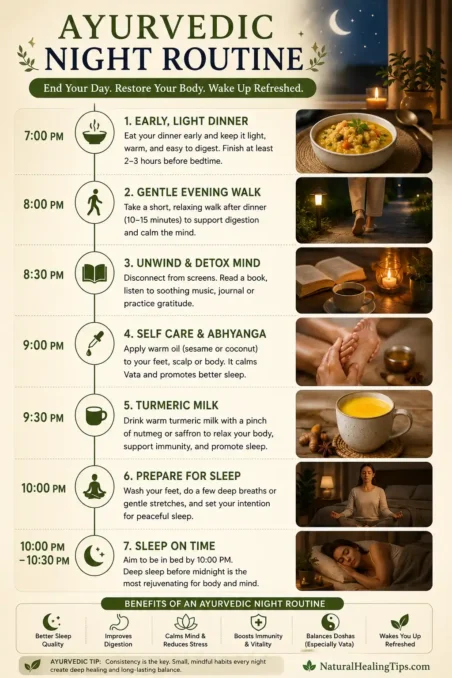
Ayurvedic Night Routine for Better Sleep and Recovery
Sleep quality is heavily influenced by what happens during the final few hours before bed.
Many modern nighttime habits — bright screens, heavy meals, excessive stimulation, and irregular sleep schedules — can keep the nervous system in an alert state long after the body feels tired.
Ayurveda traditionally encourages slower, calming evening routines that help the body transition gradually into rest mode.
Helpful nighttime habits may include:
- dimming lights after dinner
- avoiding excessive screen exposure
- light stretching or gentle yoga
- warm herbal tea
- short breathing practices
- reducing mental stimulation
Some people also find comfort in traditional evening practices such as:
- warm turmeric milk
- foot massage with oil
- calming herbal aromas
- quiet reading
These habits may help support melatonin release and nervous system recovery by reducing overstimulation before sleep.
Consistent sleep timing often matters more than achieving a “perfect” nighttime routine.
Even gradual improvements in evening habits may positively affect:
- energy levels
- mood
- digestion
- stress resilience
- recovery quality
👉 Read more natural sleep support strategies in: Natural Sleep Remedies
Foods That Support Wellness and Daily Balance
Food choices play a major role in Ayurvedic wellness because digestion is considered central to overall health.
Many traditional Ayurvedic foods focus on supporting:
- stable energy
- gut health
- hydration
- digestion
- inflammation balance
Rather than extreme restriction, Ayurveda typically emphasizes balance, moderation, and seasonal eating patterns.
Foods That Commonly Support Health
Anti-Inflammatory Foods
- turmeric
- ginger
- berries
- leafy greens
- olive oil
- nuts
Probiotic Foods
- yogurt
- kefir
- fermented vegetables
- buttermilk
Fiber-Rich Foods
- lentils
- oats
- vegetables
- fruits
- seeds
Hydrating Foods
- cucumber
- coconut water
- watermelon
- citrus fruits
Adaptogenic Herbs Traditionally Used in Ayurveda
- ashwagandha
- tulsi
- amla
These herbs are widely studied for stress and wellness support, though results vary by individual.

Foods and Habits That May Disrupt Wellness
Ultra-Processed Foods
Often high in:
- additives
- refined oils
- excess sodium
- sugar
These may contribute to inflammation and energy instability.
Excess Sugar
Frequent sugar spikes may affect:
- insulin balance
- cravings
- fatigue
- gut microbiome diversity
Excessive Caffeine
Too much caffeine may worsen:
- anxiety
- sleep quality
- cortisol imbalance
Especially when consumed late in the day.
Eating While Distracted
This is extremely common.
Scrolling during meals often leads to:
-
- overeating
- poor chewing
- weaker satiety awareness
Mindful eating sounds simple but can genuinely improve digestion.
Seasonal Ayurvedic Wellness Practices (Ritucharya)
Ayurveda traditionally adapts routines according to seasonal changes because digestion, hydration, immunity, and energy levels often shift throughout the year.
This seasonal approach is known as Ritucharya.
For example, hotter months may require lighter and more hydrating foods, while colder seasons often benefit from warming meals, spices, and grounding routines.
Adjusting habits seasonally may help support digestion, comfort, sleep quality, and overall balance more effectively throughout the year.
Lesser-Known Ayurvedic Habits People Often Ignore
These smaller habits are rarely discussed online but often matter.
Eating in a Calm Environment
The nervous system affects digestion significantly.
Rushed meals can worsen bloating and indigestion.
Seasonal Eating
Ayurveda traditionally adapts foods according to climate and season.
Examples:
Summer
- lighter foods
- hydrating fruits
- cooling herbs
Winter
- soups
- warming spices
- healthy fats
Monsoon Season
Indian households often reduce overly raw foods during heavy rainy seasons due to digestion concerns.
👉 Explore seasonal wellness habits here: Natural Immunity Boosting Tips for All Seasons

Oil Massage (Abhyanga)
Warm oil self-massage is traditionally used in Ayurveda.
People often report:
- relaxation
- improved body awareness
- reduced dryness
- calming effects
Sesame oil is commonly used traditionally.
Why Many People Struggle to Follow Ayurvedic Routines Consistently
One reason many wellness routines fail is that they are designed for ideal lifestyles rather than real life.
Modern schedules often involve:
- late-night work
- long commutes
- family responsibilities
- travel
- social eating
- constant screen exposure
- irregular sleep timing
As a result, people frequently feel discouraged when they cannot follow highly structured wellness routines perfectly.
Ayurveda works best when adapted realistically rather than followed rigidly.
For many people, sustainable progress starts with only a few consistent habits such as:
- improving sleep timing
- eating meals more regularly
- reducing overstimulation at night
- adding brief moments of calm during the day
Small routines repeated consistently often create more meaningful long-term benefits than extreme short-term wellness changes.
Common Mistakes People Make With Ayurvedic Routines
Trying to Do Everything at Once
This is probably the biggest mistake.
People become overwhelmed and quit quickly.
Start with:
- sleep timing
- hydration
- meal regularity
- one calming practice
That’s enough initially.
Overusing Herbal Supplements
Natural does not automatically mean harmless.
Some herbs may:
- interact with medications
- affect blood pressure
- influence hormones
Professional guidance matters, especially for chronic conditions.
Ignoring Sleep
Many people focus only on diet.
But poor sleep can undermine:
- metabolism
- immunity
- emotional resilience
- recovery
Expecting Instant Results
Ayurvedic wellness is gradual.
People often notice:
- better digestion first
- improved sleep later
- steadier energy over time
Consistency matters more than intensity.
Want to See How Your Body Responds? Try This Gentle 3-Day Routine…
This beginner-friendly reset focuses on realistic consistency.
Day 1
Morning
- warm water
- 5 minutes deep breathing
- sunlight exposure
Meals
- balanced breakfast
- nourishing lunch
- lighter dinner
Evening
- reduce screens 1 hour before bed
Day 2
Add:
- short post-meal walks
- tongue scraping
- mindful eating
Focus:
- slower chewing
- proper hydration
Day 3
Add:
- gentle stretching or yoga
- calming herbal tea
- fixed sleep schedule
Observe:
- digestion
- bloating
- sleep quality
- energy patterns
- mood stability
Many people notice subtle but meaningful shifts within a few days.
Ayurvedic Daily Routine Checklist for Beginners
- Wake up consistently
- Drink warm water
- Eat meals on time
- Avoid overeating at night
- Practice breathwork
- Sleep before 11 PM
- Reduce screen exposure

While This Is Often Manageable Naturally, There Are Situations Where Medical Guidance Is Important…
Natural wellness routines are supportive — not replacements for medical care.
Seek professional guidance if you experience:
- persistent fatigue
- severe digestive symptoms
- unexplained weight loss
- chronic insomnia
- chest pain
- breathing difficulties
- ongoing depression or anxiety
- frequent infections
Trusted organizations such as the World Health Organization Mayo Clinic and National Institutes of Health emphasize evidence-based medical evaluation when symptoms persist.
Ayurveda can complement modern healthcare — not replace essential diagnosis or treatment.
Realistic Benefits People Often Notice
People commonly report improvements such as:
- steadier energy
- fewer digestive issues
- reduced bloating
- calmer mornings
- improved sleep quality
- better stress resilience
- healthier eating awareness
But results vary significantly depending on:
- stress levels
- consistency
- sleep quality
- underlying health conditions
- nutrition
- activity levels
There is no “perfect” routine.
Adaptation matters more.
What Modern Research Says About Ayurvedic Lifestyle Practices
While Ayurveda is a traditional healing system, several lifestyle principles associated with it are increasingly being explored through modern wellness research.
Research suggests that practices such as meditation, yoga, mindful breathing, and consistent sleep timing may help support:
- stress reduction
- emotional regulation
- sleep quality
- inflammation balance
- nervous system recovery
Emerging evidence also indicates that gut health, meal timing, circadian rhythm alignment, and stress management may significantly influence overall wellness.
Yoga and mindfulness practices have been studied for their potential effects on:
- cortisol regulation
- heart rate variability
- mental clarity
- anxiety reduction
At the same time, researchers continue exploring how lifestyle consistency affects long-term metabolic and emotional health.
Although more large-scale studies are still needed in some areas, many Ayurvedic lifestyle habits overlap closely with modern preventive wellness principles focused on balance, recovery, and sustainable daily routines.
Quick Summary: Ayurvedic Daily Routine for Wellness
Beginner-Friendly Daily Habits
- Wake up consistently
- Drink warm water in the morning
- Eat regular balanced meals
- Make lunch the largest meal
- Reduce processed foods
- Walk after meals
- Practice calming breathwork
- Sleep earlier
- Limit nighttime screens
- Prioritize consistency over perfection
Practical Wellness Note
Many people notice that the biggest improvements often come from sleep consistency and meal timing rather than extreme detox routines. Small sustainable habits usually outperform highly restrictive wellness plans over time.
FAQ: Ayurvedic Daily Routine for Wellness
Can Ayurvedic routines actually improve energy levels?
They may help indirectly by improving sleep consistency, digestion, hydration, stress regulation, and meal timing. Many people experience steadier energy when daily rhythms become more predictable.
How long does it take to notice results?
Some people notice improved digestion or sleep within days. Deeper changes involving stress resilience, metabolism, and long-term wellness usually require consistent habits over weeks or months.
Is Ayurveda only for people in India?
No. Ayurvedic principles like regular sleep, mindful eating, stress reduction, hydration, and digestive support are globally relevant and increasingly studied through modern lifestyle medicine research.
Do I need expensive herbs or supplements?
Not necessarily.
Many effective Ayurvedic habits are free or inexpensive:
- sleep consistency
- breathwork
- balanced meals
- mindful eating
- hydration
- reducing overstimulation
What happens if routines stay inconsistent for years?
Chronic lifestyle imbalance may contribute to poor sleep, digestive issues, stress overload, inflammation, metabolic dysfunction, and emotional fatigue over time.
Can Ayurvedic routines support gut health?
Potentially yes.
Fiber-rich foods, fermented foods, digestive spices, meal regularity, and stress reduction may positively influence the gut microbiome and digestive efficiency.
Is it okay to modify Ayurvedic practices for modern life?
Absolutely.
Rigid perfection often becomes unsustainable. Flexible adaptation usually works better for long-term consistency.
Which Ayurvedic habit gives the biggest benefit for beginners?
Improving sleep timing and reducing late-night stimulation often creates surprisingly noticeable benefits across energy, digestion, cravings, and emotional balance.
Final Thoughts
Ayurveda is sometimes misunderstood as complicated or highly restrictive.
In reality, many of its most useful ideas are remarkably practical.
The deeper message is not about perfection.
It’s about rhythm.
The body tends to function better when daily habits become more predictable, calming, nourishing, and aligned with natural biological patterns.
And in a world built around overstimulation, constant rushing, irregular meals, and chronic stress, that kind of structure can feel surprisingly healing.
Even small shifts matter.
A calmer evening.
A more nourishing lunch.
A consistent sleep schedule.
Five minutes of quiet breathing.
Eating without distraction.
These habits may look simple from the outside.
But over time, they can profoundly influence how the body feels day after day.
If you’re feeling overwhelmed, start with one small change instead of trying to completely overhaul your lifestyle overnight. Consistent sleep timing, calmer meals, mindful movement, and reduced overstimulation often create more lasting benefits than extreme wellness routines.






3 thoughts on “Ayurvedic Daily Routine for Wellness”