

Best Fruits to Eat on Empty Stomach
Have you ever noticed how some mornings feel light, energetic, and refreshing—while others begin with bloating, heaviness, or sluggish digestion?
What if one small morning habit could quietly influence your digestion, hydration, energy levels, and even your mood throughout the day?
Many people rush into tea, coffee, or oily breakfasts without realizing that the stomach after waking up responds differently to food. The first thing you eat in the morning matters more than most people think.
And this is exactly why fruits can make a difference.
Choosing the best fruits to eat on empty stomach may help support digestion, hydration, gut health, and natural morning energy levels
Certain fruits contain natural enzymes, fiber, antioxidants, vitamins, and hydration-supporting compounds that may help the digestive system wake up gently after an overnight fast. But not all fruits behave the same way in the body. Some may improve digestion and gut health, while others can trigger acidity or bloating in sensitive individuals.
In many households, especially in India, people traditionally begin the day with fruits like papaya, banana, soaked raisins, or seasonal melons before breakfast. Interestingly, modern nutritional science also supports many of these habits.
Let’s explore what really happens inside your body when you eat fruits on an empty stomach—and which fruits are actually worth adding to your morning routine.
Is It Normal to Feel Better After Eating Fruits in the Morning?
You’re not alone in this.
Many people report feeling lighter, more refreshed, and less bloated when they start their day with fruits instead of heavy processed foods.
This is more common than most people think.
After 7–9 hours of overnight fasting, the digestive system is naturally more sensitive to hydration, fiber, and nutrient absorption. Fruits provide water, natural sugars, antioxidants, and gentle fiber that may support smoother bowel movement and better digestive comfort.
Many readers tell us they notice:
- less morning heaviness
- improved bowel movement
- reduced bloating
- better hydration
- more stable energy levels
Sometimes the smallest daily habits quietly shape how we feel.
However, results vary from person to person. Factors like acidity, diabetes, IBS, food intolerances, sleep quality, and stress can influence how your body reacts to fruits in the morning.
Here’s What’s Really Happening Inside Your Body
1. Overnight Dehydration Affects Digestion
One interesting thing researchers have found is that the body loses water gradually during sleep through breathing and sweating.
By morning, mild dehydration may slow digestion and contribute to constipation or sluggishness.
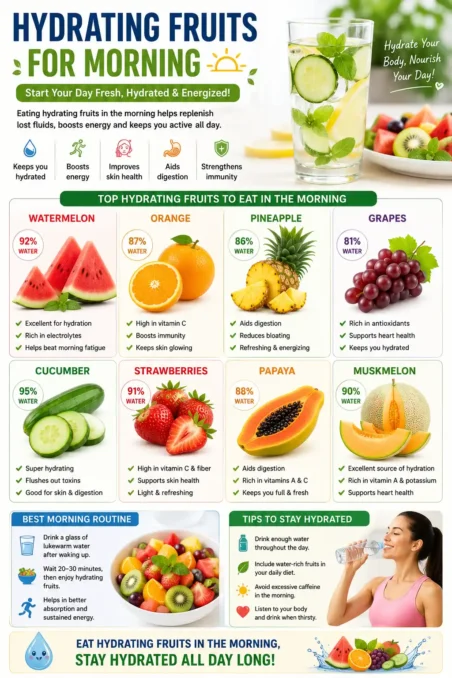
Water-rich fruits like watermelon, oranges, muskmelon, and strawberries help replenish fluids naturally.
This is one reason many people feel refreshed after eating hydrating fruits in the morning.
👉 If you frequently experience bloating or stomach discomfort, read: Natural Remedies for Digestive Problems
2. Natural Fruit Fiber Supports Gut Movement
Fiber plays a major role in digestive health.
Fruits such as apples, pears, papaya, and berries contain soluble and insoluble fiber that help support bowel regularity.
Soluble fiber absorbs water and forms a gel-like consistency that may help digestion, while insoluble fiber adds bulk to stool movement.
Experts from organizations like the Mayo Clinic often emphasize the importance of dietary fiber for digestive wellness.
3. Digestive Enzymes May Help Food Breakdown
Certain fruits naturally contain enzymes.
Papaya contains papain, while pineapple contains bromelain. These compounds may help support protein digestion.
This is one reason papaya is commonly recommended in traditional wellness practices for people who feel heavy after meals.
In traditional Indian kitchens, ripe papaya is often eaten early in the day for this exact reason.
4. Natural Sugars Provide Gentle Morning Energy
Unlike highly processed sugary foods, fruits contain natural sugars combined with water and fiber.
Bananas, apples, grapes, and mangoes may provide quick energy without the sudden heaviness that fried breakfasts sometimes cause.
You may have noticed that fruits feel “lighter” than processed breakfast foods.
That’s because they digest differently.
5. Antioxidants Help Reduce Oxidative Stress
Fruits are rich in antioxidants like:
- vitamin C
- flavonoids
- carotenoids
- polyphenols
Berries, kiwi, pomegranate, and citrus fruits are especially rich in these compounds.
Researchers believe antioxidants help protect cells from oxidative stress linked to inflammation and aging.
6. Gut Microbiome Benefits
Your gut contains trillions of bacteria that influence digestion, immunity, and even mood.
Fiber-rich fruits may support beneficial gut bacteria by acting as prebiotics.
Healthy gut bacteria are associated with:
- smoother digestion
- improved bowel movement
- reduced bloating
- better metabolic health
This is why gut health has become a major focus in modern nutrition research.

👉 Certain fiber-rich foods may also support gut cleansing naturally: Foods That Naturally Clean Your Gut
How Different Fruits Affect Digestion Differently
Not all fruits digest at the same speed.
Some fruits are lighter and water-rich, while others contain more fiber or natural sugars that influence how the stomach responds in the morning.
For example:
- Watermelon digests relatively quickly because of its high water content.
- Bananas digest more slowly and may provide longer-lasting energy.
- Apples contain pectin fiber that supports gut bacteria.
- Papaya contains digestive enzymes linked to smoother protein digestion.
One interesting thing researchers have observed is that people with sensitive digestion often tolerate softer, water-rich fruits better early in the morning compared to acidic fruits.
This is why personal tolerance matters more than following rigid food rules.
Many readers tell us they notice very different reactions depending on:
- hydration levels
- sleep quality
- stress
- portion size
- existing gut sensitivity
Sometimes the body gives subtle clues long before major digestive symptoms appear.
Best Time to Eat Fruits in the Morning
Timing matters more than many people realize.
Many nutrition experts believe that the best fruits to eat on empty stomach are usually water-rich, fiber-rich, and easy to digest.
For most people, the ideal time to eat fruits is:
- 20–30 minutes after waking
- after drinking water
- before tea or coffee
- before heavy breakfast
This allows the stomach to process fruits more comfortably.
Some people combine fruits immediately with oily foods, sugary cereals, or fried breakfast items. This may increase heaviness or digestive discomfort in sensitive individuals.
If you have diabetes or blood sugar concerns, pairing fruits with:
- nuts
- chia seeds
- yogurt
- flaxseeds
may help slow sugar absorption.
👉 A balanced morning routine may improve digestion and energy naturally: Ayurvedic Daily Routine for Wellness
10 Best Fruits to Eat on Empty Stomach
1. Papaya
Papaya is often considered one of the best fruits to eat on empty stomach because of its digestive enzyme content and digestion-supporting enzymes.
It contains papain, a natural enzyme associated with protein digestion.
Benefits
- may reduce bloating
- supports bowel movement
- rich in vitamin C
- supports gut health
- low in calories
How to Eat
Eat 1 small bowl of ripe papaya alone or with soaked chia seeds.
Best For
People with constipation, heaviness, or sluggish digestion.

👉 If constipation is affecting your mornings, explore: Natural Drinks for Constipation Relief Overnight
2. Apple
“An apple a day” became popular for a reason.
Apples contain pectin, a soluble fiber that supports gut bacteria and digestion.
Apples are among the best fruits to eat on empty stomach for people looking to improve fiber intake naturally.
Benefits
- promotes fullness
- supports gut microbiome
- may help weight management
- supports bowel regularity
How to Eat
Eat with the peel for maximum fiber benefits.
↗ Fiber-rich fruits may support healthy digestion according to: Mayo Clinic Fiber Guide
3. Banana
Bananas are convenient, filling, and naturally rich in potassium.
They provide gentle morning energy and are especially useful before workouts.
Benefits
- quick energy
- potassium support
- easy digestion
- may reduce acidity in some people
Caution
People with blood sugar concerns may benefit from pairing bananas with nuts.
4. Watermelon
Few fruits hydrate as effectively as watermelon.
During hot weather, watermelon can be one of the best fruits to eat on empty stomach for hydration support.
Because it contains high water content, it may help replenish fluids after sleep.
Benefits
- hydration support
- refreshing in hot weather
- low calorie
- contains lycopene antioxidants
Best Time
Especially beneficial during summer mornings.
5. Kiwi
Kiwi is underrated for digestive wellness.
It contains vitamin C, fiber, and actinidin, an enzyme linked to protein digestion.
Benefits
- immune support
- digestion support
- antioxidant benefits
- may support skin health
6. Pomegranate
Pomegranate is rich in polyphenols and antioxidants.
Many people enjoy it for immunity and overall wellness.
Benefits
- antioxidant-rich
- supports circulation
- may help reduce oxidative stress
- refreshing morning fruit
7. Berries
Blueberries, strawberries, and raspberries are packed with antioxidants and fiber.
Benefits
- supports gut health
- low calorie
- rich in antioxidants
- supports weight management
Many experts recommend berries as part of balanced breakfast routines.
8. Pears
Pears contain fiber and high water content.
They may support smoother digestion and satiety.
Benefits
- supports fullness
- hydration support
- gut-friendly fiber
9. Muskmelon
Muskmelon is cooling, hydrating, and light on the stomach.
In many Indian summers, muskmelon is traditionally eaten during morning hours.
Benefits
- hydration
- refreshing digestion support
- low calorie
10. Orange
Oranges provide vitamin C and hydration.
However, people with acidity should monitor tolerance carefully.
Benefits
- hydration
- immune support
- refreshing taste
Caution
May trigger acidity in sensitive individuals.
Best Seasonal Fruits to Eat in the Morning
Seasonal fruits are often fresher, more nutrient-rich, and easier on digestion.
Summer
- watermelon
- muskmelon
- mango (moderation)
- berries
Monsoon
- pomegranate
- pears
- apples
Winter
- oranges
- kiwi
- guava
In many Indian households, seasonal eating has traditionally been considered important for digestion and immunity.
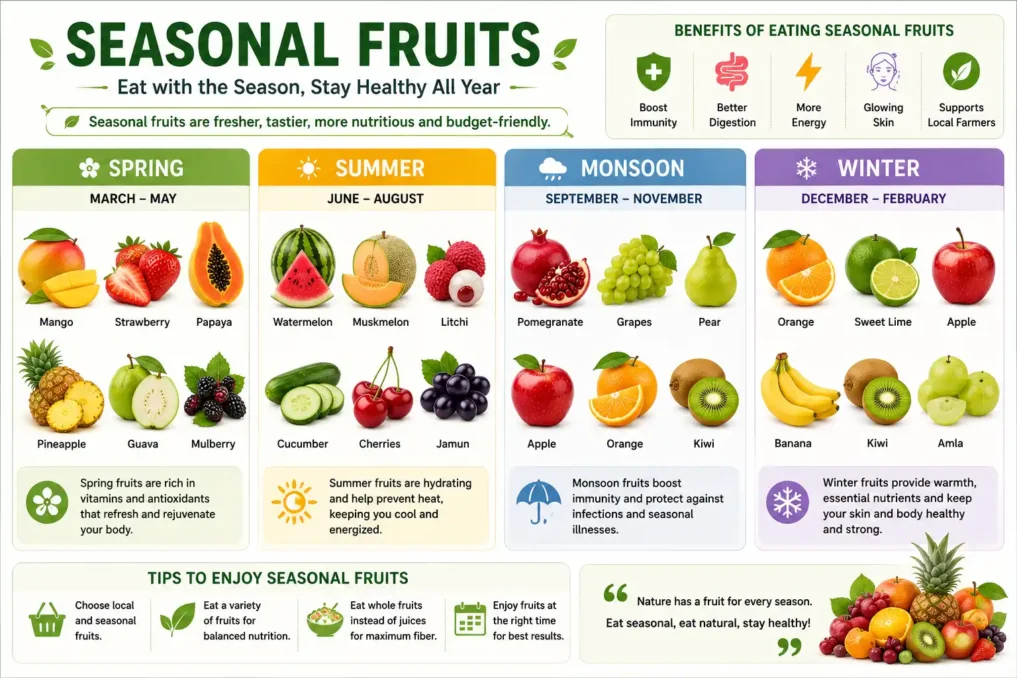
Modern nutrition experts also encourage seasonal variety because it naturally increases nutrient diversity.
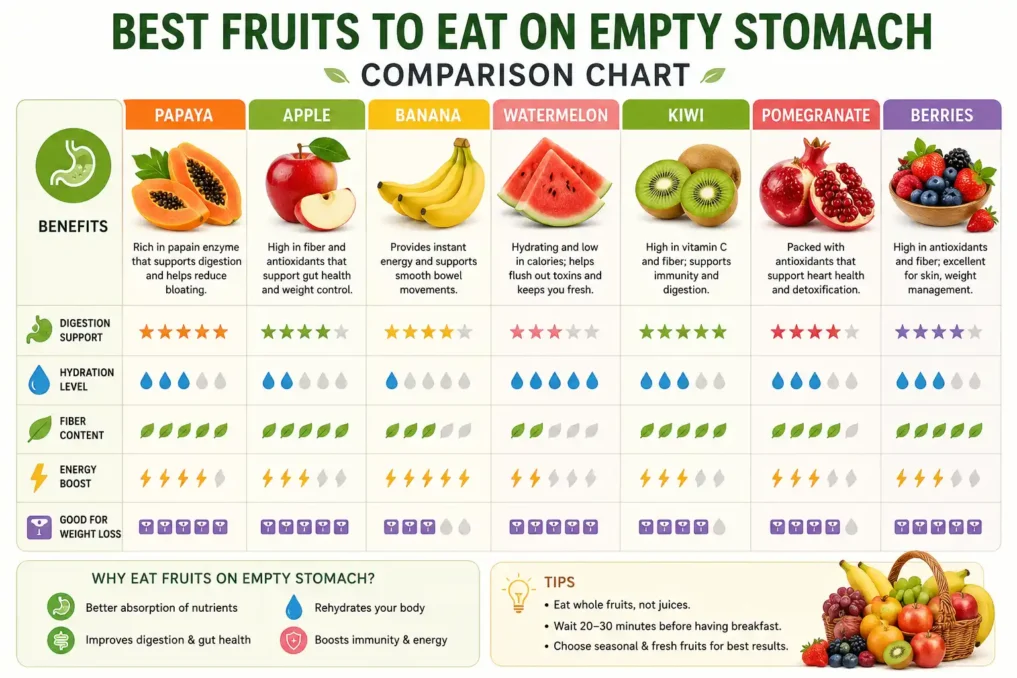
Best Fruits to Eat on Empty Stomach Compared
The best fruits to eat on empty stomach may vary depending on whether your goal is digestion, hydration, immunity, or weight management
| Fruit | Main Benefit | Best For | Fiber | Hydration |
|---|---|---|---|---|
| Papaya | Digestion | Constipation | High | Medium |
| Apple | Gut health | Weight management | High | Medium |
| Banana | Energy | Workout mornings | Medium | Low |
| Watermelon | Hydration | Summer mornings | Medium | Very High |
| Kiwi | Vitamin C | Immunity | High | Medium |
| Berries | Antioxidants | Weight loss | High | Medium |
| Muskmelon | Cooling | Summer digestion | Medium | High |
Best Fruits for Specific Digestive Problems
Different fruits may support different digestive concerns.
For Constipation
Fruits rich in fiber and water may help improve bowel movement naturally.
Best options:
- papaya
- pear
- apple
- kiwi
For Bloating
Some fruits may feel gentler on digestion and reduce heaviness.
Best options:
- papaya
- watermelon
- berries
For Acidity
Low-acid fruits are often easier for sensitive stomachs.
Best options:
- banana
- muskmelon
- pear
For Morning Energy
Natural carbohydrates may provide quick but lighter energy.
Best options:
- banana
- apple
- grapes
Best Fruit Combinations for Breakfast
Some combinations may work even better together.
For Digestion
- papaya + kiwi
- apple + chia seeds
For Weight Loss
- berries + Greek yogurt
- apple + soaked almonds
For Hydration
- watermelon + cucumber
- muskmelon + mint
For Immunity
- kiwi + berries
- pomegranate + orange
Can Eating Fruits on Empty Stomach Help Weight Loss?
This question appears frequently in Google searches.
Fruits alone do not magically cause weight loss.
Some of the best fruits to eat on empty stomach for weight management include apples, berries, kiwi, and pears.
However, replacing processed breakfast foods with fiber-rich fruits may indirectly support healthy weight management.
Why?
Because many fruits:
- increase fullness
- reduce overeating
- contain fewer calories
- improve hydration
- support healthier food choices later in the day
Berries, apples, kiwi, pears, and papaya are commonly included in balanced weight-management diets because of their fiber content.
Fiber slows digestion and may help reduce sudden hunger spikes.
Some people also notice that starting the day with lighter foods improves energy and reduces sluggishness after breakfast.
That said, portion control still matters.
Large amounts of fruit juices, sweetened smoothie bowls, or excessive dried fruits may add significant sugar and calories.
The healthiest approach is balance—not extremes.
Best Fruits to Eat on Empty Stomach for Skin Health
Healthy skin is often closely connected to hydration, antioxidants, and nutrition.
Certain fruits may support healthier-looking skin because they contain vitamin C, water, and antioxidant compounds.
Best Fruits for Skin Glow
- kiwi
- berries
- orange
- papaya
- pomegranate
Vitamin C plays a role in collagen production, while hydration may help maintain skin elasticity and freshness.
Many people notice that healthier eating habits gradually influence skin appearance over time.
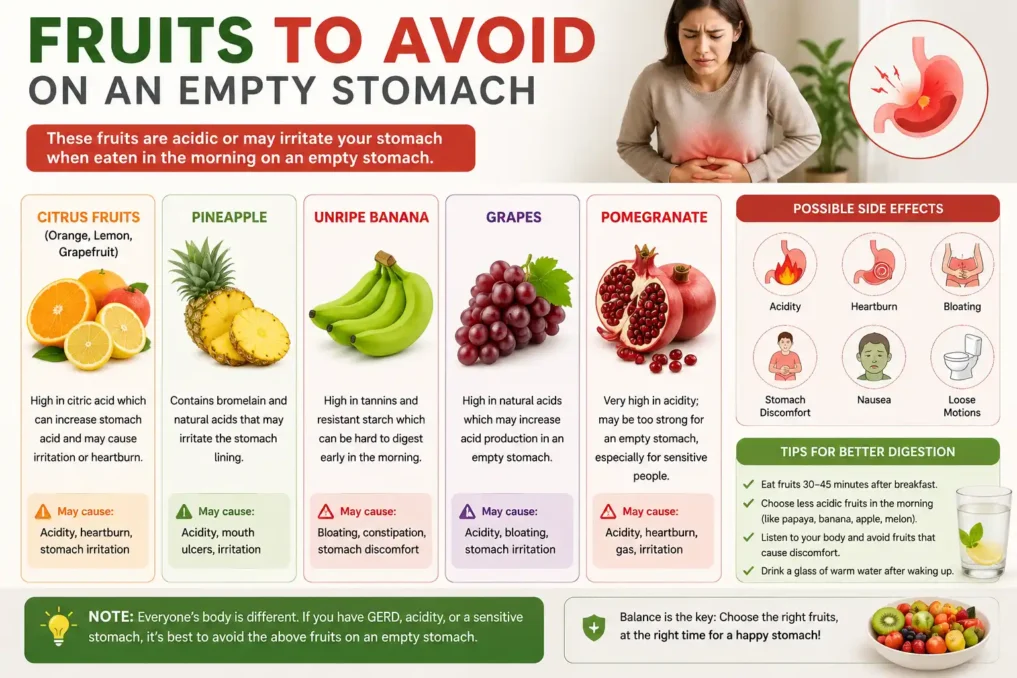
Fruits That Should Be Avoided on Empty Stomach
While fruits are generally healthy, not every fruit suits every stomach.
Citrus Fruits
People with acid reflux or gastritis may experience irritation.
Pineapple
Its acidity may cause discomfort in sensitive individuals.
Excessively Ripe Mangoes
High natural sugar content may not suit everyone early in the morning.
Unripe Bananas
Can feel heavy or bloating for some people.
While this is usually harmless, there are times when you should pay attention.
Organizations such as the World Health Organization (WHO), NHS, and Mayo Clinic advise seeking medical guidance if digestive symptoms become persistent or severe.
Who May Need Extra Caution With Morning Fruits?
While fruits are healthy for most people, certain individuals should be more mindful.
People With Diabetes
Portion control and food pairing matter.
People With IBS
Some fruits may trigger bloating or discomfort.
People With Acid Reflux
Acidic fruits may worsen symptoms.
Children
Avoid excessive fruit juices with added sugar.
Older Adults
Soft fruits like papaya or bananas may sometimes be easier to digest.
If symptoms persist, professional medical advice is important.
Signs You Should Not Ignore
Consult a healthcare professional if you experience:
- ongoing stomach pain
- persistent bloating
- vomiting
- unexplained weight loss
- blood in stool
- severe acid reflux
- chronic constipation
Natural remedies help many people, but persistent symptoms deserve professional evaluation.
The Good News Is—Small Changes Can Make a Noticeable Difference
Practical Tips for Eating Fruits Safely
- Drink water first after waking
- Avoid overeating fruits
- Choose seasonal fruits
- Wash fruits thoroughly
- Eat slowly
- Avoid mixing too many fruits together initially
- Pair sugary fruits with nuts if diabetic
- Wait before heavy breakfast
Many people ignore these simple habits.
Yet they often make the biggest difference.
How Much Fruit Should You Eat on Empty Stomach?
More is not always better.
For most people, 1–2 servings of fruit in the morning is usually enough.
Examples include:
- 1 medium apple
- 1 banana
- 1 cup papaya
- 1 cup watermelon
- 1 kiwi with breakfast
Eating excessive amounts of fruits at once may contribute to:
- bloating
- excess sugar intake
- digestive discomfort
Balance matters more than extremes.
People with diabetes or digestive disorders may benefit from professional dietary guidance.
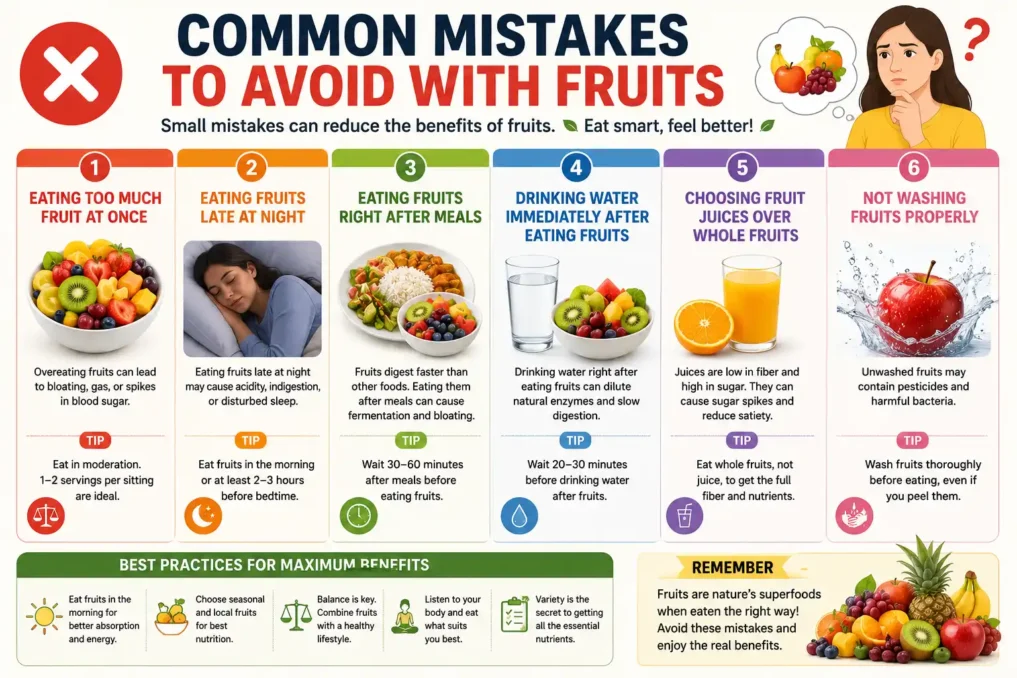
Common Mistakes People Make When Eating Fruits in the Morning
Sometimes healthy habits fail because of small mistakes people rarely notice.
1. Eating Fruits Immediately After Heavy Breakfast
Many people eat fruits after oily breakfasts thinking it improves digestion.
In reality, this may increase heaviness for some individuals.
2. Drinking Tea or Coffee Immediately After Fruits
Tea and coffee may irritate digestion in sensitive stomachs when consumed immediately after acidic fruits.
3. Consuming Too Much Fruit Juice
Whole fruits contain fiber.
Packaged fruit juices often contain excess sugar and much less fiber.
4. Mixing Too Many Fruits Together
Large fruit combinations may trigger bloating in sensitive individuals.
5. Ignoring Portion Size
Even healthy foods can become excessive.
Moderation matters.
6. Choosing Unripe Fruits
Unripe fruits may be harder to digest and can sometimes increase stomach discomfort.
This is more common than many people realize.
Are Whole Fruits Better Than Fruit Juices?
In most cases, whole fruits are considered healthier than packaged fruit juices.
Why?
Because whole fruits naturally contain:
- fiber
- water
- slower sugar absorption
- better satiety
Fruit juices often contain:
- less fiber
- higher sugar concentration
- faster blood sugar spikes
Fresh homemade juices without added sugar may occasionally be included in balanced diets, but whole fruits generally provide better digestive and metabolic benefits.
This is one reason many nutrition experts encourage eating fruits instead of drinking processed fruit beverages.
Want to See How Your Body Responds? Try This 3-Day Routine
Day 1
- warm water after waking
- papaya breakfast starter
- avoid fried breakfast
Day 2
- watermelon or muskmelon
- increase hydration
- light breakfast afterward
Day 3
- apple with chia seeds
- observe digestion and energy levels
You may notice:
- lighter digestion
- improved bowel movement
- reduced heaviness
- better morning freshness

Myth vs Fact About Eating Fruits on Empty Stomach
| Myth | Fact |
|---|---|
| Fruits must only be eaten on empty stomach | Fruits are healthy at multiple times |
| Banana is unhealthy in morning | Safe for most people |
| Fruit alone burns fat | Weight loss depends on overall lifestyle |
| Fruits instantly detox the body | The liver and kidneys already detox naturally |
↗ Learn more about fruit timing and digestion: Best Time to Eat Fruit — Healthline
Quick Summary
- Fruits may support digestion and hydration in the morning
- Papaya, apples, kiwi, and berries are popular choices
- Water-rich fruits help hydration after sleep
- Fiber supports gut health and bowel movement
- Some acidic fruits may irritate sensitive stomachs
- Portion control and timing matter
- Persistent digestive symptoms require medical advice
FAQs About Eating Fruits on Empty Stomach
What really happens if you eat fruits first thing in the morning?
Many people experience lighter digestion, hydration, and better bowel movement due to water and fiber content.
Can this actually improve digestion?
For many individuals, fiber-rich fruits may support smoother digestion and gut movement.
Why do some people notice changes quickly?
Hydration, reduced processed food intake, and increased fiber may create noticeable short-term improvements.
Is papaya really good for empty stomach?
Papaya contains papain, an enzyme linked to digestive support.
Can fruits help with bloating?
Some fruits like papaya and kiwi may support digestion and reduce heaviness.
Which fruits are best for weight loss?
Berries, apples, kiwi, and pears are commonly included in weight-management diets because of their fiber content.
Can diabetics eat fruits on empty stomach?
Many can, but portion control and food pairing are important. Professional guidance is recommended.
Does fruit digest faster on an empty stomach?
For many people, fruits may feel lighter and digest more comfortably before heavy meals.
Is it better to eat fruits before or after breakfast?
Many nutrition experts prefer fruits before breakfast because digestion may feel lighter.
Which fruit is easiest to digest in the morning?
Papaya, banana, and watermelon are often considered gentler choices.
Can eating fruits early improve skin health?
Hydration, antioxidants, and vitamin C may support healthier-looking skin over time.
What happens if you eat sugary breakfast foods instead of fruits?
Highly processed sugary foods may contribute to energy crashes and increased hunger later for some individuals.
What are the best fruits to eat on empty stomach daily?
Papaya, apples, kiwi, watermelon, berries, and bananas are commonly considered some of the best fruits to eat on empty stomach because they provide hydration, fiber, and digestive support.
Gentle Health Disclaimer
This article is for educational purposes only and should not replace professional medical advice, diagnosis, or treatment.
Final Thoughts
The best fruits to eat on empty stomach are often the ones that support your body gently rather than overload it early in the morning.
Papaya, apples, kiwi, berries, watermelon, and bananas each offer different benefits—from hydration and fiber to antioxidants and digestive support.
Ultimately, the best fruits to eat on empty stomach are the ones your body tolerates comfortably while supporting hydration, digestion, and long-term wellness.
Choosing the best fruits to eat on empty stomach consistently may help support healthier digestion and hydration over time.
What works best may vary from person to person.
The key is consistency, moderation, and paying attention to how your body responds.
Sometimes healthier mornings begin with surprisingly simple choices.
↗ Explore the nutritional benefits of fruits: Harvard School of Public Health – Fruits and Vegetables





2 thoughts on “Best Fruits to eat on Empty Stomach”