Seed Cycling for Beginners: Complete Guide to Balance Hormones Naturally
Introduction: Why Are So Many People Turning to Seed Cycling?
Have you ever felt like your body is constantly out of sync—mood swings, irregular periods, unexplained fatigue?
Or maybe you’ve tried everything—diet changes, supplements, lifestyle tweaks—but something still feels “off”?
What if a simple daily habit involving just two types of seeds could help restore balance?
That’s where seed cycling comes in.
It sounds almost too simple to be effective… and that’s exactly why most people ignore it.
Is This Common or Normal?
You’re not alone in this.
Hormonal imbalance is incredibly common—affecting women across all age groups.
Many readers tell us they experience:
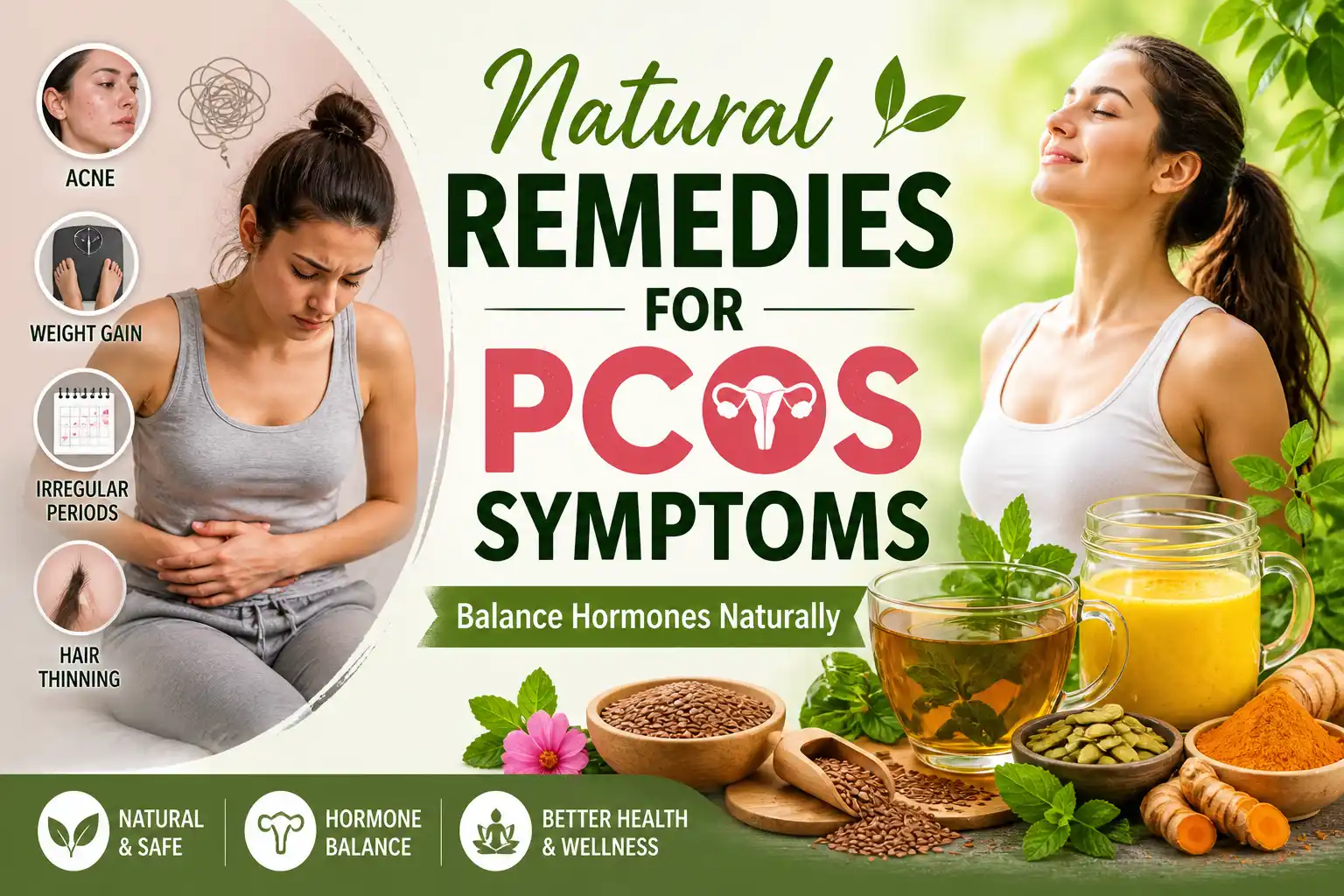
- Irregular periods
- PMS symptoms
- Acne flare-ups
- Low energy or mood swings
And often, the root cause is subtle hormonal fluctuations—not a major disease.
This is more common than most people think.
👉 If you’re looking for a broader understanding of hormonal health, start here: Natural Ways to Balance Hormones in Females
↗ For a broader understanding of hormonal health and women’s well-being, refer to guidance from the World Health Organization (WHO)
Causes of Hormonal Imbalance
What if your daily habits—not your body—are the real problem?
Hormonal imbalance doesn’t happen randomly. It’s often triggered by modern lifestyle patterns.
Common Causes:
- Chronic stress → raises cortisol → disrupts estrogen/progesterone
- Poor sleep → affects melatonin + reproductive hormones
- High sugar intake → insulin spikes → hormone disruption
- Gut imbalance → poor estrogen metabolism
- Nutrient deficiencies → especially zinc, magnesium, B6
In many households today, irregular eating patterns quietly contribute to hormonal issues.
👉 Since stress directly impacts hormone levels, explore these methods: Natural Remedies for Stress and Anxiety
Science Behind Seed Cycling: What’s Really Happening Inside Your Body?
Here’s what’s really happening inside your body…
Hormones like estrogen and progesterone follow a natural rhythm. When this rhythm gets disrupted, symptoms begin to appear.
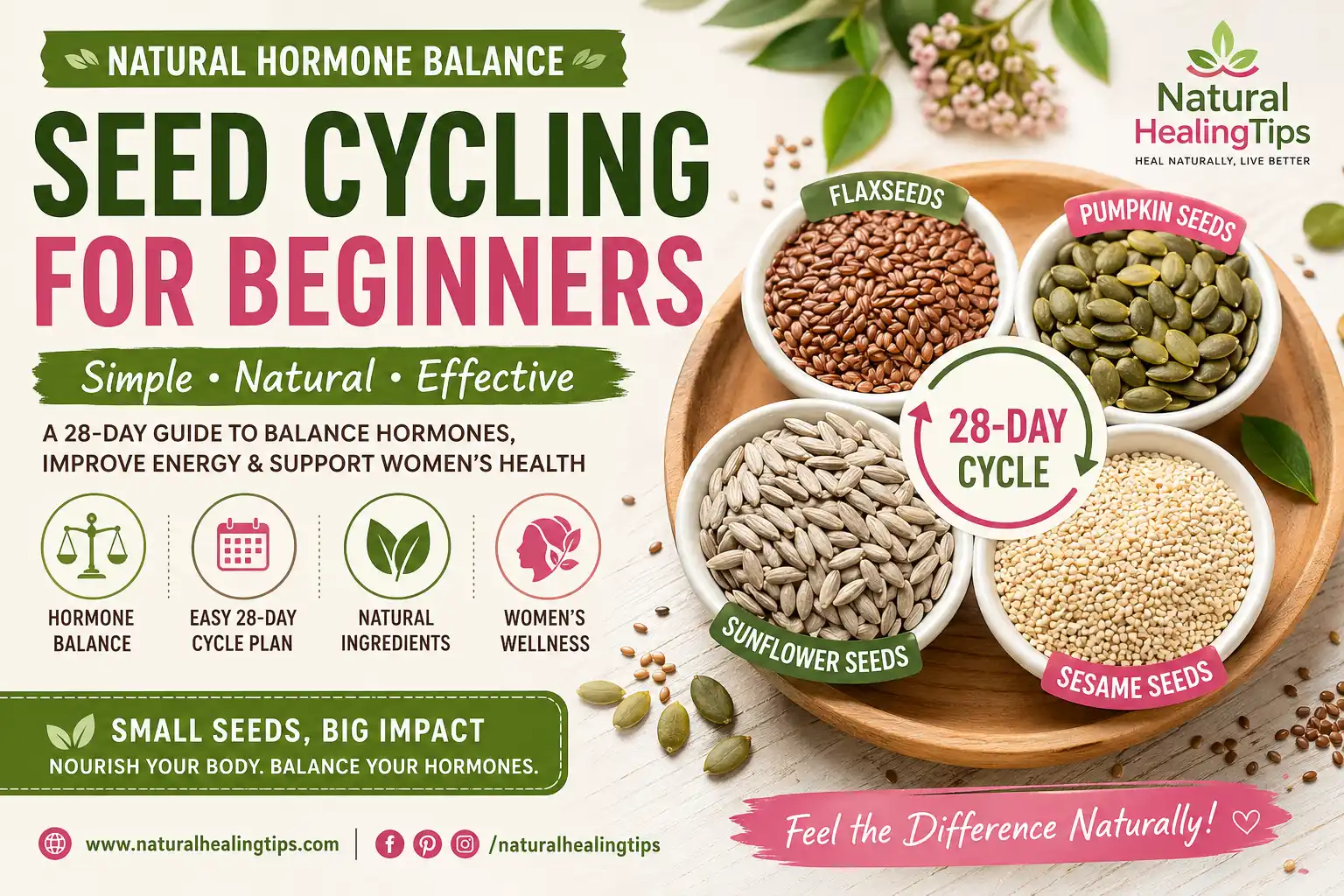
Seed cycling works by supporting different hormonal phases using specific nutrients.
1. Flaxseeds & Estrogen Balance
Mini-hook: Why do some women feel better within days of adding flaxseeds?
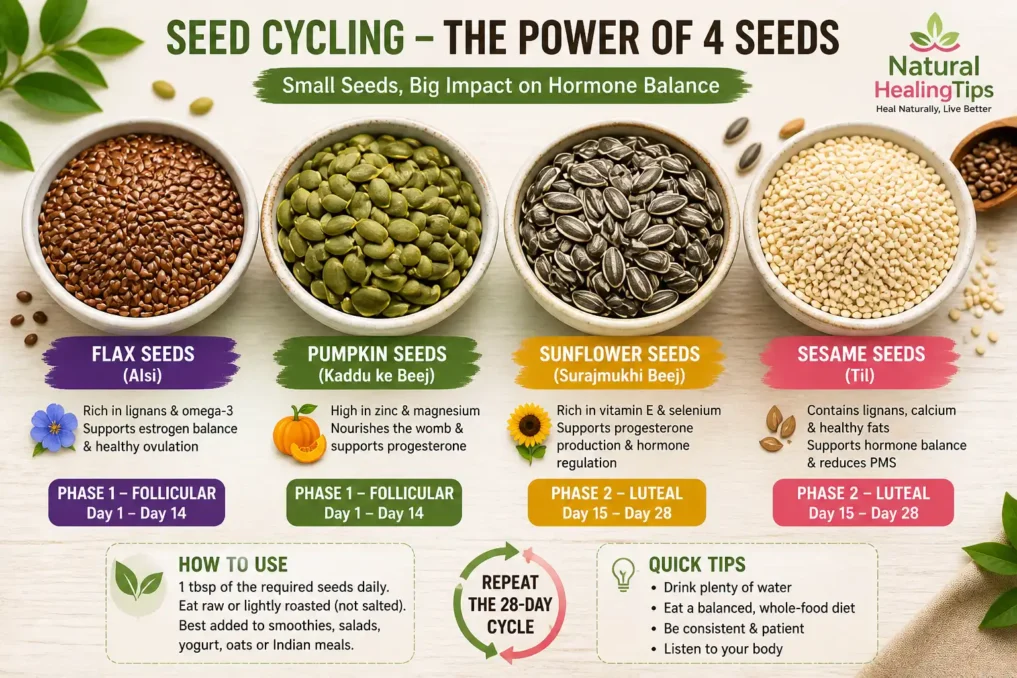
Flaxseeds contain lignans, plant compounds that help regulate estrogen levels.
- If estrogen is too high → they help reduce it
- If too low → they support balance
2. Pumpkin Seeds & Zinc Support
Pumpkin seeds are rich in zinc, a mineral essential for progesterone production.
Zinc plays a crucial role in:
- Ovulation
- Hormone signaling
- Immune support
3. Sunflower Seeds & Vitamin E
Mini-hook: Ever wondered why Vitamin E is called the “hormone vitamin”?
Sunflower seeds are loaded with Vitamin E, which supports:
- Hormone regulation
- Uterine health
- Skin improvement
4. Sesame Seeds & Progesterone Balance
Sesame seeds contain lignans and healthy fats that help support progesterone.
This is especially useful during the luteal phase of your cycle.
5. Hormonal Rhythm Synchronization
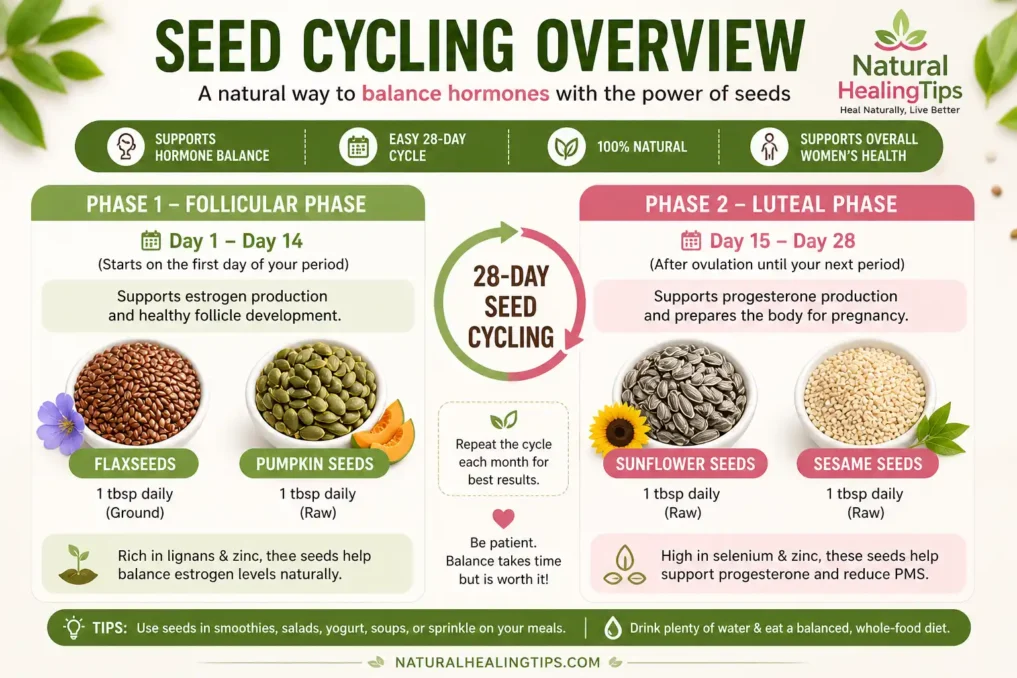
Seed cycling aligns your nutrient intake with your body’s natural hormonal phases:
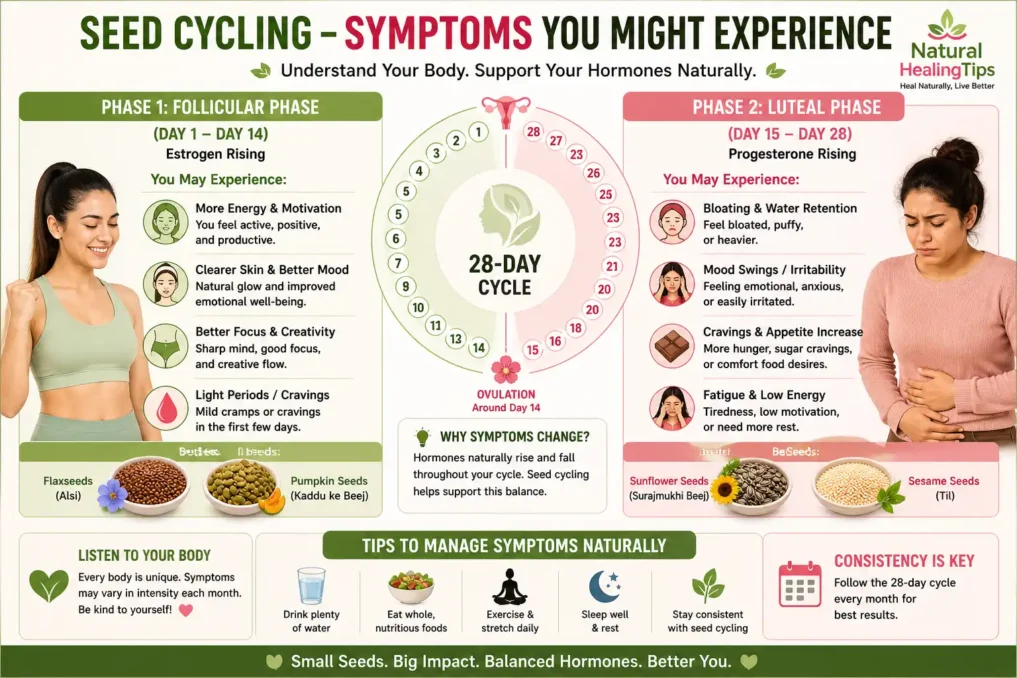
- Follicular Phase (Day 1–14) → Estrogen support
- Luteal Phase (Day 15–28) → Progesterone support
6. Gut-Hormone Connection
One interesting thing researchers have found…
Your gut plays a major role in hormone regulation. Seeds provide:
- Fiber → improves gut health
- Healthy fats → stabilize hormones
👉 Since digestion plays a key role in hormone balance, you may also benefit from: Gut Health Foods for Better Digestion
7. Blood Sugar Stabilization
Hormonal imbalance often links to insulin fluctuations.
Seeds help:
- Prevent sugar spikes
- Reduce cravings
- Maintain energy levels
↗ Medical experts at the Mayo Clinic explain how hormonal imbalances can affect mood, metabolism, and reproductive health
Symptoms Seed Cycling May Help With
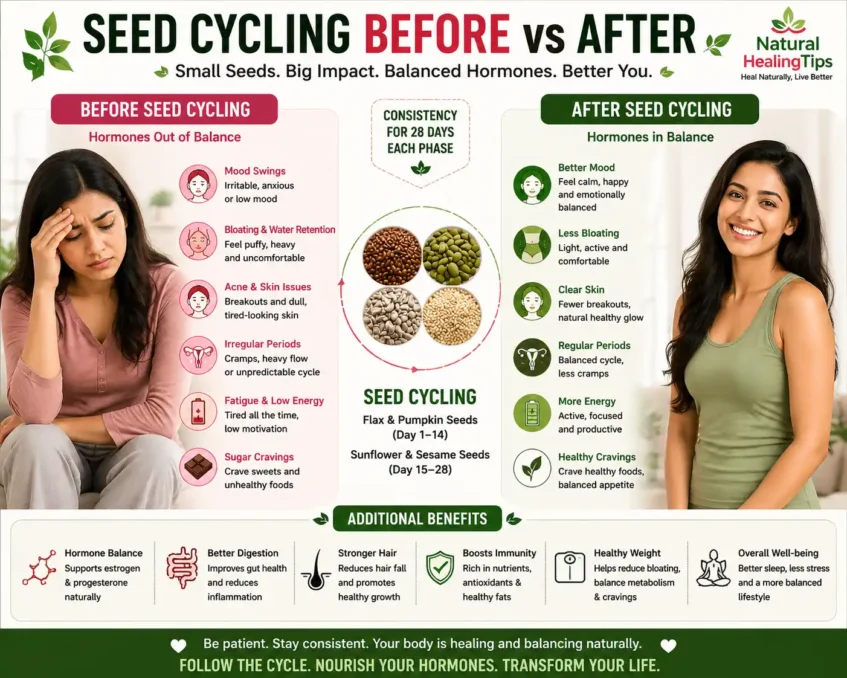
You may notice:
- Irregular menstrual cycles
- PMS (mood swings, cramps, bloating)
- Hormonal acne (especially chin/jawline)
- Hair thinning
- Low energy or fatigue
- Sleep disturbances
Many readers tell us they ignored these signs until they became persistent.
When Should You Be Concerned?
While this is usually harmless, there are times when you should pay closer attention.
- Periods missing for more than 3 months
- Severe acne that does not improve
- Unexplained weight gain or loss
- Extreme fatigue affecting daily life
These may indicate underlying hormonal conditions that require proper diagnosis.
Who Should Try Seed Cycling?
Best suited for:
- Women with irregular cycles
- PMS sufferers
- Early PCOS symptoms
- Perimenopause support
- Post-pill hormone recovery
Who Should Avoid or Be Careful
While seed cycling is generally safe, some people should take extra caution.
- Women with diagnosed thyroid or hormonal disorders
- Severe PCOS cases under medical treatment
- Pregnant or breastfeeding women
- People with seed allergies
When in doubt, it’s always best to consult a qualified healthcare professional before starting.
Practical Natural Solutions: How to Do Seed Cycling
The good news is—small changes can make a noticeable difference.
Step-by-Step Seed Cycling Plan
Phase 1 (Day 1–14):
- 1 tbsp flaxseeds
- 1 tbsp pumpkin seeds
Phase 2 (Day 15–28):
- 1 tbsp sunflower seeds
- 1 tbsp sesame seeds
↗ The NHS (National Health Service) provides detailed insights into menstrual cycle phases and hormonal changes
Best Time to Consume
- Morning (empty stomach preferred)
- Or mix into breakfast
How to Use Seeds Daily
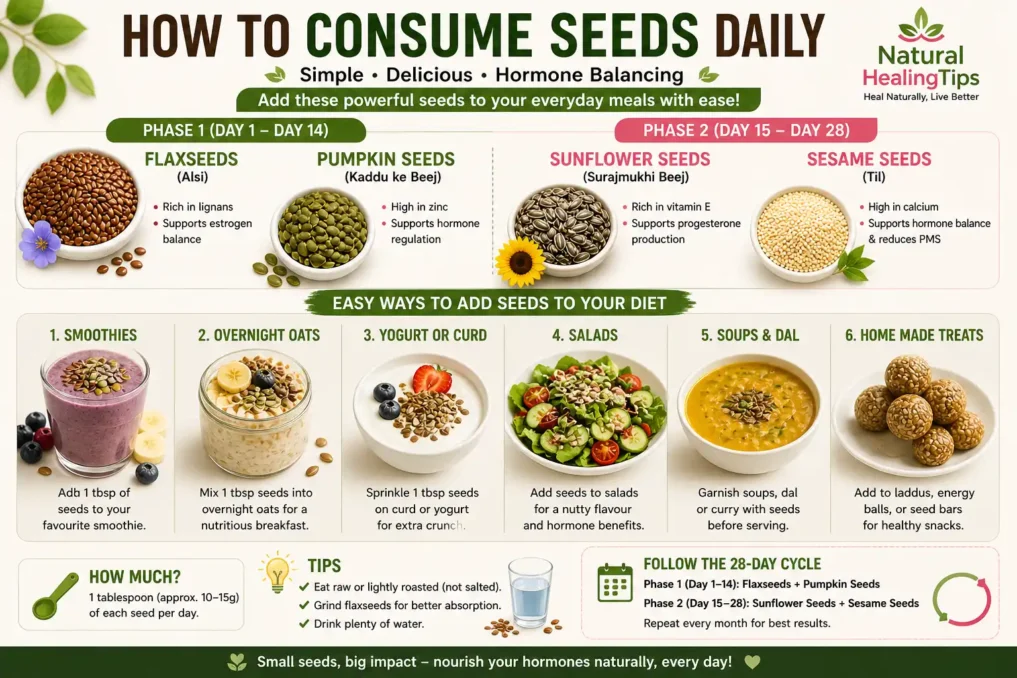
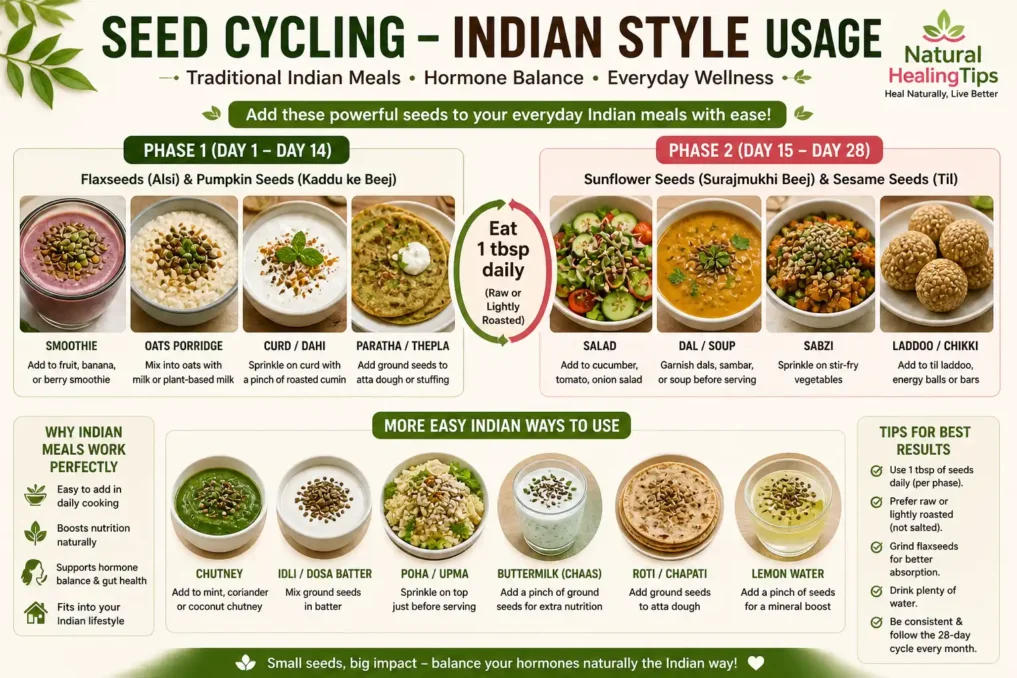
- Add to smoothies
- Sprinkle over oatmeal
- Mix in curd (popular in Indian households)
- Blend into chutneys
Dosage Guidelines
- Stick to 1–2 tablespoons per day
- Avoid excessive intake
When Will You See Results?
You may notice:
- Improved energy within days
- Cycle regulation in 1–3 months
- Reduced PMS symptoms
Diet Restrictions During Seed Cycling
Avoid:
- Excess sugar
- Processed foods
- Trans fats
Side Effects & Precautions
- Start slowly to avoid bloating
- Drink enough water
- Avoid if allergic to seeds
Seed Cycling Diet Integration
Here’s where most people unknowingly sabotage results…
Seed cycling works best when combined with supportive foods.
Phase 1 Diet Support (Estrogen Phase)
Include:
- Leafy greens
- Carrots, beetroot
- Whole grains
- Flaxseed smoothies
👉 To further support your digestion and hormone health, read: Foods That Naturally Clean Your Gut
Phase 2 Diet Support (Progesterone Phase)
Include:
- Healthy fats (ghee, coconut, nuts)
- Warm cooked foods
- Sunflower/sesame laddus (Indian twist)
In traditional Indian kitchens, sesame-based foods are often consumed in winter—this aligns naturally with hormone-supportive nutrition.
👉 For even better results, combine seed cycling with this approach: Anti-Inflammatory Diet for Natural Healing
Sample 7-Day Seed Cycling Meal Plan
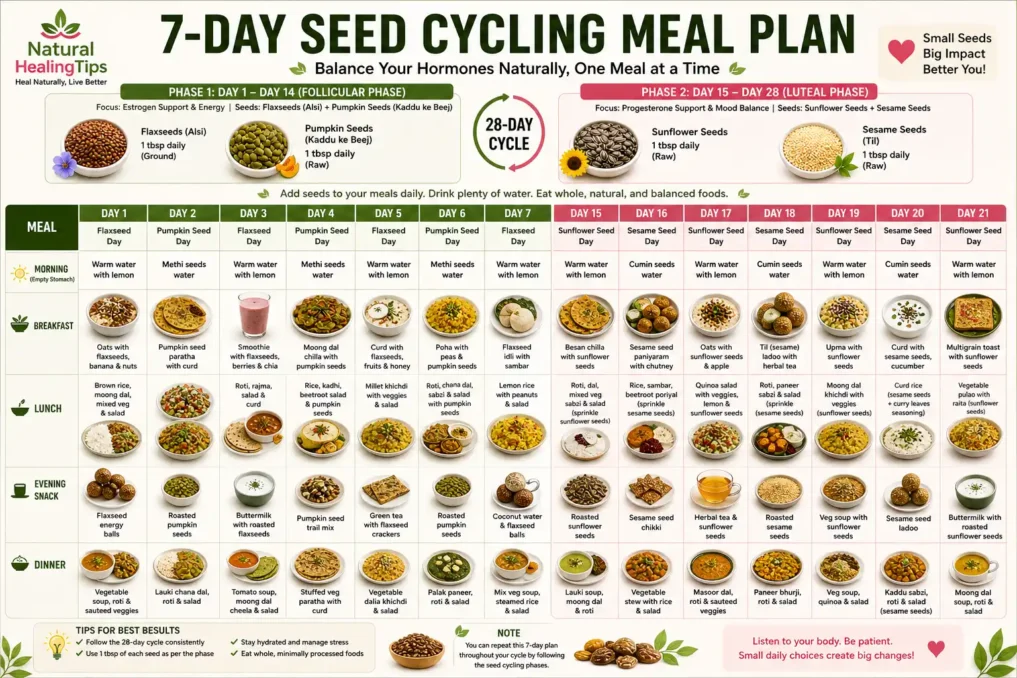
Day 1–3:
- Morning: Flax + pumpkin smoothie
- Lunch: Dal + rice + sabzi
- Evening: Herbal tea
Day 4–7:
- Add seeds to:
- Roti dough
- Curd bowls
- Vegetable stir-fry
Keep it practical, not complicated.
This plan is flexible—you can adjust meals based on your preferences while keeping the seed phases consistent.
7. Does Seed Cycling Actually Work?
Is this just another wellness trend—or is there logic behind it?
- Limited direct clinical trials
- BUT strong nutritional science supports:
- Lignans → estrogen modulation
- Zinc → progesterone production
- Vitamin E → reproductive health
One interesting thing researchers have found is that micronutrient timing can influence hormonal pathways.
While direct clinical studies on seed cycling are limited, the nutrients involved are well-researched.
For example, lignans in flaxseeds influence estrogen metabolism, while zinc in pumpkin seeds plays a key role in progesterone production.
This is why many people experience gradual improvements when consistency is maintained.
Seed Cycling vs Supplements
| Factor | Seed Cycling | Supplements |
|---|---|---|
| Natural | ✅ | ❌ |
| Side effects | Low | Moderate |
| Cost | Affordable | Expensive |
| Long-term use | Safe | Depends |
Common Mistakes
Most people try seed cycling… and unknowingly fail.
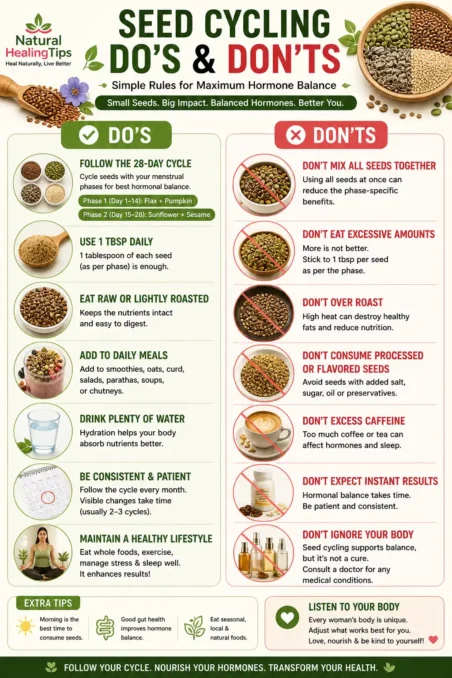
Avoid:
- Not grinding seeds
- Inconsistent usage
- Expecting instant results
- Ignoring diet and sleep
Myths vs Facts
| Myth | Reality |
|---|---|
| Works instantly | Takes 1–3 cycles |
| Only for periods | Helps overall hormones |
| Any seeds work | Specific seeds required |
3-Day Natural Experiment
Want to see how your body responds? Try this 3-day routine…
Day 1–3 Plan:
- Morning: flax + pumpkin seeds
- Avoid processed food
- Drink warm water
Observe:
- Energy levels
- Digestion
- Mood changes
Even small changes during these 3 days can give you insight into how your body responds.
Long-Term Benefits
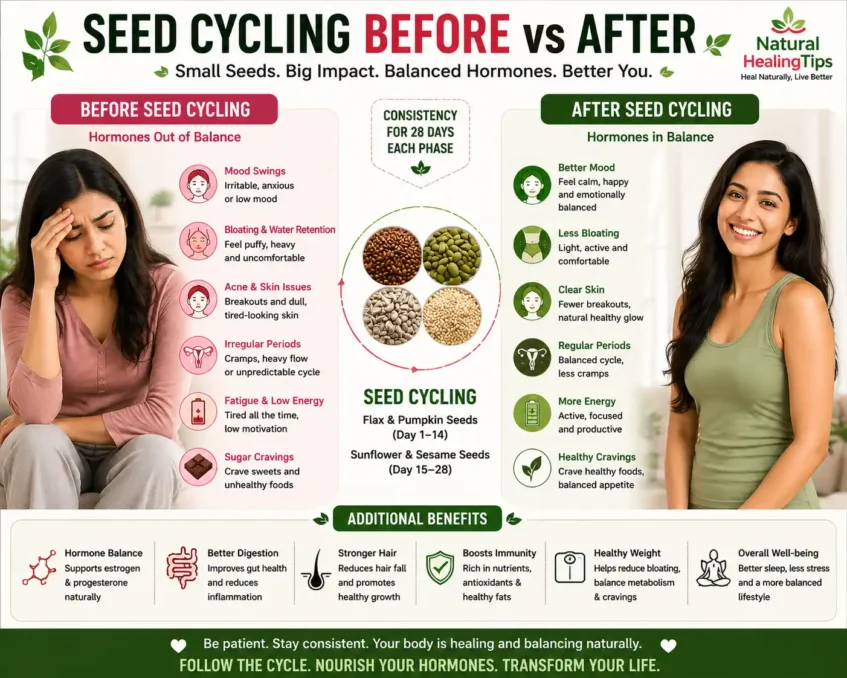
If done consistently, you may notice:
- Stable energy
- Clearer skin
- Better cycle regularity
- Reduced PMS
Sometimes the biggest changes are the ones you feel gradually.
Quick Summary
- Seed cycling uses seeds to balance hormones naturally
- Divided into two phases (estrogen + progesterone support)
- Helps regulate periods, mood, and energy
- Requires consistency for best results
- Safe for most people when used correctly
Expert Note
This guide is based on nutritional science, traditional practices, and practical experience in natural health approaches. While seed cycling can support hormone balance, individual results may vary.
FAQ Section
What really happens if you skip seed cycling days?
Consistency matters. Missing occasional days won’t harm, but regular gaps reduce effectiveness.
Can this actually improve irregular periods?
Yes, many people report improvement—but results vary depending on root causes.
Why do some people notice changes quickly?
Because nutrients like zinc and lignans start working at a cellular level quickly.
Is seed cycling scientifically proven?
Limited clinical studies exist, but nutritional science supports its mechanisms.
Can men do seed cycling?
Yes, but it’s mainly used for female hormonal cycles.
What is the best form of seeds?
Freshly ground seeds are more effective than whole seeds.
How long should I continue seed cycling?
For best results, follow seed cycling for at least 2–3 months to observe noticeable hormonal changes.
Disclaimer
This article is for educational purposes only and should not replace professional medical advice.
Conclusion: Small Seeds, Big Impact
Sometimes the most powerful changes don’t come from drastic interventions…
They come from small, consistent habits.
Sometimes, the body doesn’t need more medication—it needs better rhythm.
Seed cycling is one of those simple habits most people overlook… yet it quietly supports balance from within.
If you stay consistent, listen to your body, and make small changes daily—your results may surprise you.
This might be the simplest place to start.
Always consult a qualified healthcare provider if you have existing medical conditions.