

Home Remedies for Acidity & Heartburn (Simple, Real-World Relief That Actually Helps)
If you’ve ever finished a meal and felt that slow, uncomfortable burn rising from your stomach into your chest, you already know how distracting heartburn can be. It doesn’t always come after junk food either. Sometimes it shows up after a normal dinner, a rushed lunch, or even a cup of tea taken too late.
For many people, acidity isn’t a serious illness — it’s a signal from the body that something in the daily routine needs adjusting. The reassuring part is that mild acidity often improves with small, consistent changes and a few dependable kitchen remedies.
This article focuses on practical home remedies for acidity & heartburn — not miracle cures, but realistic solutions people actually use in everyday life.
What Causes That Burning Feeling?
Inside your stomach, acid helps break down food. Normally, this acid stays contained. But when the stomach is overly full, digestion slows, or pressure increases, some acid can move upward into the food pipe.
Because the food pipe isn’t built to handle acid, even a small amount can cause irritation. That irritation is what you feel as heartburn.
↗ Learn more about medically recognized symptoms and causes of acid reflux: Mayo Clinic – GERD Symptoms and Causes
Difference Between Acidity, Acid Reflux & GERD
Many people use the terms acidity, heartburn, and acid reflux interchangeably, but they are slightly different.
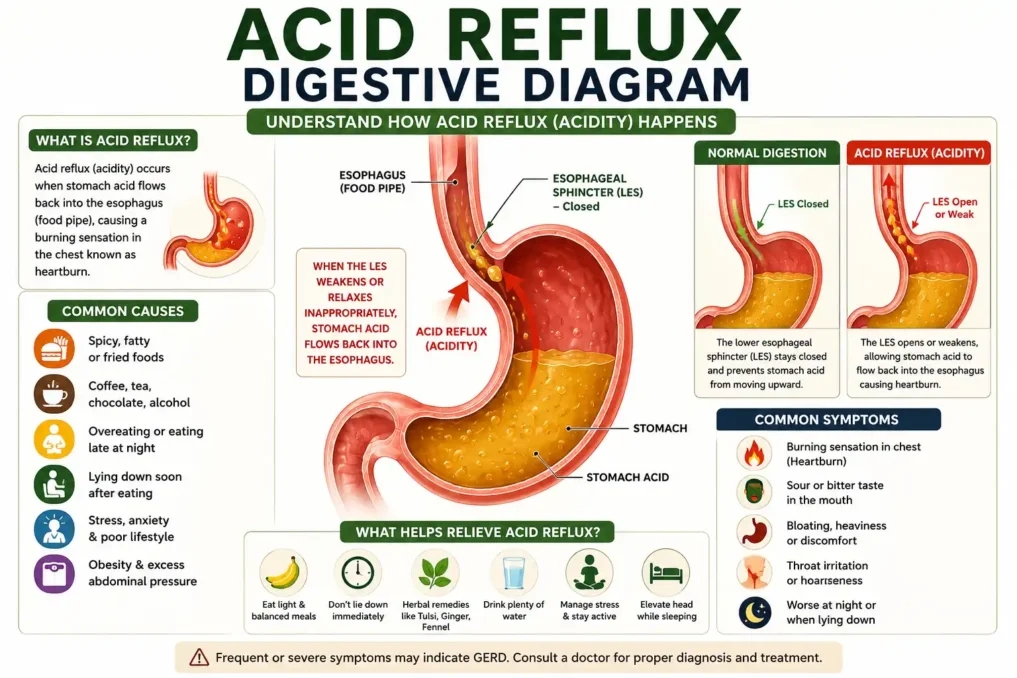
| Condition | What It Means |
|---|---|
| Acidity | Excess stomach acid causing irritation |
| Heartburn | Burning sensation in the chest due to acid |
| Acid Reflux | Acid moving upward into the food pipe |
| GERD | Long-term chronic acid reflux condition |
Occasional acidity is common. But if symptoms occur multiple times every week, it may indicate GERD (Gastroesophageal Reflux Disease).
👉 Persistent reflux should not be ignored because long-term irritation may affect the food pipe lining.
↗ Cleveland Clinic explains how acid reflux and heartburn develop in everyday life: Cleveland Clinic – Acid Reflux & GERD Overview
Signs It’s Likely Acidity
- Burning sensation in chest after meals
- Sour taste in the mouth
- Frequent burping or heaviness
- Feeling uncomfortable when lying down
- Mild nausea or bloating
- Night-time throat irritation
Occasional symptoms happen to almost everyone. Frequent symptoms deserve medical advice.
Symptoms That Should Not Be Ignored
While mild acidity is usually manageable at home, certain symptoms may signal a more serious digestive condition.
Seek medical attention if you experience:
- Burning with severe chest pressure
- Difficulty swallowing food
- Vomiting blood
- Black-colored stools
- Persistent cough with reflux
- Sudden unexplained weight loss
- Continuous throat irritation
These symptoms may require evaluation beyond simple home remedies.
Everyday Reasons Acidity Happens
In most cases, acidity connects more to habits than disease.
Meal-related causes
- Eating too quickly
- Very oily or spicy food
- Drinking tea/coffee on an empty stomach
- Heavy late-night dinners
- Overeating after long gaps
Routine-related causes
- Sleeping soon after eating
- Sitting for long hours without movement
- Stressful schedules or irregular sleep
- Smoking or frequent alcohol
Physical factors
- Pregnancy
- Extra abdominal weight
- Certain medications
- Chronic reflux disorder
Once you notice your personal trigger, managing acidity becomes much easier.
👉 Digestive discomfort often begins with weak gut habits: Natural Remedies for Digestive Problems
Practical Home Remedies for Acidity & Heartburn
Instead of trying everything at once, pick one or two remedies and see how your body responds. What works quickly for one person may feel neutral for another.
Cold Milk When Burning Starts Suddenly
A small glass of plain cold milk often feels soothing because it temporarily buffers acid and cools irritation.
Sip slowly rather than drinking it all at once.
Jeera Water After Heavy Food
Cumin seeds are commonly used in home cooking for digestion. Many people find cumin water helpful after oily or festive meals.
Boil a teaspoon of cumin in water, cool slightly, and sip warm.
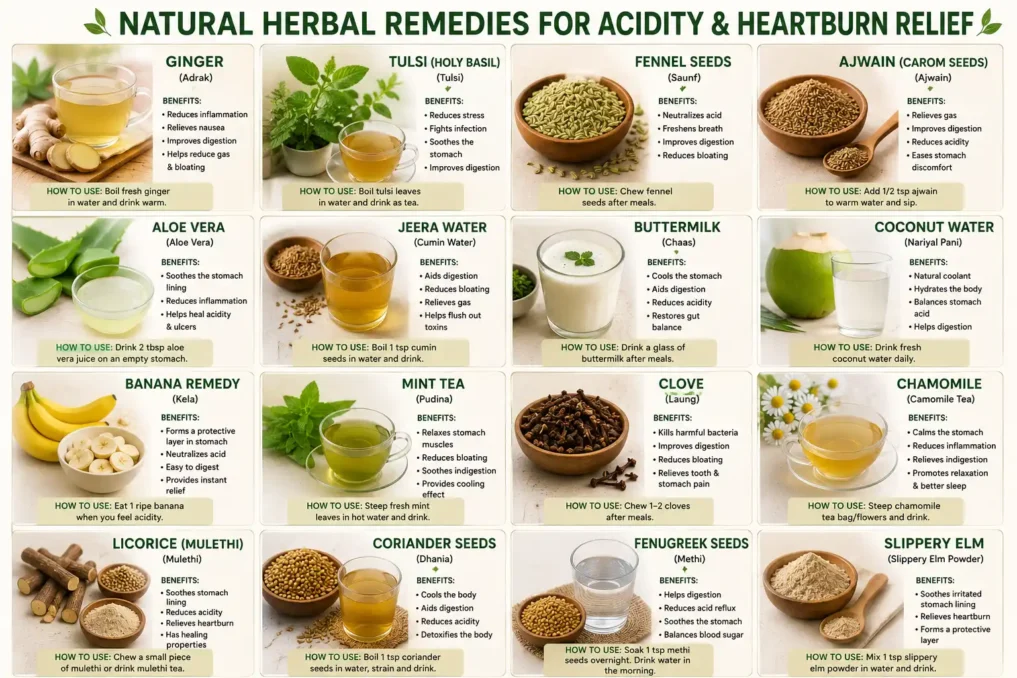
A Few Tulsi Leaves for Mild Discomfort
Tulsi is often used in traditional home remedies when the stomach feels unsettled.
Chew a few fresh leaves or make a light infusion in hot water.
Ginger Before Meals
If meals often feel heavy, a little ginger before eating may help digestion feel smoother.
Add thin slices to warm water or tea.
Banana as a Gentle Snack
A ripe banana is filling but mild, which makes it a comfortable option when acidity tends to flare between meals.
Fennel Seeds After Eating
Chewing fennel seeds after food is a long-standing habit in many households because it can reduce bloating and freshen the mouth at the same time.
Buttermilk in the Afternoon
Light buttermilk with a pinch of roasted cumin often feels easier on the stomach than heavier dairy products.
Coconut Water for Heat-Related Acidity
On hot days or during dehydration, coconut water can feel calming and refreshing without burdening digestion.
Ajwain Water for Gas and Heaviness
If acidity comes with bloating, warm ajwain water is a common household fix.
Boil half a teaspoon in water and drink warm.
Aloe Vera Juice (Occasional Use Only)
Food-grade aloe vera juice is sometimes used in small diluted quantities when irritation feels persistent. It’s best taken occasionally rather than daily unless advised.
Clove for Sudden Gas-Related Burning
Slowly sucking on a clove is a simple traditional trick some people rely on when discomfort starts unexpectedly.
Mint Tea After Oily Meals
A light mint tea can feel refreshing when the stomach feels overfull.
Rice Gruel on Sensitive Days
When digestion feels repeatedly irritated, very simple foods help reset things. Warm rice gruel is gentle, hydrating, and easy to tolerate.
Smaller Dinner Portions
Not technically a remedy, yet one of the most effective changes. Large dinners are among the most common acidity triggers.
Staying Upright After Meals
Even sitting upright or taking a slow walk for 15–20 minutes after eating can noticeably reduce reflux episodes.
Fastest Home Remedies for Immediate Acidity Relief
Sometimes acidity appears suddenly after overeating, spicy meals, or late-night food. These quick remedies may help calm symptoms temporarily.
1. Drink Lukewarm Water Slowly
Warm water may help dilute stomach acid and improve digestion flow.
2. Sit Upright Immediately
Avoid lying down after symptoms begin. Upright posture reduces upward acid movement.
3. Banana for Instant Comfort
Bananas are naturally soft and gentle on the stomach lining.
4. Fennel Seeds After Meals
Fennel may help reduce bloating and digestive heaviness.
5. Cold Milk for Temporary Cooling Relief
Plain cold milk can soothe burning sensations for some individuals.
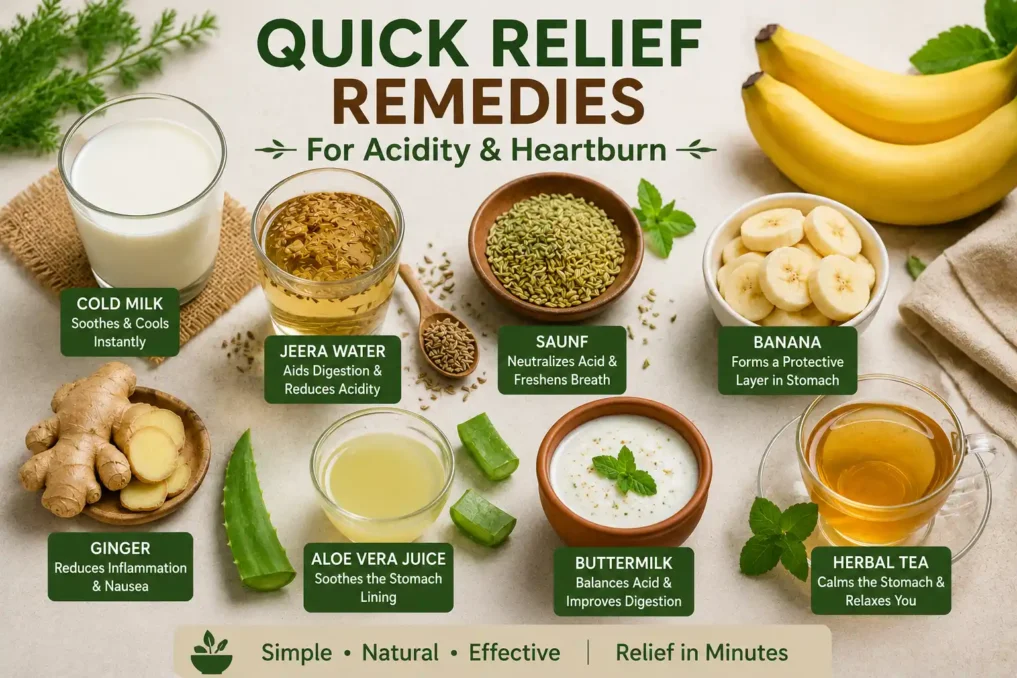
👉 Quick relief methods work best for occasional symptoms, not chronic reflux.
👉 If acidity appears after overeating, these simple remedies may also help: Home Remedies for Feeling Heavy After Eating
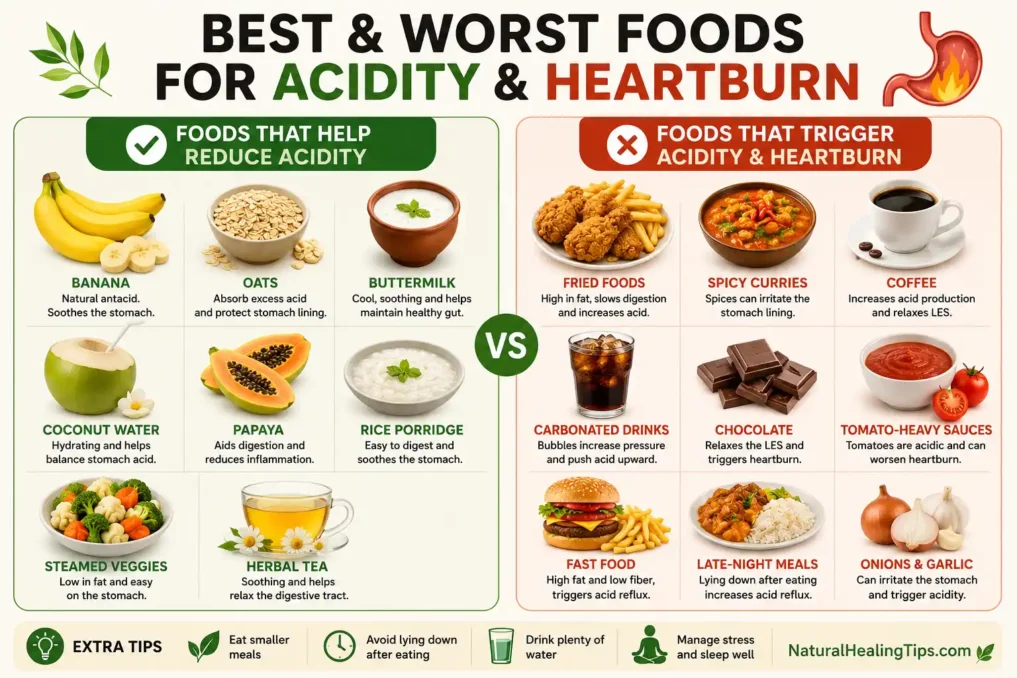
Foods That Usually Feel Comfortable
When acidity is active, many people feel better sticking to simple meals like:
- Soft porridge or oats
- Ripe banana or papaya
- Plain rice with dal
- Steamed vegetables
- Light soups
- Buttermilk
- Whole grains
👉 Certain foods naturally support smoother digestion and may reduce stomach irritation: Gut Health Foods for Better Digestion
- Warm water
- Jeera water
- Buttermilk with roasted cumin
- Coconut water
- Herbal teas
- Fennel-infused water
- Rice gruel
- Light ginger tea
Warm Water
Warm water may help digestion feel smoother and can feel gentler on the stomach than very cold drinks.
Jeera Water
Cumin water is commonly used after heavy meals to reduce digestive heaviness and bloating naturally.
Buttermilk
Light buttermilk with a pinch of roasted cumin often feels cooling and comfortable during mild acidity.
Coconut Water
Coconut water supports hydration and may feel soothing during heat-related acidity or dehydration.
Herbal Tea
Mild herbal teas like chamomile or tulsi tea are often preferred over strong caffeinated drinks.
Drinks to Limit During Acidity
- Carbonated soft drinks
- Strong coffee on an empty stomach
- Excess tea
- Energy drinks
- Packaged sugary beverages
- Alcohol
👉 Choosing simple, hydration-supporting drinks throughout the day may help reduce recurring acidity episodes naturally.
👉 Some traditional herbal drinks may also support digestion and gut comfort naturally: Indian Herbal Waters for Digestion
↗ Johns Hopkins Medicine explains how dietary choices can affect reflux symptoms: Johns Hopkins Medicine – GERD Diet and Lifestyle Tips
Best Breakfast for Acidity-Prone People
Morning acidity is common when the stomach remains empty for long periods.
Simple breakfast choices that usually feel gentle include:
- Oats with banana
- Idli with light chutney
- Plain poha
- Whole wheat toast
- Papaya
- Rice porridge
- Light upma
- Warm herbal tea
Skipping breakfast often worsens acid production.
👉 Starting the day with light, balanced meals can reduce acidity episodes throughout the day.
👉 Morning digestive habits can strongly influence acid production throughout the day: Morning Routine for Better Digestion Naturally
Foods That Commonly Trigger Heartburn
If symptoms repeat, try reducing:
- Deep-fried snacks
- Heavy restaurant gravies
- Very spicy pickles
- Coffee on empty stomach
- Carbonated drinks
- Chocolate desserts
- Late-night heavy meals
Keeping track for a week often reveals clear patterns.
| Foods That May Help Reduce Acidity | Foods That Commonly Trigger Acidity |
|---|---|
| Ripe bananas | Deep-fried foods |
| Oats and soft porridge | Very spicy curries |
| Buttermilk | Carbonated soft drinks |
| Papaya and melon | Coffee on an empty stomach |
| Plain rice with dal | Heavy restaurant gravies |
| Steamed vegetables | Late-night heavy dinners |
| Coconut water | Chocolate desserts |
| Herbal teas | Excess packaged snacks |
| Whole grains | Very oily fast food |
| Warm jeera water | Excess alcohol and smoking |
👉 Keeping track of your personal food triggers can make acidity management much easier over time.
↗ Johns Hopkins Medicine explains how food and lifestyle habits influence acid reflux symptoms: Johns Hopkins Medicine – GERD Diet and Lifestyle Tips
👉 Many people with acidity also experience bloating and digestive gas after meals: Foods That Stop Bloating Immediately at Home
↗ Johns Hopkins Medicine explains how lifestyle habits affect reflux symptoms: Johns Hopkins Medicine – GERD Diet and Lifestyle Tips
Worst Habits That Trigger Acidity Daily
Many people focus only on food while ignoring habits that worsen reflux.
Common acidity-triggering habits:
- Sleeping immediately after dinner
- Drinking too much tea or coffee
- Long gaps between meals
- Eating too quickly
- Excess mobile use while eating
- Overeating during dinner
- Frequent packaged snacks
- Stress eating
Even healthy foods can trigger discomfort when eating habits become irregular.
Why Acidity Happens More at Night
Many people notice that acidity and heartburn feel worse during the night, especially after dinner. This usually happens because digestion slows down while the body rests, making it easier for stomach acid to move upward into the food pipe.
Common reasons night-time acidity happens
- Sleeping soon after dinner
- Heavy or spicy late-night meals
- Lying flat immediately after eating
- Large portion sizes at dinner
- Drinking tea or coffee late in the evening
- Reduced movement after meals
Why lying down worsens acidity
During the day, gravity naturally helps keep stomach acid lower in the stomach. When lying flat, acid can travel upward more easily, especially if the stomach feels overly full.
Simple ways to reduce night-time acidity
- Finish dinner 2–3 hours before sleep
- Choose lighter evening meals
- Sleep with the head slightly elevated
- Avoid overeating at dinner
- Take a gentle walk after meals
- Reduce late-night snacking
👉 Small evening routine changes often make a noticeable difference in reducing night-time heartburn naturally.
↗ The NHS also provides guidance on managing heartburn and reflux symptoms naturally: NHS – Heartburn and Acid Reflux Guide
Habits That Prevent Acidity Long-Term
Home remedies help in the moment, but habits prevent recurrence.
Keep meal timing steady
The digestive system prefers routine.
Eat until satisfied, not full
Stopping slightly early reduces stomach pressure.
Give dinner time to digest
Allow 2–3 hours before lying down.
Elevate your head slightly while sleeping
This small adjustment helps many people avoid night reflux.
Move daily
Even gentle walking improves digestion rhythm.
Reduce rushed eating
Fast meals often mean swallowed air and poor digestion.
↗ The NHS also provides guidance on managing heartburn and reflux symptoms naturally: NHS – Heartburn and Acid Reflux Guide
Best Sleeping Position for Acid Reflux
Night-time acidity often worsens because stomach acid moves upward more easily while lying flat.
Helpful sleeping adjustments:
- Sleep slightly elevated
- Use an extra pillow if needed
- Avoid sleeping immediately after dinner
- Left-side sleeping may reduce reflux symptoms for some people
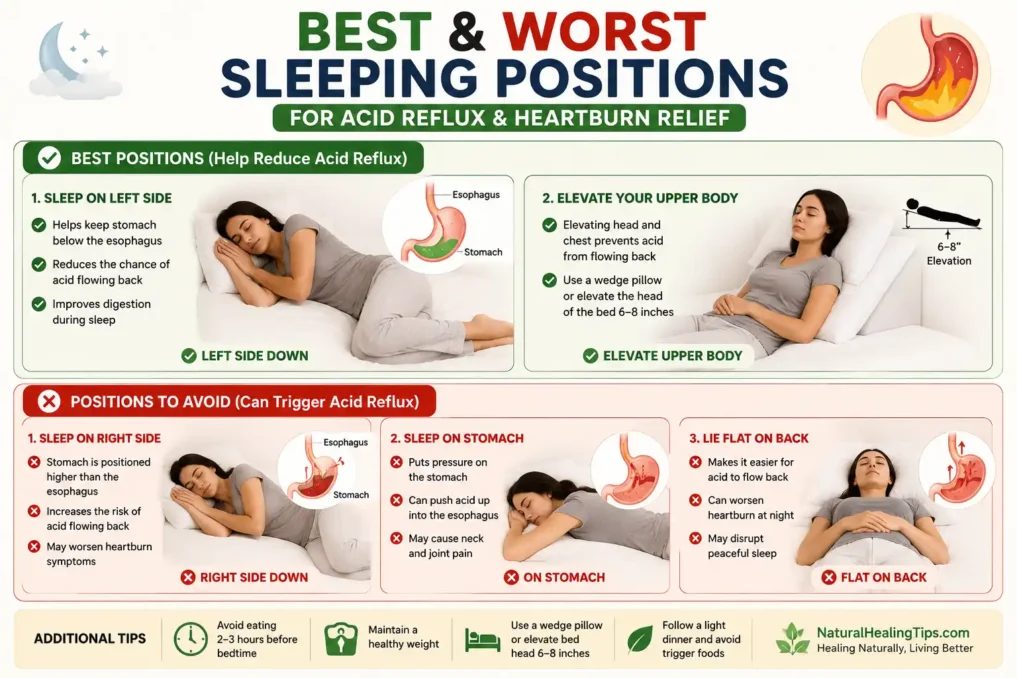
Small posture changes at night can significantly reduce morning burning sensations.
When to Seek Medical Advice
Natural remedies are suitable for occasional discomfort. Consult a professional if:
- Heartburn happens several times weekly
- Swallowing feels difficult
- Nausea or vomiting persists
- There’s unexplained weight loss
- Chest pain feels severe or unusual
Early evaluation prevents complications.
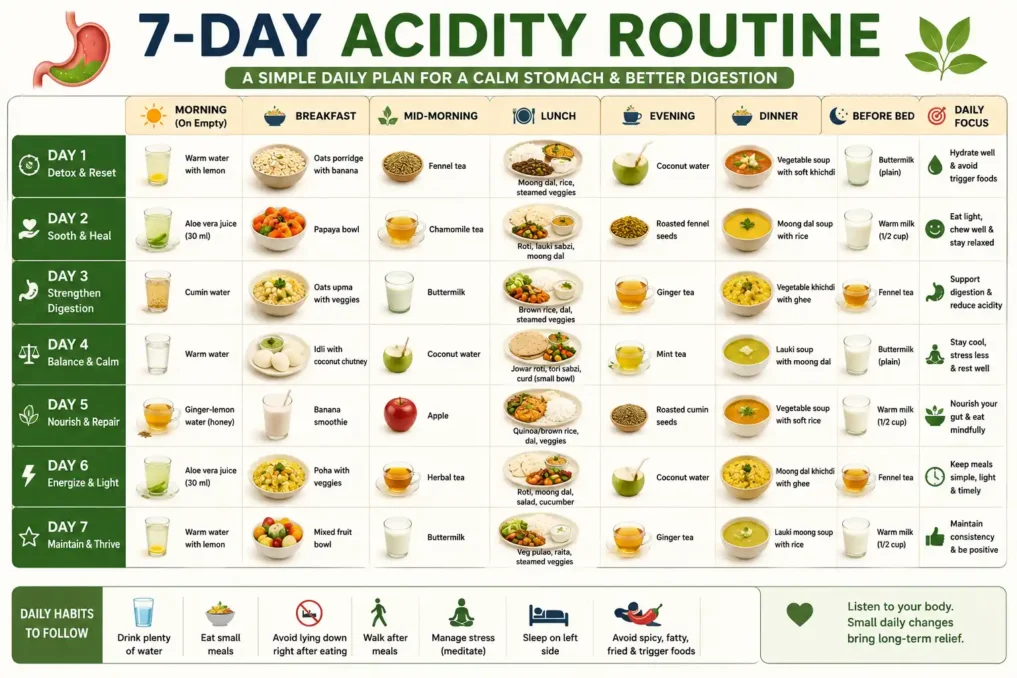
7-Day Natural Routine to Reduce Acidity
Morning
- Warm water
- Light breakfast
- Avoid tea on empty stomach
Afternoon
- Buttermilk or coconut water
- Avoid overeating
Evening
- Light snacks instead of fried foods
Dinner
- Smaller portions
- Eat 2–3 hours before sleep
Before Bed
- Gentle walk
- Avoid lying flat immediately
Consistency matters more than strict dieting.
FAQs – Home Remedies for Acidity & Heartburn
1. What gives quick relief from acidity at home?
Many people feel temporary relief from cold milk, fennel seeds, or buttermilk.
2. Is occasional acidity normal?
Yes, especially after heavy or irregular meals. Frequent symptoms need medical advice.
3. Why does heartburn worsen at night?
Late dinners and lying flat soon after eating are common reasons.
4. Can stress affect acidity?
Yes. Stress can influence digestion speed and acid production.
5. Do I need to avoid spicy food completely?
Not always. Portion size, timing, and overall routine matter just as much.
6. Which fruit is best for acidity?
Banana, papaya, melon, and sweet apples are usually considered gentle on the stomach.
7. Is lemon water good or bad for acidity?
Some people tolerate diluted lemon water well, while others feel irritation. Reactions vary individually.
8. Can empty stomach cause acidity?
Yes. Long gaps without food may increase acid irritation in sensitive individuals.
9. Is curd good for acid reflux?
Plain curd or buttermilk feels soothing for many people when consumed moderately.
10. How long does acidity usually last?
Mild acidity may settle within minutes to a few hours depending on the trigger and digestion.
Final Thoughts
Acidity usually isn’t about one wrong food — it’s about patterns. Long gaps between meals, rushed eating, heavy dinners, and stressful schedules often combine to trigger symptoms.
The most reliable solution is rarely dramatic. It’s usually a mix of steady meal timing, moderate portions, calm eating, and a few gentle home remedies for acidity & heartburn that suit your body.
Small adjustments done consistently tend to work better than strict short-term fixes. And when symptoms feel frequent or unusual, getting medical advice early is always the safest step.
⚕️ Medical Disclaimer
This article is for educational purposes only and is not intended to diagnose, treat, cure, or prevent any disease. Always consult a qualified healthcare professional before beginning any herbal regimen.






5 thoughts on “Home Remedies for Acidity & Heartburn”