

Foods That Stop Bloating Immediately at Home Naturally
Introduction: When Your Stomach Suddenly Feels Heavy
You finish a meal that looked perfectly normal — maybe rice, curry, or a sandwich — and within minutes your stomach feels tight, swollen, and uncomfortable.
Your jeans feel tighter.
You may start wondering:
Why does my stomach feel so full suddenly?
Did I eat the wrong food?
Is there something simple I can eat to fix this?
Bloating is one of the most common digestive complaints in the world. It happens to people after heavy meals, during stressful days, or sometimes for no obvious reason at all.
Certain foods that stop bloating immediately at home can help reduce gas, stomach discomfort, and digestive heaviness naturally.
Many readers tell us the same thing:
“The moment bloating starts, I just want something natural that works quickly.”
The good news is that your kitchen likely already contains several foods and natural remedies that can calm the digestive system and reduce bloating naturally.
Many people search for foods that stop bloating immediately when their stomach suddenly feels tight or uncomfortable after eating.
And in many traditional households — especially in India — these remedies have been used for generations.
Let’s explore what actually helps.
Why Bloating Happens in the First Place
Bloating happens when excess gas, water retention, or slow digestion causes the stomach to feel swollen and uncomfortable. Many people experience bloating after eating too quickly, consuming processed foods, overeating, or eating foods that are difficult to digest.
Common causes of bloating include:
- Excess salt intake
- Constipation
- Food intolerances
- Poor gut bacteria balance
- Carbonated drinks
- Hormonal fluctuations
- Eating too fast
- Digestive disorders
↗ Learn more about causes and symptoms of bloating from Mayo Clinic
Understanding the root cause of bloating helps you choose the right foods for faster relief.
👉 Learn how to improve digestion naturally with home remedies: Natural Remedies for Digestive Problems
Is Bloating Normal?
Yes — occasional bloating is completely normal.
It usually happens when gas builds up inside the digestive system during digestion.
Common causes include:
- eating too quickly
- consuming gas-producing foods
- swallowing excess air
- temporary digestive imbalance
- mild food sensitivities
- hormonal changes
According to digestive health experts, most cases of bloating are temporary and harmless.
However, frequent bloating may indicate that the digestive system needs better food choices, hydration, or lifestyle adjustments.
Understanding why bloating happens is the first step to fixing it.
Digestive symptoms often appear together. Bloating, heaviness, and fatigue after meals may all be linked to how well the gut processes food.
The Science Behind Bloating and Gas
Bloating is usually the result of gas accumulation or slowed digestion. Several biological processes contribute to this.
1. Gas Production During Digestion
When food reaches the intestines, gut bacteria help break down carbohydrates and fiber.
This fermentation process produces gases such as:
- hydrogen
- methane
- carbon dioxide
Small amounts are normal, but excess gas can stretch the intestinal walls and cause discomfort.
Digestive gas and bloating are extremely common and usually harmless, although persistent symptoms should be evaluated by a healthcare professional.
2. Slow Digestive Motility
If food moves slowly through the digestive tract, fermentation increases.
This can happen due to:
- overeating
- lack of fiber balance
- dehydration
- sedentary lifestyle
Slow digestion often leads to both bloating and heaviness.
3. Food Sensitivities
Certain foods may trigger temporary bloating in sensitive individuals.
Common triggers include:
- dairy
- beans
- carbonated drinks
- high-fat meals
- artificial sweeteners
Not everyone reacts the same way.
4. Imbalance in Gut Bacteria
The gut contains trillions of bacteria that help digestion.
If this balance changes — due to stress, antibiotics, or poor diet — the digestive system may produce more gas.
5. Swallowing Air
Eating too quickly or drinking through straws can introduce air into the digestive system.
This air often leads to sudden bloating shortly after meals.
6. Hormonal Changes
Hormones influence digestion.
Many people experience bloating during:
- menstruation
- hormonal fluctuations
- stressful periods
7. Fluid Retention
Sometimes bloating is not gas but temporary water retention in the abdomen.
This can occur after high-salt meals.
Understanding these mechanisms helps explain why certain foods and natural remedies can calm the digestive system quickly.
When Should You Be Concerned?
Occasional bloating is normal.
However, health organizations such as the World Health Organization, NHS, and Mayo Clinic recommend seeking medical advice if bloating occurs with:
- severe abdominal pain
- persistent vomiting
- unexplained weight loss
- blood in stool
- long-lasting digestive discomfort
While occasional bloating is harmless, persistent symptoms should be evaluated by a healthcare professional
If symptoms are frequent or worsening, it is best to consult a healthcare professional.
How Certain Foods Reduce Bloating Naturally
Some foods work as natural anti-bloating remedies because they:
- Reduce gas formation
- Improve digestion
- Support healthy gut bacteria
- Reduce inflammation
- Flush out excess sodium and water
- Improve bowel movement regularity
Foods rich in potassium, probiotics, digestive enzymes, fiber, and anti-inflammatory compounds are especially effective for quick bloating relief.
Foods That Stop Bloating Immediately
Many natural foods support digestion and help reduce gas buildup.
Here are some of the most effective ones.
1. Ginger
Ginger is one of the most effective natural remedies for bloating and digestive discomfort. It contains compounds called gingerols that help relax intestinal muscles and improve digestion.
Ginger is one of the best foods that stop bloating immediately at home because it helps relax digestive muscles and reduce trapped gas.
Benefits of ginger for bloating:
- Reduces trapped gas
- Speeds up stomach emptying
- Relieves nausea
- Improves gut motility
- Reduces stomach inflammation
How to use:
Drink warm ginger tea after meals or chew a small slice of fresh ginger with honey.

👉 Try these natural kitchen ingredients that help reduce gas quickly: Kitchen Ingredients That Reduce Gas Fast
2. Fennel Seeds
In many Indian households, fennel seeds are eaten after meals.
They contain compounds that help:
- relax digestive muscles
- reduce intestinal gas
- stimulate digestion
Chewing half a teaspoon after meals can help relieve discomfort.
3. Yogurt
Plain probiotic yogurt contains beneficial bacteria that support gut health and reduce bloating caused by digestive imbalance and one of the foods that stop bloating immediately at thome naturally
Choose:
- Unsweetened yogurt
- Greek yogurt
- Homemade curd with live cultures
Avoid flavored yogurts with excess sugar because they may worsen bloating.

👉 Discover the best gut-friendly foods that support healthy digestion: Gut Health Foods for Better Digestion
4. Peppermint Tea
Peppermint helps relax the digestive tract.
Research suggests peppermint may reduce symptoms of bloating and gas.
Warm peppermint tea often works quickly for stomach discomfort.
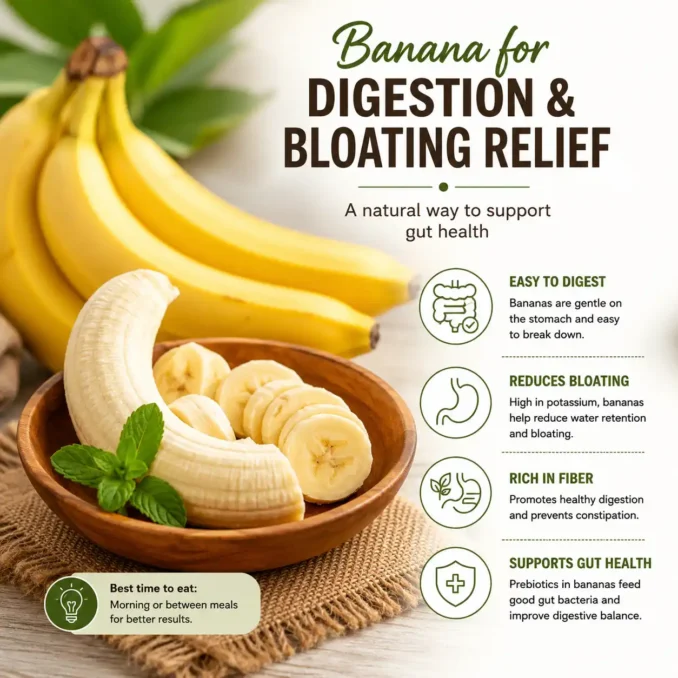
5. Banana
Bananas are rich in potassium, which helps balance sodium levels and reduce water retention — a common cause of bloating.
They also contain soluble fiber that supports healthy digestion and regular bowel movements.
Best time to eat:
Morning or between meals for maximum digestive comfort.
6. Papaya
Papaya contains an enzyme called papain, which helps break down proteins.
This improves digestion and prevents food from sitting too long in the stomach.
7. Cucumber
Cucumber is high in water and has mild anti-inflammatory properties.
It helps hydrate the body and reduce abdominal swelling.
8. Rice
When the stomach feels irritated, simple foods work best.
Plain rice is easy to digest and produces minimal gas.
9. Lemon Water
Warm lemon water gently stimulates digestive juices.
This can help food move smoothly through the digestive tract.
↗ Learn how hydration affects digestion from Johns Hopkins Medicine
10. Turmeric
Turmeric contains curcumin, known for anti-inflammatory effects.
Many traditional remedies use turmeric milk to calm digestion.
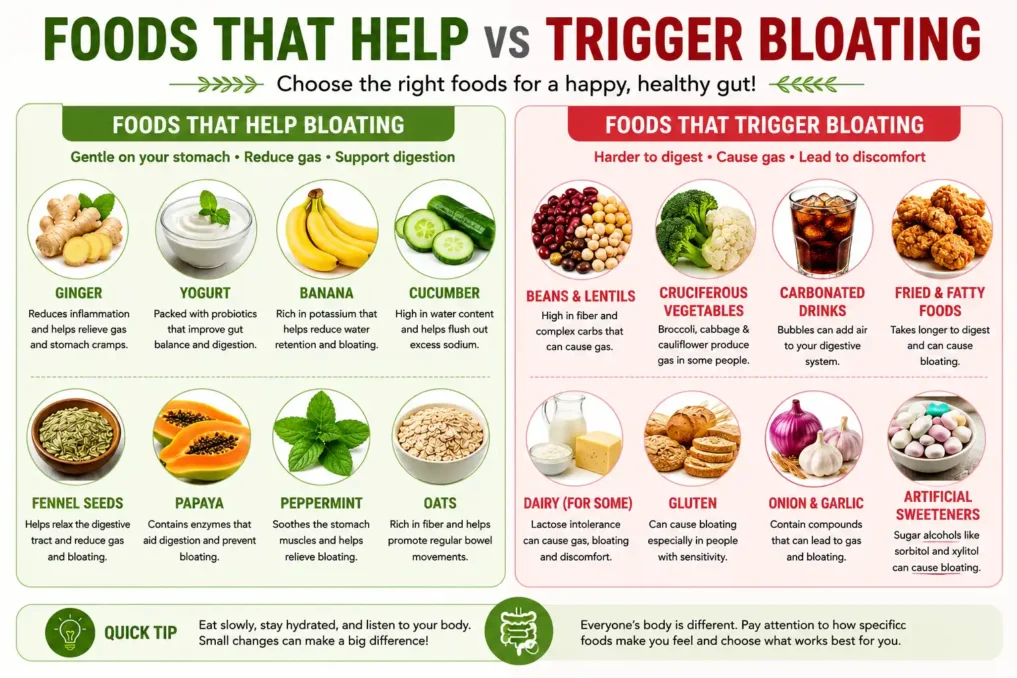
Foods That Help vs Foods That Trigger Bloating
| Foods That Reduce Bloating | Foods That Can Worsen Bloating |
|---|---|
| Ginger | Soda |
| Banana | Fried foods |
| Yogurt | Processed snacks |
| Cucumber | Excess salt |
| Papaya | Artificial sweeteners |
| Peppermint tea | Alcohol |
| Fennel seeds | Fast food |
| Oats | Heavy dairy products |
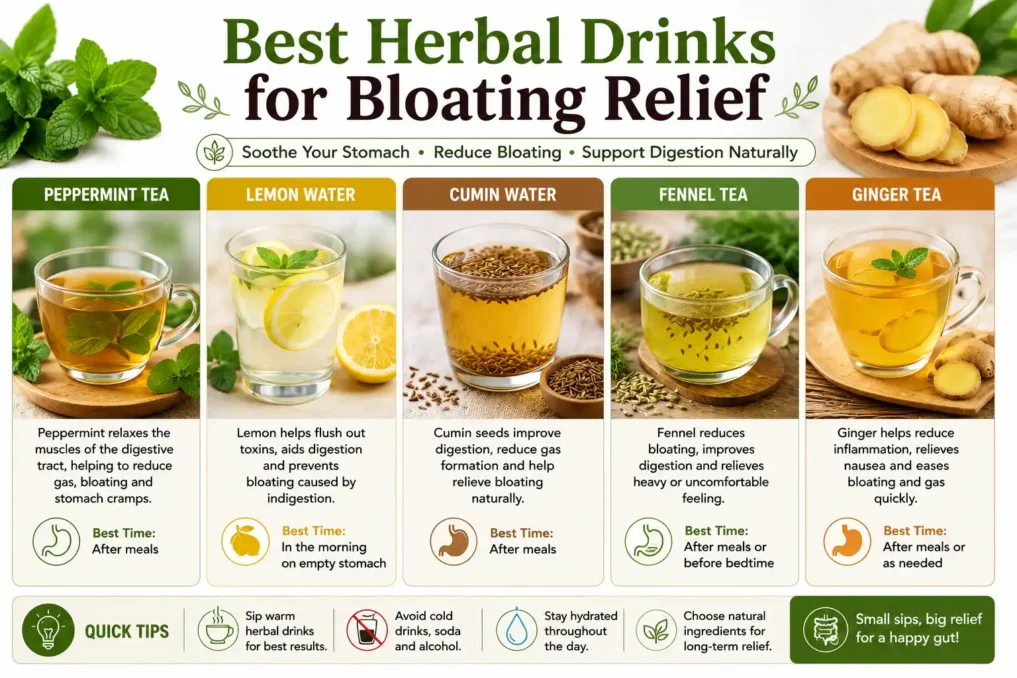
What to Drink for Immediate Bloating Relief
Herbal drinks combined with foods that stop bloating immediately at home may provide faster digestive relief.
Peppermint Tea
Warm Lemon Water
Warm lemon water can stimulate digestion and help reduce feelings of fullness and heaviness.
Drink one glass in the morning for better digestive flow.
Jeera Water
Cumin water is widely used in traditional remedies for improving digestion and reducing gas buildup.
Boil 1 teaspoon of cumin seeds in water and drink it warm.
Why Bloating Gets Worse at Night
Many people notice more bloating in the evening because digestion naturally slows down later in the day.
Nighttime bloating can also happen due to:
- Late-night eating
- High-salt dinners
- Carbonated drinks
- Overeating
- Poor sleep habits
To reduce nighttime bloating:
- Eat dinner at least 2–3 hours before bed
- Avoid fried and processed foods
- Drink herbal tea after meals
- Take a short walk after dinner
Eating the right foods that stop bloating immediately at home during dinner may reduce nighttime stomach discomfort.
👉 Follow this healthy morning routine to support digestion and reduce bloating naturally: Morning Routine for Better Digestion Naturally
Home Remedies for Bloating and Gas
Beyond food choices, several natural habits can help relieve bloating.
1. Drink Warm Water
Cold drinks sometimes slow digestion.
Warm water helps stimulate digestive movement.
2. Take a Gentle Walk
Light walking after meals encourages intestinal movement and gas release.
Even 10 minutes of walking can help.
3. Avoid Carbonated Drinks
Carbonated beverages contain dissolved gas.
These gases expand in the stomach and increase bloating.
4. Eat Slowly
Eating quickly leads to swallowing air.
Chew food thoroughly to improve digestion.
5. Use Digestive Spices
Traditional digestive spices include:
- cumin
- ginger
- fennel
- coriander
Many cultures include these spices in meals specifically to support digestion.
6. Reduce Ultra-Processed Foods
Highly processed foods often contain additives that irritate digestion.
Whole foods are generally easier to digest.
7. Stay Hydrated
Dehydration can slow digestion and worsen bloating.
Aim for steady hydration throughout the day.
Why Certain Foods Cause Bloating
While some foods calm digestion, others can easily trigger bloating in sensitive individuals.
Understanding these triggers helps prevent the problem before it begins.
Many readers notice that bloating often appears after specific meals rather than randomly.
Let’s look at some common food groups that may contribute to gas buildup.
High-Fiber Foods
Fiber is essential for digestive health, but a sudden increase can overwhelm the digestive system.
Foods such as:
- beans
- lentils
- chickpeas
- broccoli
- cabbage
contain complex carbohydrates that gut bacteria ferment, producing gas.
This doesn’t mean these foods are unhealthy.
It simply means the body sometimes needs time to adjust.
Gradually increasing fiber intake usually reduces this problem.
Dairy Products
Many adults have some degree of lactose intolerance.
Lactose is the sugar found in milk.
If the body lacks enough of the enzyme lactase, digestion becomes incomplete and bacteria ferment the sugar.
This fermentation can lead to:
- bloating
- gas
- stomach discomfort
Yogurt is often easier to digest because fermentation partially breaks down lactose.
Carbonated Beverages
Soft drinks and sparkling water contain dissolved carbon dioxide.
Once inside the stomach, this gas expands.
That expansion can cause:
- abdominal pressure
- belching
- temporary bloating
Replacing carbonated drinks with herbal teas or infused water can help significantly.
Fried and Fatty Foods
Heavy meals high in fat digest more slowly.
When food stays longer in the stomach and intestines, it increases the chance of gas formation.
Common examples include:
- fried snacks
- fast food
- greasy restaurant meals
Eating smaller portions of these foods often reduces digestive discomfort.
Artificial Sweeteners
Sweeteners such as sorbitol and xylitol are difficult for the body to digest.
They are frequently found in:
- sugar-free candies
- chewing gum
- diet foods
These compounds can ferment in the intestines and produce gas.
These foods that stop bloating immediately can be easily added to daily meals to support better digestion.
Lifestyle Habits That Reduce Bloating
Food is only one part of the digestive picture.
Daily habits also influence how smoothly digestion works.
Sometimes simple lifestyle adjustments produce surprisingly quick improvements.
Combining healthy habits with foods that stop bloating immediately can significantly improve digestive comfort.
1. Eating Mindfully
Modern lifestyles often encourage eating while distracted — watching TV, working, or scrolling on phones.
But digestion begins in the mouth.
When food is chewed properly:
- saliva enzymes begin digestion
- stomach workload decreases
- gas production reduces
Try slowing down during meals and chewing thoroughly.
2. Maintaining Regular Meal Times
Irregular eating patterns can confuse the digestive system.
Large gaps between meals may lead to overeating later, which increases bloating risk.
A more consistent routine helps the body maintain steady digestive rhythms.
3. Managing Stress
The digestive system and nervous system are closely connected.
Stress can affect gut motility and increase digestive discomfort.
Many people notice bloating during periods of:
- emotional stress
- travel
- poor sleep
Relaxation techniques such as breathing exercises, meditation, or light yoga can help regulate digestion.
4. Gentle Physical Activity
Movement stimulates intestinal contractions that move gas through the digestive tract.
Simple activities like:
- walking
- stretching
- yoga
often reduce bloating faster than remaining sedentary.
5. Getting Adequate Sleep
Sleep plays an important role in metabolic and digestive health.
Poor sleep patterns can disrupt gut bacteria and digestive hormones.
Maintaining consistent sleep schedules may improve digestive comfort over time.
A balanced diet rich in whole foods supports digestion and overall health
Traditional Indian Remedies for Bloating
In many Indian kitchens, certain spices are valued not only for flavor but also for their digestive benefits.
Traditional practices often combine multiple spices to support the digestive system.
Here are a few widely used remedies.
Ajwain (Carom Seeds)
Ajwain has long been used in Indian households for digestive discomfort.
It contains thymol, which helps stimulate digestive enzymes.
A small pinch of ajwain with warm water is a common traditional remedy.
Cumin Water
Cumin seeds support digestion by stimulating enzyme secretion.
To prepare cumin water:
- Boil one teaspoon cumin seeds in water
- Let it cool slightly
- Drink after meals
Many people find this soothing for the stomach.
Hing (Asafoetida)
Hing is widely used in lentil dishes because it helps reduce gas formation.
Even a small pinch added to food can improve digestion.
Ginger and Honey
A mixture of grated ginger with a little honey is sometimes used as a quick digestive tonic.
This combination may stimulate digestion and relieve mild discomfort.
Hydration and Digestive Comfort
Water plays a crucial role in digestion.
It helps dissolve nutrients and move food smoothly through the digestive tract.
When the body is dehydrated:
- digestion slows
- constipation may occur
- gas buildup increases
Drinking water regularly throughout the day supports healthy digestion.
However, drinking large amounts of water during meals may dilute digestive enzymes for some individuals.
Moderation works best.
How Gut Health Influences Bloating
Scientists increasingly recognize the importance of the gut microbiome — the trillions of bacteria living in the digestive tract.
These microorganisms help:
- break down food
- produce vitamins
- regulate immunity
- maintain digestive balance
When gut bacteria become imbalanced, digestive symptoms may appear.
This imbalance is sometimes called dysbiosis.
Several factors can influence gut bacteria:
- poor diet
- excessive sugar intake
- antibiotics
- chronic stress
Supporting gut health with balanced nutrition and fermented foods may reduce bloating over time.
Signs Your Digestive System Is Improving
When digestion becomes healthier, people often notice gradual changes.
These may include:
- less bloating after meals
- improved bowel regularity
- increased energy
- reduced stomach discomfort
The digestive system responds well to consistent habits rather than sudden changes.
Small improvements accumulate over time.
A Simple 3-Day Natural Experiment
If bloating happens often, try this small experiment.
Observe how your body responds.
Day 1
- Start the morning with warm lemon water
- Eat simple meals (rice, vegetables, yogurt)
- Walk for 10 minutes after dinner
Day 2
- Drink ginger tea after lunch
- Avoid carbonated drinks
- Add fennel seeds after meals
Day 3
- Include papaya or banana in breakfast
- Drink enough water throughout the day
- Eat slowly and mindfully
Many people notice significant improvement within just a few days.
Quick Summary: Key Ways to Reduce Bloating Naturally
If bloating occurs occasionally, the following strategies may help:
- Choose easy-to-digest foods such as rice, yogurt, and bananas
- Drink herbal teas like ginger or peppermint
- Chew food slowly and mindfully
- Walk briefly after meals
- Stay well hydrated throughout the day
- Reduce carbonated beverages
- Include digestive spices such as cumin and fennel
- Maintain balanced gut bacteria through nutritious foods
These simple practices support natural digestion and reduce gas buildup.
When Bloating Could Be a Medical Problem
Occasional bloating is common, but persistent bloating may require medical attention.
Consult a healthcare professional if bloating is accompanied by:
- Severe abdominal pain
- Sudden weight loss
- Blood in stool
- Chronic constipation
- Vomiting
- Difficulty eating
Persistent digestive symptoms may indicate food intolerance, IBS, gastritis, or other digestive conditions.
↗ Read expert digestive health guidance from Cleveland Clinic
Frequently Asked Questions
Why do I suddenly feel bloated after eating?
This usually happens due to gas formation during digestion, overeating, or swallowing air while eating quickly.
What drink helps reduce bloating fast?
Warm beverages such as ginger tea, peppermint tea, or lemon water may help relax digestive muscles and improve digestion.
Are bananas good for bloating?
Yes. Bananas contain potassium, which helps regulate fluid balance and may reduce bloating caused by salt intake.
Can stress cause bloating?
Yes. Stress can influence the digestive system and may slow digestion, leading to temporary bloating.
When should I see a doctor for bloating?
Seek medical advice if bloating is severe, persistent, or accompanied by symptoms such as unexplained weight loss or severe pain.
What food stops bloating the fastest?
Ginger, banana, yogurt, cucumber, papaya, and peppermint tea are among the fastest natural foods for reducing bloating.
Does drinking water help bloating?
Yes. Proper hydration helps flush excess sodium and improves digestion, reducing water retention and stomach discomfort.
Is banana good for stomach bloating?
Yes. Bananas contain potassium and fiber that help reduce water retention and support healthy digestion.
What should I avoid when bloated?
Avoid:
- Carbonated drinks
- Fried foods
- Excess salt
- Artificial sweeteners
- Heavy processed meals
Can stress cause bloating?
Yes. Stress can slow digestion and increase gas buildup, leading to bloating and stomach discomfort.
What are the best foods that stop bloating immediately at home?
Ginger, banana, yogurt, cucumber, papaya, peppermint tea, and fennel seeds are some of the best foods that stop bloating immediately at home naturally.

Gentle Health Disclaimer
This article is for educational purposes only and should not replace professional medical advice.
Always consult a qualified healthcare professional if you experience persistent digestive symptoms.
Many of these natural remedies are commonly used in traditional diets and are supported by basic digestive science, but individual responses can vary.
Final Thoughts
Bloating can be uncomfortable, but the right foods and drinks can provide quick natural relief. Ginger, bananas, yogurt, cucumber, herbal teas, and fiber-rich foods help support digestion and reduce gas buildup naturally.
Small lifestyle changes like eating slowly, staying hydrated, avoiding processed foods, and improving gut health can make a major difference in preventing bloating long term.
Choosing foods that stop bloating immediately at home can improve digestion, reduce gas buildup, and support long-term gut health.





2 thoughts on “Foods That Stop Bloating Immediately at Home”