

Ginger Tea for Digestion and Cold — Best Time
A Simple Cup That Many Homes Trust
On many Indian mornings, the kitchen fills with a familiar aroma — freshly crushed ginger simmering in tea. Many people drink it because they believe ginger tea for digestion and cold best time depends on when the body needs digestive support or warmth.
For some people, it’s simply part of the routine. For others, it’s a comforting remedy when the stomach feels heavy or when a mild cold begins to creep in.
Many readers tell us something similar:
“Whenever I feel bloated or start sneezing, my first instinct is ginger tea.”
And honestly, that instinct isn’t random.
Ginger has been used for centuries in traditional kitchens and wellness practices. From home remedies for digestion problems to warm drinks during seasonal colds, ginger tea quietly holds a respected place.
But a question often comes up:
When is the best time to drink ginger tea for digestion and cold relief?
Is morning better?
Should it be taken after meals?
Or does it work best when symptoms appear?
The answer depends on how ginger interacts with the body’s digestive and immune systems.
Before discussing timing, let’s understand something important.
Understanding ginger tea for digestion and cold best time can help you use this simple drink more effectively for everyday digestive comfort and seasonal wellness.
Is It Normal to Use Ginger Tea for Digestion and Cold?
Yes — it’s very common.
Across India and many other cultures, ginger is traditionally used to support digestion and provide warmth during cold weather.
In small amounts, ginger is generally considered safe for most people. It contains natural compounds such as gingerol and shogaol, which are known for their warming and soothing properties.
Many people notice that ginger tea may help:
- ease mild stomach discomfort
- reduce feelings of heaviness after meals
- provide warmth during cold symptoms
- support general digestive comfort
However, it’s important to understand that ginger tea is not a medical treatment. Instead, it acts as a gentle supportive habit within a healthy lifestyle.
If symptoms are mild and occasional, using ginger tea as a natural remedy is often perfectly reasonable.
👉 Sometimes slow digestion can also make people feel tired after eating. If this happens often, you may want to understand why do I feel sleepy after meals and how digestion influences energy levels.
Why Ginger Tea Helps Digestion and Cold
The benefits of ginger tea mainly come from the bioactive compounds naturally present in ginger root.
These compounds influence digestion, circulation, and body warmth in several ways.
Let’s break it down simply.
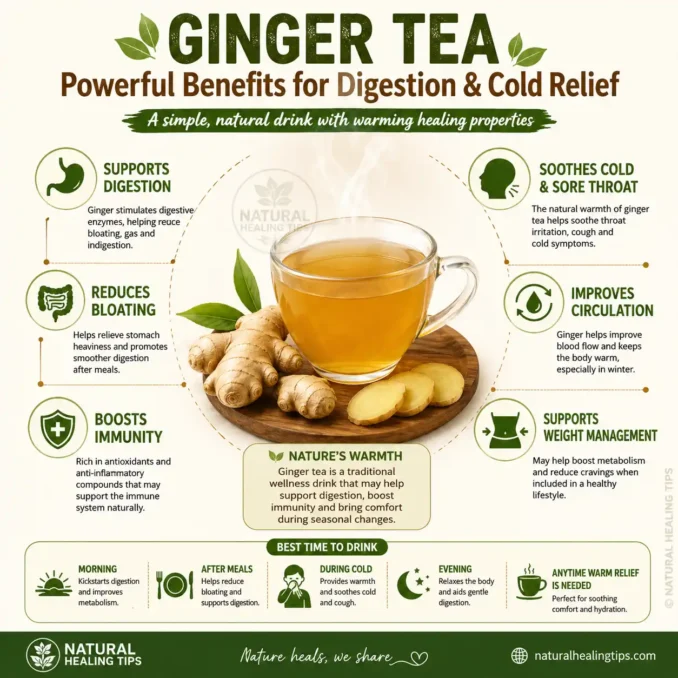
Ginger Stimulates Digestive Enzymes
One of the most well-known effects of ginger is its ability to support digestive activity.
After eating, the body releases enzymes that help break down food. Sometimes digestion slows down, especially after:
- heavy meals
- oily or fried food
- overeating
- late-night dinners
Ginger can gently stimulate digestive enzymes, which may help food move more smoothly through the stomach.
👉 Many people also enjoy exploring other soothing herbal drinks in: Herbal Tea Recipes: The Complete Guide to Natural Healing Teas
That’s why many people feel relief from:
- bloating
- gas
- heaviness after meals
A warm cup of ginger tea after food can feel surprisingly comforting.
👉 If bloating happens frequently after meals, you may also explore: Foods That Stop Bloating Immediately at Home
Ginger Improves Circulation and Body Warmth
When someone catches a mild cold, the body often feels:
- chilly
- congested
- sluggish
Ginger has natural warming properties that may help improve circulation.
This warming effect can make the body feel more comfortable when dealing with cold symptoms such as:
- throat irritation
- mild nasal congestion
- body chills
This is one reason ginger tea is often preferred during winter months.
Ginger May Support the Immune Response
Ginger contains natural plant compounds that may support the body’s immune response.
Although it does not cure infections, it may help the body maintain normal immune activity.
When consumed regularly in moderate amounts, ginger tea may contribute to:
- general wellness
- immune resilience
- seasonal comfort
Many families include ginger in soups, teas, and herbal drinks during the colder months for this reason.
👉 Along with ginger tea, many people also follow: Natural Immunity Boosting Tips for All Seasons
Can Ginger Tea Support Immunity Naturally?
Many people drink ginger tea during seasonal weather changes because warm herbal drinks may support overall wellness.
Ginger contains natural antioxidants that help protect cells from oxidative stress. Combined with proper sleep, hydration, and nutrition, ginger tea may support the body’s natural immune function.
However, ginger tea should be viewed as a supportive wellness habit rather than a cure or medical treatment.
Ginger Helps Reduce Nausea and Stomach Discomfort
Ginger is widely known for helping reduce nausea.
This is why ginger is sometimes used for:
- motion sickness
- mild stomach upset
- morning nausea
When taken as a warm tea, ginger can settle the stomach gently without feeling heavy.
Best Time to Drink Ginger Tea for Digestion and Cold
Timing can influence how effective ginger tea feels.
Different times serve different purposes.
Many people wonder about ginger tea for digestion and cold best time because timing can influence how the body responds to natural remedies.
Morning: Best for Starting Digestion
Drinking ginger tea in the morning can gently activate the digestive system.
For people exploring ginger tea for digestion and cold best time, morning is often considered one of the most supportive times to start the day.
After several hours of sleep, the stomach is empty and ready to start the day’s digestion.
A mild ginger tea in the morning may help:
- wake up digestion
- reduce morning sluggishness
- improve appetite naturally
Some people prefer drinking it before breakfast, while others enjoy it with light breakfast foods such as:
- poha
- idli
- toast
- oats
However, very strong ginger tea on an empty stomach may feel too intense for some people.
After Meals: Best for Digestive Comfort
If your main concern is digestion, the best time to drink ginger tea is after meals.
This timing allows ginger to support the digestive process when the stomach is actively breaking down food.
People often notice benefits such as:
- less bloating
- reduced heaviness
- smoother digestion
A small cup about 20–30 minutes after meals is usually enough.

During Cold Symptoms: Anytime Warm Relief Is Needed
When someone develops cold symptoms, ginger tea can be taken whenever the body needs warmth.

For example:
- mid-morning when throat irritation begins
- afternoon when fatigue appears
- evening when congestion increases
Adding a small amount of honey or tulsi leaves can make the tea more soothing.
The warmth itself plays a role in comfort.
Evening: Good for Cold Relief but Not Too Late
Ginger tea in the evening can help when:
- the throat feels scratchy
- the nose feels blocked
- the body feels chilled
However, strong ginger tea very late at night may feel stimulating for some people.
It’s usually better to drink it 1–2 hours before bedtime rather than immediately before sleeping.
Can Ginger Tea Help With Bloating and Gas?
Many people drink ginger tea after heavy meals because they feel it helps reduce bloating and trapped gas.
Bloating often happens when digestion slows down or when food stays in the stomach longer than normal.
Warm ginger tea may help by:
- supporting digestive movement
- stimulating digestive enzymes
- helping the stomach feel lighter
- reducing the feeling of fullness after eating
This is especially common after:
- fried foods
- restaurant meals
- overeating
- spicy or oily foods
Although results vary from person to person, ginger tea is one of the most commonly used natural drinks for digestive comfort.
Can Ginger Tea Soothe a Sore Throat?
Warm ginger tea is commonly used during mild cold symptoms because the warmth itself can feel soothing on the throat.
Some people drink ginger tea when they experience:
- throat irritation
- dry cough
- mild congestion
- seasonal discomfort
Adding ingredients such as:
- honey
- tulsi
- lemon
may make the tea feel even more comforting.
However, persistent sore throat symptoms or high fever should always be evaluated by a healthcare professional.
When to Be Concerned
Although ginger tea is generally safe in moderate amounts, persistent digestive or respiratory symptoms should not be ignored.
According to health authorities such as the
World Health Organization,
National Health Service, and
Mayo Clinic, ongoing symptoms should be evaluated by a qualified healthcare professional.
Seek medical advice if you experience:
- severe stomach pain
- persistent vomiting
- unexplained weight loss
- high fever with cold symptoms
- symptoms lasting longer than 10–14 days
Natural remedies like ginger tea can support comfort, but they should not replace professional medical care when needed.
↗ According to global health guidance from the World Health Organization, persistent digestive or respiratory symptoms should be evaluated by a qualified healthcare professional.
Who Should Be Careful With Ginger Tea?
Although ginger tea is safe for most people in moderate amounts, some individuals should use caution.
People who may need medical guidance include:
- individuals with acid reflux or severe heartburn
- people taking blood-thinning medications
- those with gallbladder disorders
- pregnant women consuming large amounts of ginger
- people with stomach ulcers or sensitive digestion
In some cases, too much ginger may increase stomach irritation or interact with medications.
If you have an ongoing medical condition, consult a healthcare professional before using ginger tea regularly.
Practical Natural Ways to Use Ginger Tea
If you want to make ginger tea a helpful daily habit, the approach should be simple and balanced.
Here are some practical ideas.
1. Use Fresh Ginger Instead of Powder
Fresh ginger contains the most active compounds.
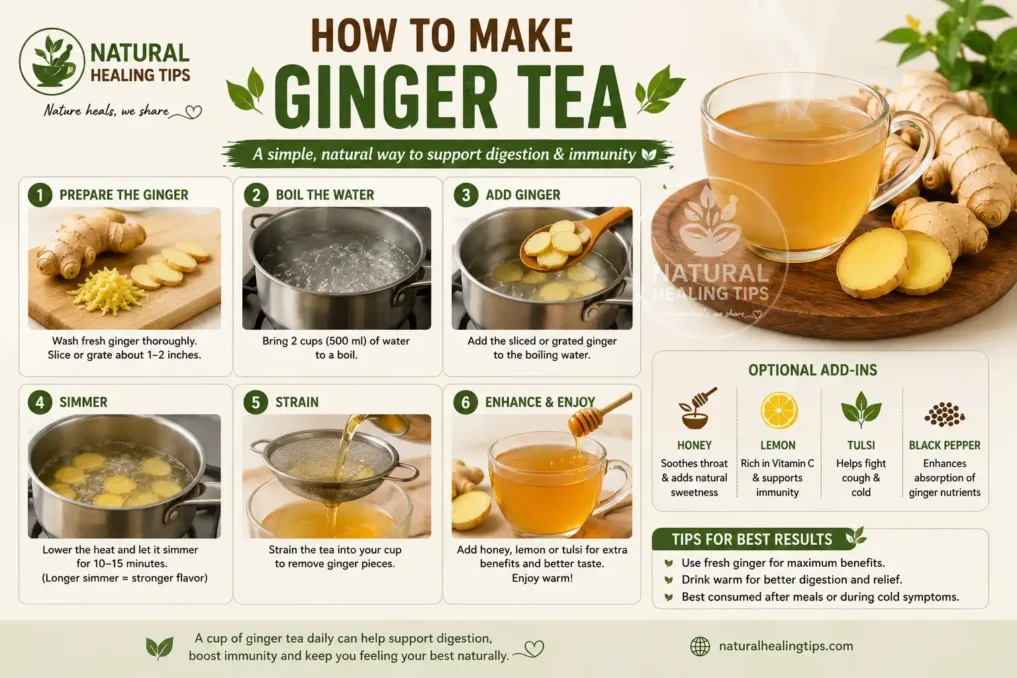
To prepare tea:
- Crush or slice a small piece of ginger
- Boil in water for 5–7 minutes
- Strain and drink warm
Fresh ginger also produces a smoother taste.
2. Keep the Quantity Moderate
Too much ginger may irritate the stomach.
Most people do well with:
1–2 cups per day
A small piece of ginger (about 1–2 cm) is usually enough.
3. Try Ginger Tea After Heavy Meals
If you frequently experience bloating after meals like:
- biryani
- fried snacks
- rich restaurant food
try drinking ginger tea after the meal.
Many readers say this simple habit helps their digestion feel lighter.
👉 People who often feel overly full after oily or heavy meals may also benefit from: Home Remedies for Feeling Heavy After Eating
4. Best Ingredients to Combine With Ginger Tea
Ginger tea is often combined with other natural kitchen ingredients for flavor and comfort.

Popular combinations include:
Ginger + Honey
Often used during cold weather because honey adds soothing sweetness.
Ginger + Lemon
Provides a refreshing taste and is commonly preferred in the morning.
Ginger + Tulsi
A traditional combination used in many Indian households during seasonal weather changes.
Ginger + Turmeric
Frequently used in wellness drinks because both ingredients contain natural plant compounds.
Ginger + Cinnamon
Adds warmth and aroma, especially during winter months.
Different combinations work for different preferences, and mild preparation is usually best.
5. Stay Hydrated Throughout the Day
Ginger tea should not replace normal water intake.
Digestion works best when the body is properly hydrated.
Try balancing ginger tea with regular water throughout the day.
6. Avoid Drinking Very Strong Ginger Tea
Some people boil large amounts of ginger thinking it increases benefits.
But very strong ginger tea may cause:
- heartburn
- stomach irritation
Mild tea is usually more comfortable.
7. Try a Simple 3-Day Ginger Tea Experiment
If you’re curious whether ginger tea helps your digestion, try this small test.
For three days:
- drink one cup of ginger tea after lunch
- notice how your stomach feels
- observe bloating, heaviness, or comfort
Small experiments like this help you understand what works best for your body.
How Long Does Ginger Tea Take to Work?
The effects of ginger tea can vary depending on the person and the reason for drinking it.
Some people notice warmth or digestive comfort within:
- 15–30 minutes after drinking
For regular digestion support, people often notice better results when ginger tea becomes part of a consistent routine.
Natural remedies usually work gradually rather than instantly.
Common Mistakes People Make With Ginger Tea
Some habits may reduce the comfort or effectiveness of ginger tea.
Common mistakes include:
- drinking extremely concentrated ginger tea
- consuming too many cups daily
- drinking it immediately before sleeping
- adding excessive sugar
- relying on ginger tea instead of medical treatment
Using ginger moderately is usually the most comfortable approach.
What Happens If You Drink Ginger Tea Daily?
Many people enjoy ginger tea as part of their everyday wellness routine.
When consumed in moderate amounts, daily ginger tea may help support:
- digestive comfort
- hydration habits
- warmth during seasonal weather
- mild bloating relief
- appetite regulation
Some people also feel that regular ginger tea helps them feel lighter after meals.
However, more is not always better.
Excessive ginger intake may cause:
- heartburn
- stomach irritation
- burning sensation
- acid reflux discomfort
For most healthy adults, 1–2 cups per day is generally considered reasonable.
Who May Benefit Most From Ginger Tea?
Ginger tea is commonly used by people who experience:
- mild bloating after meals
- sluggish digestion
- seasonal cold discomfort
- throat irritation during weather changes
- heaviness after oily foods
- occasional nausea
People with busy eating schedules or late-night meals may also enjoy ginger tea as a comforting digestive habit.
However, responses vary between individuals, and ginger tea should not replace medical treatment for ongoing symptoms.
Quick Summary
What causes digestive discomfort and cold symptoms where ginger tea may help?
If you’re wondering about ginger tea for digestion and cold best time, it usually depends on digestion needs, meal timing, and cold symptoms.
- Slow digestion after heavy meals
- Gas and bloating from certain foods
- Seasonal temperature changes
- Mild throat irritation during cold
- Reduced digestive enzyme activity
- Temporary immune stress during seasonal illness
Ginger tea may support comfort because it helps stimulate digestion, improves circulation, and provides warming relief.
↗ For general digestive health information, the digestive health advice from the NHS explains how diet, hydration, and lifestyle habits influence stomach comfort.
Best Time to Drink Ginger Tea Based on Your Goal
| Goal | Best Time | Why It Helps |
|---|---|---|
| Better digestion | After meals | Supports digestive activity |
| Morning sluggishness | Morning | Gently activates digestion |
| Cold symptoms | Anytime warm relief is needed | Provides warmth and comfort |
| Bloating after heavy food | 20–30 minutes after eating | Helps reduce heaviness |
| Evening cold discomfort | Early evening | Soothes throat and body |
Common Reasons People Drink Ginger Tea
People often drink ginger tea for many everyday wellness reasons, including digestive comfort and seasonal cold support.
- ginger tea for digestion and bloating
- best time to drink ginger tea in the morning
- ginger tea for cold and cough relief
- ginger tea after meals for digestion
- ginger tea benefits for stomach health
- when to drink ginger tea during cold
Frequently Asked Questions
Is ginger tea good for digestion every day?
For most people, drinking ginger tea in moderate amounts (1–2 cups daily) is generally safe and may support digestion. However, very strong tea or excessive intake may irritate the stomach.
What is the ginger tea for digestion and cold best time?
The best time is usually 20–30 minutes after meals, especially after heavy or oily food. This timing supports the digestive process.
Can ginger tea help with cold and cough?
Ginger tea may provide soothing warmth during cold symptoms and may help relieve throat discomfort. However, it does not cure infections.
Is ginger tea better in the morning or evening?
Morning ginger tea may help activate digestion, while evening ginger tea can feel comforting during cold symptoms. Both times can be beneficial depending on your goal.
Can I drink ginger tea on an empty stomach?
Some people tolerate it well, but strong ginger tea on an empty stomach may feel too intense for others. If unsure, drink it after food.
Is ginger tea good for bloating?
Many people drink ginger tea to reduce bloating and stomach discomfort after heavy meals.
Can ginger tea improve digestion naturally?
Ginger tea may support digestion by stimulating digestive enzymes and helping food move through the stomach more comfortably.
Can I drink ginger tea after dinner?
Yes, many people drink ginger tea after dinner to reduce heaviness and bloating. However, very strong ginger tea immediately before bed may feel stimulating for some individuals.
Is ginger tea good during winter?
Ginger tea is commonly consumed during winter because its warming properties may help provide comfort during cold weather.
Does ginger tea help after overeating?
Many people drink ginger tea after overeating because it may help reduce the feeling of heaviness and support digestion.
Gentle Health Disclaimer
This article is for educational purposes only and should not be considered medical advice. Always consult a qualified healthcare professional for diagnosis or treatment of medical conditions.
Final Thoughts
Sometimes the most effective wellness habits are also the simplest.
A small cup of ginger tea may not look dramatic, but over time it can become a comforting ritual that supports digestion and seasonal wellness.
Instead of searching for complicated solutions, start with small consistent habits:
- eat balanced meals
- stay hydrated
- sleep well
- use natural foods wisely
Knowing ginger tea for digestion and cold best time allows you to enjoy this traditional drink in a way that supports digestion and seasonal comfort.
And occasionally, when the stomach feels heavy or a cold begins to appear, a warm cup of ginger tea may quietly do what it has done for generations — offer gentle comfort.






Really enjoyed this post. Thanks for sharing such helpful info. If you want a science‑based breakfast tool, this one has been super helpful for me: