

Gut Health Foods for Better Digestion: What Actually Helps Your Gut Feel Better Naturally?
Have you ever eaten a perfectly normal meal and still ended up feeling bloated, heavy, sluggish, or strangely tired afterward?
Why do some people seem to digest everything easily while others struggle with gas, acidity, constipation, or stomach discomfort almost every week?
And why does digestion often get worse during stressful periods, poor sleep cycles, or busy lifestyles?
The truth is, digestion is connected to far more than just your stomach.
Your gut influences energy levels, mood, immunity, inflammation, sleep quality, metabolism, and even how well your body absorbs nutrients. When gut health begins to suffer, the signs can appear quietly at first — irregular bowel movements, cravings, fatigue, bad breath, skin flare-ups, brain fog, or constant bloating after meals.
The encouraging part is this: small, consistent food choices can make a surprisingly noticeable difference over time.
Many of the best Gut Health Foods for Better Digestion are simple everyday ingredients that support the microbiome, bowel regularity, and digestive comfort naturally.
Many people try expensive supplements before improving the simple daily habits that actually support the digestive system naturally. In real life, the basics tend to matter more than people expect — hydration, fiber balance, fermented foods, meal timing, stress management, and anti-inflammatory ingredients.
This guide explores the best gut health foods for better digestion, why they work, what common mistakes damage the microbiome, and how to build realistic eating habits that support long-term digestive wellness naturally.
Gut Health Foods for Better Digestion are foods that support the gut microbiome, improve bowel regularity, reduce bloating, and help digestion function more efficiently. Common examples include yogurt, fermented foods, fiber-rich fruits, oats, herbal teas, and anti-inflammatory ingredients like ginger.
You’re Not Alone in This
Digestive discomfort has quietly become one of the most common lifestyle complaints worldwide.
Modern routines often include:
- rushed meals
- low-fiber diets
- excessive sugar
- ultra-processed foods
- poor sleep
- chronic stress
- irregular eating schedules
Many people normalize symptoms like:
- bloating after meals
- constipation
- acidity
- excessive burping
- sluggish digestion
- food sensitivities
- irregular appetite
👉 Persistent bloating, heaviness, acidity, and sluggishness may indicate deeper digestive imbalance. Here are some common Signs Your Digestion Is Weak
But digestion problems are not always “just normal aging” or “bad luck.”
In many cases, the gut is reacting to accumulated daily habits.
One overlooked reality is that digestive improvement usually happens gradually — not overnight. People often expect instant results after eating yogurt for two days or drinking a detox beverage once. In reality, the gut microbiome responds best to consistency.
That’s why sustainable dietary patterns usually outperform short-term “gut cleanse” trends.
What Is Gut Health?
Gut health refers to the balance and function of microorganisms living inside the digestive tract, often called the gut microbiome.
A healthy gut typically supports:
- smoother digestion
- better nutrient absorption
- stronger immune response
- balanced inflammation levels
- improved bowel regularity
- healthier metabolism
- mental wellness support
The digestive system contains trillions of bacteria, fungi, and microorganisms. Some are beneficial, while others can become problematic when imbalances develop.
A balanced microbiome helps:
- break down food
- produce certain vitamins
- support immune defense
- regulate inflammation
- maintain the intestinal barrier
When gut balance becomes disrupted, digestion often suffers.
This is why Gut Health Foods for Better Digestion are increasingly recommended as part of a balanced long-term wellness lifestyle.
Here’s What’s Really Happening Inside Your Body…
The digestive system is deeply connected to multiple biological systems. Better digestion is not only about avoiding stomach pain — it’s about how efficiently your body functions overall.
1. Your Gut Microbiome Influences Digestion
Beneficial gut bacteria help ferment fiber and produce compounds called short-chain fatty acids, which support colon health and reduce inflammation.
Low-fiber diets can reduce microbial diversity over time.
↗ Research discussed by Harvard Health Publishing explains how fiber and prebiotics help nourish beneficial gut bacteria that support digestion and overall wellness.
2. Stress Hormones Can Slow Digestion
Chronic stress increases cortisol and may disrupt gut motility, stomach acid balance, and microbial diversity.
Many people notice:
- stress bloating
- stress-related acidity
- irregular bowel habits
- appetite fluctuations
This is why emotional stress often shows up physically in the gut.
3. Sleep Quality Affects Digestive Function
Poor sleep may alter gut bacteria composition and increase inflammatory stress.
Late-night eating combined with inadequate sleep often worsens:
- indigestion
- acid reflux
- sugar cravings
- sluggish bowel movements
4. Hydration Helps Food Move Efficiently
Water supports:
- stool softness
- nutrient transport
- digestive enzyme function
- fiber movement through intestines
Many constipation issues become worse when people suddenly increase fiber without increasing hydration.
5. Ultra-Processed Foods May Harm Gut Diversity
Highly processed foods often contain:
- excess sugar
- refined oils
- additives
- low fiber
These dietary patterns may encourage less beneficial bacteria growth.
6. Inflammation Can Affect Digestive Comfort
Chronic inflammation may contribute to digestive irritation and discomfort.
Anti-inflammatory foods rich in antioxidants may support:
- gut lining integrity
- microbial balance
- digestive recovery
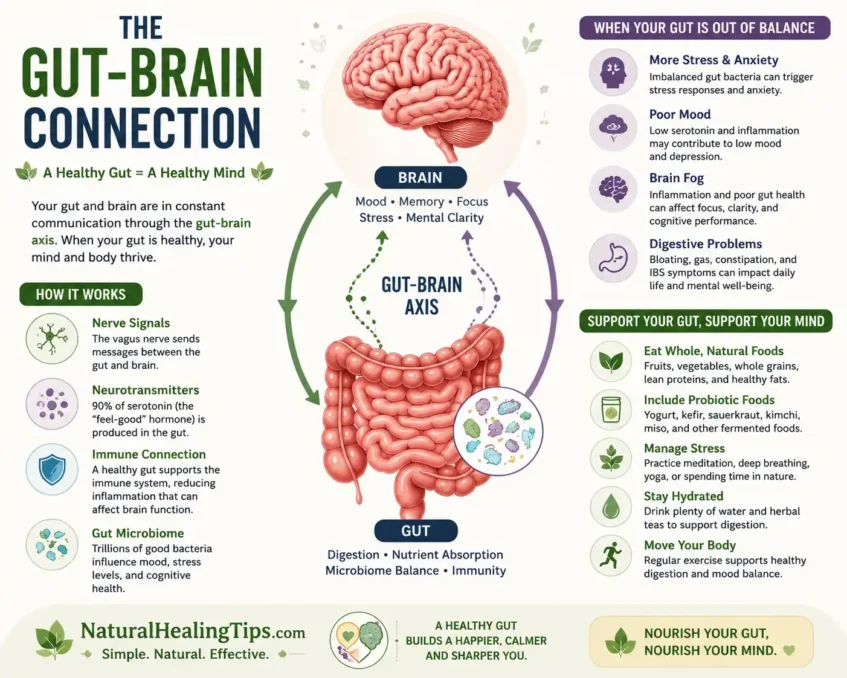
7. The Gut-Brain Connection Is Real
The gut and brain constantly communicate through the gut-brain axis.
Digestive health may influence:
- mood
- focus
- stress resilience
- emotional balance
This partly explains why digestive discomfort sometimes increases during emotionally difficult periods.
8. Nutrient Deficiencies Can Worsen Digestion
Low intake of:
- magnesium
- zinc
- fiber
- probiotics
- vitamin-rich foods
may affect digestive efficiency and bowel regularity.
While This Is Often Manageable Naturally, There Are Situations Where Medical Guidance Is Important…
Natural digestion support can be helpful for many mild digestive complaints, but some symptoms require professional evaluation.
Organizations like the World Health Organization, Mayo Clinic, and National Institutes of Health emphasize seeking medical advice for persistent or severe digestive symptoms.
See a healthcare professional if you experience:
- blood in stool
- unexplained weight loss
- persistent vomiting
- severe abdominal pain
- difficulty swallowing
- chronic diarrhea
- prolonged constipation
- ongoing acid reflux
- persistent fatigue with digestive symptoms
Digestive symptoms can sometimes signal underlying medical conditions that need proper diagnosis.
↗ According to Mayo Clinic, persistent digestive symptoms such as severe abdominal pain, unexplained weight loss, or blood in stool should be medically evaluated.
Gut Health Foods for Better Digestion That Support Daily Wellness
Below are some of the most effective gut health foods and habits that consistently support better digestion naturally.
The following Gut Health Foods for Better Digestion may help support microbial balance, digestive comfort, nutrient absorption, and smoother bowel regularity over time.
1. Yogurt With Live Cultures
Yogurt is one of the most widely recognized probiotic foods.
Why It Helps
It contains beneficial bacteria that may support:
- microbial balance
- bowel regularity
- digestion support
Best Way to Use It
- Choose plain unsweetened yogurt
- Avoid heavily sugary flavored versions
- Consume with breakfast or lunch
Practical Tip
Adding fruit, chia seeds, or oats improves fiber intake alongside probiotics.
Precautions
People with lactose intolerance may tolerate yogurt better than milk, but not always.
↗ The National Institutes of Health notes that probiotics may help support digestive balance and microbial health in certain individuals.
2. Fermented Indian Foods
Traditional Indian foods often contain naturally beneficial bacteria.
Examples include:
- idli
- dosa batter
- homemade curd
- kanji
- fermented rice
Why They Help
Fermentation may improve:
- digestibility
- microbial diversity
- nutrient availability
Traditional diets frequently included fermented foods long before probiotics became trendy wellness products.

3. Fiber-Rich Fruits
Fruits provide fiber, antioxidants, hydration, and prebiotics.
Especially Helpful Options
- bananas
- apples
- papaya
- berries
- pears
- pomegranate
Why They Help
Fiber supports bowel regularity and feeds beneficial bacteria.
Papaya is especially popular in digestive wellness routines because it contains enzymes that may support protein digestion.
4. Cooked Vegetables Instead of Excess Raw Salads
Many people assume raw foods are automatically healthier for digestion.
But in real life, some sensitive digestive systems tolerate cooked vegetables much better.
Easier-to-Digest Choices
- carrots
- bottle gourd
- spinach
- pumpkin
- zucchini
- sweet potato
Cooking may reduce digestive strain while preserving many nutrients.
This is particularly useful during:
- bloating episodes
- digestive sensitivity
- recovery from stomach irritation
5. Oats and Whole Grains
Oatmeal contains beta-glucan fiber, which supports gut bacteria and digestive regularity.
Benefits
- supports satiety
- promotes smoother bowel movements
- may help stabilize blood sugar
Real-World Observation
People who suddenly switch from refined carbs to excessive fiber sometimes experience bloating initially. Gradual adjustment tends to work better.
6. Ginger for Digestive Comfort
Ginger has long been used in Ayurvedic and traditional wellness systems.
Why It Helps
Ginger may support:
- gastric emptying
- nausea relief
- digestive comfort
- inflammation balance
Simple Ways to Use It
- ginger tea
- fresh ginger in meals
- warm ginger water
Moderation Matters
Excess intake may irritate some individuals with acid reflux.
7. Kefir and Probiotic Drinks
Kefir contains diverse probiotic strains.
Potential Benefits
- digestive support
- microbiome diversity
- bowel regularity
Some people tolerate kefir better than regular milk due to fermentation.
8. Chia Seeds and Flaxseeds
These seeds support digestive health through:
- soluble fiber
- omega-3 fatty acids
- hydration support
Practical Advice
Soak them before use if digestion is sensitive.
Common Mistake
Taking large amounts suddenly without enough water may worsen bloating.
9. Herbal Teas for Digestion
Herbal beverages can gently support digestion without heavy stimulants.
Helpful options include:
- peppermint tea
- fennel tea
- ginger tea
- chamomile tea
These may support:
- relaxation
- digestion comfort
- bloating reduction

10. Prebiotic Foods That Feed Good Bacteria
Prebiotics are fibers that nourish beneficial gut microbes.
Good Sources
- garlic
- onions
- asparagus
- oats
- bananas
- legumes
This is one area competitors often under-explain: probiotics alone are not enough. Beneficial bacteria also need fuel to survive.
Common Daily Habits That Quietly Damage Gut Health
Sometimes digestive discomfort persists not because of one major problem, but because of repeated small habits.
Eating Too Fast
Fast eating often increases:
- air swallowing
- overeating
- indigestion
Digestion begins in the mouth through chewing and enzyme activity.
Constant Snacking
Continuous grazing may prevent the digestive system from resting properly.
Some people notice improvements when meals become more structured.
Excess Sugar Intake
High sugar diets may negatively affect microbial balance.
Sugary beverages are especially problematic because they add calories without fiber.
Overusing Digestive Supplements
Many people take multiple probiotics, detox powders, or cleanses without improving diet quality first.
Food patterns generally matter more long term.
Ignoring Stress and Sleep
This is one of the biggest overlooked gut health factors.
People often focus only on food while neglecting:
- chronic stress
- poor sleep
- emotional burnout
The gut responds strongly to nervous system stress.
👉 If digestive discomfort keeps returning despite dietary changes, explore these deeper Natural Remedies for Digestive Problems that may help support long-term digestive balance naturally.
Gut Health Mistakes Even Healthy Eaters Sometimes Make
Eating Too Much Fiber Too Quickly
Suddenly switching to high-fiber foods without gradual adjustment may temporarily worsen bloating and digestive discomfort.
Depending Only on Supplements
Many people focus heavily on probiotics while ignoring sleep, hydration, stress, and dietary quality.
Eating Heavy Meals Late at Night
Late-night eating may slow digestion and worsen sleep quality at the same time.
Overusing “Detox” Products
Extreme cleanses and excessive detox supplements may irritate digestion rather than support it.
Foods That Support Better Digestion
| Food Category | Why It Helps |
|---|---|
| Fermented foods | Support beneficial bacteria |
| Fiber-rich fruits | Improve bowel regularity |
| Whole grains | Feed gut microbes |
| Cooked vegetables | Gentle digestive support |
| Herbal teas | Reduce digestive discomfort |
| Yogurt and kefir | Add probiotics |
| Seeds | Support hydration and fiber intake |
| Ginger and turmeric | Anti-inflammatory support |
Combining multiple Gut Health Foods for Better Digestion usually works better than depending on a single “superfood” alone.
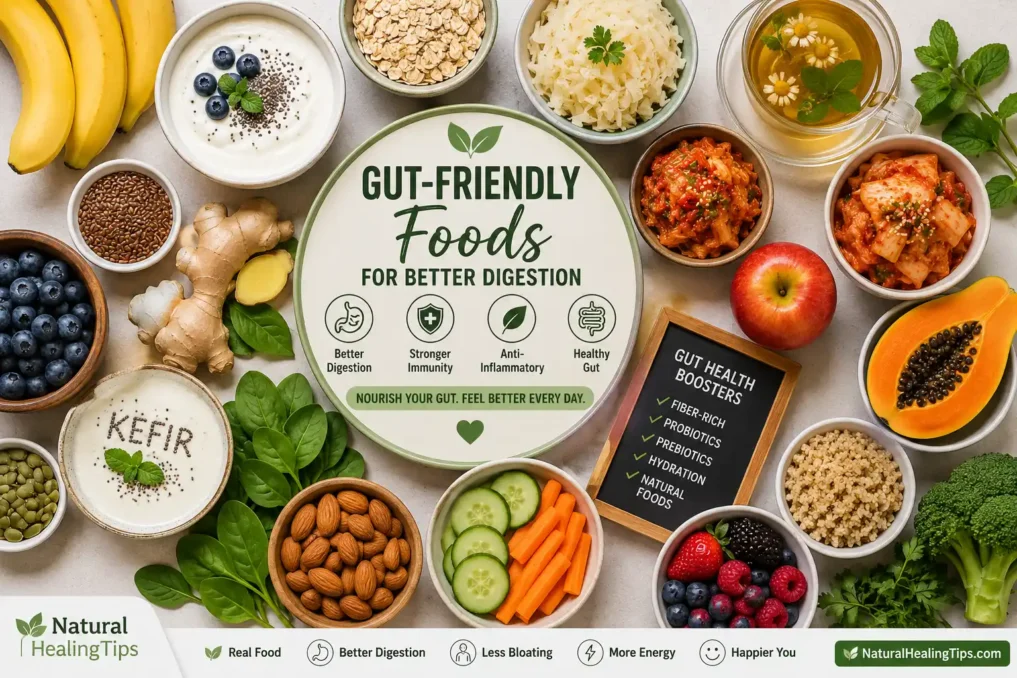
Simple Gut-Friendly Meal Ideas
Breakfast
- Oats with yogurt and berries
- Vegetable poha with curd
Lunch
- Rice, dal, and cooked vegetables
- Quinoa bowls with fermented vegetables
Snacks
- Fruit with soaked seeds
- Buttermilk or herbal tea
Dinner
- Light khichdi
- Vegetable soup with cumin and ginger
Best Gut Health Foods by Time of Day
| Time of Day | Helpful Foods |
|---|---|
| Morning | Warm water, oats, yogurt, papaya |
| Lunch | Rice, lentils, cooked vegetables |
| Evening | Herbal tea, fruit, buttermilk |
| Dinner | Light soups, khichdi, steamed vegetables |
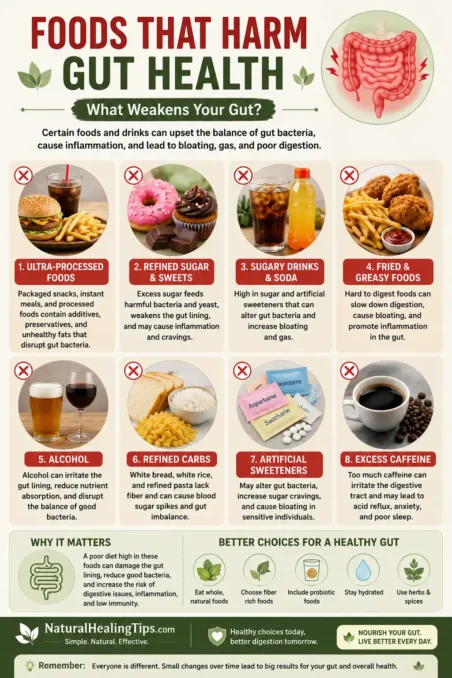
Foods That May Weaken Gut Health
| Food Type | Why It Can Be Problematic |
|---|---|
| Ultra-processed foods | Low fiber, high additives |
| Excess alcohol | May irritate gut lining |
| Sugary beverages | Disrupt microbial balance |
| Excess fried foods | Harder to digest |
| Artificial sweeteners (excess) | May affect gut bacteria |
| Heavy late-night meals | Slow nighttime digestion |
👉 Certain fiber-rich and anti-inflammatory ingredients may also support natural digestive cleansing. Read: Foods That Naturally Clean Your Gut
↗ The World Health Organization emphasizes reducing ultra-processed foods, excess sugar, and unhealthy fats as part of a healthier long-term dietary pattern.
One Overlooked Digestive Mistake: Drinking Too Little Water With Fiber
People often increase:
- oats
- salads
- seeds
- supplements
without increasing water intake.
This can actually worsen constipation temporarily.
Hydration matters just as much as fiber.
Want to See How Your Body Responds? Try This Gentle 3-Day Routine…
This is not a “detox.”
It’s simply a gentle reset focused on digestion-friendly habits.

This simple routine combines several Gut Health Foods for Better Digestion in a practical and beginner-friendly way.
Day 1
Morning
- Warm water with ginger
- Oats with banana and chia seeds
Lunch
- Rice with cooked vegetables and curd
Evening
- Herbal tea
Goal
Focus on hydration and reducing processed foods.
Day 2
Morning
- Yogurt with fruit
Lunch
- Lentils, vegetables, and whole grains
Evening
- Light walk after dinner
Goal
Support fiber intake gradually.
👉 If you want a more structured short-term digestive reset, explore this practical One-Day Gut Reset Plan
Day 3
Morning
- Papaya or berries
Lunch
- Fermented foods plus vegetables
Evening
- Early light dinner
Goal
Improve meal timing and digestive rhythm.
👉 Small morning habits often influence digestion more than people realize. Explore this practical Morning Routine for Better Digestion Naturally
What Realistic Improvements Might People Notice?
Digestive improvements often happen gradually.
Some people report:
- less bloating
- smoother bowel movements
- improved energy
- fewer cravings
- better meal satisfaction
- reduced heaviness after eating
But consistency matters more than perfection.
Occasional indulgences are usually less problematic than chronic unhealthy patterns.
Signs Your Gut Health May Be Improving
Digestive improvement is often gradual rather than dramatic. Small changes usually appear first.
- more regular bowel movements
- less bloating after meals
- better appetite control
- improved energy stability
- reduced sugar cravings
- less heaviness after eating
- better sleep comfort
- improved meal satisfaction
One overlooked sign is feeling lighter after meals instead of overly sleepy or sluggish. Many people also notice better consistency in digestion before major symptom changes occur.
The Gut Health–Immunity Connection
Around 70% of the immune system is associated with the gut.
A healthier gut environment may support:
- immune resilience
- inflammation balance
- nutrient absorption
- recovery processes
Many Gut Health Foods for Better Digestion also contain antioxidants, fiber, probiotics, and anti-inflammatory compounds that support immune resilience.
This is why digestive wellness often overlaps with:
- seasonal wellness
- skin health
- energy levels
- respiratory health
- stress resilience
Gut Health and Mental Wellness
Many people are surprised by how strongly digestion affects mood.
The gut-brain connection may influence:
- stress tolerance
- focus
- emotional regulation
- sleep quality
Digestive discomfort itself can also increase stress, creating a cycle.
This is one reason gentle routines often work better than extreme dietary restriction.
Indian Kitchen Ingredients That Quietly Support Digestion
Traditional Indian cooking includes several naturally digestion-supportive ingredients.
Helpful Examples
- cumin
- fennel
- turmeric
- ginger
- coriander
- curry leaves
These spices are often used not just for flavor, but also for digestive comfort.
Turmeric contains curcumin, a compound studied for anti-inflammatory properties.
A Realistic Perspective on “Gut Healing”
One major wellness myth is that digestion can be permanently “fixed” in a week.
In reality:
- the microbiome changes gradually
- habits matter more than short cleanses
- stress affects digestion continuously
- sleep consistency matters
- food quality accumulates over time
Sustainable progress usually beats extreme protocols.
Quick Summary: Gut Health Foods for Better Digestion
Focus More On
- fermented foods
- fiber-rich fruits
- hydration
- whole grains
- cooked vegetables
- herbal teas
- probiotics
- meal consistency
Reduce
- excessive sugar
- ultra-processed foods
- heavy late-night eating
- chronic stress
- dehydration
Remember
Small consistent habits often outperform expensive wellness trends.
Frequently Asked Questions
What foods improve digestion quickly?
Foods like yogurt, ginger, papaya, bananas, oats, and fermented foods may gently support digestion. However, sustainable digestive improvement usually comes from consistent habits rather than instant solutions.
Can probiotics help with bloating?
Some people notice reduced bloating with probiotic-rich foods, especially when digestion imbalance is involved. Results vary depending on diet, stress, hydration, and overall gut health.
Why does stress affect digestion so much?
Stress hormones can influence gut motility, inflammation, and microbial balance. This is why stressful periods often worsen acidity, bloating, or irregular bowel movements.
Are raw salads always better for digestion?
Not necessarily. Some people digest cooked vegetables more comfortably, especially during digestive sensitivity or bloating episodes.
How long does it take to improve gut health naturally?
Some individuals notice changes within days, while deeper digestive improvements may take weeks or months depending on consistency, stress levels, sleep, and dietary habits.
Can poor gut health affect energy levels?
Yes. Digestion influences nutrient absorption, inflammation, sleep quality, and metabolism, all of which can affect energy and focus.
Is yogurt enough for gut health?
Yogurt may help, but overall lifestyle matters more. Fiber intake, hydration, stress management, sleep, and dietary diversity all influence gut health.
What foods commonly worsen digestion?
Excess fried foods, sugary beverages, ultra-processed foods, heavy late-night meals, and excessive alcohol may contribute to digestive discomfort in some individuals.
Why does bloating happen even after healthy eating?
Even healthy foods may cause bloating if fiber intake increases too quickly, hydration is inadequate, digestion is sensitive, or stress levels are high. Portion size and meal timing also matter.
Can gut health affect skin problems?
Digestive health may influence inflammation, nutrient absorption, and immune balance, which can indirectly affect skin wellness in some individuals.
What are the best Gut Health Foods for Better Digestion?
Foods commonly recommended for digestion support include yogurt, fermented foods, oats, bananas, ginger, cooked vegetables, herbal teas, seeds, and fiber-rich fruits that nourish beneficial gut bacteria naturally.
Final Thoughts
Improving digestion rarely comes from a single “superfood” or short-term cleanse. In most cases, gut wellness improves gradually through consistent habits — balanced meals, hydration, stress management, fiber-rich foods, fermented ingredients, and realistic routines.
Choosing the right Gut Health Foods for Better Digestion consistently may help support smoother digestion, reduced bloating, improved bowel regularity, better energy levels, and long-term digestive wellness naturally.
The key is sustainability, not perfection. Small daily choices often influence digestive health far more than extreme wellness trends.






Really enjoyed this post. Thanks for sharing such helpful info. If you want a science‑based breakfast tool, this one has been super helpful for me: