

Morning Routine for Mental Calm & Positive Energy
Introduction
Do you wake up feeling mentally tired—even after a full night’s sleep?
Does your mind start racing the moment you open your eyes… thinking about tasks, stress, or unfinished work?
Or worse—do you reach for your phone and instantly feel overwhelmed before your day even begins?
What if the real problem isn’t your workload… but how your day starts?
Most people underestimate this:
The first 30–60 minutes after waking can shape your entire emotional state for the day.
A well-designed morning routine for mental calm & positive energy doesn’t just improve your mood—it resets your nervous system, stabilizes your thoughts, and builds long-term emotional resilience.
And the best part?
You don’t need anything complicated.
Just a few intentional habits can create powerful changes.
A consistent morning routine for mental calm & positive energy can help you start your day with clarity, focus, and emotional balance.
👉 Many people struggling with morning stress also benefit from: Natural Remedies for Stress and Anxiety
What Is the Best Morning Routine for Mental Calm & Positive Energy?
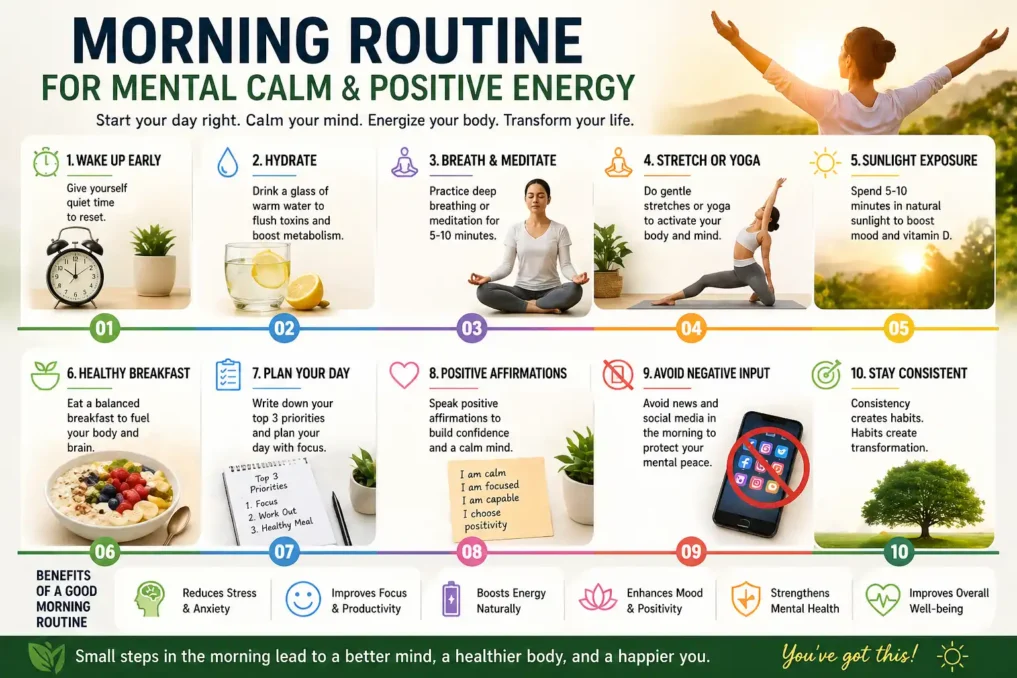
The best morning routine for mental calm and positive energy includes:
- Avoiding phone usage for the first 30 minutes
- Drinking warm water to hydrate and activate metabolism
- Practicing deep breathing or meditation to calm the mind
- Doing gentle stretching or yoga to release tension
- Eating a balanced breakfast to stabilize energy levels
This routine helps regulate stress hormones, improve focus, and create a calm, positive mindset for the rest of the day.
Is This Common or Normal?
You’re not alone in this.
In fact, this is more common than most people think.
Many readers tell us they:
- Feel anxious without a clear reason in the morning
- Experience mental fog or low motivation
- Start the day already feeling “behind”
This happens because your brain is highly sensitive during early hours.
Without structure, it defaults to:
- Stress patterns
- Negative thought loops
- Cortisol spikes
The good news?
This pattern is reversible—with the right routine.
What most people don’t realize is… your morning habits silently control your entire day.
Without a structured morning routine for mental calm & positive energy, your mind naturally drifts toward stress and overthinking.
Why Do You Feel Mentally Disturbed in the Morning?
Many people assume morning stress is random—but it’s not.
It’s usually the result of accumulated physiological and lifestyle triggers.
1. Poor Sleep Quality (Hidden Root Cause)
Even if you sleep 7–8 hours, poor sleep quality can lead to:
- Brain fog
- Irritability
- Low motivation
This happens because your brain doesn’t complete full sleep cycles, especially deep sleep.
You may have noticed waking up tired even after “enough” sleep—that’s your body signaling incomplete recovery.
2. Late-Night Screen Exposure
Blue light suppresses melatonin.
This leads to:
- Delayed sleep
- Disrupted circadian rhythm
- Higher morning cortisol
3. Chronic Stress Carryover
Your brain doesn’t “reset” overnight.
Unresolved stress from:
- Work pressure
- Emotional issues
- Overthinking
👉 Carries into the next morning.
↗ Explore medically reviewed stress management techniques: Stress Management Guide
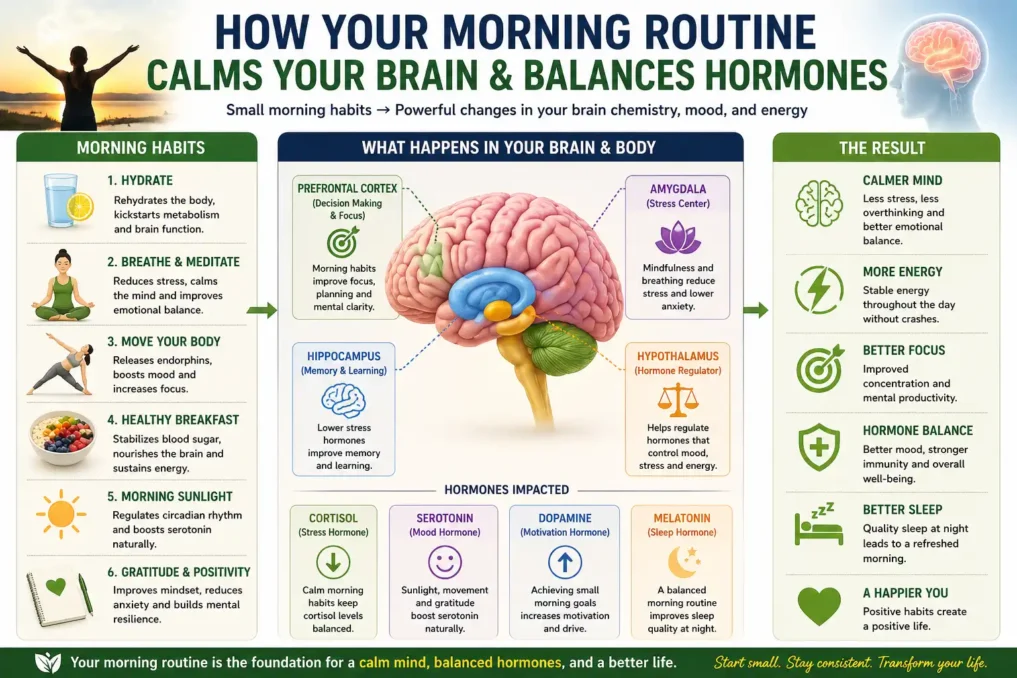
“This diagram explains how your morning routine affects brain function and hormone balance.”
4. Blood Sugar Imbalance
Skipping dinner or eating heavy late meals can cause:
- Morning fatigue
- Mood swings
- Cravings
5. Overstimulation (Dopamine Overload)
Late-night scrolling, binge-watching, or gaming:
👉 Overstimulates dopamine
👉 Leads to low motivation next morning
6. Lack of Morning Structure
Without a routine, your brain defaults to:
- Anxiety
- Random thoughts
- Reactive behavior
This is why building a morning routine for mental calm & positive energy becomes essential for long-term mental stability.
Here’s What’s Really Happening Inside Your Body
Let’s simplify what science says.
1. Cortisol Awakening Response
Your body naturally releases cortisol in the morning.
👉 In balanced amounts, it helps you wake up.
👉 But stress amplifies it—leading to anxiety.
2. Circadian Rhythm Activation
Your internal body clock controls:
- Sleep
- Hormones
- Energy levels
Poor morning habits disrupt this rhythm.
3. Dopamine & Motivation Loop
What you do first affects dopamine.
👉 Phone scrolling = instant dopamine spike
👉 Result = reduced motivation later
4. Nervous System Sensitivity
Morning is when your nervous system is most impressionable.
Calm inputs → Calm day
Stress inputs → Chaotic day
5. Breath & Vagus Nerve Connection
Deep breathing activates the vagus nerve.
This:
- Reduces stress
- Slows heart rate
- Improves emotional control
↗ Understand how breathing impacts your body: 4-7-8 Breathing Technique
6. Blood Sugar Stability
Skipping or eating poorly in the morning causes:
- Mood swings
- Irritability
- Brain fog
7. Mental Conditioning Window
Your brain is highly programmable in the morning.
This is when habits shape:
- Thought patterns
- Emotional responses
↗ Learn how global experts define mental well-being: Mental Health Overview
Even a small mistake in the first 10 minutes can affect your mood for hours.
A well-designed morning routine for mental calm & positive energy works with your biology instead of against it.
Signs Your Morning Routine Needs Fixing
If you experience these regularly, your morning habits need attention:
- Feeling anxious immediately after waking
- Low energy despite rest
- Irritability or mood swings
- Lack of focus
- Overthinking early in the day
This is more common than people admit—but also more fixable than you think.
When Should You Be Concerned?
While morning stress is common, there are times to pay attention.
According to organizations like World Health Organization and Mayo Clinic:
You should seek help if you experience:
- Persistent anxiety or panic
- Chronic fatigue despite sleep
- Difficulty focusing daily
- Sleep disturbances
A morning routine helps—but deeper issues may need professional care.
Instant Relief Tips
- Splash cold water on face
- Step outside for sunlight
- Take 5 deep breaths
Even a simplified morning routine for mental calm & positive energy can quickly reset your nervous system.
What to Do When You Wake Up Stressed
Sometimes, even with a routine, you may feel off.
Here’s what helps immediately:
1. 60-Second Breathing Reset
- Inhale 4 seconds
- Hold 4 seconds
- Exhale 6 seconds
👉 Activates parasympathetic nervous system
2. Cold Water Splash
Stimulates the vagus nerve
👉 Instantly reduces stress response
3. Grounding Technique
- Stand barefoot (if possible)
- Focus on surroundings
👉 Brings mind back to present
The Good News—Small Changes Can Make a Big Difference
Here’s where transformation begins.
Let’s build a powerful morning routine for mental calm & positive energy step by step.
Step-by-Step Morning Routine for Mental Calm & Positive Energy
1. Wake Up Without Digital Shock
Why it works:
Your brain is in a semi-conscious state. External input shapes your mood instantly.
How to do it:
- Avoid phone for 30 minutes
- Open windows or step into natural light
Result:
Reduced anxiety within minutes
👉 Start your day distraction-free by understanding the impact of screen habits: Digital Detox for Mental Health
2. Practice Gratitude (Mental Reset)
Why it works:
Gratitude shifts brain focus from threat → safety
How:
- 3 slow breaths
- Think of 3 things you’re grateful for
Result:
Immediate emotional calm
3. Drink Warm Water
Why:
- Activates digestion
- Improves circulation
- Rehydrates brain
How:
- 1 glass warm water
- Add lemon or tulsi (optional)
Result:
Better mental clarity within 15–20 minutes
4. Gentle Stretching or Yoga
- Releases stored tension
- Improves blood flow
“Here’s a simple visual guide to morning yoga and stretching.”

How:
- 10–15 minutes
- Focus on spine + breathing
Result:
Lightness in body + calm mind
This step is a key part of any morning routine for mental calm & positive energy.
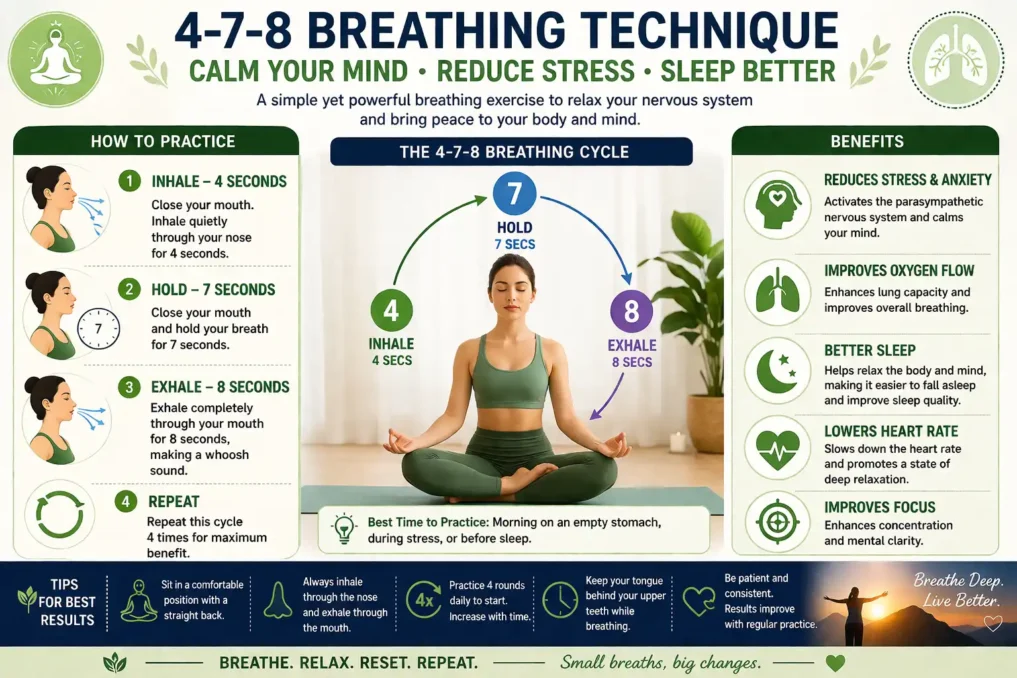
5. Breathing Techniques (Pranayama)
Why:
Controls nervous system directly
Best methods:
- Anulom Vilom
- Bhramari
- Deep breathing
Timing: 5–10 minutes
Result:
Noticeable calm within minutes
Breathing exercises are one of the most effective elements of a morning routine for mental calm & positive energy.
👉 Learn deeper calming methods with: Breathing Techniques for Stress & Panic Relief
6. Meditation (Mental Clarity)
Why:
Reduces overthinking
How:
- Sit quietly
- Focus on breath
Result:
Improved focus in 1–2 weeks
👉 If you’re new to mindfulness, explore this guide: Mindfulness Meditation for Beginners
7. Positive Affirmations
Why:
Reprograms subconscious patterns
Examples:
- “I am calm and focused”
- “Today will be balanced”
Result:
Stronger emotional resilience
8. Herbal Tea Instead of Coffee
Avoids overstimulation
Best options:
- Tulsi
- Chamomile
- Green tea
Result:
Stable energy without crashes
9. Nourishing Breakfast
Why:
Stabilizes blood sugar
Best foods:
- Fruits + nuts
- Oats
- Indian meals with ghee
Avoid:
- Sugar-heavy foods
Nutrition plays an important role in supporting a morning routine for mental calm & positive energy.
10. Protect Your Mental Space
Avoid:
- News
- Negative conversations
Choose:
- Silence
- Music
- Nature
How Morning Habits Rewire Your Brain
Here’s something most people don’t realize:
Your brain is most “plastic” in the first hour after waking.
Neuroplasticity in Action
Morning habits:
- Strengthen neural pathways
- Reinforce emotional patterns
👉 Calm mornings → Calm personality over time
Cortisol Timing Matters
Healthy pattern:
- High in morning
- Low at night
But stress flips this cycle.
👉 Result:
- Morning anxiety
- Night overthinking
Dopamine Sensitivity Reset
Avoiding early stimulation (phone):
👉 Helps restore natural motivation system
Over time, a consistent morning routine for mental calm & positive energy can reshape your mental patterns.
What You Eat in the Morning Matters More Than You Think
Best Foods for Mental Calm
- Soaked almonds
- Banana (serotonin support)
- Oats (slow energy release)
- Herbal teas
Indian Context (High Relevance)
In many households:
- Idli + chutney
- Upma with vegetables
- Moong dal cheela
👉 These provide balanced energy

Foods That Disrupt Mental Calm
- Sugary tea/coffee on empty stomach
- Packaged snacks
- Refined carbs
Foods to Avoid in Morning
- Sugary cereals
- Processed snacks
- Excess caffeine
What Happens If You Ignore This Daily Window?
Most people ignore this—and pay the price later.
Long-term effects include:
- Chronic anxiety
- Burnout
- Hormonal imbalance
- Reduced productivity
- Emotional instability
Small habits ignored daily can silently create bigger problems over time.
How to Follow This Safely
- Don’t force long routines suddenly
- Start with 2–3 habits
- Avoid perfection mindset
- Stay consistent over intensity
How to Customize Your Morning Routine
If You Are Busy:
- 10-minute version:
- Water
- Breathing
- Gratitude
If You Have Anxiety:
Focus more on:
- Breathing
- Meditation
- Herbal tea
If You Feel Low Energy:
Add:
- Sunlight exposure
- Light exercise
You can adjust your morning routine for mental calm & positive energy based on your lifestyle and needs.
Long-Term Benefits
With consistency, you may notice:
- Reduced anxiety
- Better focus
- Stable mood
- Improved energy
3-Day Natural Experiment
Curious how your body responds?
Day 1:
- Warm water
- No phone
- Breathing
Day 2:
- Add stretching
Day 3:
- Add meditation + affirmations
👉 Observe changes in mood & energy
Quick Summary
- Morning habits shape your mind
- Avoid phone first
- Practice breathing + gratitude
- Eat clean
- Stay consistent
How to Start a Stress-Free Morning Routine?
To start a stress-free morning routine:
- Wake up without checking your phone
- Practice gratitude or deep breathing
- Drink warm water
- Do light stretching or yoga
- Avoid negative inputs like news or social media
This helps reduce anxiety and improves focus throughout the day.
FAQs
What really happens if you skip a morning routine?
Your brain defaults to stress patterns.
Can this improve anxiety?
Yes, gradually with consistency.
Why do some people feel worse in mornings?
Due to cortisol imbalance.
How quickly can I see results?
Within a few days to weeks.
Is coffee bad in morning?
Not always—but excess can increase anxiety.
What Experts Say About Morning Routines & Mental Calm
Many mental health professionals and wellness researchers emphasize that the first hour after waking plays a critical role in emotional regulation and cognitive performance.
According to organizations like the World Health Organization, maintaining structured daily habits—including consistent sleep and morning routines—can significantly improve mental well-being and reduce stress-related symptoms.
Experts in behavioral science also highlight that:
- Morning habits directly influence cortisol levels, which affect how calm or anxious you feel throughout the day
- Breathing techniques and mindfulness practices activate the parasympathetic nervous system, helping the body shift from stress mode to relaxation
- Exposure to natural light in the morning helps regulate circadian rhythm, improving both mood and sleep quality
One interesting thing researchers have found is this:
People who follow even a simple, consistent morning routine tend to experience better focus, emotional stability, and energy levels compared to those who start their day reactively.
In many cases, it’s not about doing more—it’s about doing the right small habits consistently.
Practical Takeaway
You don’t need a perfect routine.
Even combining just 3 core habits:
- Deep breathing
- Hydration
- Light movement
…can create noticeable improvements in mental calm within days.
Final Thoughts
A calm mind isn’t built overnight.
It’s built every morning.
Small, intentional actions—done daily—can quietly transform your mental health, energy, and emotional stability.
And once you feel that shift…
You’ll never want to start your day the old way again.
Disclaimer
This article is for educational purposes only and does not replace medical advice.






6 thoughts on “Morning Routine for Mental Calm & Positive Energy”