
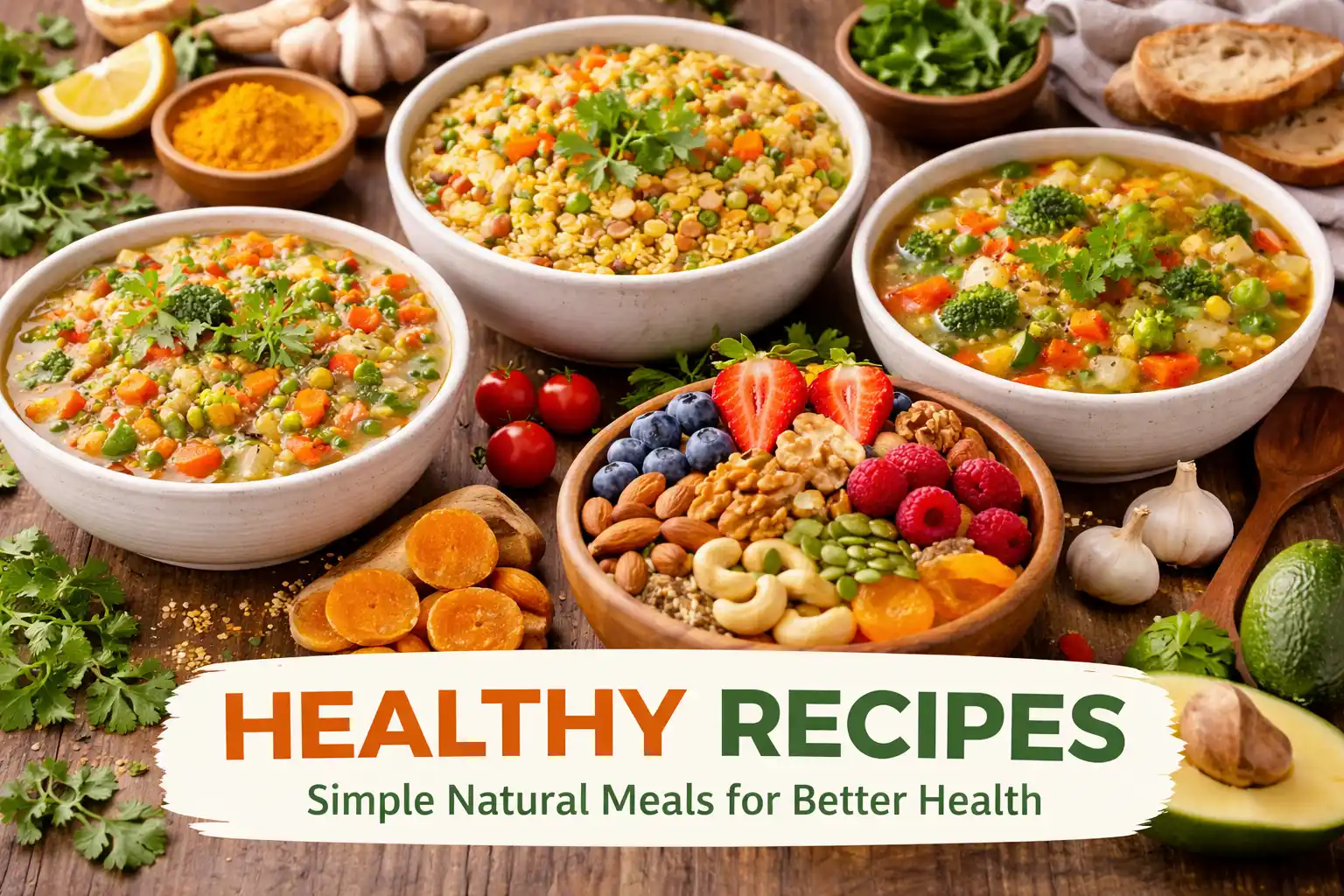
Healthy Recipes: Simple Natural Meals for Better Health, Energy, and Digestion
Introduction: Why Many People Are Returning to Simple Cooking
In many households today, eating healthy has become both a priority and a challenge. Supermarket shelves are filled with packaged foods that promise convenience, yet many people feel more tired, bloated, or sluggish after meals than they expect.
This has made many readers curious about something surprisingly simple: simple home-cooked healthy recipes
What actually makes a recipe healthy?
Do healthy meals require complicated ingredients?
And can everyday foods truly make a noticeable difference in digestion and energy?
In reality, healthy cooking rarely depends on fancy ingredients or strict diets. Often, it comes down to a few basic principles: using fresh foods, balancing nutrients, and preparing meals in ways that preserve natural goodness.
Interestingly, many traditional cuisines already follow these principles. In traditional Indian kitchens, for example, simple combinations of grains, vegetables, spices, and legumes have long been used to create meals that are both satisfying and nourishing.
Across the world—from Mediterranean cooking to Asian home meals—the idea is similar: simple ingredients prepared thoughtfully can support long-term health.
This guide explores practical healthy recipes, everyday cooking ideas, and the science behind why certain meals can support digestion, energy levels, and overall well-being.
What Makes a Recipe Truly Healthy?
A recipe is considered healthy not because it follows a strict trend, but because it provides balanced nutrition and supports the body’s natural functions.
Several key factors usually define a healthy meal.
Balanced nutrients
Healthy recipes generally combine:
- complex carbohydrates
- protein
- healthy fats
- fiber
- vitamins and minerals
This balance helps the body maintain stable energy levels and supports metabolic processes.
Whole, natural ingredients
Meals based on whole foods—such as vegetables, grains, legumes, nuts, and fruits—typically provide more nutrients than highly processed foods.
Whole foods also tend to contain fiber and natural compounds that support digestion.
Gentle cooking methods
The way food is cooked matters.
Cooking techniques like steaming, sautéing, slow cooking, and light roasting often preserve nutrients better than deep frying or heavy processing.
Portion balance
Healthy recipes also consider portion size. Even nutritious foods are most beneficial when consumed in reasonable amounts.
In practice, healthy cooking is less about strict rules and more about consistent, balanced habits.
↗ According to the World Health Organization, a balanced diet rich in fruits, vegetables, whole grains, and leguemes support long-term health
Common Mistakes People Make When Trying to Eat Healthy
Many people start eating healthy with good intentions but unknowingly make a few common mistakes.
Relying too much on packaged “health foods”
Granola bars, flavored yogurts, and packaged smoothies often contain large amounts of added sugar.
Completely avoiding healthy fats
Healthy fats from nuts, seeds, olive oil, and avocados support hormone balance and nutrient absorption.
Skipping meals
Skipping meals can lead to overeating later and unstable energy levels.
Overcomplicating healthy cooking
Healthy meals do not need complicated recipes or expensive ingredients.
Sometimes a simple bowl of rice, lentils, and vegetables provides balanced nutrition.
Why Healthy Home Cooking Matters
Many readers tell us that when they start cooking simple meals at home, they notice subtle but meaningful changes in how they feel throughout the day.
Energy levels become more stable.
Digestion feels lighter.
And meals tend to feel more satisfying.
One reason for this is that home cooking allows better control over ingredients and preparation methods.
According to guidance from the World Health Organization, balanced diets that include vegetables, whole grains, and legumes can help support long-term health and reduce the risk of certain chronic conditions.
Similarly, nutrition guidelines from the NHS (National Health Service) emphasize meals built around vegetables, fruits, whole grains, and moderate protein sources.
Home cooking also encourages mindful eating habits. Preparing food often makes people more aware of ingredients, portion sizes, and the natural flavors of foods.
Over time, these small habits can create sustainable improvements in dietary patterns.
↗ The National Health Service (NHS) also recommends building meals around vegetables, whole grains and lean protein sources
Healthy Breakfast Recipes to Start the Day
Breakfast is often described as the meal that sets the tone for the day. A balanced breakfast can support energy levels, concentration, and digestion.
Here are several simple healthy breakfast recipes.
Vegetable Oats Porridge
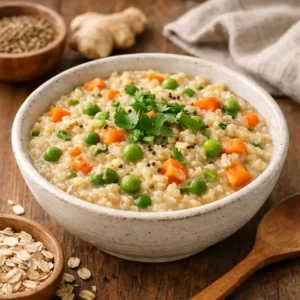
Ingredients
- rolled oats
- chopped carrots
- peas
- ginger
- cumin seeds
- water or vegetable broth
Preparation
Cook oats in water or broth and sauté vegetables with ginger and cumin. Combine and simmer briefly.
Why it’s healthy
Oats provide soluble fiber that may support digestive health and help maintain steady blood sugar levels.
Millet Breakfast Bowl
Millets have been used in many traditional cuisines for centuries.
Ingredients
- cooked millet
- sautéed vegetables
- yogurt or plant-based yogurt
- roasted seeds
Benefits
Millets are rich in fiber and minerals and may help promote fullness for longer periods.
Yogurt Fruit Bowl
Ingredients
- plain yogurt
- seasonal fruits
- nuts or seeds
- drizzle of honey (optional)
Benefits
Yogurt contains probiotics that support gut health, while fruits provide vitamins and natural antioxidants.
👉 A diet rich in natural foods can support gut function over time: Gut Health Foods for Better Digestion
Vegetable Poha
Poha (flattened rice) is a light breakfast widely enjoyed in India.
Cook poha with:
- onions
- mustard seeds
- turmeric
- peas
- coriander leaves
This combination creates a warm, easy-to-digest breakfast.
Chia Seed Pudding
Chia seeds absorb liquid and form a pudding-like texture.
Preparation
Soak chia seeds in milk overnight and top with fruits and nuts.
Benefits
Chia seeds contain fiber and omega-3 fatty acids that may support heart health.
Nutritious Lunch Recipes for Balanced Energy
Lunch often needs to be filling enough to sustain energy for the afternoon while remaining easy to digest.
Vegetable Khichdi
Khichdi is a classic comfort meal made from rice and lentils.
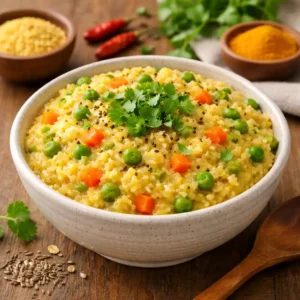
Ingredients
- rice
- yellow lentils
- vegetables
- turmeric
- cumin
This dish is often recommended during recovery periods because it is gentle on digestion.
Lentil and Spinach Soup
Combine lentils, spinach, garlic, and mild spices.
Lentils provide plant-based protein, while spinach offers iron and antioxidants.
Brown Rice Vegetable Bowl
A balanced bowl may include:
- brown rice
- sautéed vegetables
- chickpeas
- yogurt dressing
This meal combines fiber, protein, and healthy carbohydrates.
Chickpea Salad
Chickpeas mixed with cucumber, tomatoes, olive oil, and lemon create a refreshing and nutritious lunch.
Chickpeas contain plant protein and fiber that can help maintain satiety.
↗ The Harvard Healthy Eating Plate model highlights the importance of vegetables, whole grains, and healthy fats in daily meals
Light and Healthy Dinner Ideas
Evening meals are often easier to digest when they are lighter and less oily.
Vegetable Soup
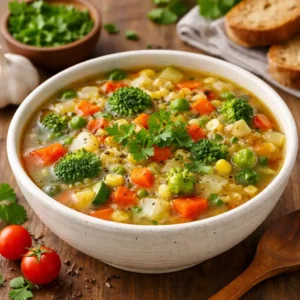
A warm vegetable soup made with seasonal vegetables can provide hydration and nutrients without feeling heavy.
Quinoa Vegetable Stir-Fry
Quinoa is a complete plant protein.
Stir-fry quinoa with vegetables like bell peppers, broccoli, and mushrooms for a balanced meal.
Mung Dal Soup
Mung dal is widely regarded as one of the easiest lentils to digest.
Cook it with turmeric, ginger, and cumin for a simple dinner option.
Healthy Snack Ideas Between Meals
Snacks can help maintain energy levels when chosen wisely.
Healthy snack ideas include:
- roasted chickpeas
- fruit with yogurt
- mixed nuts and seeds
- vegetable sticks with hummus
- smoothies made from fruits and spinach
These snacks provide fiber, protein, and natural nutrients without excessive added sugar.
👉 A warm herbal drink can complement healthy meals beautifully: Natural Tea Types and Their Preparation
Healthy Recipes From Different Food Traditions
Many traditional cuisines include naturally balanced meals.
Mediterranean meals
Often include olive oil, vegetables, legumes, and fish.
Japanese home cooking
Typically features rice, vegetables, fermented foods, and soups.
Indian home cooking
Meals often combine grains, lentils, vegetables, and spices.
Despite cultural differences, these food traditions share a similar principle:
simple ingredients prepared thoughtfully.
Essential Ingredients Used in Healthy Recipes
Many nutritious meals around the world rely on a small group of natural ingredients.
Whole grains
Examples:
- oats
- brown rice
- quinoa
- millets
These provide slow-release energy and fiber.
Legumes and lentils
Examples:
- chickpeas
- lentils
- mung beans
They are excellent plant protein sources.
Fresh vegetables
Leafy greens, carrots, broccoli, and seasonal vegetables provide vitamins and antioxidants.
Natural spices
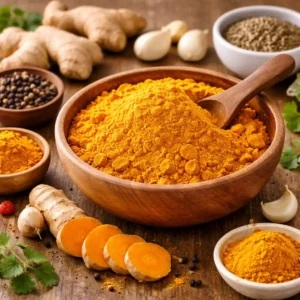
Spices like turmeric, ginger, cumin, and coriander enhance flavor while also supporting digestion.
In traditional cooking cultures, spices are used both for taste and for their functional properties.
Cooking Methods That Keep Healthy Recipes Nutritious
Cooking techniques influence how much nutrition food retains.
Steaming
Steaming vegetables helps preserve vitamins that may be lost through prolonged cooking.
Stir-frying
Quick stir-frying with minimal oil allows vegetables to retain texture and nutrients.
Slow cooking
Slow cooking soups and stews can enhance flavor while keeping ingredients wholesome.
Minimal oil cooking
Using moderate amounts of healthy oils, such as olive oil, can add flavor while maintaining nutritional balance.
Natural Ingredients That Boost Nutrition
Many traditional ingredients used in everyday cooking also contain natural compounds that support well-being.
Turmeric
Turmeric contains curcumin, a compound known for its antioxidant properties.
Ginger
Ginger is widely used to support digestion and reduce nausea.
Garlic
Garlic contains sulfur compounds associated with cardiovascular benefits.
Cumin and coriander
These spices are commonly used in traditional cuisines and may aid digestion.
In many Indian kitchens, these ingredients are used daily not just for flavor but also for their functional health benefits.
👉 In many traditional kitchens, turmeric-based drinks are used alongside meals: Turmeric Milk Benefits and Recipe for Natural Healing
How to Plan Healthy Meals for the Week
Meal planning can make healthy eating easier and more consistent.
Start with simple meals
Choose recipes that use familiar ingredients.
Prepare ingredients in advance
Washing vegetables, soaking grains, and preparing sauces ahead of time can reduce cooking stress.
Balance each meal
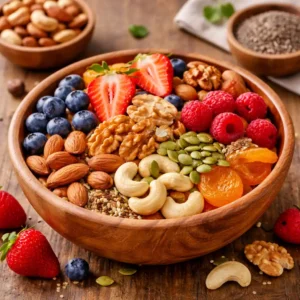
Try to include:
- vegetables
- protein
- whole grains
Rotate ingredients
Variety ensures that the body receives different nutrients.
Many families naturally follow this approach by rotating dishes throughout the week.
Try a Simple 3-Day Healthy Meal Experiment
Sometimes the best way to understand how food affects the body is through observation.
Try this small three-day experiment.
Day 1
Eat a balanced breakfast and a lighter dinner.
Day 2
Include fermented foods like yogurt or buttermilk.
Day 3
Add herbal teas and increase vegetable intake.
Pay attention to:
- digestion
- energy levels
- hunger patterns
Many readers notice subtle improvements after even small dietary adjustments.
How Healthy Recipes Support Digestive Health
Digestive comfort is one of the main reasons many people switch to natural home cooking.
Fiber-rich foods
Vegetables, fruits, and whole grains help maintain regular digestion.
Fermented foods
Examples include yogurt, kefir, and fermented vegetables.
These foods support beneficial gut bacteria.
Hydrating foods
Soups, fruits, and herbal drinks help maintain digestive balance.
Gentle spices
Spices such as ginger, cumin, and fennel are often used in traditional cuisines to support digestion.
👉 When digestion becomes uncomfortable, simple natural remedies may help: Natural Remedies for Digestive Problems
Quick Summary: What Makes a Recipe Healthy?
Healthy recipes are meals that:
- use whole, minimally processed ingredients
- provide balanced nutrients
- include vegetables and fiber
- use gentle cooking methods
- avoid excessive sugar and processed oils
- support digestion and stable energy
Frequently Asked Questions
What is considered a healthy recipe?
A healthy recipe usually includes whole ingredients, balanced nutrients, and cooking methods that preserve natural nutrition.
Are homemade meals healthier?
Homemade meals often allow better control over ingredients, oils, and portion sizes.
What cooking method is healthiest?
Steaming, sautéing, and light roasting are generally considered healthier than deep frying.
How often should you eat healthy meals?
Consistency matters more than perfection. Regular balanced meals support long-term health.
Are traditional recipes healthy?
Many traditional recipes around the world use whole ingredients and balanced cooking methods, making them naturally nutritious.
Are healthy recipes expensive?
Healthy meals often rely on basic ingredients like grains, vegetables, and legumes, which are affordable.
Can healthy meals still be flavorful?
Yes. Herbs, spices, and cooking techniques can create rich flavors without excessive oil or sugar.
Gentle Health Disclaimer
This article is for educational purposes only and should not replace professional medical advice. Always consult a qualified healthcare professional for personalized guidance.
Conclusion
Healthy eating rarely requires complicated diets or expensive ingredients. In fact, many of the most nourishing meals are built from simple foods that have been used in traditional kitchens for generations.
Small changes—such as cooking more meals at home, including vegetables regularly, and choosing balanced ingredients—can gradually improve overall dietary patterns.
Instead of aiming for perfection, focusing on consistent habits often produces the most sustainable results.
Over time, these everyday healthy recipes can become part of a natural lifestyle that supports energy, digestion, and long-term well-being.





Stir-Fried Tofu with Vegetables recipe is awesome ❤️😋
Thank You 🙏