

Why Do I Feel Sleepy After Meals? Causes, Science, Remedies & When to Worry
Have you ever finished a meal and suddenly felt like your energy disappeared within minutes?
Your eyes feel heavy. Your body slows down. Sometimes even a simple afternoon task starts feeling difficult. You may wonder: Did I eat too much? Is this normal? Why does this happen almost every day?
One interesting thing researchers have found is that post-meal sleepiness is not just “being lazy” or “overeating.” Your body goes through several complex biological changes after eating — and some daily habits quietly make the effect much stronger.
For many people, this feeling becomes especially noticeable after lunch or heavy dinners. In many households, people even joke about needing a nap after rice-heavy meals or festive foods. But what’s really happening inside the body may surprise you.
Is Feeling Sleepy After Meals Common?
You’re not alone in this.
This is more common than most people think.
Many readers tell us they experience a noticeable drop in energy after meals, especially during busy workdays, after large family lunches, or after eating carb-heavy comfort foods.
In fact, mild sleepiness after eating is considered normal in many cases. Your body naturally redirects energy toward digestion after meals. Hormonal shifts, blood sugar changes, and nervous system activity all contribute to this temporary dip in alertness.
However, the intensity matters.
Feeling slightly relaxed after eating is very different from:
- struggling to stay awake daily,
- needing naps after every meal,
- feeling dizzy or weak,
- or experiencing brain fog regularly.
That’s where it becomes important to understand the deeper causes.
Here’s What’s Really Happening Inside Your Body
The science behind post-meal sleepiness is surprisingly fascinating.
Your body is not shutting down randomly. Multiple systems start working together immediately after you eat.
1. Blood Flow Shifts Toward Digestion
The moment you eat, your digestive system becomes highly active.
Your stomach, intestines, pancreas, and liver begin processing food rapidly. To support this process, blood circulation increases around the digestive tract.
This temporary redistribution of blood flow may contribute to feelings of heaviness or reduced alertness in some people — especially after large meals.
Many people notice this more strongly after:
- buffet meals,
- weddings,
- festive Indian lunches,
- or late-night dinners.
The larger the meal, the harder the digestive workload.
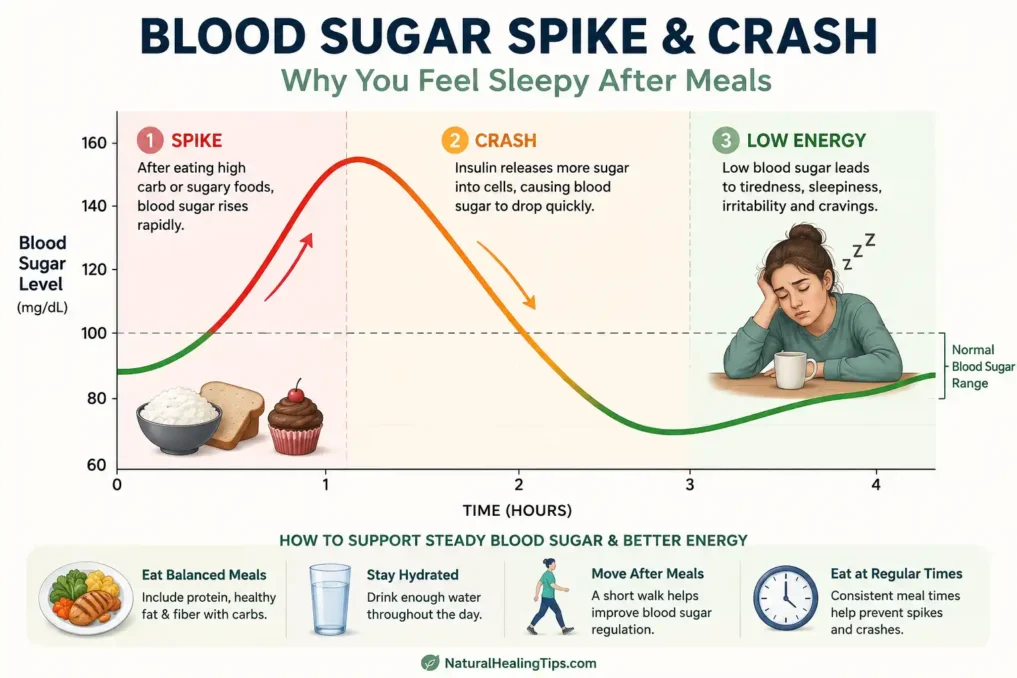
2. Blood Sugar Spikes and Crashes
This is one of the biggest hidden reasons.
When you eat foods high in refined carbohydrates or sugar, your blood glucose rises quickly. Your pancreas then releases insulin to help move sugar into cells.
Sometimes, this process overshoots.
The rapid spike is followed by a sudden dip, often called a “blood sugar crash,” which may trigger:
- fatigue,
- irritability,
- brain fog,
- shakiness,
- or intense sleepiness.
Common trigger foods include:
- white rice in excess,
- sweets,
- sugary tea,
- pastries,
- white bread,
- sugary breakfast cereals,
- soft drinks.
You may have noticed this especially after restaurant meals or heavy afternoon snacks.
One interesting thing researchers have found is that meals high in refined carbohydrates but low in protein and fiber tend to create faster glucose fluctuations.
Protein, fiber, and healthy fats slow digestion and help stabilize the release of sugar into the bloodstream. This is one reason balanced meals often feel more energizing than highly processed meals.
3. Certain Foods Increase Sleep-Promoting Chemicals
Some foods naturally influence neurotransmitters linked to sleep.
For example, foods containing tryptophan — an amino acid — may help the body produce serotonin and melatonin, chemicals associated with relaxation and sleep regulation.
Foods that contain tryptophan include:
- turkey,
- milk,
- bananas,
- curd,
- nuts,
- seeds,
- eggs.
However, researchers believe it’s usually not just one food causing drowsiness. It’s often the combination of heavy carbohydrates plus large portions that amplifies the sleepy feeling.
4. Overeating Forces the Body Into “Recovery Mode”
One large meal can demand enormous digestive effort.
When people eat too quickly or beyond fullness, the body has to work harder to:
- break down food,
- regulate blood sugar,
- manage insulin,
- process fats,
- and maintain digestive balance.
This creates a sluggish, heavy sensation.
In traditional Indian kitchens, large rice portions combined with fried foods and sweets may intensify this effect, especially during festivals or family gatherings.
Sometimes the issue is not what you eat — but how much.
5. Poor Sleep at Night Makes Post-Meal Fatigue Worse
This connection is often ignored.
If you are already sleep-deprived, your brain becomes more vulnerable to natural energy dips after meals.
Even mild digestion-related relaxation can suddenly feel overwhelming when:
- you slept poorly,
- work stress is high,
- or your circadian rhythm is disrupted.
Many people blame lunch when the real issue began the previous night.
6. Dehydration Can Intensify Fatigue
Even mild dehydration affects:
- circulation,
- brain performance,
- oxygen delivery,
- and energy levels.
After eating, dehydration may amplify feelings of tiredness and heaviness.
This becomes especially common in:
- hot climates,
- summer seasons,
- high caffeine intake,
- and people who forget to drink water during work hours.
7. Heavy Fatty Meals Slow Digestion
Fatty foods digest more slowly than lighter meals.
While healthy fats are important, excessively oily or fried meals may delay stomach emptying and increase feelings of sluggishness.
Examples include:
- deep-fried snacks,
- creamy gravies,
- fast food,
- heavily processed meals.
Many readers notice that lunch from fast-food chains causes much stronger fatigue than lighter homemade meals.
8. Underlying Medical Conditions Sometimes Play a Role
While occasional drowsiness is common, persistent or severe post-meal fatigue may sometimes be linked to:
- insulin resistance,
- diabetes,
- sleep apnea,
- anemia,
- thyroid imbalance,
- food sensitivities,
- digestive disorders.
This is why repeated extreme fatigue after meals should not always be ignored.
Why Do Some People Feel Sleepier Than Others After Eating?
Ever wondered why one person feels energetic after lunch while another struggles to keep their eyes open?
The answer often comes down to metabolism, food choices, sleep quality, activity levels, and insulin sensitivity.
Some people process carbohydrates more efficiently, while others experience larger blood sugar fluctuations after meals. This may explain why two people can eat similar foods but feel completely different afterward.
People who may experience stronger post-meal fatigue include:
- individuals with sedentary lifestyles,
- people under chronic stress,
- shift workers,
- those with poor sleep quality,
- people with insulin resistance,
- and individuals consuming highly processed diets.
Age may also play a role. Older adults sometimes digest food more slowly, which can increase feelings of heaviness and fatigue after large meals.
One interesting thing researchers have found is that gut health may also influence energy regulation. An imbalanced gut microbiome may affect inflammation, digestion, and metabolic responses after meals.
Symptoms Often Associated With Post-Meal Sleepiness
Post-meal fatigue may appear differently from person to person.
Common symptoms include:
- heavy eyelids,
- yawning,
- low concentration,
- bloating,
- sluggish thinking,
- mild dizziness,
- craving more sugar,
- lack of motivation,
- feeling mentally “foggy.”
Some people also notice:
- stomach heaviness,
- acid reflux,
- or reduced productivity during afternoon hours.
👉 Many people experiencing post-meal fatigue also notice bloating and digestive discomfort: Foods That Stop Bloating Immediately at Home
Why Do I Feel Sleepy After Eating Rice?
For many people — especially in Asian and Indian households — rice-heavy meals are one of the biggest triggers for afternoon sleepiness.
This usually happens because large portions of refined white rice digest quickly and may cause a rapid rise in blood sugar levels. The body then releases insulin to manage the glucose surge, which may lead to a sudden dip in energy afterward.
The effect can become stronger when rice is combined with:
- fried foods,
- sugary desserts,
- low protein intake,
- or oversized meal portions.
However, rice itself is not necessarily “bad.”
The key often lies in:
- portion size,
- meal balance,
- fiber intake,
- and overall eating habits.
Some people notice better energy when pairing rice with:
- dal,
- vegetables,
- curd,
- protein-rich foods,
- or switching partly to brown rice or millets.
| Foods That May Trigger Fatigue | Foods That May Support Stable Energy |
|---|---|
| Sugary desserts | Oats |
| White bread | Whole grains |
| Fried snacks | Nuts and seeds |
| Sugary tea or soda | Herbal teas |
| Large refined-carb meals | Protein-balanced meals |
| Fast food | Homemade fiber-rich meals |
| Processed snacks | Fruits and vegetables |
Best Foods That May Help Prevent Post-Meal Fatigue
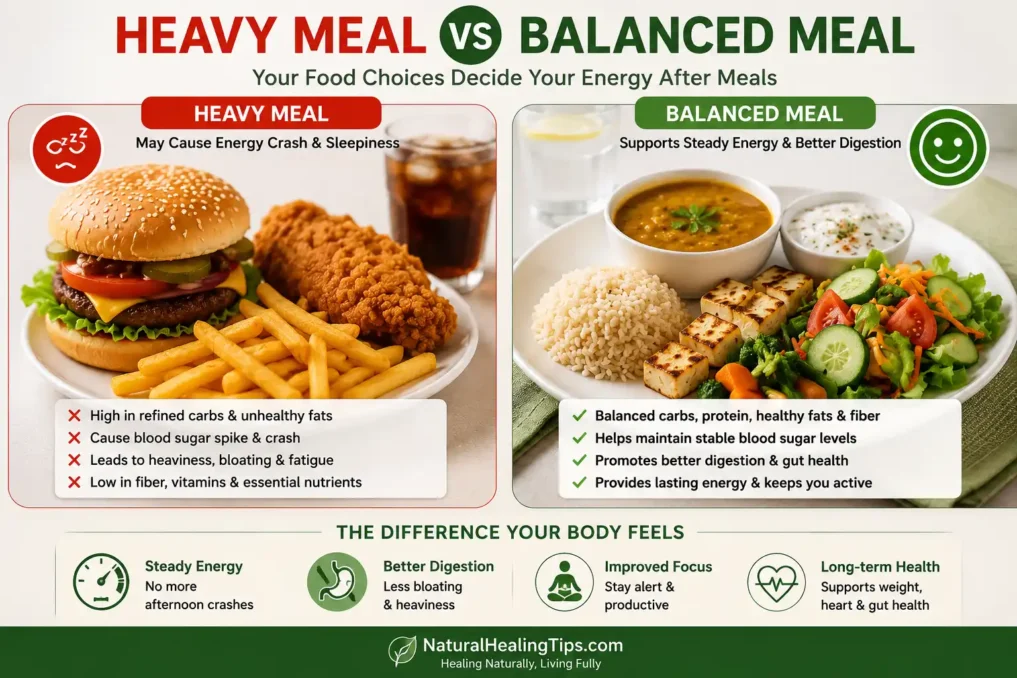
The foods you choose can strongly affect how energetic or sluggish you feel after eating. Balanced meals with protein, fiber, and healthy fats may help support steadier energy levels and reduce sudden crashes.
Oats
Rich in soluble fiber, oats digest slowly and may help stabilize blood sugar.
Eggs
Eggs provide protein that may help reduce sudden energy dips after meals.
Lentils and Dal
Dal-based meals contain fiber and protein, making them more filling and easier on energy levels than heavily refined foods.
Curd or Greek Yogurt
Curd supports digestion and feels lighter than oily side dishes, especially during hot weather.
Nuts and Seeds
Almonds, walnuts, flaxseeds, and chia seeds provide healthy fats and slow-release energy.
Fiber-Rich Fruits
Apples, pears, berries, and guava contain fiber that may help prevent rapid sugar spikes.
Leafy Green Vegetables
Spinach and other greens provide nutrients and fiber that support lighter digestion.
Whole Grains
Brown rice, millets, oats, and whole wheat digest more slowly than refined grains and may reduce post-meal sluggishness.
Herbal Digestive Drinks
Traditional drinks made with ginger, fennel, or cumin may help support digestion naturally after heavy meals.
Quick Tip
Try building meals with:
- ½ plate vegetables
- ¼ plate protein
- ¼ plate complex carbohydrates
This simple balance may help reduce post-meal fatigue and support steadier energy throughout the day.
Could Your Lunch Timing Be Making You More Tired?
Many people focus only on what they eat but ignore when they eat.
Large late lunches, irregular eating schedules, and skipping breakfast may all worsen energy crashes later in the day.
For example:
- skipping breakfast often leads to overeating at lunch,
- very late dinners may affect sleep quality,
- inconsistent meal timing can disrupt circadian rhythm.
Your body follows an internal biological clock that influences digestion, hormones, and alertness.
👉 If stress and mental fatigue are contributing to your energy crashes, these natural approaches may help: Natural Remedies for Stress and Anxiety
Eating very heavy meals during the body’s natural afternoon dip may intensify sleepiness.
This is one reason many office workers experience the classic “2 PM crash.”
Experts increasingly suggest that consistent meal timing may help support stable energy levels throughout the day.

While This Is Usually Harmless, There Are Times When You Should Pay Attention
Most cases of mild post-meal sleepiness are not dangerous.
However, organizations like the World Health Organization, National Health Service, Mayo Clinic emphasize the importance of evaluating persistent fatigue symptoms.
You should consider speaking with a healthcare professional if you experience:
- extreme exhaustion after every meal,
- fainting sensations,
- rapid heartbeat,
- unexplained weight changes,
- excessive thirst,
- frequent urination,
- severe bloating,
- chest discomfort,
- or ongoing digestive pain.
This becomes especially important if symptoms interfere with daily life or continue for weeks.
↗ Experts at Mayo Clinic explain that persistent fatigue can sometimes be linked to underlying health conditions and lifestyle factors
Conditions That Can Sometimes Mimic Normal Post-Meal Sleepiness
While occasional fatigue after eating is common, persistent symptoms may sometimes overlap with medical conditions.
These may include:
- type 2 diabetes,
- reactive hypoglycemia,
- sleep apnea,
- anemia,
- hypothyroidism,
- chronic stress,
- food intolerances.
For example, reactive hypoglycemia occurs when blood sugar drops too quickly after eating, which may trigger shakiness, sweating, fatigue, and sudden hunger.
Similarly, sleep apnea may cause poor nighttime sleep, making daytime fatigue much worse after meals.
This does not mean every case is serious.
But persistent or worsening symptoms deserve attention rather than self-diagnosis.
The Good News Is—Small Changes Can Make a Noticeable Difference
Many people notice meaningful improvement simply by adjusting meal habits, sleep patterns, and food combinations.
👉 Improving your digestion naturally may also help reduce energy crashes after meals: Natural Remedies for Digestive Problems
Here are practical strategies that may help.
1. Reduce Portion Sizes Slightly
Large meals often create larger energy crashes.
Try eating until you feel comfortably satisfied instead of overly full.
A practical method:
- fill half your plate with vegetables,
- one-quarter with protein,
- and one-quarter with carbohydrates.
You may notice lighter energy levels within days.
2. Balance Carbohydrates With Protein
This is one of the most effective strategies.
Instead of eating carbs alone, pair them with:
- eggs,
- dal,
- paneer,
- yogurt,
- fish,
- chicken,
- tofu,
- nuts.
Balanced meals slow glucose spikes and may reduce sudden fatigue.
↗ The NHS Healthy Eating Guide also highlights the importance of balanced meals and stable eating habits for maintaining consistent energy levels.
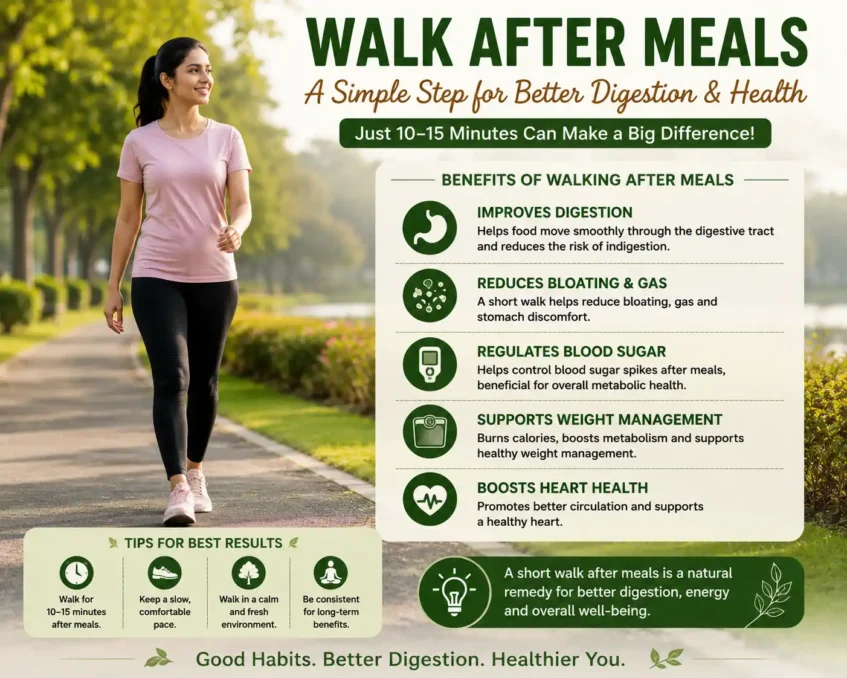
3. Walk for 10–15 Minutes After Meals
Many people ignore this simple habit.
A short walk after meals may support:
- blood sugar regulation,
- digestion,
- circulation,
- and alertness.
Even gentle movement often works better than immediately lying down.
In many households, older generations traditionally recommended slow walking after dinner — and modern research increasingly supports this habit.
4. Stay Hydrated Throughout the Day
Instead of drinking large amounts only during meals, maintain hydration steadily throughout the day.
Helpful options include:
- water,
- lemon water,
- coconut water,
- herbal teas,
- infused water.
Avoid excessive sugary beverages that may worsen energy crashes.

5. Avoid Extremely Heavy Lunches During Work Hours
This is especially important for office workers and students.
Heavy lunches combined with long sitting hours often intensify fatigue dramatically.
Try lighter combinations such as:
- vegetable dal with moderate rice,
- grilled protein with salad,
- millet-based meals,
- soups with protein,
- curd rice in moderate portions.
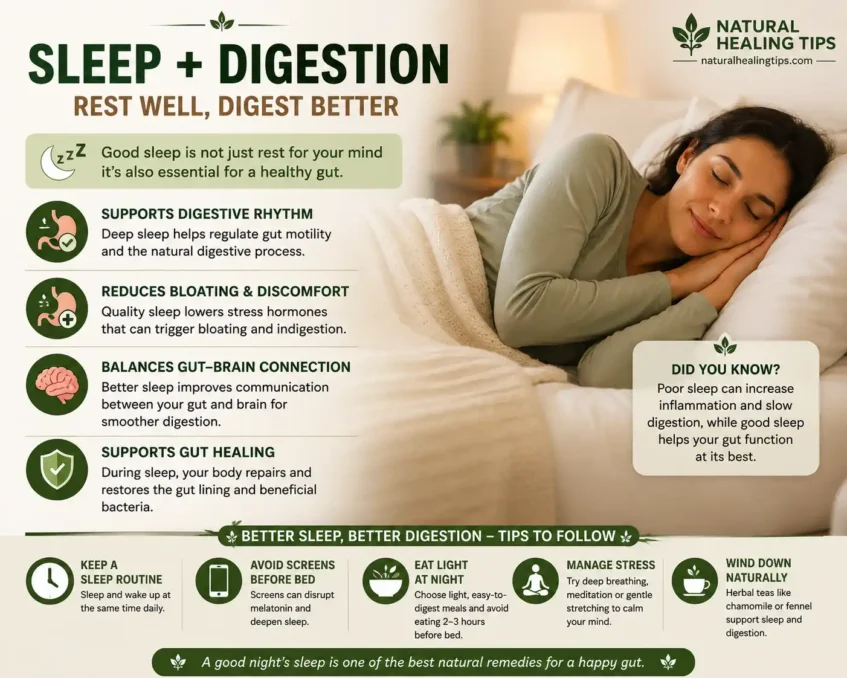
6. Improve Sleep Quality at Night
Sometimes fixing daytime fatigue starts at bedtime.
Aim for:
- consistent sleep timing,
- reduced screen exposure before bed,
- darker sleeping environments,
- and enough total sleep hours.
Poor sleep amplifies natural post-meal relaxation signals.
👉 Building healthier morning habits may improve digestion and daytime energy naturally: Morning Routine for Better Digestion Naturally
7. Include Fiber-Rich Foods
Fiber slows digestion and supports steadier blood sugar levels.
Helpful foods include:
- oats,
- vegetables,
- flaxseeds,
- fruits,
- legumes,
- chia seeds.
One interesting thing researchers have found is that fiber-rich meals often improve satiety without causing the same heavy crash associated with refined foods.
👉 Certain gut-friendly foods may help support steadier digestion and energy levels: Gut Health Foods for Better Digestion

8. Try Traditional Digestive Spices
In traditional Indian kitchens, certain spices have long been used to support digestion naturally.
Examples include:
- fennel seeds,
- cumin,
- ginger,
- ajwain,
- turmeric.
Simple Digestive Tea Recipe
Ingredients:
- 1 teaspoon fennel seeds
- ½ teaspoon cumin
- small ginger slice
- 1 cup water
Preparation:
Boil for 5–7 minutes.
Usage:
Drink warm after lunch.
Expected benefits:
Some people notice reduced bloating and lighter digestion within a few days.
9. Limit Ultra-Processed Foods
Highly processed foods often contain:
- refined sugars,
- unhealthy fats,
- additives,
- and low fiber.
These combinations may contribute to unstable energy levels.
Cooking more meals at home often leads to better energy awareness and portion control.
↗ According to the NHS Healthy Eating Guide, reducing ultra-processed foods and improving dietary balance may support better long-term health outcomes.
10. Eat More Mindfully
Eating too quickly can worsen post-meal heaviness.
Slow eating allows the brain and digestive system to coordinate better.
Simple practices include:
- chewing thoroughly,
- reducing distractions,
- avoiding overeating,
- pausing midway through meals.
Sometimes the body signals fullness earlier than we realize.
How to Feel More Awake Quickly After a Heavy Meal
If you already feel sleepy after eating, these simple strategies may help temporarily improve alertness:
- Take a 10-minute walk
- Drink water slowly
- Step outside into natural sunlight
- Stretch lightly
- Avoid lying down immediately
- Wash your face with cool water
- Choose green tea instead of sugary drinks
- Practice deep breathing for 2–3 minutes
Many readers tell us that movement works surprisingly fast compared to drinking more caffeine.
Mistakes That Quietly Worsen Post-Meal Fatigue
Sometimes the problem is not just the meal itself — but the habits surrounding it.
Common mistakes include:
- eating too quickly,
- skipping breakfast,
- consuming sugary drinks with meals,
- sitting continuously after eating,
- sleeping immediately after lunch,
- relying on excessive caffeine,
- and eating very late at night.
Many people unknowingly create a cycle where:
poor sleep → heavy meals → fatigue → more caffeine → worse sleep.
Breaking even one part of this cycle may noticeably improve energy levels over time
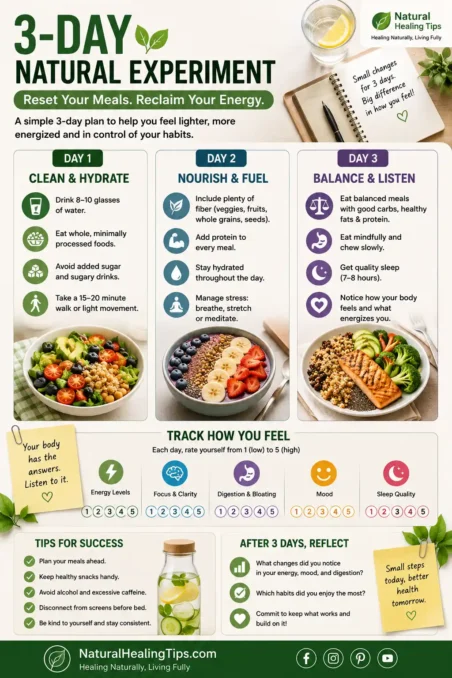
Want to See How Your Body Responds? Try This 3-Day Routine
This simple experiment may help you identify whether meal habits are contributing to your fatigue.
Day 1
- Reduce portion size by 20%
- Drink more water
- Walk after meals
Day 2
- Add protein to every meal
- Avoid sugary snacks
- Sleep earlier
Day 3
- Eat slowly
- Include vegetables and fiber
- Avoid heavy fried lunch foods
Track:
- energy levels,
- bloating,
- concentration,
- afternoon cravings,
- sleepiness intensity.
Many people notice patterns surprisingly quickly.
Foods and Habits That May Make Things Worse
Try limiting:
- overeating,
- sugary drinks,
- skipping breakfast,
- sleeping immediately after meals,
- excessive alcohol,
- highly processed snacks,
- very late-night dinners.
These habits quietly increase fatigue over time.
Small Daily Habits Most People Ignore
Mini-hook:
Sometimes the biggest energy drains come from habits we barely notice.
Many people focus only on food while ignoring the lifestyle habits quietly contributing to fatigue.
These include:
- eating too fast,
- working continuously without movement,
- chronic stress,
- poor hydration,
- excessive caffeine,
- irregular sleep,
- and screen exposure late at night.
Even simple changes like standing up after meals, improving posture, or reducing ultra-processed snacks may create noticeable improvements over time.
This is more common than people realize.
Quick Summary
Why You Feel Sleepy After Meals
- Digestion redirects energy
- Blood sugar spikes and crashes
- Large meals overload digestion
- Poor sleep worsens fatigue
- Heavy carbs and fried foods increase drowsiness
When to Seek Medical Advice
- Severe fatigue after every meal
- Dizziness or fainting
- Excessive thirst
- Persistent symptoms
- Sudden weight changes
Signs Your Meal May Be Too Heavy for Your Body
You may want to rethink your meal balance if you regularly experience:
- extreme sleepiness after eating,
- bloating or heaviness,
- brain fog,
- acid reflux,
- sugar cravings shortly after meals,
- low afternoon productivity,
- or the need to lie down after lunch.
These signs do not always mean something serious is wrong.
But they may suggest your meals are too large, too processed, or poorly balanced for your current lifestyle and metabolism.
Frequently Asked Questions
Why do carbs make me sleepy so quickly?
Refined carbohydrates can rapidly raise blood sugar levels, followed by a sharp insulin response. This may lead to an energy crash and drowsiness.
What really happens if I sleep immediately after eating?
Sleeping right after meals may worsen digestion for some people and increase bloating or acid reflux symptoms.
Can dehydration actually make post-meal fatigue worse?
Yes. Even mild dehydration may affect circulation and energy regulation, making tiredness feel stronger after eating.
Why do some people notice changes quickly after improving meals?
Balanced meals help stabilize blood sugar and digestion, so some people feel improvements within a few days.
Is feeling sleepy after lunch normal?
Mild afternoon sleepiness can be normal, especially after large meals. However, extreme fatigue every day should be evaluated.
Can spicy Indian foods cause sleepiness?
Not directly in most cases. However, heavy oily meals, large portions, and rich gravies may contribute to sluggishness afterward.
Does walking after meals really help?
Research suggests light walking after meals may support blood sugar balance and digestion, which can reduce fatigue.
Could post-meal sleepiness be a sign of diabetes?
Sometimes persistent fatigue after eating may be associated with blood sugar regulation problems. A healthcare professional can evaluate symptoms properly.
Why do I feel sleepy after eating rice but not bread?
Different foods affect blood sugar differently depending on portion size, fiber content, protein balance, and digestion speed.
Why do I crash after lunch every afternoon?
Large lunches, refined carbohydrates, dehydration, stress, poor sleep, and inactivity may all contribute to the classic afternoon energy crash.
Can eating too much sugar make you sleepy?
Yes. Sugary foods may temporarily increase energy before causing a rapid blood sugar drop that triggers fatigue.
Is it better to walk or sleep after meals?
Light walking is generally considered more supportive for digestion and blood sugar balance than lying down immediately after eating.
Gentle Health Disclaimer
This article is for educational purposes only and should not replace professional medical advice. If you experience severe or persistent symptoms, consult a qualified healthcare provider.
Can Post-Meal Sleepiness Improve Naturally Over Time?
Yes — in many cases, it can.
When people consistently improve:
- sleep quality,
- meal balance,
- hydration,
- activity levels,
- and digestion habits,
they often notice gradual improvement in daytime energy.
However, results usually happen progressively rather than overnight.
Some people notice lighter digestion within days, while others may require several weeks of consistent lifestyle adjustments.
The key is identifying patterns instead of searching for one “magic fix.”
Final Thoughts
Sometimes the body whispers before it starts shouting.
Feeling sleepy after meals is often your body’s way of signaling that something about digestion, meal balance, sleep, or lifestyle needs attention. The encouraging part is that many people improve significantly through small daily adjustments rather than extreme diets or complicated routines.
Start simple.
Pay attention to how different meals affect your energy. Eat more mindfully. Walk a little after meals. Sleep better. Stay hydrated.
Tiny habits repeated consistently often create the biggest long-term changes.






8 thoughts on “Why Do I Feel Sleepy After Meals?”