
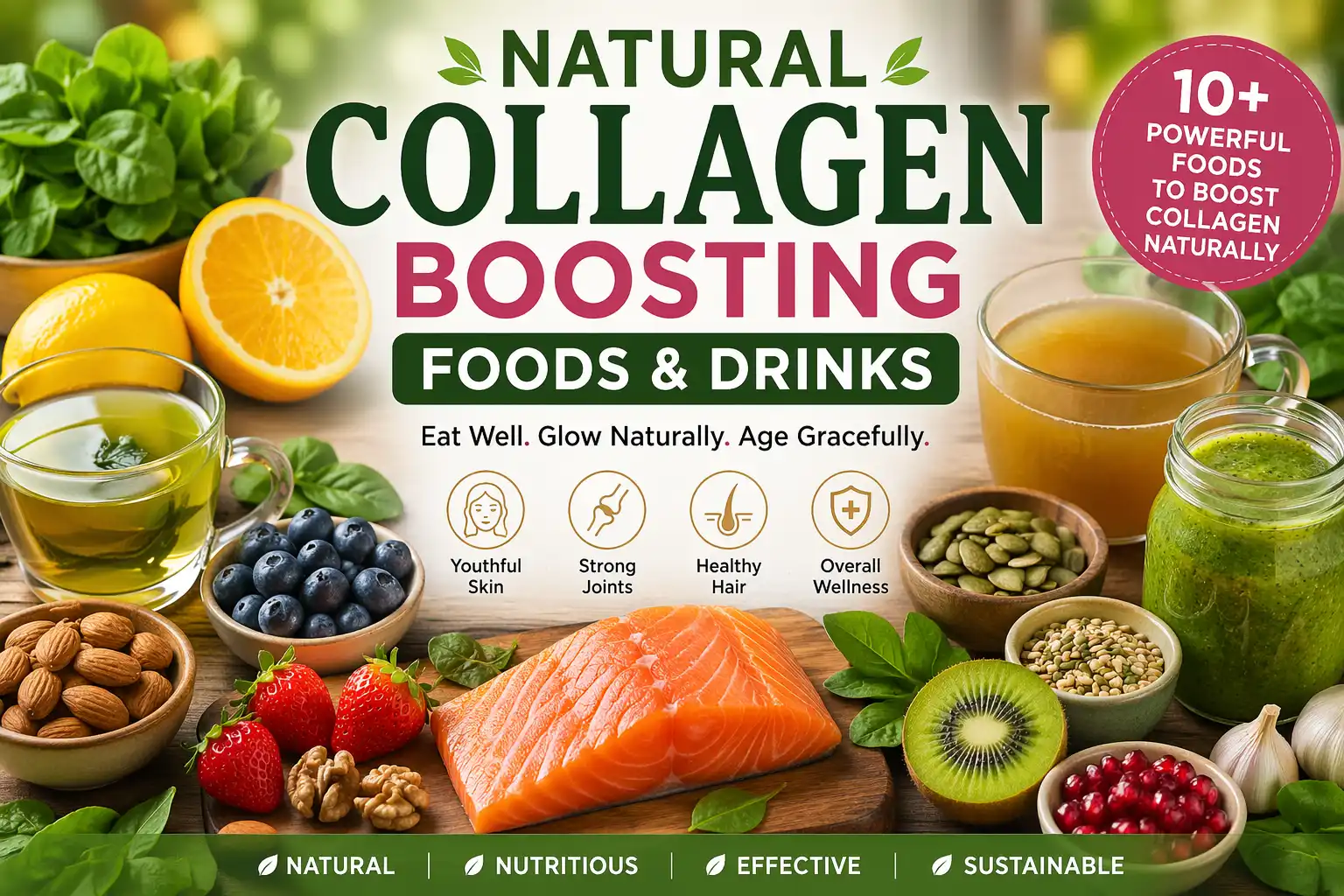
10 Natural Collagen Boosting Foods & Drinks That Make Your Skin Glow Faster
Introduction
Your skin might be aging faster than you think…
Not because of time—but because of what’s missing in your diet.
What if a few simple foods could help your body rebuild collagen naturally?
You may have noticed:
- Fine lines appearing sooner than expected
- Skin losing its bounce
- Hair thinning slightly
So here’s the real question…
Can food actually help your body rebuild collagen naturally?
The answer is more interesting—and more empowering—than most people think.
Signs Your Body Needs More Collagen
- Skin looks dull or tired
- Fine lines appearing early
- Hair feels weaker
- Joint stiffness
- Slow recovery
👉 If your digestion isn’t optimal, even healthy foods may not help much: Best Foods for Gut Health and Digestion
Is This Common or Normal?
You’re not alone in this.
In fact, collagen loss is something almost everyone experiences, whether they notice it or not.
This is more common than most people think…
- After age 25, collagen production declines by about 1% per year
- Lifestyle factors like stress, poor diet, and sun exposure speed it up
- Even digestion plays a role in how well your body uses nutrients
Many readers tell us they assumed collagen loss was irreversible.
But here’s the surprising part:
Your body is still capable of producing collagen—you just need to support it correctly.
Science Behind Collagen Loss & Production
Here’s what’s really happening inside your body…
Let’s break this down simply.
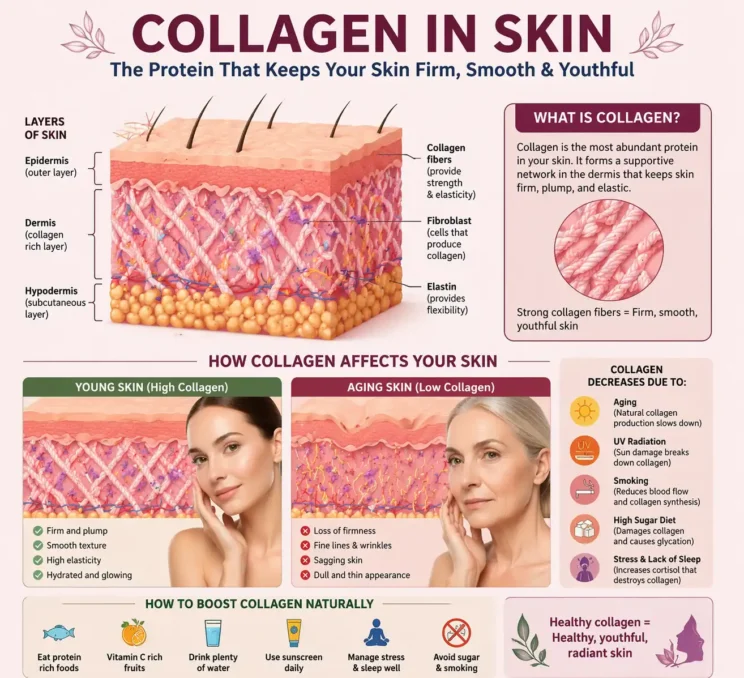
1. Collagen is Made from Amino Acids
Your body builds collagen using amino acids like glycine, proline, and hydroxyproline.
Without enough protein intake…
Collagen production slows down.
2. Vitamin C is a Critical Trigger
Here’s something most people overlook:
Without vitamin C, collagen synthesis literally cannot happen.
That’s why diets low in fruits and vegetables often lead to dull skin.
↗ The NHS highlights the importance of vitamin C and balanced nutrition in supporting skin health and repair.
3. Oxidative Stress Damages Collagen
Free radicals—from pollution, stress, and junk food—break down existing collagen.
This is where antioxidants come in.
4. Sugar Weakens Collagen Structure
One interesting thing researchers have found…
Excess sugar causes a process called glycation, which makes collagen stiff and fragile.
5. Gut Health Influences Collagen Absorption
If your digestion is poor, even the best foods won’t help much.
Your gut determines how efficiently nutrients are absorbed.
6. Hormonal Changes Affect Collagen
Especially in women, estrogen plays a role in collagen maintenance.
That’s why skin changes become noticeable during certain life stages.
7. Sleep is a Collagen Repair Window
During deep sleep, your body repairs tissues—including collagen fibers.
Poor sleep = poor repair.
👉 Your daily habits also influence how efficiently nutrients are absorbed: Morning Habits for Better Digestion
When Should You Be Concerned?
While this is usually harmless, there are times when you should pay attention…
If you notice:
- Sudden skin sagging
- Persistent joint pain
- Slow wound healing
It’s worth consulting professionals.
Trusted organizations like:
- ↗ World Health Organization (WHO)
- ↗ NHS
- ↗ Mayo Clinic
highlight that structural protein health is linked to overall nutrition and lifestyle.
↗ According to the World Health Organization (WHO), proper nutrition plays a key role in maintaining overall tissue health and preventing deficiencies.
What are natural collagen boosting foods & drinks?
Natural collagen boosting foods & drinks are foods rich in vitamin C, amino acids, antioxidants, and minerals that help your body produce and protect collagen naturally. These include citrus fruits, bone broth, leafy greens, berries, nuts, seeds, and herbal drinks like green tea and amla juice.
| Food/Drink | Key Nutrient | Collagen Benefit |
|---|---|---|
| Citrus fruits | Vitamin C | Boosts collagen production |
| Bone broth | Gelatin | Improves skin elasticity |
| Leafy greens | Antioxidants | Protects collagen |
| Berries | Polyphenols | Prevents breakdown |
| Nuts & seeds | Zinc | Supports repair |
| Green tea | Catechins | Reduces damage |
Natural Collagen Boosting Foods & Drinks
The good news is—small changes can make a noticeable difference…
Let’s explore powerful, natural options.
1. Bone Broth (Collagen Direct Source)
Rich in gelatin and amino acids.
In many households, slow-cooked broths have been used for generations.
Instant benefit: Supports joints and skin elasticity.
2. Citrus Fruits (Vitamin C Power)
Oranges, lemons, amla (Indian gooseberry).
They trigger collagen synthesis.
You may notice brighter skin within days.
3. Leafy Greens
Spinach, kale, fenugreek leaves.
Packed with chlorophyll and antioxidants.
✔ If your digestion isn’t optimal, even healthy foods may not help much.
4. Tomatoes
Rich in lycopene.
Protects collagen from sun damage.
5. Nuts & Seeds
Almonds, walnuts, flaxseeds.
Provide zinc and healthy fats.
6. Fatty Fish
Salmon, sardines.
Contain omega-3 fatty acids that reduce collagen breakdown.
7. Berries
Strawberries, blueberries.
High in antioxidants.
8. Eggs
Egg whites contain proline—essential for collagen formation.
9. Garlic
Contains sulfur, which helps prevent collagen breakdown.
10. Green Tea
Loaded with polyphenols.
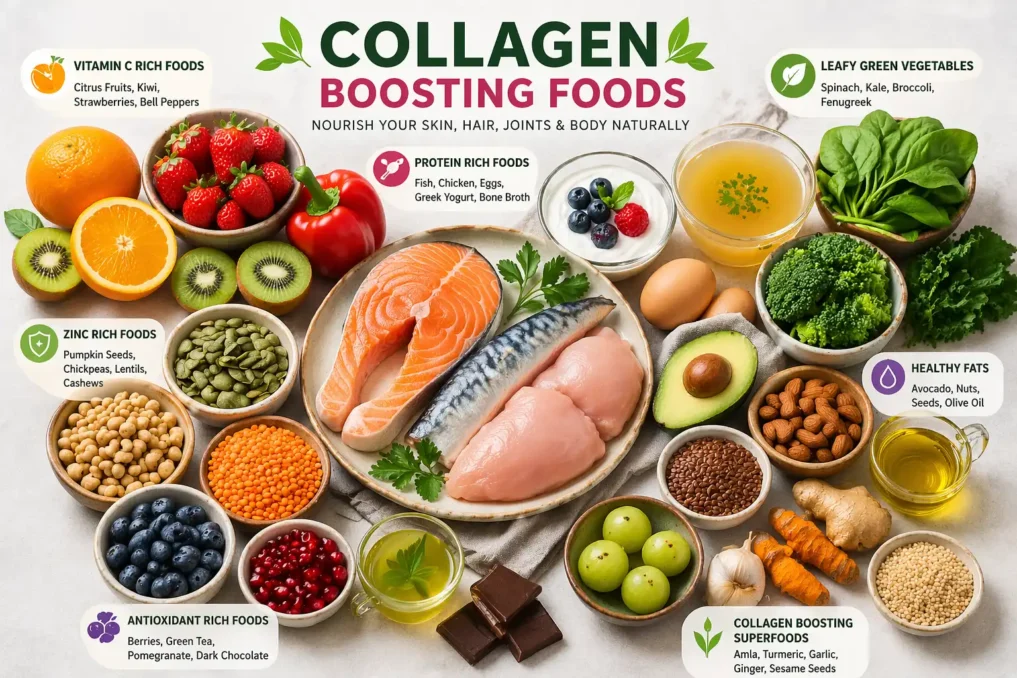
Protects collagen from damage.
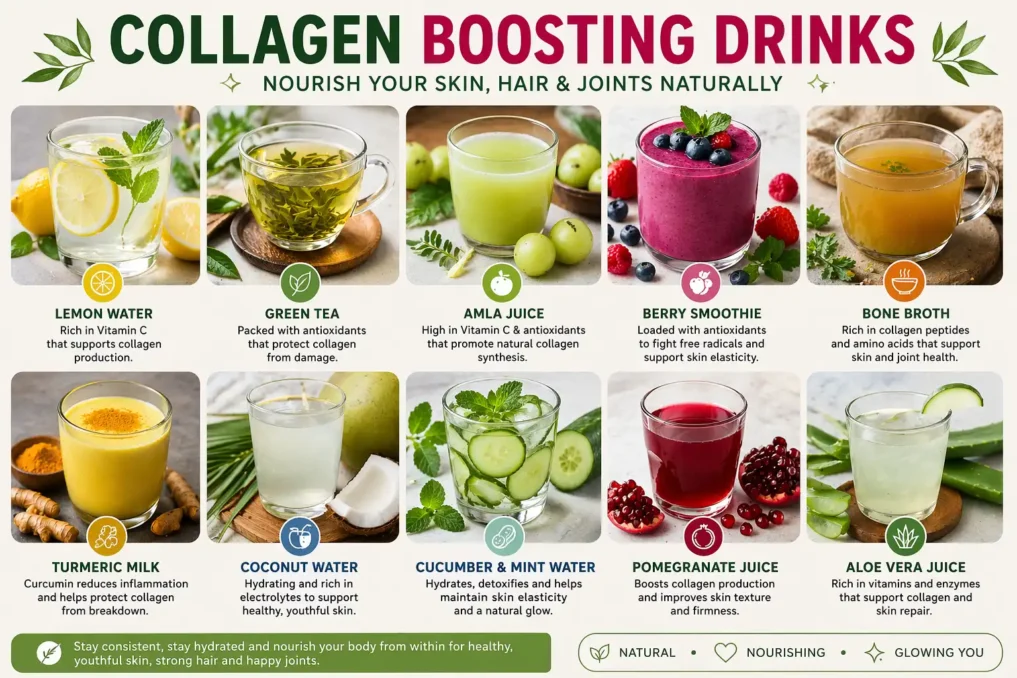
Collagen Boosting Drinks
1. Lemon Water
Simple but powerful.
Hydrates + provides vitamin C.
2. Amla Juice
A staple in Indian wellness.
Extremely high vitamin C content.
3. Smoothies (Berry + Spinach)
Combines antioxidants + vitamins.
4. Coconut Water
Hydration supports skin elasticity.
5. Herbal Teas
Tulsi, chamomile—reduce stress-related collagen loss.
👉 Starting your morning with the right drinks can amplify collagen production: Morning Drinks for Glowing Skin Naturally
Collagen by Age: What Changes Over Time?
Here’s something most people don’t realize…
Collagen loss doesn’t happen suddenly—it follows a pattern.
In Your 20s
- Collagen production is still active
- Skin looks firm and elastic
- Damage is minimal but begins internally
Hidden risk: Poor diet now affects future aging.
In Your 30s
- Collagen declines more noticeably
- Fine lines may begin
- Skin hydration reduces
Many readers say this is when they first notice subtle changes.
In Your 40s and Beyond
- Collagen breakdown accelerates
- Skin thinning becomes visible
- Joint stiffness may increase
This is where nutrition becomes even more critical.
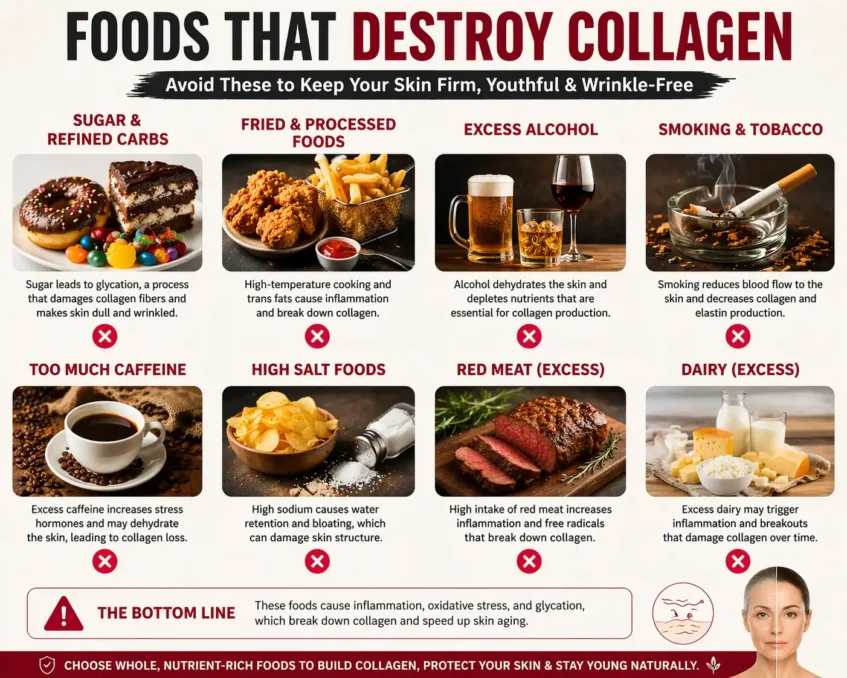
Foods That Destroy Collagen (Most People Ignore This)
What if some of your daily habits are silently undoing your efforts?
1. Excess Sugar
Triggers glycation—damaging collagen fibers.
2. Processed Foods
Contain inflammatory compounds that weaken skin structure.
3. Deep-Fried Foods
Oxidative stress increases collagen breakdown.
4. Excess Alcohol
Dehydrates skin and reduces nutrient absorption.
5. Smoking
One of the fastest ways to destroy collagen.
FOMO trigger:
Most people focus on what to eat—but ignore what to avoid.
👉 Reducing inflammation is one of the fastest ways to protect your collagen levels: Top Anti-Inflammatory Foods for Daily Diet
Ayurvedic Perspective on Collagen
In traditional Indian wellness systems like Ayurveda, collagen isn’t referred to directly—but its function aligns with:
- Rasa Dhatu (nutrition fluid)
- Mamsa Dhatu (muscle tissue)
- Ojas (vital energy)
According to Ayurveda:
Strong tissues come from proper digestion (Agni).
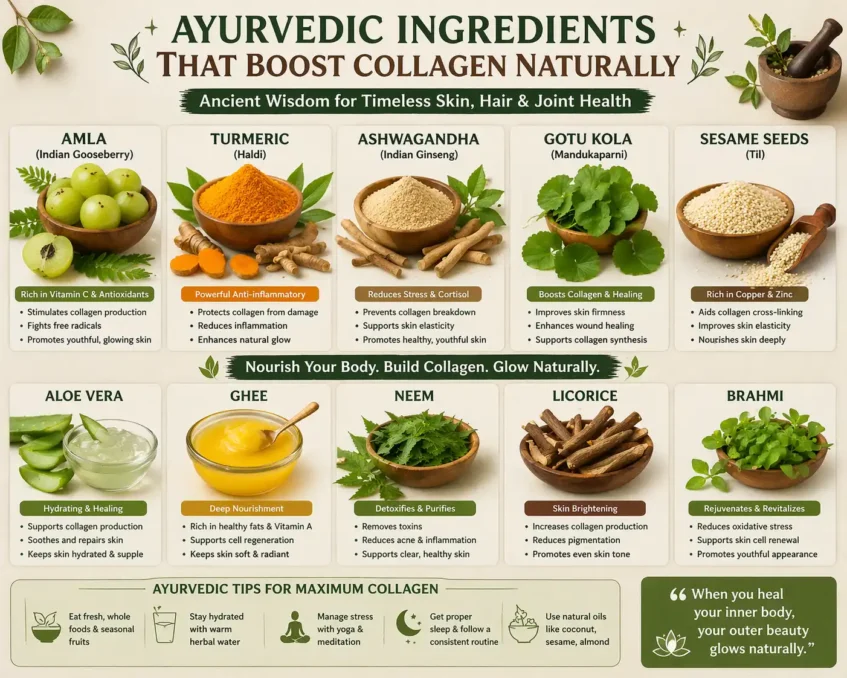
Ayurvedic Collagen-Boosting Ingredients
- Amla (Indian gooseberry)
- Turmeric
- Ashwagandha
- Sesame seeds
- Ghee
In many Indian kitchens, these are already part of daily meals.
Best Time to Consume Collagen-Boosting Foods
Timing matters more than most people think.
Morning (Best Absorption Window)
- Lemon water
- Amla juice
- Fruit-based smoothies
Afternoon (Nutrient Utilization Peak)
- Protein-rich meals
- Leafy greens
Night (Repair Phase)
- Herbal teas
- Light soups
Your body repairs collagen while you sleep.
Weekly Collagen Diet Plan
Day 1
- Citrus fruits + nuts
- Green vegetables
Day 2
- Bone broth or veg soup
- Berries
Day 3
- Eggs + spinach
- Green tea
Day 4
- Amla juice
- Lentils
Day 5
- Fatty fish / plant omega sources
- Tomatoes
Day 6
- Mixed fruit smoothie
- Seeds
Day 7
- Light detox (low sugar, high hydration)
Instant gratification trigger:
Many people notice improved skin hydration within a week.
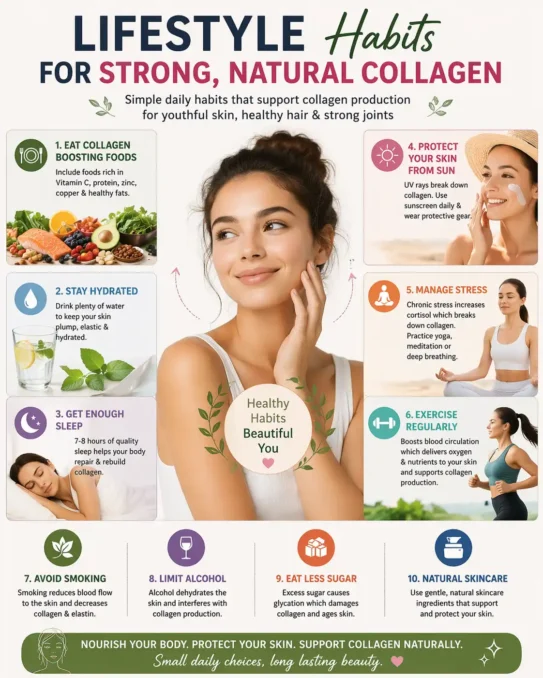
Lifestyle Habits That Boost Collagen Naturally
Food alone isn’t enough.
1. Sleep Quality
Deep sleep = collagen repair.
2. Sun Protection
UV rays break collagen faster than aging.
3. Hydration
Water maintains skin elasticity.
4. Stress Reduction
Stress hormones break down collagen.
5. Moderate Exercise
Improves circulation and nutrient delivery.
Expert Insight
Dermatology research suggests:
- Vitamin C + amino acids = optimal collagen synthesis
- Antioxidants slow collagen degradation
- Balanced diet outperforms isolated supplementation
↗ The Mayo Clinic emphasizes that diet, hydration, and lifestyle habits all influence skin structure and aging.
Why This Matters More Than You Think
Collagen isn’t just about appearance.
It affects:
- Skin elasticity
- Joint flexibility
- Hair strength
- Gut lining
What are the best natural collagen boosting foods & drinks?
The best natural collagen boosting foods & drinks include:
- Citrus fruits (vitamin C)
- Bone broth (collagen source)
- Leafy greens (antioxidants)
- Berries (free radical protection)
- Nuts and seeds (zinc)
- Green tea (polyphenols)
- Amla juice and lemon water (collagen synthesis support)
3-Day Natural Experiment
Want to see how your body responds? Try this 3-day routine…
Day 1
- Morning: Lemon water
- Lunch: Leafy greens + protein
- Evening: Green tea
Day 2
- Add berries + nuts
- Include bone broth or soup
Day 3
- Include amla juice
- Reduce sugar completely
Most people notice:
- Better hydration
- Slight skin glow
- Improved digestion
Quick Summary
- Collagen declines naturally with age
- Vitamin C is essential for production
- Antioxidants protect existing collagen
- Sugar damages collagen structure
- Gut health affects absorption
Top foods:
- Citrus fruits
- Bone broth
- Leafy greens
- Nuts & seeds
- Berries
FAQs
What really happens if you don’t support collagen?
Your skin, joints, and hair gradually lose strength and elasticity.
Can food actually improve collagen?
Yes—consistent diet changes can significantly support natural production.
Why do some people see faster results?
Better gut health + lower sugar intake = faster visible changes.
Are supplements necessary?
Not always. Many people get great results from whole foods alone.
How long does it take to notice changes?
Some improvements appear within days, deeper changes take weeks.
Disclaimer
This article is for educational purposes only and should not replace professional medical advice.
Which Collagen Booster Is Right for You?
If you have:
- Dry skin → Citrus + hydration
- Hair fall → Nuts + seeds
- Joint pain → Bone broth
- Dull skin → Berries + green tea
Conclusion
Collagen isn’t just about looking younger.
It’s about how your body feels, moves, and repairs itself every single day.
The most powerful shift?
It doesn’t come from expensive treatments…
It comes from simple, consistent choices—what you eat, drink, and how you care for your body.
Start small.
Stay consistent.
And over time, your body quietly rewards you in ways you didn’t expect.




4 thoughts on “Natural Collagen Boosting Foods & Drinks”