Mindfulness Meditation for Beginners

By Meenakshi

Updated On:

Mindfulness Meditation for Beginners

Table of Contents

Mindfulness Meditation for Beginners: A Complete Step-by-Step Guide to Calm, Focus, and Inner Balance

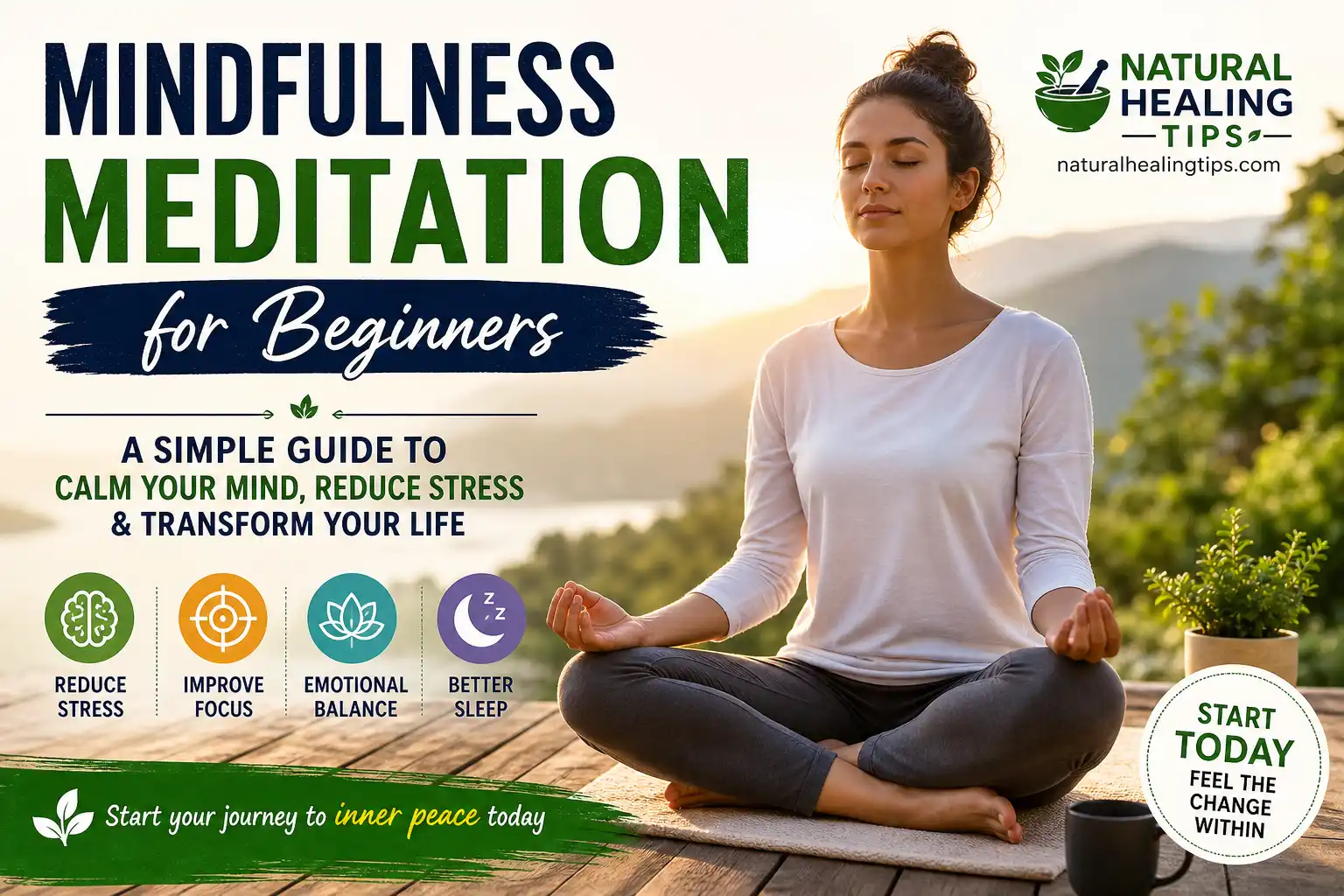
In a world filled with constant notifications, deadlines, and mental overload, finding peace can feel difficult. This is exactly why Mindfulness Meditation for Beginners has become one of the most searched wellness topics worldwide. Mindfulness meditation is simple, natural, and proven to reduce stress, improve focus, and support emotional well-being—without requiring any special tools or experience.

If you are new to meditation, this in-depth guide will help you understand what mindfulness meditation is, how beginners can practice it correctly, and how to build a sustainable daily habit.

What Is Mindfulness Meditation?

Mindfulness meditation is the practice of bringing your full attention to the present moment—your thoughts, emotions, bodily sensations, and surroundings—without judgment. Instead of trying to control the mind, mindfulness teaches awareness and acceptance.

For beginners, mindfulness meditation usually starts with breath awareness, gentle observation of thoughts, and learning to stay grounded in the “now.”

Mindfulness meditation for beginners is not about emptying the mind—it is about becoming aware of what the mind is doing.

Why Mindfulness Meditation Is Perfect for Beginners

Unlike complex spiritual practices, mindfulness meditation for beginners is easy to learn and flexible. You can practice it anywhere—at home, at work, or even while walking.

Key Reasons Beginners Choose Mindfulness Meditation

  • Simple and beginner-friendly
  • No equipment or special posture required
  • Backed by scientific research
  • Suitable for all age groups
  • Can be practiced for just 5–10 minutes daily

Because of its simplicity, mindfulness meditation is often recommended as the best meditation technique for beginners.

Benefits of Mindfulness Meditation for Beginners

Regular mindfulness practice offers both short-term relief and long-term transformation.

Mental Health Benefits

  • Reduces stress and anxiety naturally
  • Improves concentration and memory
  • Helps manage negative thoughts
  • Enhances emotional regulation
  • Supports mental clarity and calmness

Physical Health Benefits

  • Lowers blood pressure
  • Improves sleep quality
  • Reduces tension headaches
  • Supports immune system health

Emotional and Lifestyle Benefits

  • Encourages self-awareness
  • Improves patience and resilience
  • Enhances overall quality of life

These benefits make mindfulness meditation for beginners one of the most effective natural wellness practices.

How Mindfulness Meditation Works

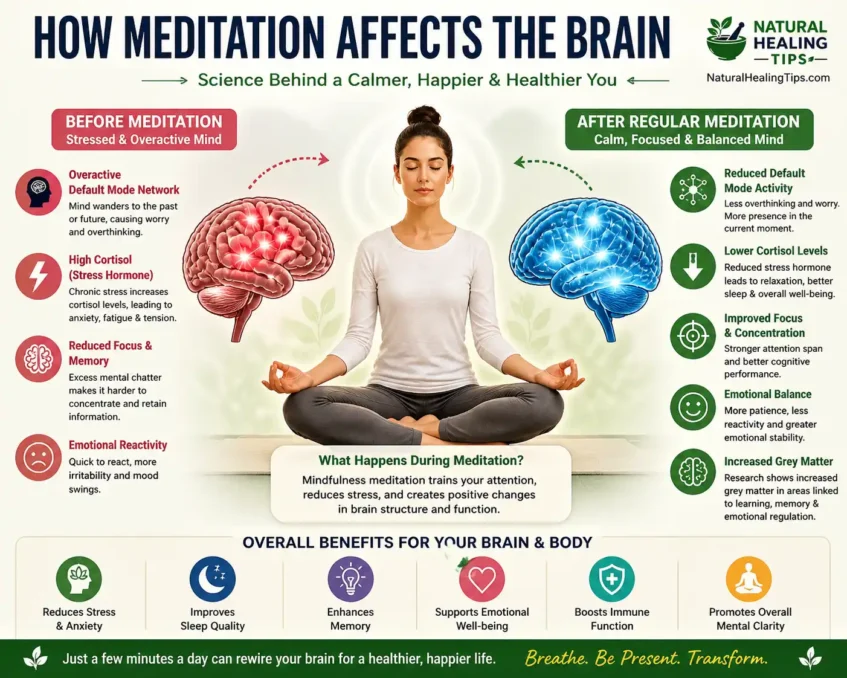
Mindfulness meditation works by training the brain to stay present rather than reacting automatically to stress. When practiced regularly, mindfulness strengthens areas of the brain associated with focus, emotional balance, and decision-making.

Scientific studies show that mindfulness can reduce cortisol (the stress hormone) and improve overall emotional well-being.

👉 https://www.health.harvard.edu/mind-and-mood/what-is-mindfulness

Mindfulness Meditation for Beginners: Step-by-Step Practice Guide

If you’re wondering how to practice mindfulness meditation as a beginner, follow these simple steps.

Step 1: Find a Quiet Space

Choose a calm, distraction-free place. Silence helps beginners focus better during meditation.

Step 2: Sit or Lie Comfortably

Sit on a chair, cushion, or floor with your spine straight but relaxed. You may also lie down if sitting is uncomfortable.

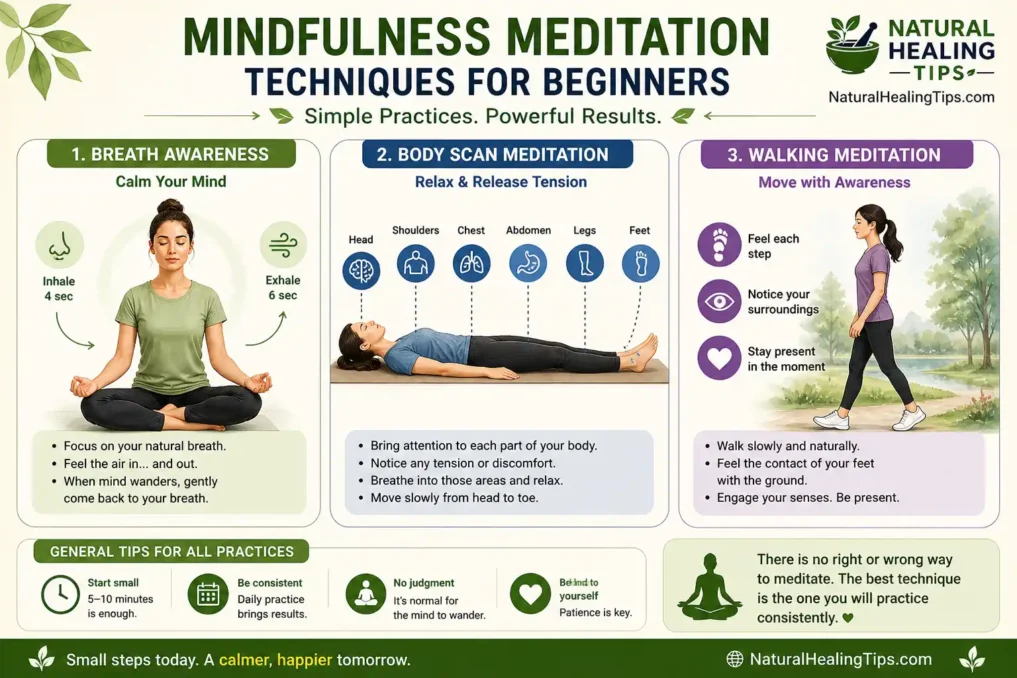
Step 3: Focus on Your Breath

Close your eyes gently and bring attention to your breathing. Notice:

  • Air entering and leaving your nose
  • Your chest or belly rising and falling

Breath awareness is the foundation of mindfulness meditation for beginners.

Step 4: Observe Thoughts Without Judgment

Thoughts will arise—this is natural. Instead of reacting:

  • Acknowledge the thought
  • Let it pass
  • Gently return focus to your breath

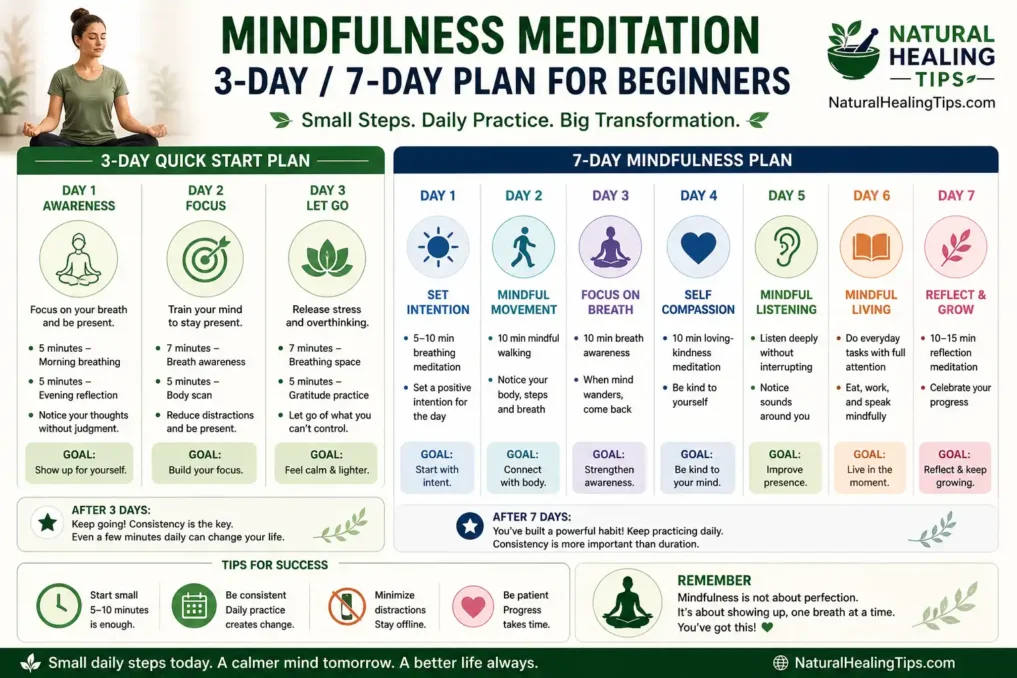
Step 5: Start Small

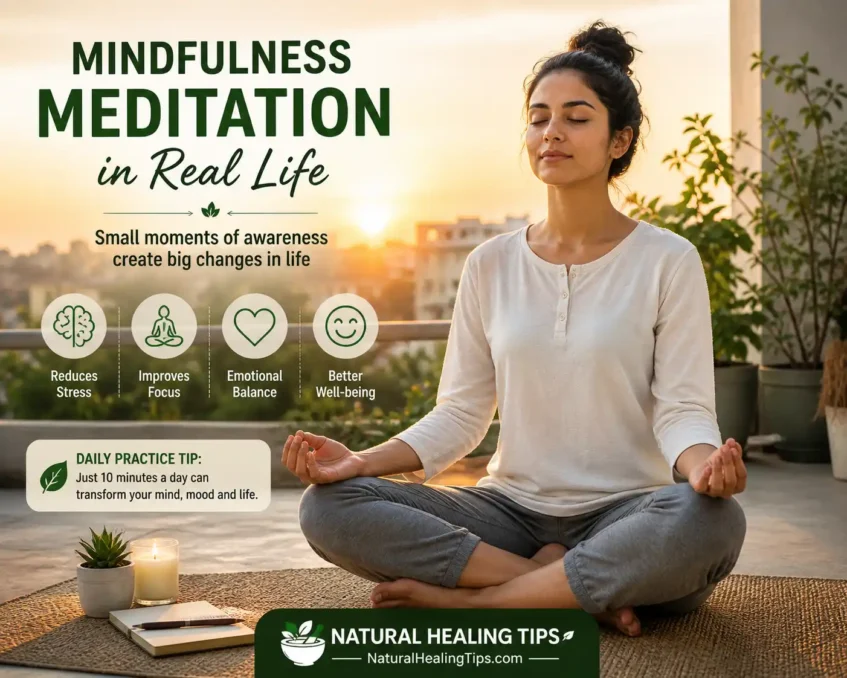
Begin with 5 minutes a day, then gradually increase to 10–20 minutes.

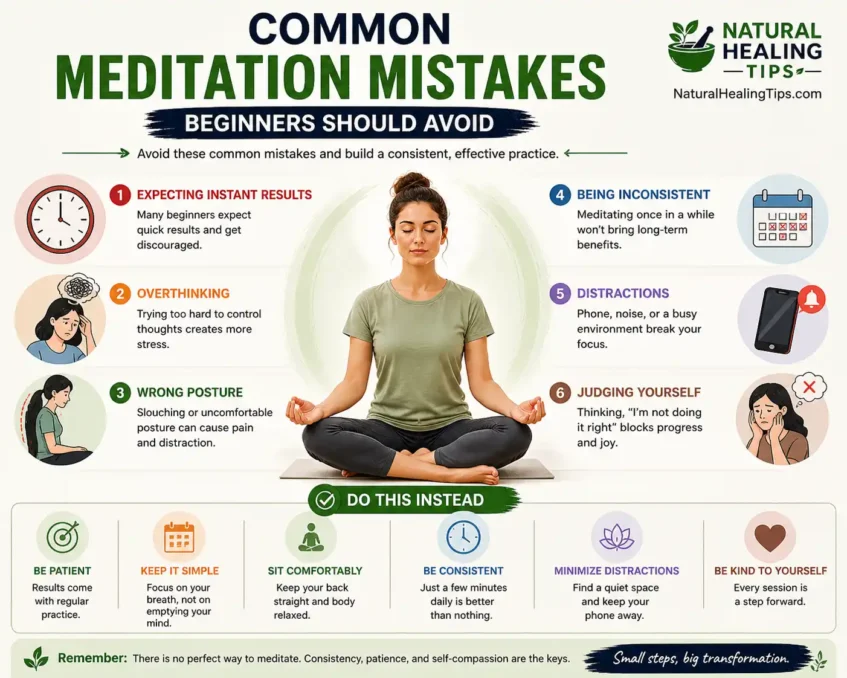
Common Mistakes Beginners Make (And How to Avoid Them)

Expecting Instant Results

Mindfulness is a practice, not a quick fix. Benefits grow with consistency.

Trying to Stop Thoughts

The goal is awareness, not control. Let thoughts come and go naturally.

Being Too Hard on Yourself

There is no “perfect” meditation. Simply showing up is enough.

Understanding these mistakes helps beginners stay motivated in their mindfulness meditation journey.

Best Time to Practice Mindfulness Meditation

There is no single “perfect” time, but beginners often prefer:

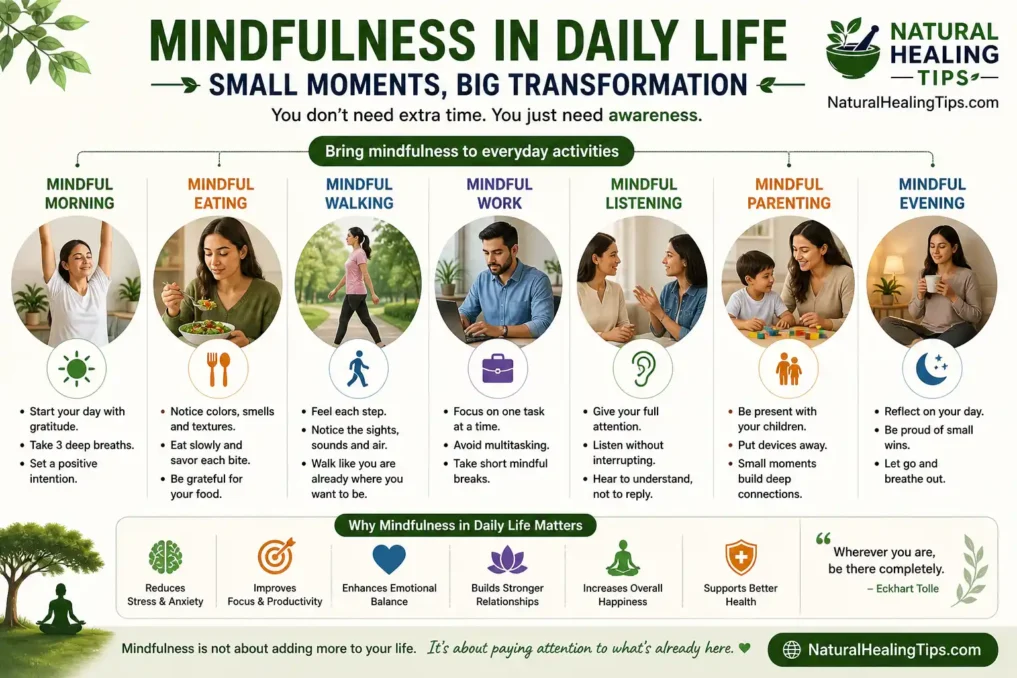
  • Morning: Sets a calm tone for the day
  • Evening: Helps release stress and improve sleep
  • Midday: Refreshes focus and mental clarity

Choose a time that fits your routine to maintain consistency.

👉 More information is on Morning Routine for Mental Calm & Positive Energy

Mindfulness Meditation Techniques for Beginners

To keep your practice engaging, try these beginner-friendly techniques:

1. Breathing Meditation

Focus solely on slow, deep breathing. This is the most recommended method for mindfulness meditation for beginners.

👉 More information is on Breathing Techniques for Stress & Panic Relief

2. Body Scan Meditation

Bring awareness to each part of your body, from head to toe, noticing sensations without judgment.

3. Mindful Walking

Pay attention to each step, your movement, and the contact of your feet with the ground.

4. Loving-Kindness Meditation

Silently repeat positive affirmations for yourself and others, cultivating compassion and emotional balance.

How Long Should Beginners Meditate?

For beginners, short sessions are more effective than long ones.

Recommended duration:

  • Beginners: 5–10 minutes
  • Intermediate: 15–20 minutes
  • Advanced: 30 minutes or more

Consistency matters more than duration in mindfulness meditation for beginners.

Mindfulness Meditation for Stress and Anxiety Relief

One of the biggest reasons people start mindfulness meditation is stress relief. By focusing on the present moment, mindfulness prevents the mind from dwelling on worries and fears.

Regular practice helps:

  • Calm the nervous system
  • Reduce anxiety symptoms
  • Improve emotional stability

This makes mindfulness meditation an excellent natural remedy for stress-related issues.

👉 More information is on Natural Anxiety Relief

Mindfulness Meditation and Better Sleep

Mindfulness meditation helps calm racing thoughts, making it easier to fall asleep naturally.

Tips for Sleep-Focused Mindfulness

  • Practice meditation 30 minutes before bed
  • Focus on slow breathing
  • Avoid screens before meditation

👉 More information is on Natural Remedies for Better Sleep.

Scientific Evidence Supporting Mindfulness Meditation

According to research from Harvard Medical School, mindfulness meditation improves mental well-being, reduces stress, and enhances emotional regulation.

👉 https://www.health.harvard.edu/staying-healthy/how-mindfulness-can-improve-your-health

How to Build a Daily Mindfulness Meditation Habit

Consistency is key for beginners. Here are practical tips:

  • Set a daily reminder
  • Meditate at the same time each day
  • Use guided meditation apps
  • Track progress in a journal

Building a habit ensures long-term success with mindfulness meditation for beginners.

Mindfulness Meditation vs Traditional Meditation

Feature Mindfulness Meditation Traditional Meditation
Focus Present moment Mantras or visualization
Difficulty Beginner-friendly Often advanced
Flexibility Can be done anywhere Usually structured
Goal Awareness & acceptance Deep concentration

This comparison explains why mindfulness meditation is ideal for beginners.

Who Should Practice Mindfulness Meditation?

Mindfulness meditation is suitable for:

  • Students
  • Working professionals
  • Seniors
  • Homemakers
  • Anyone experiencing stress or anxiety

There are no age or fitness restrictions.

Final Thoughts on Mindfulness Meditation for Beginners

Mindfulness Meditation for Beginners is one of the simplest and most powerful practices to improve mental clarity, emotional balance, and overall well-being. You don’t need special skills or long hours—just a few minutes of awareness each day can bring lasting positive change.

Start small, be patient, and allow mindfulness to naturally transform your daily life.

Frequently Asked Questions (FAQs)

What is mindfulness meditation for beginners?

Mindfulness meditation for beginners is a simple meditation practice that focuses on being fully present in the moment. Beginners learn to observe their breath, thoughts, and sensations without judgment. It does not require prior experience, special equipment, or long practice sessions.

How do beginners start mindfulness meditation?

Beginners can start mindfulness meditation by:

  • Sitting in a quiet place
  • Focusing on slow, natural breathing
  • Observing thoughts without reacting
  • Practicing for 5–10 minutes daily

Consistency is more important than duration when starting mindfulness meditation.

How long should beginners meditate each day?

For beginners, 5 to 10 minutes per day is enough. As focus and comfort improve, meditation time can gradually increase to 15–20 minutes. Short, daily sessions are more effective than occasional long sessions.

Is mindfulness meditation difficult for beginners?

No, mindfulness meditation is one of the easiest meditation practices for beginners. The goal is not to stop thoughts but to observe them calmly. With regular practice, it becomes easier and more natural.

What are the benefits of mindfulness meditation for beginners?

Mindfulness meditation for beginners helps:

  • Reduce stress and anxiety
  • Improve focus and concentration
  • Enhance emotional balance
  • Support better sleep
  • Promote mental clarity and calmness

Even a few minutes of daily practice can provide noticeable benefits.

Can mindfulness meditation reduce stress and anxiety?

Yes, mindfulness meditation is highly effective for stress and anxiety relief. By focusing on the present moment, it prevents overthinking and calms the nervous system. Many studies support mindfulness meditation as a natural stress-management tool.

What is the best time to practice mindfulness meditation?

The best time to practice mindfulness meditation is when you can be consistent. Many beginners prefer:

  • Morning meditation for a calm start
  • Evening meditation for relaxation and better sleep

Choose a time that fits your routine.

Do I need to sit in a specific posture for mindfulness meditation?

No, beginners do not need a specific posture. You can sit on a chair, floor, or cushion, or even lie down. The key is to stay comfortable yet alert during mindfulness meditation.

Can mindfulness meditation help with sleep problems?

Yes, mindfulness meditation helps calm racing thoughts and relax the body, making it easier to fall asleep. Practicing mindfulness before bedtime can significantly improve sleep quality for beginners.

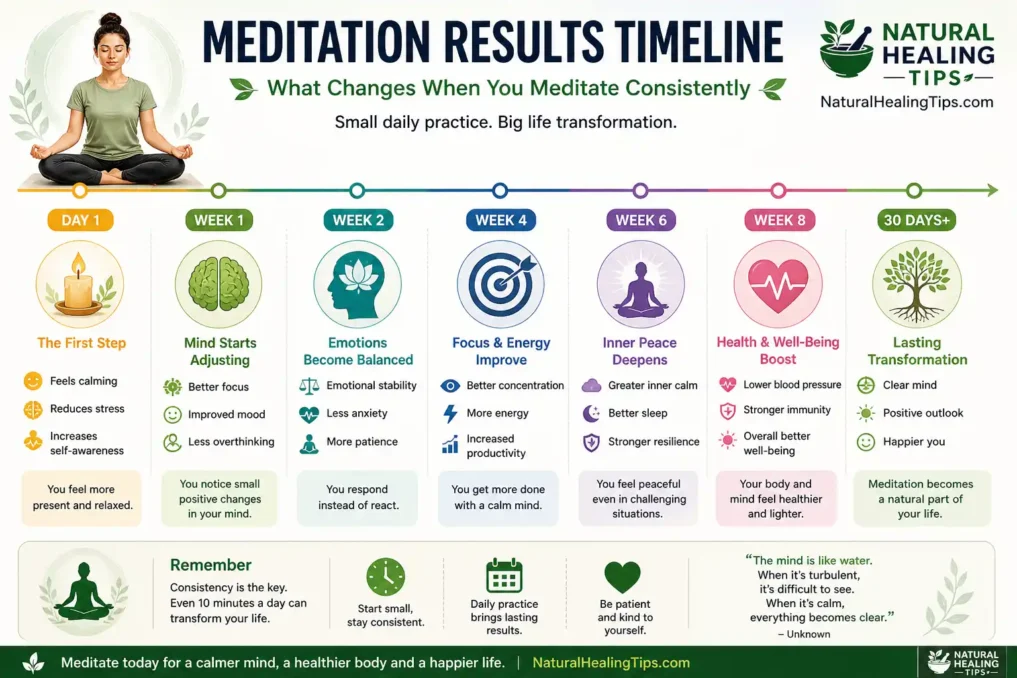
How long does it take to see results from mindfulness meditation?

Some beginners notice relaxation after the first session, while deeper benefits usually appear after 2–4 weeks of regular practice. Consistency is the key to long-term results.

Is mindfulness meditation safe for everyone?

Yes, mindfulness meditation is generally safe for all age groups. However, people with severe mental health conditions should consult a healthcare professional before starting any meditation practice.

⚕️ Medical Disclaimer

The information provided in this article is intended for educational and informational purposes only and is not a substitute for professional medical advice, diagnosis, or treatment. Always seek the guidance of a qualified healthcare provider before starting any new health regimen, herbal remedy, dietary change, or lifestyle practice—especially if you have a medical condition, are pregnant, nursing, or taking medications. Natural Healing Tips does not claim to diagnose, treat, cure, or prevent any disease.

Meenakshi

Meenakshi is a health and wellness content writer with over two years of experience creating informative, reader-friendly articles on natural healing, immunity, nutrition, herbal remedies, and holistic lifestyle practices. She specializes in translating traditional wellness knowledge and evidence-based health insights into practical guidance that readers can easily understand and apply in everyday life. With a strong focus on preventive care and natural living, Meenakshi is committed to promoting balanced, sustainable health through well-researched and engaging content.

1 thought on “Mindfulness Meditation for Beginners”

  1. Hi Meenakshi, thank you for such a grounded guide! I especially appreciated the part about mindfulness not being about “emptying the mind” but rather observing it—that’s a huge relief for a beginner like me. I’ve been trying to integrate these practices while managing a pretty hectic remote work lifestyle. I recently came across some insights on balancing a mindful life with digital responsibilities over at https://www.livingserenely.com/blog.html and it got me thinking: do you have any specific advice on practicing mindfulness during short breaks in a high-stress digital workspace, or is it better to strictly stick to those 5-10 minute morning sessions you mentioned to build the habit first?

    Reply

Leave a Reply