
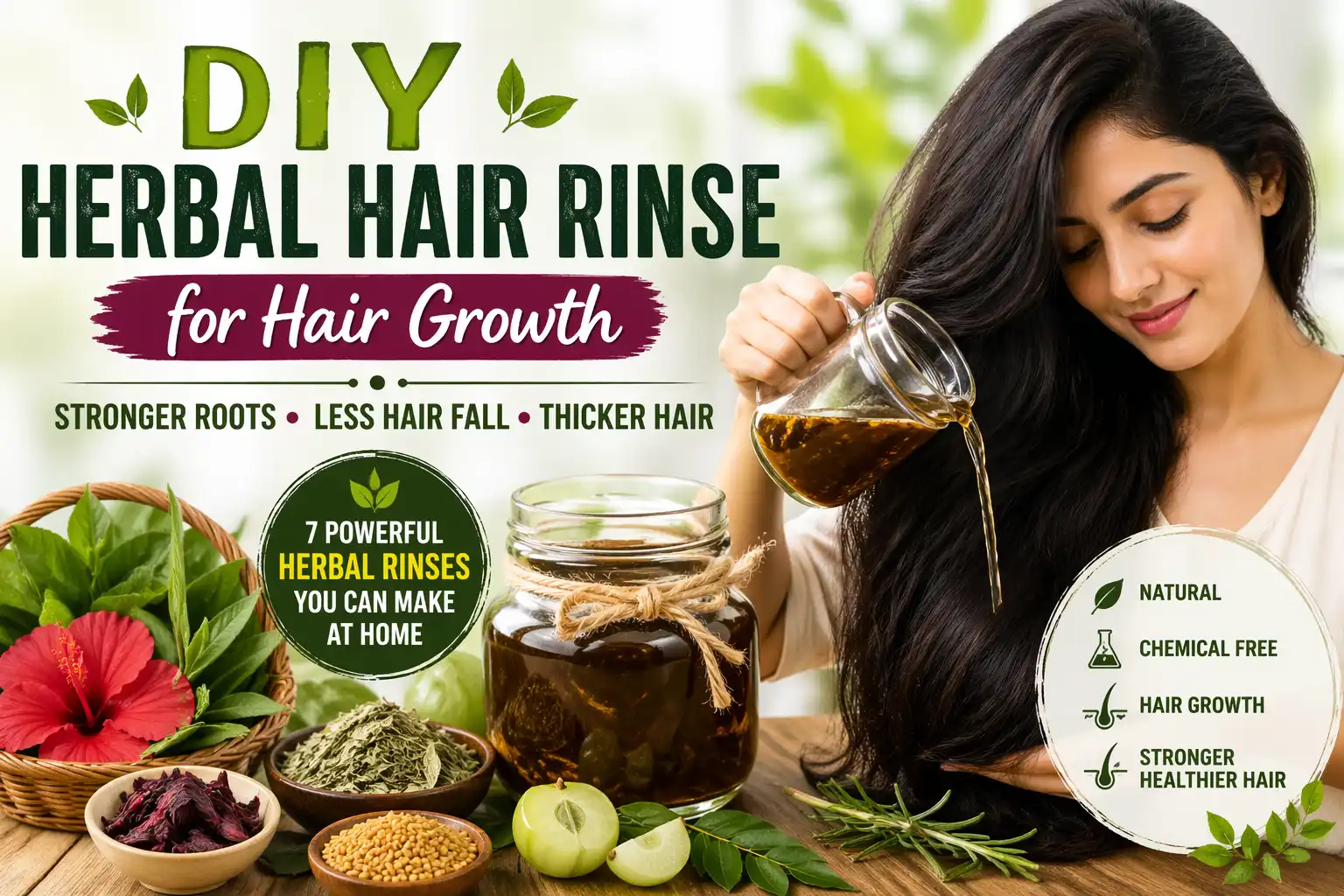
DIY Herbal Hair Rinse for Hair Growth
Introduction
What if the secret to stronger, longer hair has been sitting quietly in your kitchen all along?
You may have tried expensive shampoos, oils, or even supplements… yet your hair still feels thin, weak, or lifeless.
Why does hair fall continue despite all the effort?
And what are most people missing in their routine?
Here’s something interesting—many traditional cultures never relied on chemical products. Instead, they used simple herbal rinses that worked with the body, not against it.
And surprisingly… you might start noticing changes within days.
What Is the Best DIY Herbal Hair Rinse for Hair Growth?
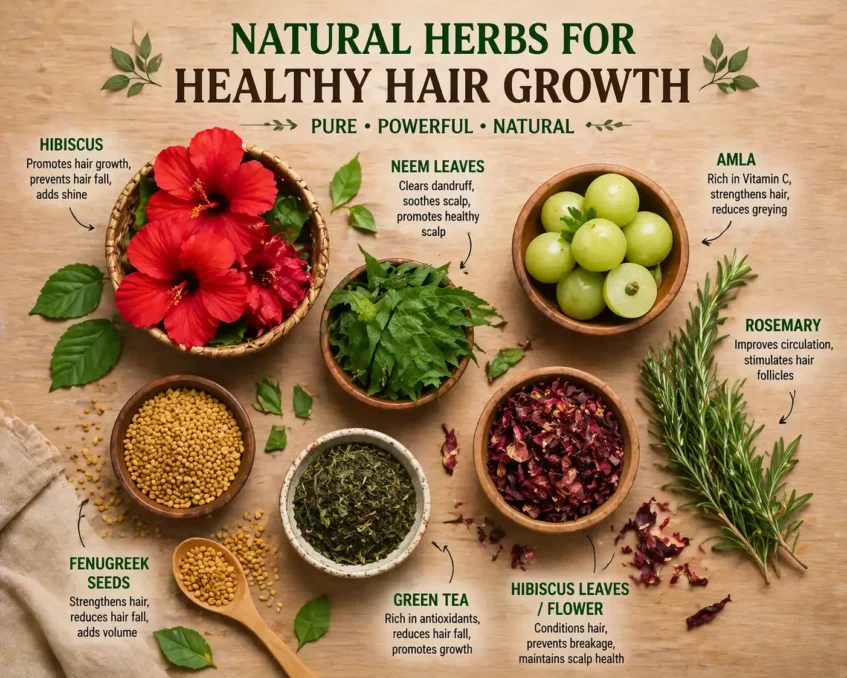
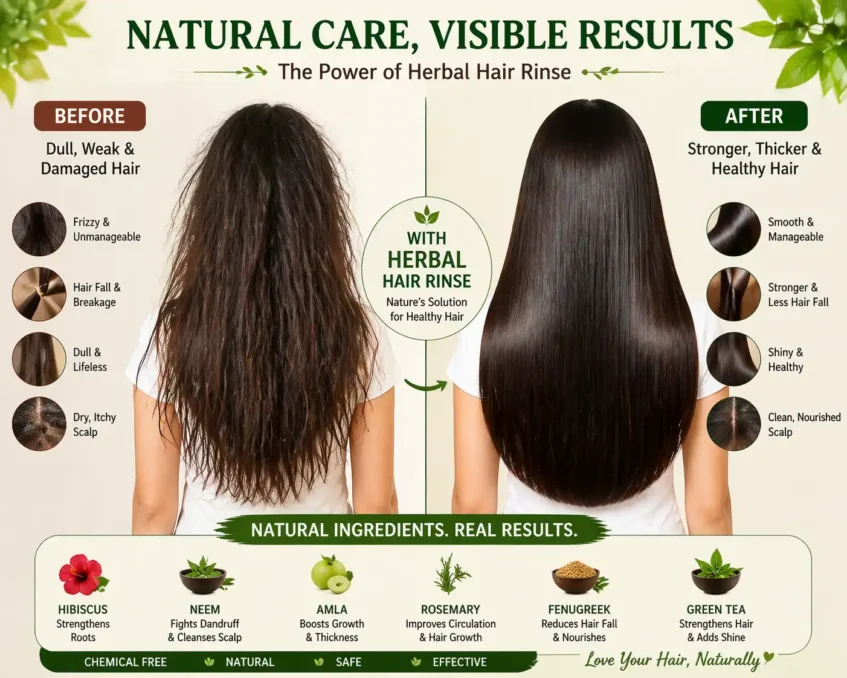
The best DIY herbal hair rinse for hair growth includes rosemary, amla, and hibiscus. These herbs help improve scalp circulation, strengthen hair roots, and promote natural hair growth. For best results, use the rinse 2–3 times per week.
Which Herbal Hair Rinse Is Best for Your Hair Type?
Choosing the right herbal rinse is just as important as using one.
Not all hair types respond the same way—and this is where many people unknowingly go wrong.
Hair Type vs Best Herbal Rinse
| Hair Type | Best Herbal Rinse | Why It Works |
|---|---|---|
| Oily Scalp | Neem, Green Tea | Controls excess oil & bacteria |
| Dry Hair | Chamomile, Hibiscus | Adds moisture & softness |
| Hair Fall | Amla, Fenugreek | Strengthens roots |
| Dandruff | Neem, Rosemary | Anti-fungal properties |
| Thin Hair | Rosemary, Green Tea | Stimulates follicles |
| Frizzy Hair | Hibiscus, Chamomile | Smooths cuticles |
👉 SEO Benefit: Targets long-tail keywords like “best herbal rinse for oily scalp”
Is This Common or Normal?
You’re not alone in this.
Hair fall, slow growth, and thinning hair are more common than most people think. Many readers tell us they started noticing hair issues in their late 20s or early 30s—even earlier in stressful lifestyles.
This is more common than you might expect.
Factors like:
- Stress
- Nutrient deficiencies
- Hard water
- Chemical products
- Hormonal imbalance
…all quietly affect hair health over time.
The good news?
Your hair still has the ability to recover—if you support it the right way.
Science Behind Herbal Hair Rinse (What’s Really Happening)
Here’s what’s really happening inside your scalp…
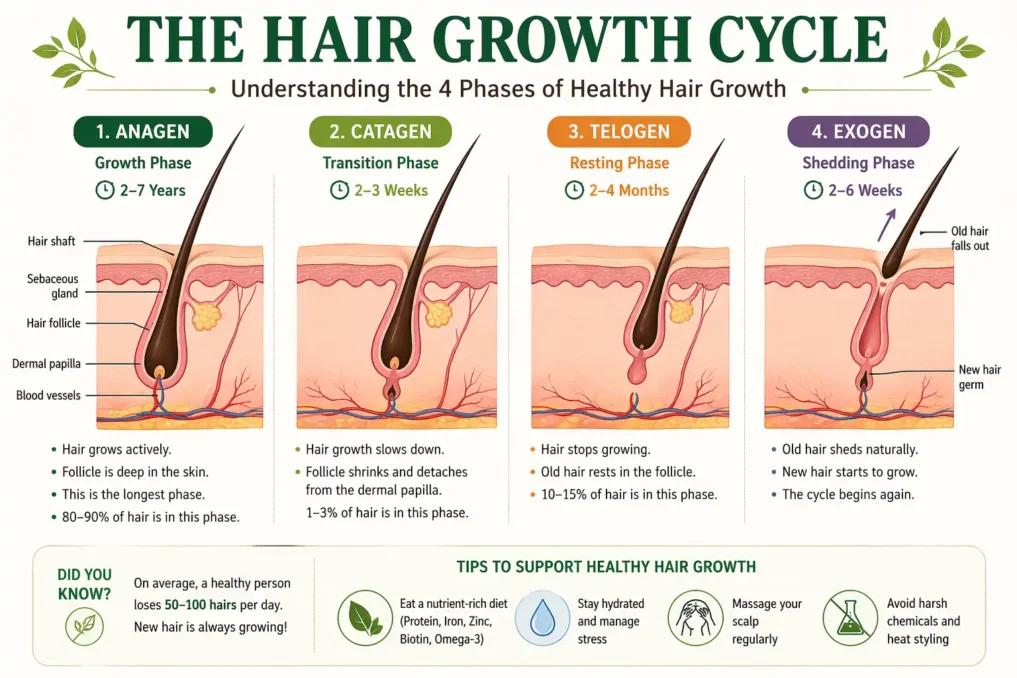
1. Scalp Microbiome Balance
Your scalp has a natural ecosystem of microbes.
When harsh shampoos disrupt this balance, it can lead to dandruff, irritation, and hair fall.
Herbal rinses (like neem or green tea) help restore this balance gently.
2. Improved Blood Circulation
Healthy hair growth depends on good blood flow.
Ingredients like rosemary and hibiscus stimulate circulation, delivering oxygen and nutrients to hair follicles.
Experts in dermatology have observed that improved circulation can support hair growth cycles.
3. Antioxidant Protection
Pollution and stress create oxidative damage.
Herbs like green tea and amla are rich in antioxidants that protect hair roots.
One interesting thing researchers have found is that antioxidants may slow down premature hair thinning.
4. Natural pH Balance
Hair thrives in a slightly acidic environment.
Herbal rinses help restore natural pH, making hair smoother and shinier.
↗ Research-backed insights on natural hair care: National Center for Biotechnology Information (NCBI)
5. Strengthening Hair Follicles
Certain herbs contain:
- flavonoids
- vitamins
- minerals
These nourish follicles, reducing breakage.
6. Gentle Cleansing Without Damage
Unlike chemical shampoos, herbal rinses:
- cleanse without stripping oils
- maintain moisture balance
7. Reduction in Hair Fall Triggers
Many herbal ingredients have anti-inflammatory properties that reduce scalp irritation—one of the hidden causes of hair loss.
👉 Some herbs used in hair rinses are also powerful for skin and scalp health: Skin Healing Herbs for Clear & Glowing Skin
What Makes These Herbs Effective for Hair Growth?
You might be wondering—what actually makes these natural ingredients work?
Here’s where things get interesting…
Many herbs used in hair rinses are rich in bioactive compounds that directly support scalp health and hair growth.
1. Flavonoids – Boost Circulation
Flavonoids are natural plant compounds found in herbs like hibiscus and rosemary.
They help improve blood circulation to the scalp, which means hair follicles receive more oxygen and nutrients.
Better circulation = stronger, healthier hair growth.
2. Polyphenols – Protect Hair Roots
Green tea is rich in polyphenols, especially catechins.
These compounds help reduce oxidative stress—a hidden cause of hair thinning and premature hair fall.
One interesting thing researchers have found is that polyphenols may support longer hair growth phases.
3. Vitamin C – Strengthens Hair Structure
Amla (Indian gooseberry) is packed with vitamin C.
This helps boost collagen production, which strengthens hair strands and reduces breakage.
In many traditional Indian remedies, amla is considered a key ingredient for thick, strong hair.
4. Anti-Inflammatory Compounds – Calm the Scalp
Neem and fenugreek contain natural anti-inflammatory properties.
They help reduce scalp irritation, itching, and dandruff—common triggers of hair fall.
A calm scalp creates the ideal environment for hair growth.
5. Natural Proteins & Nutrients – Repair Damage
Fenugreek seeds are rich in proteins and nicotinic acid.
These nutrients help repair damaged hair follicles and improve overall hair texture.
Which Herbal Hair Rinse Should You Use Based on Your Hair Problem?
Most people try random remedies and then wonder why nothing changes.
The truth is—the right herbal rinse depends on your specific hair concern.
Choosing the correct one can make a noticeable difference within weeks.
Quick Guide: Choose the Right Herbal Rinse
| Hair Problem | Best Herbal Rinse | Why It Works |
|---|---|---|
| Hair fall | Fenugreek + Green Tea | Strengthens roots and reduces shedding |
| Dandruff / itchy scalp | Neem | Natural antibacterial and antifungal properties |
| Thin or slow-growing hair | Rosemary + Amla | Boosts circulation and follicle strength |
| Dry and frizzy hair | Hibiscus + Chamomile | Adds moisture and smoothness |
| Oily scalp | Green Tea | Controls excess oil production |
| Premature greying | Curry Leaves + Amla | Supports melanin production |
When Should You Be Concerned?
While this is usually harmless, there are times when you should pay attention…
According to organizations like the WHO, NHS, and Mayo Clinic, excessive hair loss may require medical evaluation if:
- Hair falls out in patches
- Sudden heavy shedding occurs
- Scalp shows redness or infection
- Hair loss is linked with fatigue or weight loss
If you notice these symptoms, consult a healthcare professional.
↗ Learn more about causes of hair loss: Mayo Clinic – Hair Loss Overview
Who Should Be Careful When Using Herbal Hair Rinse?
While herbal hair rinses are generally safe, there are a few situations where you should be a little cautious.
This isn’t about fear—it’s about using natural remedies the right way.
1. People with Sensitive Scalp
If your scalp reacts easily to products, even natural herbs can sometimes cause irritation.
👉 Start with a mild rinse (like chamomile or diluted green tea)
👉 Always do a patch test before full use
2. Those with Allergies to Herbs
Some individuals may be allergic to specific plants like neem or fenugreek.
👉 Test a small amount on your skin
👉 Wait 24 hours before applying to your scalp
3. Existing Scalp Conditions
If you have:
- psoriasis
- eczema
- severe dandruff
- infections
…it’s best to consult a healthcare professional before trying new remedies.
Organizations like the WHO, NHS, and Mayo Clinic recommend medical guidance for persistent scalp issues.
4. Children and Pregnant Women
While most herbs are gentle, it’s better to use:
👉 mild, diluted rinses
👉 simple ingredients (avoid complex combinations)
5. Overuse of Herbal Rinses
Using herbal rinses too frequently can:
- dry out the scalp
- disrupt natural oil balance
👉 Stick to 2–3 times per week
Safe Usage Tip
Always remember:
Natural doesn’t always mean “use as much as you want.”
Start simple, observe how your scalp responds, and adjust accordingly.
DIY Herbal Hair Rinse for Hair Growth: Practical Natural Solutions
The good news is—small changes can make a noticeable difference.
Simple DIY Herbal Hair Rinse Recipe (Beginner-Friendly)
If you’re new to herbal hair care, start simple.
You don’t need complicated ingredients or long routines to see results.
Here’s a basic recipe that works for most hair types.
Ingredients
- 2 cups water
- 1 tablespoon dried herbs (or a small handful of fresh herbs)
👉 You can choose:
- hibiscus (for growth & shine)
- neem (for dandruff)
- green tea (for hair fall)
- rosemary (for stimulation)
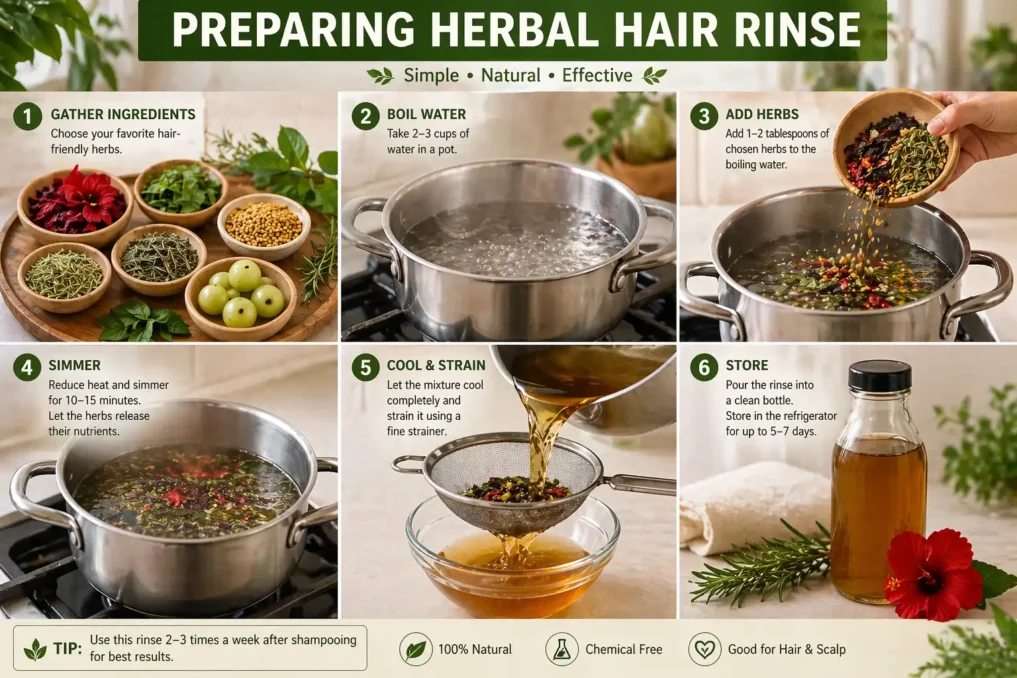
Step-by-Step Preparation
- Boil 2 cups of water
- Add your chosen herb(s)
- Let it simmer for 10–15 minutes
- Turn off heat and allow it to cool
- Strain the liquid into a clean container
How to Use
- After shampooing, pour the rinse over your hair
- Gently massage into the scalp
- Leave it for 5–10 minutes
- Rinse lightly or leave it in (depending on preference)
Storage Tips
- Store in the refrigerator
- Use within 3–5 days
- Shake before use
Pro Tip
Start with one herb only.
Once you understand how your hair responds, you can experiment with combinations.
Common Beginner Mistake
Many people try too many ingredients at once.
This makes it hard to know what actually works.
Keep it simple at first.
Here are powerful DIY herbal hair rinses you can try at home:
1. Hibiscus Hair Rinse
Best for: Hair growth & thickness
How to prepare:
- Boil hibiscus flowers/leaves in water
- Cool and strain
Why it works:
Rich in amino acids that strengthen roots.
2. Neem Rinse
Best for: Dandruff & scalp infections
Preparation:
- Boil neem leaves
- Use cooled water as rinse
In many Indian households, neem has been used for generations.
3. Green Tea Rinse
Best for: Reducing hair fall
Contains antioxidants that support hair growth.
👉 If you’re also dealing with hair fall, this guide explains natural solutions in detail: Natural Remedies for Hair Fall & Hair Growth
4. Rosemary Rinse
Best for: Stimulating hair follicles
Studies suggest rosemary may support hair growth similar to certain treatments.
5. Amla Rinse
Best for: Strength & shine
High in vitamin C, supports collagen production.
6. Chamomile Rinse
Best for: Softness & shine
Especially helpful for dry or frizzy hair.
👉 Many herbal teas contain the same ingredients that support hair growth internally: Herbal Tea Recipes for Natural Healing
7. Fenugreek (Methi) Rinse
Best for: Hair fall control
Rich in protein and nicotinic acid.
8. Curry Leaves Rinse
Best for: Preventing premature greying
Widely used in South Indian traditions.
Why Your Herbal Hair Rinse Isn’t Working
You’re doing everything right… or at least it feels that way.
But what if the problem isn’t the remedy—it’s how you’re using it?
This is where most people unknowingly go wrong.
1. Inconsistent Usage
Using herbal rinses once in a while won’t give visible results.
Hair growth is a slow biological process.
👉 You need consistency—at least 2–3 times per week
2. Using Water That’s Too Hot
Very hot water can:
- damage hair roots
- dry out your scalp
- weaken hair strands
👉 Always use lukewarm or cool rinses
3. Mixing Too Many Herbs
More ingredients ≠ better results.
Using too many herbs at once can:
- irritate the scalp
- cancel out benefits
- make results unpredictable
👉 Start simple with 1–2 herbs
4. Not Giving It Enough Time
Many people quit after a few uses.
But real changes take time.
👉 Give it at least 3–4 weeks
5. Skipping Scalp Care
Hair growth starts at the scalp—not the strands.
If your scalp is unhealthy:
- growth slows down
- hair becomes weak
👉 Combine rinses with:
- gentle oil massage
- mild cleansing
6. Ignoring Your Diet
You may have noticed…
Even the best external care doesn’t work if your body lacks nutrients.
Hair needs:
- protein
- iron
- vitamins
👉 Internal health directly affects hair growth
7. Expecting Instant Results
Natural remedies are not quick fixes.
They work gradually—but sustainably.
↗ Expert advice on healthy hair care: American Academy of Dermatology (AAD)
Reality Check
Herbal hair rinses don’t “magically” grow hair overnight.
But they create the right environment for healthy growth.
And that’s what truly matters.
How Long Does It Take to See Results?
You may be wondering…
“Will this actually work for me?”
Here’s a realistic timeline:
- After 1–2 uses: Hair feels softer and smoother
- Within 1 week: Reduced scalp irritation
- 2–3 weeks: Noticeable reduction in hair fall
- 4–6 weeks: Improved thickness and shine
One important thing…
Consistency matters more than the type of herb you use.
3-Day Natural Hair Experiment
Want to see how your body responds? Try this 3-day routine…
Day 1
Use hibiscus or green tea rinse
Day 2
Oil massage + mild shampoo
Day 3
Use neem or rosemary rinse
You may notice:
- smoother texture
- less hair fall
- healthier shine
Weekly Herbal Hair Routine
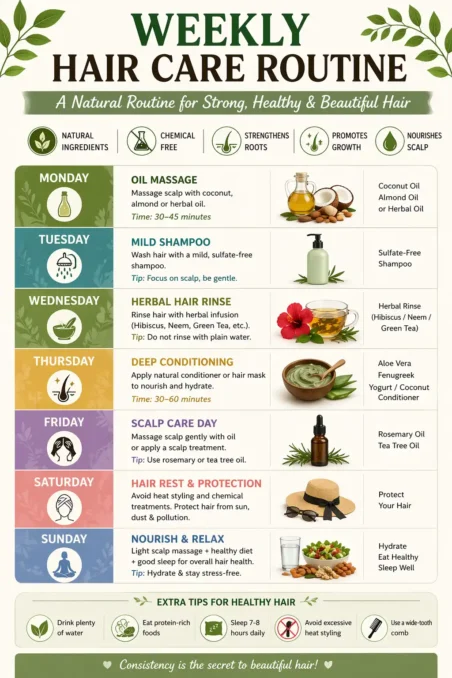
Example Weekly Routine
| Day | Routine |
|---|---|
| Monday | Oil massage + mild shampoo |
| Wednesday | Herbal rinse (hibiscus/green tea) |
| Friday | Herbal rinse (neem/rosemary) |
| Sunday | Deep oiling + rest |
This creates a balanced cycle of:
- nourishment
- cleansing
- stimulation
👉 A holistic routine improves results—this daily practice supports overall hair and body wellness: Ayurvedic Daily Routine for Wellness
Best Time to Use Herbal Hair Rinse
(Quick actionable insight)
- Morning: Best for freshness and volume
- Evening: Helps relaxation and scalp recovery
Pro tip:
Use rinse after a light oil massage for better absorption.
Why Traditional Cultures Trusted Herbal Hair Care
(Storytelling + authority)
Long before modern products…
Ancient systems like Ayurveda focused on balance—not quick fixes.
In many households:
- Hibiscus was used weekly
- Coconut oil was infused with herbs
- Hair care was seen as self-care, not just grooming
Modern research is now slowly validating these practices.
↗ Benefits of medicinal plants: World Health Organization (WHO) – Traditional Medicine
What You Eat Matters More Than You Think
You may have noticed…
Even with external care, hair doesn’t improve much if nutrition is poor.
Hair is made of protein (keratin), so your diet directly affects growth.
Key Nutrients for Hair Growth
- Protein (lentils, eggs, yogurt)
- Iron (spinach, dates)
- Omega-3 (flaxseeds, walnuts)
- Vitamin C (amla, citrus fruits)
- Biotin (nuts, seeds)
In traditional Indian diets, ingredients like amla, curry leaves, and coconut naturally support hair health.
👉 This synergy of internal + external care is what creates visible results.
Herbal Hair Rinse vs Chemical Products
(Comparison = high SEO + featured snippet potential)
| Feature | Herbal Rinse | Chemical Products |
|---|---|---|
| Ingredients | Natural | Synthetic |
| Side Effects | Minimal | Possible irritation |
| Long-Term Impact | Improves scalp health | May damage over time |
| Cost | Low | High |
| Sustainability | Eco-friendly | Often harmful |
One surprising insight…
Many people switch to herbal care only after damage becomes visible.
Starting early can prevent that damage entirely.
Quick Takeaways
- DIY herbal hair rinse for hair growth supports scalp health
- Reduces hair fall naturally
- Easy to prepare at home
- Works best with consistent use
Quick Summary
- Herbal rinses support natural hair growth
- Improve scalp health and circulation
- Reduce hair fall and breakage
- Easy to prepare at home
- Consistency gives best results
FAQs
What really happens if you use herbal hair rinse regularly?
Over time, your scalp becomes healthier, and hair may grow stronger and shinier.
Can this actually improve hair growth?
It supports the conditions needed for growth, but results vary by individual.
Why do some people notice results quickly?
Because scalp health improves rapidly when irritants are removed.
How often should I use it?
2–3 times per week is ideal.
Can I mix multiple herbs?
Yes, combining herbs can enhance benefits.
Can herbal hair rinse regrow hair?
Herbal rinses support scalp health and strengthen follicles, which can promote natural hair growth over time.
Is herbal hair rinse better than shampoo?
Herbal rinses are gentler and chemical-free, but they work best alongside a mild shampoo.
How long should I leave herbal rinse on my hair?
Leave it for 5–10 minutes for best absorption.
Can I use herbal hair rinse daily?
It’s best to use it 2–3 times per week to avoid over-drying the scalp.
What happens if I stop using herbal rinse?
Your hair will gradually return to its previous condition if other care habits are not maintained.
Disclaimer
This article is for educational purposes only and should not replace professional medical advice.
Conclusion
Sometimes, the most effective solutions are the simplest ones.
You don’t always need expensive treatments or complicated routines.
Nature already provides powerful tools—you just need to use them consistently.
Start small.
Stay patient.
And remember—healthy hair is not just about appearance…
it’s a reflection of how well you care for yourself.



1 thought on “DIY Herbal Hair Rinse for Hair Growth”