
Burning Sensation After Spicy Food: Causes and Natural Relief
A Familiar Experience Many Food Lovers Know
It often begins with something delicious.
Maybe it’s a bowl of spicy ramen, a plate of Mexican salsa, a Thai curry, or a homemade Indian biryani packed with chilies and spices. The flavors are exciting, warming, and deeply satisfying.
Many people experience a burning sensation after spicy food, especially when meals contain large amounts of chili peppers or strong spices.
But then comes the other side of the experience.
A sudden heat spreads across the mouth.
The tongue feels like it’s on fire.
Sometimes the stomach starts to feel uncomfortable too.
You may have asked yourself:
Why does spicy food create that burning sensation?
Why do some people handle it easily while others struggle?
And most importantly — how can you calm the burn naturally?
The good news is that this reaction is completely understandable. In fact, the body is responding exactly the way biology designed it to.
Once you understand what is happening inside your body, simple natural solutions begin to make much more sense.
Is Burning Sensation After Spicy Food Normal?
For most people, yes — it is completely normal.
The burning feeling after spicy food usually comes from a compound called capsaicin, which is found in chili peppers. Capsaicin activates the same nerve receptors that detect heat.
In other words, your body isn’t literally burning.
But your nervous system believes it is.
This is why the sensation feels intense even though no actual heat is present.
Interestingly, tolerance varies widely.
Some cultures regularly eat very spicy food, and over time their bodies adapt. In places like India, Thailand, Mexico, and Korea, people often build a higher tolerance simply through repeated exposure.
But for someone who isn’t used to chili heat, even moderate spice levels can feel overwhelming.
Occasional burning after spicy food usually isn’t dangerous. However, understanding the science behind it helps you manage the sensation more comfortably.
Common Symptoms After Eating Spicy Food
Symptoms may vary depending on spice tolerance and digestive sensitivity.
Common symptoms include:
- mouth burning
- tongue irritation
- stomach warmth
- heartburn
- sweating
- runny nose
- hiccups
- bloating
- temporary digestive discomfort
The Science Behind the Burning Sensation
Spicy food reactions involve several fascinating biological processes. Let’s break them down in simple terms.
Capsaicin Activates Heat Receptors
Capsaicin binds to a receptor in the body known as TRPV1.
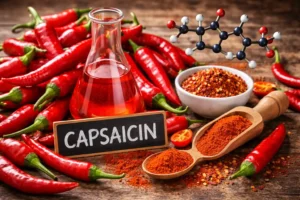
These receptors normally respond to high temperatures or physical irritation. When capsaicin activates them, the brain interprets the signal as heat.
This reaction is the main reason people feel a burning sensation after spicy food, even when the meal is not physically hot.
👉 Capsaicin, the compound that gives chili peppers their heat, activates the body’s heat receptors and creates the burning sensation people feel when eating spicy foods: Capsaicin – StatPearls – NCBI Bookshelf
Saliva Production Increases
When spicy food triggers nerve receptors, the body reacts by increasing saliva production.
Saliva helps dilute capsaicin and gradually wash it away from the tongue.
You may notice:
- watery mouth
- runny nose
- slight sweating
These are all natural protective responses.
Digestive Tract Irritation
Capsaicin doesn’t only affect the mouth.
It can also stimulate receptors in the esophagus and stomach lining, which sometimes causes a warm or burning feeling in the stomach.
For people with sensitive digestion, this may feel like mild irritation or heartburn.
Stimulation of Metabolism
One interesting thing researchers have found is that capsaicin can slightly increase metabolic activity.
It may temporarily raise body temperature and stimulate circulation.
This is one reason spicy foods are often associated with:
- warming the body
- stimulating digestion
- increasing sweating
However, too much spice can overwhelm the digestive system in some individuals.
Increased Gastric Acid Production
Spicy foods may encourage the stomach to produce more digestive acid.
In small amounts, this supports digestion.
But for people prone to acid reflux or sensitive stomachs, the extra acid can contribute to discomfort or burning sensations.
Gut Sensitivity Differences
Not everyone’s digestive system reacts the same way.
Some people naturally have:
- stronger stomach lining protection
- higher spice tolerance
- more efficient capsaicin breakdown
Others may experience irritation more quickly.
This explains why two people can eat the same spicy dish and have completely different reactions.
Antioxidant Compounds in Spices
Interestingly, many spicy foods also contain powerful antioxidants and plant compounds.
Chilies, turmeric, ginger, and garlic are all widely studied for their potential health-supporting properties.
So the goal is not necessarily to eliminate spice — but to understand how to balance it.
Mouth Burning vs Stomach Burning After Spicy Food
The burning sensation from spicy food may affect different parts of the body in different ways.
Mouth Burning
This usually happens immediately after eating spicy food. Capsaicin activates heat-sensitive nerve receptors on the tongue and inside the mouth.
Common symptoms include:
- tongue burning
- lip irritation
- watering eyes
- sweating
Stomach Burning
Stomach discomfort may develop later as spicy food moves through digestion.
Some people experience:
- warm sensation in the stomach
- heartburn
- acid reflux
- bloating
Individuals with sensitive digestion may notice stronger stomach reactions than mouth burning.
Why Some People Love Spicy Food
An interesting aspect of spicy food is that many people actually enjoy the burning sensation.
This happens because capsaicin triggers the release of endorphins, the body’s natural “feel-good” chemicals.
Endorphins can create a mild sense of pleasure or excitement, which is why some people enjoy increasingly spicy foods.
Over time, regular spicy food eaters may develop:
- higher tolerance to chili heat
- reduced sensitivity to capsaicin
- increased enjoyment of spicy flavors
This explains why a dish that feels extremely spicy to one person may feel mild to another.
Spicy Food and Digestive Health
Spices are often misunderstood. While excessive chili can irritate the stomach, moderate spice consumption may have some benefits.
Research has explored potential effects such as:
- stimulation of digestion
- improved circulation
- antimicrobial properties
- metabolic activation
Many traditional medical systems — including Ayurveda and Traditional Chinese Medicine — use spices carefully to support digestion.
However, moderation is important. Extremely spicy meals or very frequent chili consumption may irritate sensitive digestive systems.
Can Spicy Food Cause Acid Reflux?
Spicy foods do not directly cause acid reflux in everyone, but they may trigger symptoms in sensitive individuals.
Capsaicin may relax the lower esophageal sphincter in some people, allowing stomach acid to move upward into the esophagus.
This can lead to:
- heartburn
- chest burning
- sour taste in the mouth
- throat irritation
People with GERD or chronic reflux may benefit from limiting extremely spicy meals or combining them with milder foods.
Who May Be More Sensitive to Spicy Food
Certain individuals may experience stronger reactions to spicy meals.
These include people who have:
- acid reflux
- gastritis
- stomach ulcers
- irritable bowel syndrome (IBS)
- sensitive digestive systems
For these individuals, reducing chili intake or balancing spicy foods with cooling ingredients may help prevent discomfort.
Anyone experiencing persistent digestive symptoms should consult a qualified healthcare professional.
When Should You Be Concerned?
Occasional burning after spicy food is usually harmless.
However, health professionals suggest paying attention if symptoms happen frequently or become intense.
Organizations such as the World Health Organization, NHS, and Mayo Clinic note that persistent digestive discomfort may sometimes indicate conditions such as:
- acid reflux
- gastritis
- ulcers
- food sensitivity
👉 Health experts explain that certain foods, including spicy dishes, may trigger heartburn or digestive discomfort in some individuals: Heartburn – Symptoms and Causes – Mayo Clinic
Seek medical guidance if you experience:
- severe stomach pain
- frequent heartburn
- vomiting
- difficulty swallowing
- persistent digestive discomfort
👉 The NHS recommends seeking medical advice if indigestion or stomach discomfort happens frequently or becomes severe: Indigestion – NHS Health Guide
If symptoms occur only occasionally after very spicy meals, simple dietary adjustments are often enough.
Natural Ways to Relieve Burning Sensation After Spicy Food
Many kitchens around the world already contain ingredients that help calm the burn.
Here are practical approaches that work for many people.
1. Drink Milk or Yogurt
Dairy products contain casein, a protein that helps dissolve capsaicin.
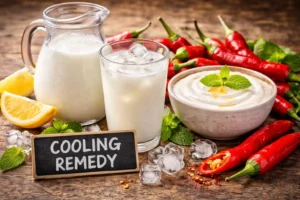
This is why milk or yogurt often works better than water for cooling the mouth.
Many traditional cuisines pair spicy dishes with:
- yogurt
- raita
- sour cream
In Indian meals, yogurt-based sides are commonly used to balance chili heat.
2. Eat Starchy Foods
Starchy foods absorb and dilute spicy compounds.
Examples include:
- rice
- bread
- potatoes
- tortillas
A spoonful of plain rice often reduces mouth burning quickly.
3. Try Honey
Honey coats the mouth and throat, helping soothe irritation.
It also contains natural plant compounds that may support healing of irritated tissues.
A small spoonful can calm lingering heat.
4. Coconut Water

Coconut water is naturally cooling and hydrating.
It is widely used in tropical regions to balance spicy meals and restore hydration.
In many South Asian households, coconut water is considered a gentle digestive support.
5. Ginger Tea for Digestive Comfort

Ginger supports digestion and may reduce stomach irritation.
Warm ginger tea after a spicy meal often helps the stomach settle.
👉 Ginger tea is widely used to support digestion and may help reduce stomach discomfort after heavy or spicy meals: Ginger Tea for Digestion and Cold — Best Time to Drink
6. Turmeric Milk for Stomach Calm
Turmeric contains curcumin, a compound studied for its anti-inflammatory properties.
A small cup of warm turmeric milk in the evening may help soothe digestive discomfort.
Turmeric milk has been used in many traditional households as a calming nighttime drink.
👉 Many people also drink turmeric milk at night to support digestion and overall wellness: Turmeric Milk Before Bed: Benefits, Science, and Who Should Avoid It
7. Eat Cooling Foods
Certain foods naturally feel cooling to the digestive system.
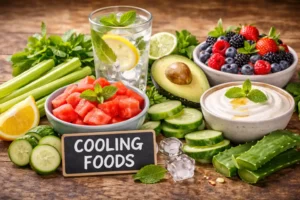
Examples include:
- cucumber
- bananas
- yogurt
- melon
- oats
These foods help rebalance the digestive environment after spicy meals.
8. Drink Coriander Water
In traditional Indian kitchens, coriander seeds are often used to cool body heat.
Coriander water may help calm digestive irritation after spicy foods.
👉 Certain kitchen ingredients may naturally support digestion and help reduce discomfort after spicy meals: Kitchen Ingredients That Reduce Gas Fast
9. Avoid Drinking Plain Water Immediately
This might surprise many people.
Capsaicin is oil-soluble, not water-soluble.
Drinking plain water can sometimes spread the spice around the mouth instead of removing it.
Dairy, starch, or mild sweet foods usually work better.
What Not to Do After Eating Spicy Food
Some common habits may accidentally make the burning sensation worse.
Avoid:
- drinking excessive plain water immediately
- lying down right after eating
- drinking large amounts of alcohol
- eating additional spicy foods
- consuming very acidic foods immediately afterward
Lying down too soon after spicy meals may increase acid reflux symptoms in sensitive individuals.
Best Foods to Eat Before Spicy Meals
Preparing the stomach before eating spicy foods may reduce irritation and improve comfort.
Foods commonly recommended before spicy meals include:
- plain rice
- oatmeal
- bananas
- yogurt
- whole grain bread
- milk-based foods
These foods help create a mild protective layer inside the stomach and may reduce direct irritation from capsaicin.
Eating spicy foods after long periods of fasting may increase the likelihood of stomach discomfort.
How to Prevent Burning Sensation After Eating Spicy Food
While natural remedies can calm the burning sensation, preventing the discomfort in the first place is often easier. A few simple eating habits can make spicy foods much more comfortable to enjoy.
Eat Slowly
Eating spicy food too quickly can overwhelm the mouth and digestive system. When large amounts of chili reach the stomach at once, irritation may increase.
Taking smaller bites and chewing slowly allows saliva to dilute capsaicin gradually.
Avoid Eating Very Spicy Food on an Empty Stomach
An empty stomach may be more sensitive to strong spices. When spicy food is the first thing the digestive system receives, irritation can occur more easily.
Many nutrition experts recommend eating spicy dishes alongside rice, bread, or other mild foods that help balance the meal.
Combine Spicy Foods with Cooling Ingredients
Traditional cuisines often combine spicy foods with cooling foods for a reason.
Examples include:
- yogurt or raita with Indian curries
- sour cream with Mexican dishes
- cucumber salads with spicy meals
- coconut milk in Thai curries
These combinations naturally balance the heat of chili peppers.
Stay Hydrated Throughout the Day
Proper hydration helps maintain healthy digestion. When the body is well hydrated, digestive processes function more smoothly and irritation may be reduced.
Drinking water regularly throughout the day — rather than immediately after spicy food — can support digestive balance.
Foods That May Make the Burning Worse
Certain foods and habits may intensify the burning sensation after spicy meals.
Being aware of these can help reduce discomfort.
Alcohol
Alcohol may irritate the stomach lining and increase acid production. When combined with spicy food, it can worsen stomach burning.
Fried or Greasy Foods
Heavy oily meals slow digestion. If spicy food is also oily, the digestive system may take longer to process it, which can prolong discomfort.
Carbonated Drinks
Many people drink soda after spicy food, but carbonation can sometimes increase bloating and stomach pressure.
This may make the burning sensation feel worse.
Very Hot Temperature Foods
Food that is both physically hot and spicy may intensify the heat sensation because both activate the same nerve receptors.
Allowing spicy food to cool slightly before eating can sometimes help.
These simple habits can significantly reduce the chances of experiencing a burning sensation after spicy food.
A Simple 3-Day Natural Experiment
If spicy foods often cause discomfort, try this small experiment.
Day 1
Eat your normal meal but include:
- yogurt
- cucumber
- extra hydration
Observe your digestion.
Day 2
Reduce chili quantity slightly and add:
- ginger tea
- rice or whole grains
Notice how your stomach responds.
Day 3
Include cooling foods during the day:
- bananas
- oats
- coconut water
Then eat a mildly spicy dinner.
Many readers find that balancing spicy foods with cooling ingredients significantly improves comfort.
Quick Summary
What Causes Burning Sensation After Spicy Food?
- Capsaicin activates heat receptors in the mouth
- Capsaicin is the main reason people feel a burning sensation after spicy food
- Nerve signals make the brain interpret spice as heat
- Increased stomach acid may occur
- Sensitive digestive systems react more strongly
- Eating large amounts of chili intensifies irritation
Natural Ways to Relieve It
- milk or yogurt
- rice or bread
- honey
- coconut water
- ginger tea
- turmeric milk
- cooling fruits and vegetables
Balancing spicy meals with calming foods often works surprisingly well.
Why Spicy Food Can Burn During Bowel Movements
Many people notice that spicy food may cause a second burning sensation later during bowel movements.
This happens because capsaicin, the compound responsible for chili heat, is not fully broken down during digestion. Small amounts may remain active as food moves through the digestive tract.
When capsaicin reaches sensitive tissues near the rectum, it can trigger the same heat receptors that create the burning sensation in the mouth.
People who eat extremely spicy foods or large amounts of chili peppers may notice this effect more strongly.
To reduce discomfort:
- drink enough water throughout the day
- avoid excessive chili intake
- eat fiber-rich foods
- combine spicy meals with rice or yogurt
Occasional burning is usually temporary, but persistent digestive discomfort should be evaluated by a healthcare professional.
Quick Relief Methods for Spicy Food Burn
| Remedy | How It Helps |
|---|---|
| Milk or Yogurt | Casein helps dissolve capsaicin |
| Rice or Bread | Absorbs spicy oils |
| Honey | Coats irritated tissues |
| Coconut Water | Supports cooling and hydration |
| Ginger Tea | May calm digestion |
Frequently Asked Questions
Is burning sensation after spicy food harmful?
Usually not. It is typically a temporary reaction to capsaicin stimulating nerve receptors.
Why does milk help with spicy food?
Milk contains casein protein, which binds to capsaicin and helps wash it away from the mouth.
What is the best drink after spicy food?
Milk, yogurt drinks, or coconut water are often more effective than plain water.
Can spicy food damage the stomach?
For most people it does not. However, those with acid reflux or ulcers may experience irritation.
Who should avoid very spicy foods?
People with digestive conditions such as gastritis, ulcers, or chronic acid reflux may benefit from limiting spicy foods.
Why does spicy food burn the stomach later?
Capsaicin can stimulate stomach acid and irritate sensitive digestive linings.
For some people, this may cause a delayed burning feeling or mild heartburn after eating spicy meals.
Lifestyle Habits That Support Comfortable Digestion
Beyond specific remedies, daily habits also influence how the digestive system responds to spicy food.
Maintain Regular Meal Timing
Irregular eating patterns can sometimes make digestion more sensitive. Eating meals at consistent times supports healthy digestive rhythms.
Avoid Overeating
Large meals may place extra stress on the digestive system. When spicy foods are eaten in very large quantities, irritation may increase.
Moderate portion sizes often help digestion remain comfortable.
Support Gut Health
A balanced diet containing fiber-rich foods, fruits, vegetables, and fermented foods helps maintain healthy gut bacteria.
Healthy gut microbiota can support better digestive tolerance over time.
Are Spicy Foods Safe for Children?
Children are often more sensitive to spicy foods because their tolerance to capsaicin is still developing.
Very spicy meals may cause:
- mouth discomfort
- stomach irritation
- temporary digestive upset
Mild spices are generally tolerated better than extremely hot chili peppers.
Parents should introduce spicy foods gradually and observe how children respond.
Health Disclaimer
This article is for educational purposes only and should not replace professional medical advice. If you experience persistent digestive symptoms, consult a qualified healthcare professional.
What Research Says About Capsaicin
Researchers have studied capsaicin extensively for its effects on pain receptors, metabolism, digestion, and circulation.
Some studies suggest capsaicin may help:
- support metabolic activity
- increase temporary calorie burning
- stimulate circulation
- influence appetite regulation
However, tolerance levels vary significantly between individuals, and excessive spicy food intake may irritate sensitive digestive systems.
Most experts recommend moderation rather than complete avoidance.
Conclusion: Enjoy Spicy Foods with Balance
Spicy foods are a vibrant part of many culinary traditions around the world. From Indian curries to Mexican salsas and Thai soups, chili peppers add bold flavor and excitement to meals.
The burning sensation they create is not actual damage, but rather the result of capsaicin stimulating the body’s heat receptors.
For most people, a burning sensation after spicy food is temporary and can be relieved with simple kitchen remedies such as yogurt, milk, rice, honey, and cooling foods.
By understanding how spicy food affects the body and learning how to balance meals with soothing ingredients, most people can enjoy flavorful dishes without discomfort.
In many cases, the best solution is not eliminating spice entirely — but finding the right balance that works for your body.