
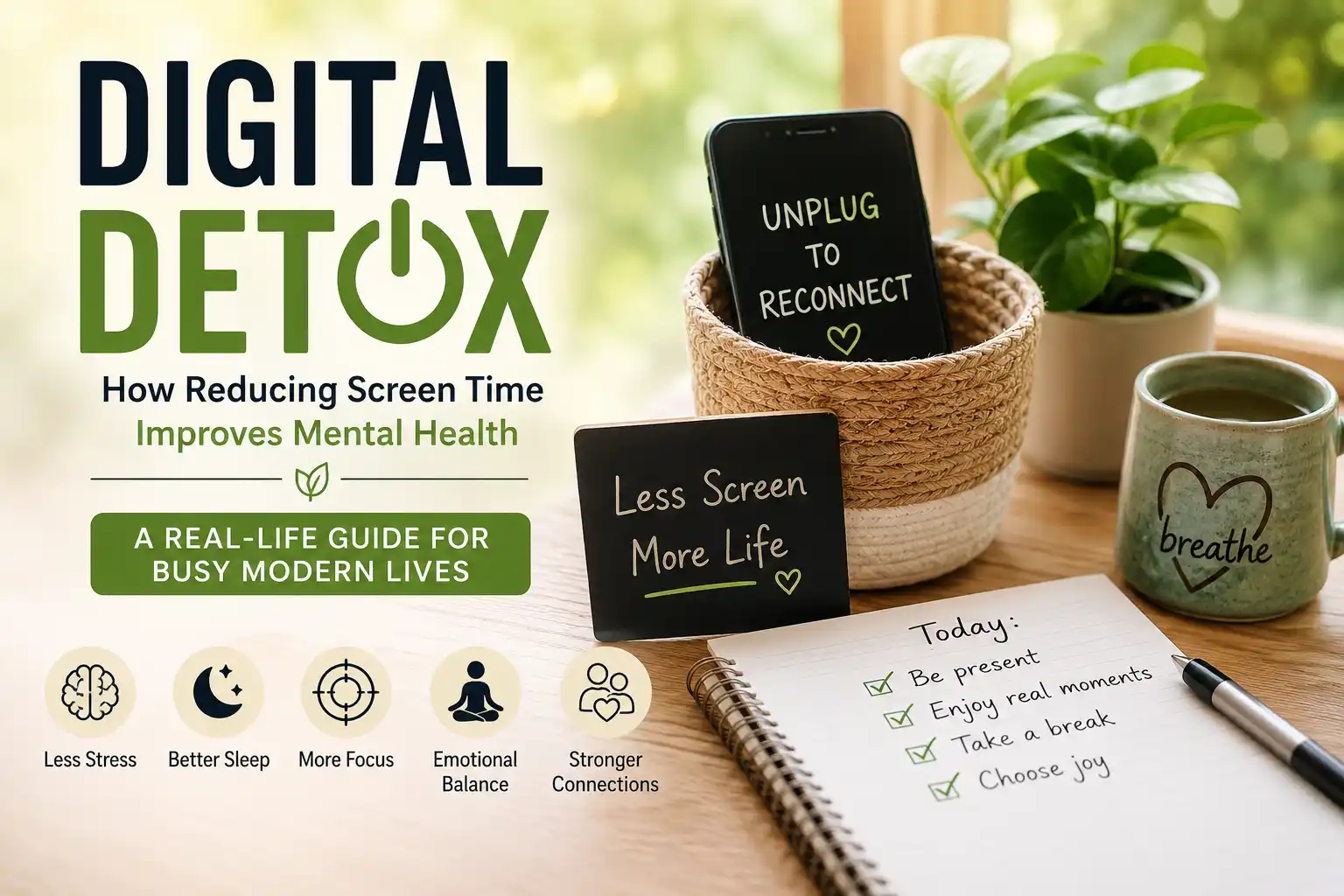
Digital Detox: How Reducing Screen Time Improves Mental Health (A Real-Life Guide for Busy Modern Lives)
One Small Habit That Quietly Took Over Our Day
A few months ago, I noticed something slightly embarrassing about myself.
Every morning, before even brushing my teeth, I would check my phone. Not for anything urgent — just out of habit. Messages, news, random videos, notifications… nothing life-changing. Yet somehow, 20 minutes would disappear.
At night, the same thing happened again. I’d lie down thinking I’d sleep early, then open my phone “for five minutes.” Next thing I knew, it was almost midnight.
Nothing dramatic. Just small daily moments slowly eaten by screens.
That’s when I realised something simple: my mind never really got a break.
And honestly, this isn’t just my story. It’s happening in most homes today — whether we admit it or not.
That’s where the idea of a digital detox comes in. Not as a strict rule. Not as a trendy challenge. Just as a practical way to give your brain some breathing space again.
What Is a Digital Detox?
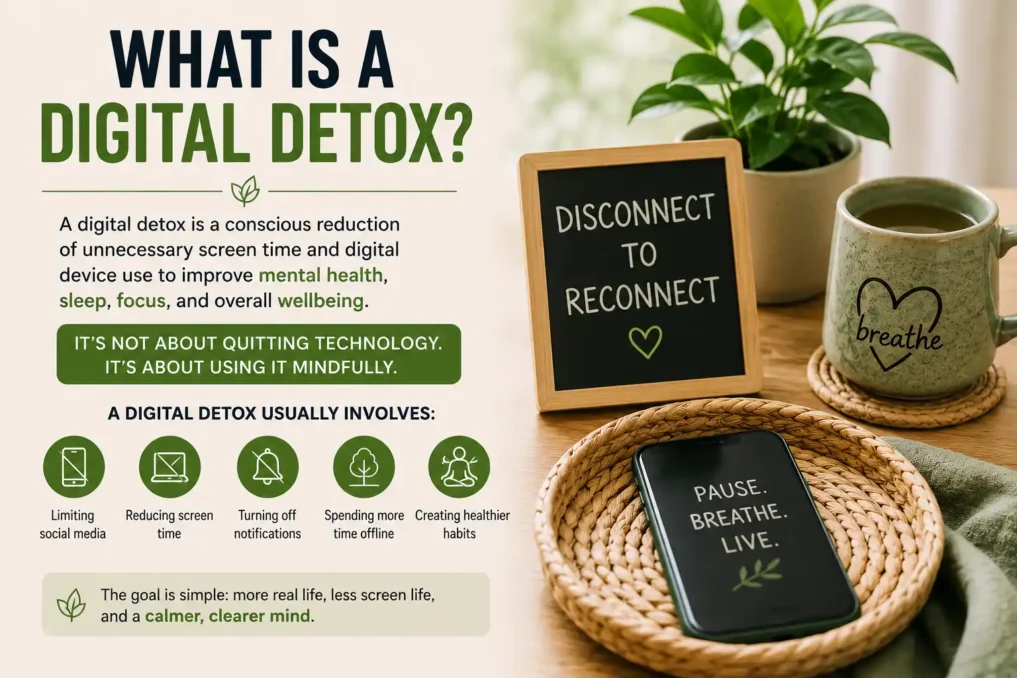
A digital detox is a conscious reduction of unnecessary screen time and digital device use to improve mental health, sleep, focus, and overall wellbeing. It usually involves limiting social media, phone use, and online distractions while creating healthier offline habits.
What a Digital Detox Means in Real Life (Not Internet Theory)
When people hear “digital detox,” they imagine extreme steps:
- deleting WhatsApp
- quitting social media forever
- switching off phones for a week
Let’s be real — that’s not practical for most of us.
We need our phones:
- for work
- for family updates
- for banking and payments
- for maps and daily tasks
A real digital detox isn’t about removing technology. It’s about stopping unnecessary use.
Sometimes it’s as simple as:
- not using the phone during meals
- keeping it away while talking to family
- avoiding screens before sleep
- taking short social media breaks
Small changes. Big difference.
How Too Much Screen Time Affects Mental Health (In Ways We Don’t Notice Immediately)
The tricky part about screen overuse is that it doesn’t feel harmful in the moment.
Scrolling feels relaxing. Watching videos feels entertaining. Replying to messages feels productive.
But slowly, the effects build up.
1. The Mind Stays Busy Even During “Rest”
Earlier, rest meant:
- sitting quietly after dinner
- chatting with family
- taking a short walk
- simply doing nothing
Now, rest often means scrolling.
The problem? Scrolling isn’t real mental rest.
Your brain is still processing:
- news headlines
- opinions
- videos
- advertisements
- notifications
↗ Health experts at Harvard Health Publishing explain that constant digital input keeps the brain slightly alert, making true relaxation harder.
It’s like trying to relax in a room where the TV keeps changing channels automatically.
2. Sleep Gets Disturbed More Than We Think
This one hits home for many people.
Late-night scrolling has become normal — especially after a long day.
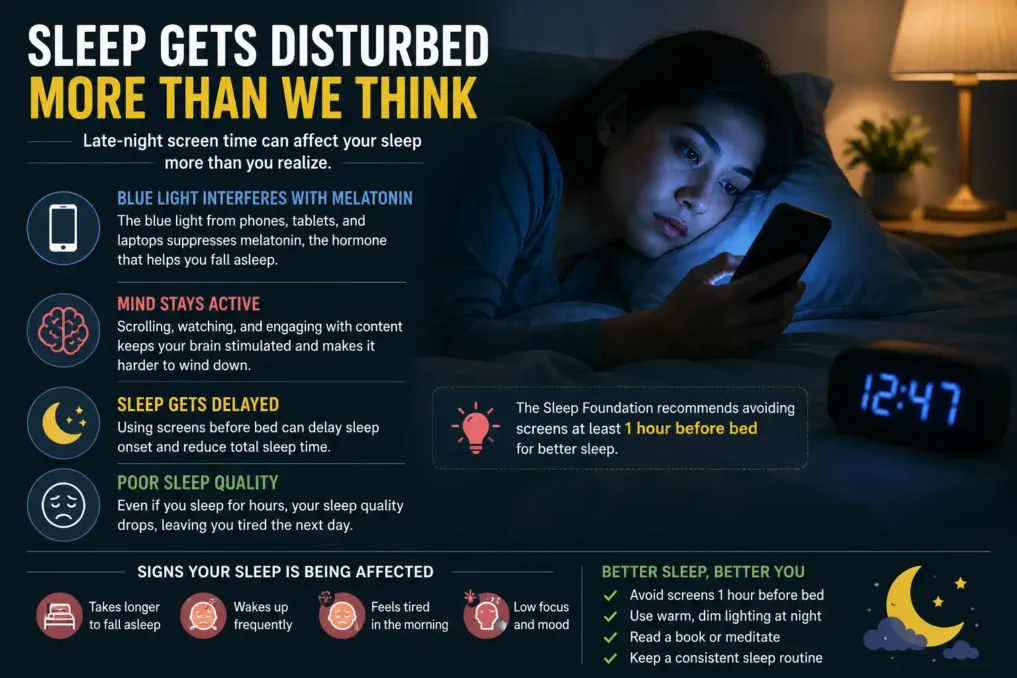
But phone screens emit blue light that interferes with melatonin, the hormone that helps you sleep. The Sleep Foundation highlights how evening screen exposure can delay sleep and reduce its quality.
👉 Struggling with late-night scrolling and poor sleep? Explore these Natural Sleep Remedies that may help improve relaxation and bedtime routines naturally.
Even without the science, you may have noticed:
- difficulty falling asleep after using the phone
- waking up feeling less refreshed
- feeling tired even after enough hours in bed
Sometimes the issue isn’t sleep duration — it’s screen timing.
↗ The Sleep Foundation explains that blue light exposure before bedtime may interfere with melatonin production and reduce sleep quality.
3. Social Media Quietly Affects Mood
This part is subtle.
You don’t open Instagram or YouTube expecting to feel stressed.
But after seeing:
- someone’s vacation photos
- someone’s career success
- someone’s fitness journey
- perfectly arranged lifestyles
…it’s easy for the mind to compare.
↗ Research shared by the American Psychological Association (APA) suggests that excessive social media use may contribute to stress, loneliness, and emotional fatigue in some individuals.
Not always dramatically. Just enough to shift your mood slightly downward.
4. How Screen Time Can Increase Anxiety Levels
Many people don’t realise that excessive screen exposure can quietly increase anxiety levels.
It usually happens through:
- constant notifications
- information overload
- doomscrolling negative news
- pressure to respond instantly
- social comparison on social media
The brain rarely gets time to slow down.
When alerts, videos, and updates keep arriving throughout the day, the nervous system can remain in a mild state of stress for hours.
Mental health researchers often describe this as “continuous partial attention” — where the mind is technically resting but never fully relaxed.
Over time, this may contribute to:
- mental fatigue
- irritability
- difficulty concentrating
- restlessness
- increased stress levels
Many people notice that even a short break from social media helps them feel mentally lighter and emotionally calmer.
👉 If constant notifications and screen overload leave you feeling mentally exhausted, these Natural Remedies for Stress and Anxiety may help support emotional balance naturally.
5. Focus Slowly Weakens
Another effect many people notice is reduced concentration.
You start:
- switching apps frequently
- checking messages mid-task
- feeling impatient with long work
- struggling to read lengthy articles
It’s not laziness. It’s habit.
When the brain gets used to quick stimulation, deep focus feels uncomfortable.
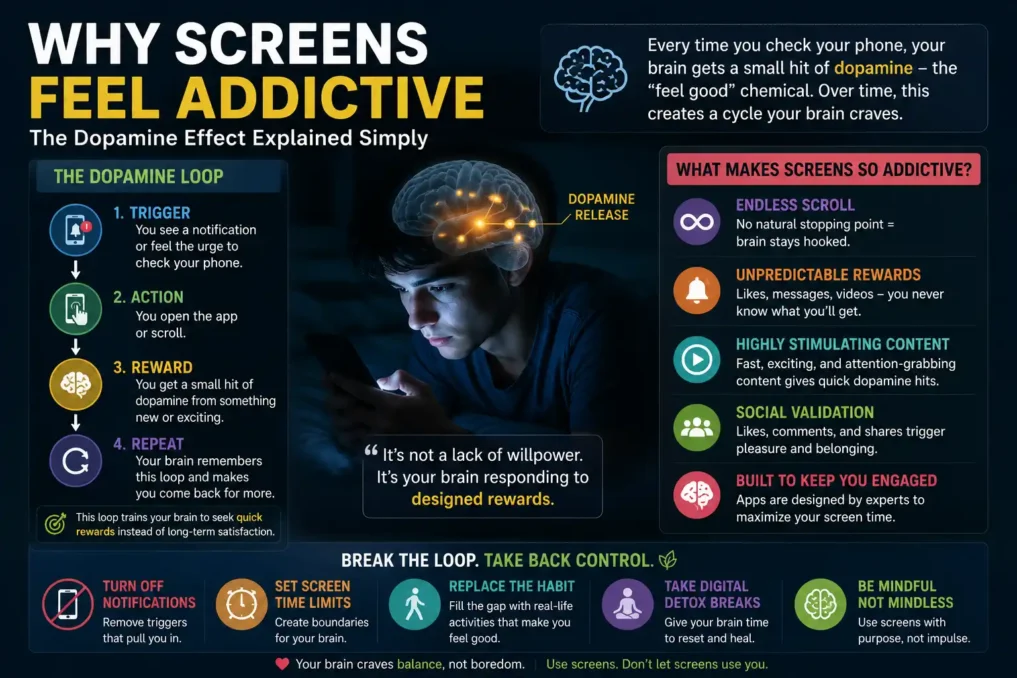
6. Why Screens Feel Addictive (The Dopamine Effect Explained Simply)
Have you ever opened your phone for “just 2 minutes” and suddenly lost half an hour?
That’s not entirely lack of discipline.
Apps and social media platforms are designed to keep attention for as long as possible.
Every notification, short video, message, or “like” can trigger small dopamine responses in the brain. Dopamine is a chemical linked to motivation and reward.
The unpredictable nature of scrolling makes it even harder to stop.
You never know:
- what video appears next
- who replied
- what update arrives
- which post becomes interesting
This creates a loop where the brain keeps seeking “one more scroll.”
Understanding this helps people approach digital detox with more self-awareness instead of guilt.
7. Physical Health Problems Caused by Excessive Screen Time
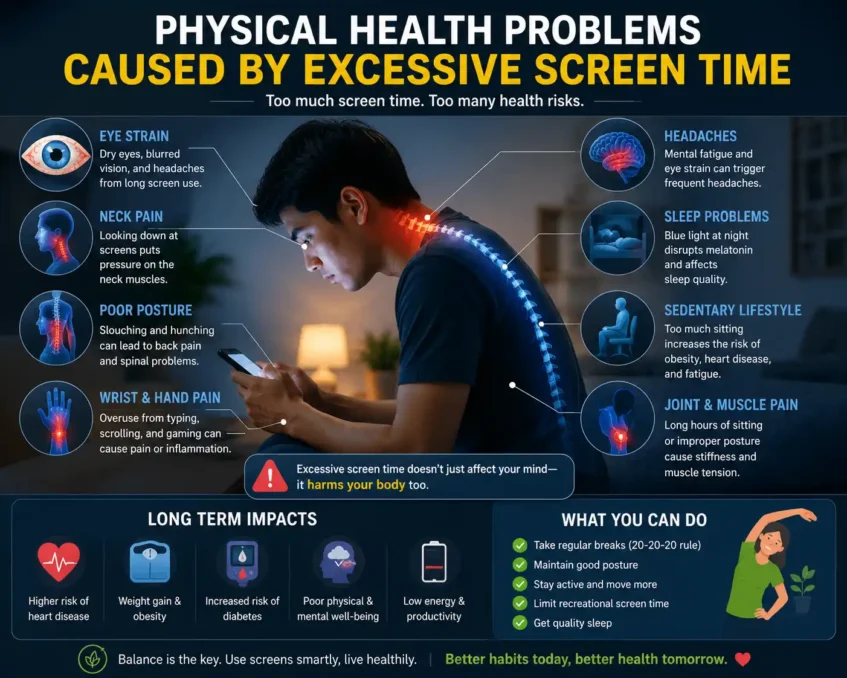
Screen overuse doesn’t only affect mental wellbeing.
The body feels it too.
Eye Strain and Dry Eyes
Long screen exposure may cause:
- burning eyes
- blurred vision
- dryness
- headaches
- eye fatigue
Many people blink less while staring at screens, which contributes to dryness and irritation.
Neck and Shoulder Pain
Poor posture while using phones or laptops can strain:
- neck muscles
- shoulders
- upper back
This is sometimes called “tech neck.”
Reduced Physical Activity
More screen time often means:
- less walking
- less outdoor activity
- less movement overall
A sedentary lifestyle may affect:
- energy levels
- weight management
- sleep quality
- overall health
Taking regular offline breaks helps both the mind and body recover.
Scientifically Proven Benefits of a Digital Detox

Research suggests that reducing excessive screen exposure may help improve several areas of wellbeing.
People often report:
- better sleep quality
- improved concentration
- lower stress levels
- better emotional balance
- higher productivity
- improved real-life relationships
Some studies also suggest that reducing social media use may help decrease feelings of loneliness and anxiety in certain individuals.
The important thing is consistency.
Even small daily reductions in screen time can create noticeable mental clarity over time.
↗ Experts at Cleveland Clinic note that reducing excessive screen time may help improve focus, emotional wellbeing, and sleep habits.
What Happens When You Reduce Screen Time (The Good Part)
The encouraging thing is how quickly the mind responds to small changes.
Not months. Sometimes days.
Better Sleep Comes First
Many people notice this within a week:
- falling asleep faster
- waking fewer times
- feeling slightly fresher in the morning
All from simply reducing nighttime screen use.
Mind Feels Less Crowded
Without constant notifications and updates, thoughts settle.
You feel:
- calmer
- clearer
- less mentally rushed
Nothing magical — just quieter.
More Real-Life Connection
When phones step aside:
- conversations last longer
- meals feel more relaxed
- family time feels more present
You realise how often attention used to be split.
Productivity Improves Naturally
Interestingly, reducing screen distractions often saves time.
Tasks finish faster because:
- you’re not interrupting yourself
- your focus lasts longer
- decision fatigue reduces
Less effort. Better output.
How a Digital Detox Improves Productivity and Work Performance
Many people assume multitasking improves efficiency.
But constant digital interruptions often reduce deep focus.
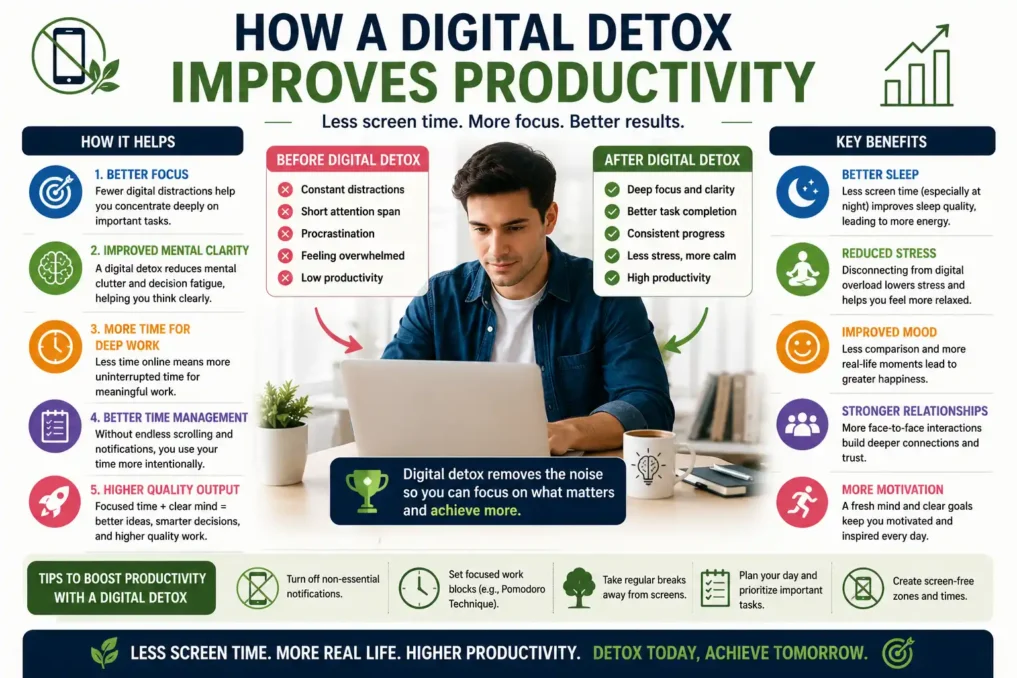
Frequent notifications can:
- break concentration
- increase mental fatigue
- slow task completion
- reduce creativity
When screen distractions reduce, work often feels:
- more organised
- less mentally exhausting
- easier to complete
Simple productivity-friendly habits include:
- checking messages at fixed times
- using focus mode while working
- keeping social media apps closed during important tasks
- taking short offline breaks
Many people discover they finish work faster with fewer interruptions.
Signs You Might Need a Digital Detox
No dramatic symptoms needed.
Just notice if you:
- check your phone immediately after waking
- scroll late into the night
- feel restless without your phone nearby
- lose time online unintentionally
- struggle to focus on one thing
If yes, your brain may just need a reset.
How to Start a Digital Detox Without Making It Difficult
Most people fail because they try extreme rules.
Instead, try realistic steps.
Start With One Screen-Free Moment Daily
Not the whole day.
Just one consistent window:
- morning tea time
- dinner
- evening walk
- last hour before bed
Consistency matters more than duration.
Keep Phone Physically Away
Simple but powerful:
- charge phone outside bedroom
- keep it off dining table
- place it behind you while working
Out of reach = out of mind.
👉 Creating calmer morning habits can reduce phone dependence naturally. Here’s a helpful guide on a Morning Routine for Mental Calm and Positive Energy.
Replace the Habit, Don’t Just Remove It
If you stop scrolling but do nothing else, boredom pulls you back.
Replace with:
- reading a few pages of a book
- stretching
- listening to music
- chatting with family
- stepping outside for fresh air
Your brain still needs a break — just a healthier one.
Best Digital Detox Activities to Replace Screen Time
One reason digital detox becomes difficult is boredom.
The brain is used to constant stimulation.
Replacing screen habits with enjoyable offline activities makes the process easier.
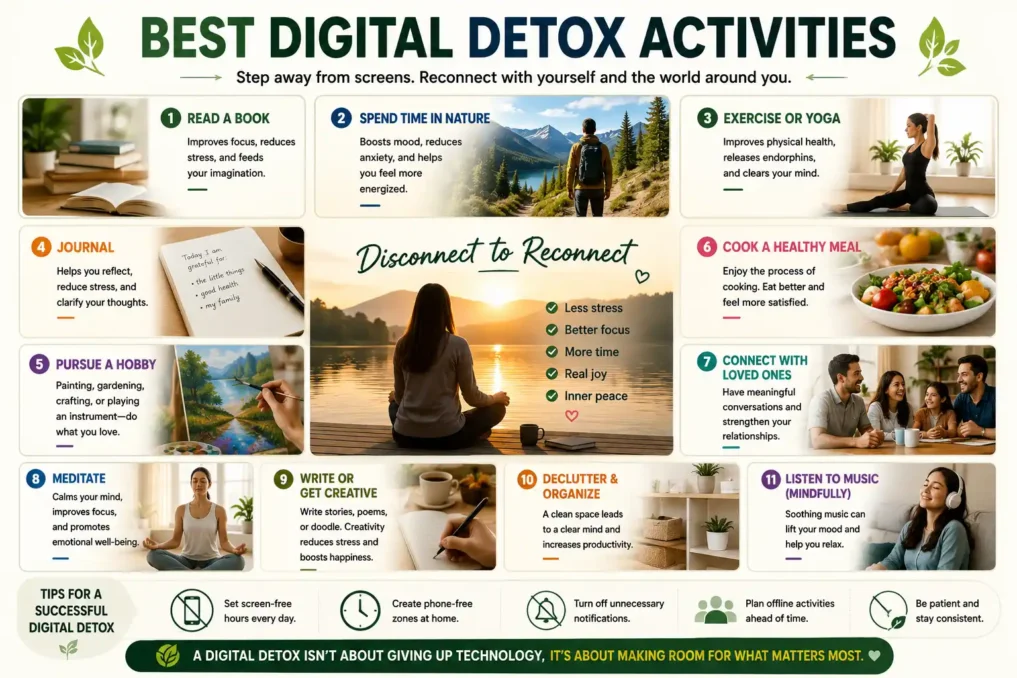
Healthy alternatives include:
- walking outdoors
- gardening
- reading books
- journaling
- cooking
- exercise or yoga
- meditation
- listening to music
- creative hobbies
- spending time with family
The goal isn’t to make life “anti-technology.”
It’s to create better balance between online and offline life.
👉 Practices like breathing exercises and mindfulness can make digital detox easier. Read this beginner-friendly guide on Mindfulness Meditation for Beginners.
A Gentle 7-Day Digital Detox Plan
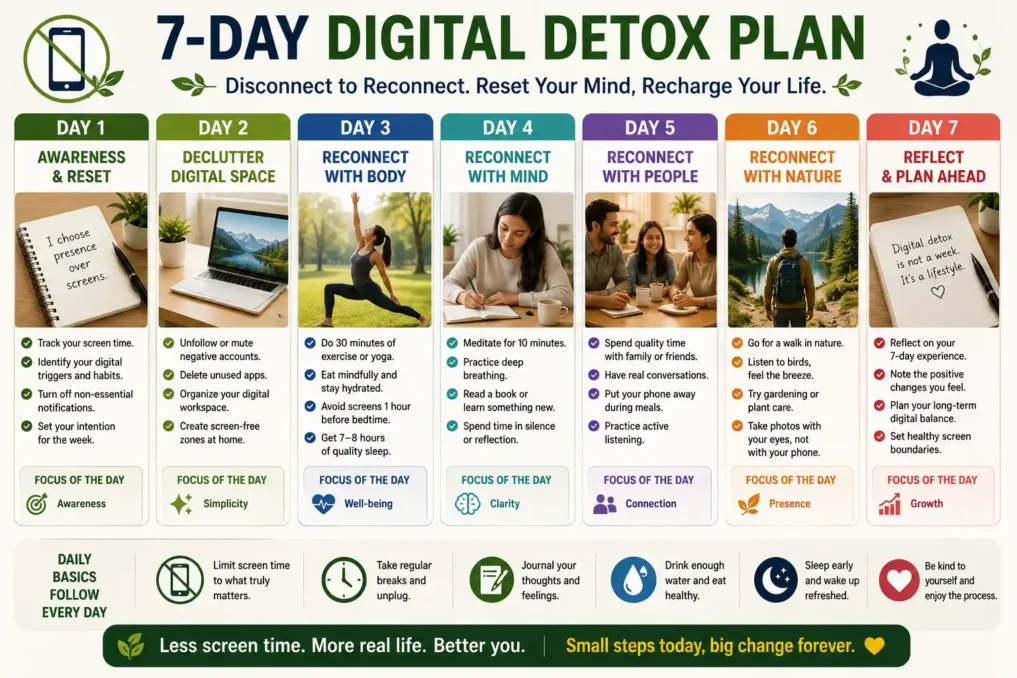
Day 1: Check your actual screen time
Day 2: Turn off unnecessary notifications
Day 3: Eat one meal without screens
Day 4: No phone 1 hour before sleep
Day 5: Replace 30 minutes scrolling with reading/walking
Day 6: Spend one hour intentionally offline
Day 7: Notice how your mood, sleep, and focus feel
No pressure. Just awareness.
Digital Detox Tips for Families and Children
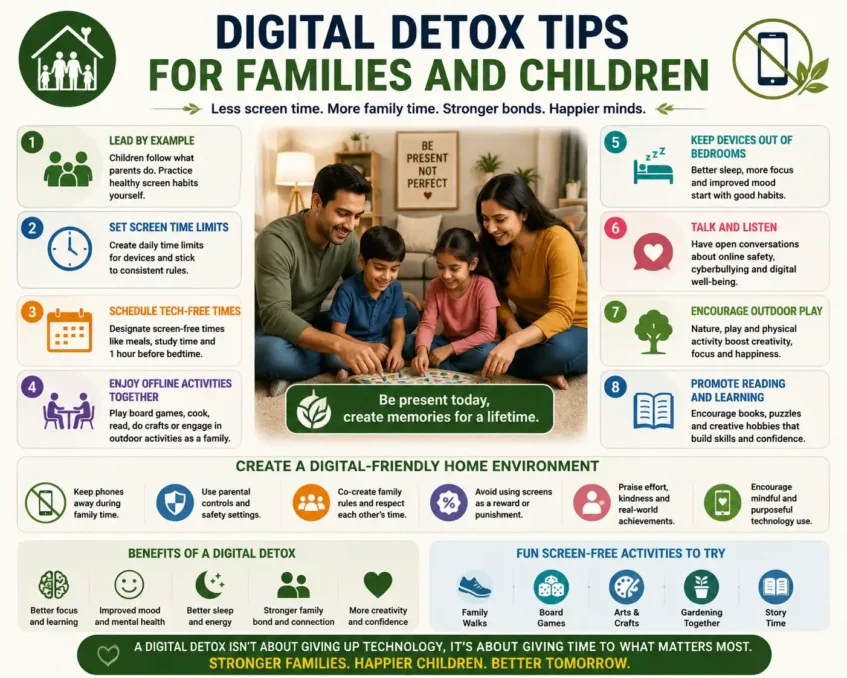
Children today grow up surrounded by screens.
From online classes to entertainment apps, digital devices are part of daily life.
Instead of banning screens completely, families can focus on healthier digital habits.
Helpful ideas include:
- screen-free family meals
- keeping phones away during conversations
- creating a fixed bedtime routine
- encouraging outdoor activities
- having one tech-free hour daily
Parents who model balanced screen habits themselves often find it easier to encourage children to follow similar routines.
Small family habits can create healthier long-term relationships with technology.
FAQs
1. Do I need to stop using my phone completely?
No. The goal is mindful use, not elimination.
2. How quickly can reducing screen time help mental health?
Sleep improvements can appear within days; mood and focus often improve within weeks.
3. Is social media always harmful?
Not inherently. Problems usually come from excessive or mindless use.
4. What’s the easiest first step?
Avoid screens for one hour before sleep.
5. How many hours of screen time is considered unhealthy?
There is no single number for everyone, but problems usually appear when screen use starts affecting sleep, mood, focus, productivity, or relationships.
6. Can a digital detox help anxiety?
Reducing excessive screen exposure and social media use may help lower stress and mental overload for some individuals.
7. What happens during the first few days of a digital detox?
Some people initially feel boredom or restlessness, but many later notice improved focus, calmer thoughts, and better sleep.
8. Is watching TV included in a digital detox?
Yes. A digital detox generally includes reducing unnecessary exposure to phones, tablets, computers, social media, and television.
9. What is the best time to avoid screens?
The hour before bedtime is one of the most beneficial screen-free periods because it supports healthier sleep.
Final Thoughts
Technology isn’t the problem.
Automatic, constant use is.
A digital detox doesn’t require big decisions or dramatic changes.
Sometimes it begins with something small:
leaving the phone in another room tonight
going for a short walk without it
or simply choosing sleep over one more scroll
Small steps feel ordinary.
But over time, they give your mind something rare in today’s world:
quiet space to breathe again.
⚕️ Medical Disclaimer
This article is for educational purposes only and is not intended to diagnose, treat, cure, or prevent any disease. Always consult a qualified healthcare professional before beginning any herbal regimen.






1 thought on “Digital Detox: How Reducing Screen Time Improves Mental Health”