
Mind Body Healing Practices: A Complete Natural Guide to Balance, Energy, and Long-Term Wellness
Introduction: When Your Body Feels Fine… But Something Still Feels Off
Mind body healing practices are simple, natural ways to restore balance, reduce stress, and improve overall wellbeing.
You wake up in the morning.
Your body isn’t exactly sick. There’s no fever, no obvious problem.
But something feels… heavy.
Your mind is already busy before the day begins.
Your body feels tight without any clear reason.
Have you ever wondered:
- Why do I feel tired even after resting?
- Why does stress show up physically in my body?
- Is there a natural way to feel balanced again?
Many readers tell us this is exactly how their day begins.
And the truth is—this isn’t unusual.
It’s often a sign that your mind and body are out of sync.
The encouraging part?
You don’t need extreme changes to fix it.
Sometimes, small and consistent mind body healing practices can gently bring everything back into balance.
These mind body healing practices are not complicated or time-consuming. In fact, when practiced consistently, they can significantly improve your mental clarity, emotional balance, and physical energy.
👉 If stress is affecting both your mind and body, explore deeper solutions here: Natural Remedies for Stress and Anxiety
Is Mind-Body Imbalance Common Today?
More than ever.
In today’s lifestyle:
- we think more than we move
- we scroll more than we rest
- we react more than we reflect
In many households, especially across urban India and global cities alike, people are:
- eating quickly
- sleeping late
- multitasking constantly
This creates a silent imbalance where:
- the mind stays active
- the body stays tense
This is not a medical condition in most cases—it’s a lifestyle pattern.
This is exactly why mind body healing practices are becoming essential in modern lifestyles.
And that means it can be improved.
The Science Behind Mind-Body Healing (Deeper Understanding)
Let’s go a layer deeper—not complicated science, but practical understanding.
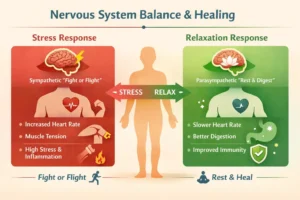
1. The Autonomic Nervous System
Your body has two modes:
- Sympathetic (fight or flight)
- Parasympathetic (rest and repair)
Modern life keeps us stuck in the first.
Mind-body practices activate the second—this is where:
- healing
- digestion
- recovery
actually happen.
👉 The mind-body connection is widely studied in modern research: Harvard Health – Mind Body Connection
2. Chronic Stress and Micro-Inflammation
Stress isn’t just mental.
It creates:
- low-grade inflammation
- muscle tightness
- fatigue
Over time, this affects:
- joints
- digestion
- immunity
Natural practices help reduce this internal pressure.
3. Hormonal Rhythm and Cortisol
Cortisol is useful—but only in balance.
Too much leads to:
- poor sleep
- anxiety
- weight fluctuations
Daily calming practices help restore:
- natural hormonal rhythm
4. Gut-Brain Axis (Highly Important)
You may have noticed:
- stress → stomach discomfort
- anxiety → loss of appetite
That’s the gut-brain connection.
When you calm your mind:
- digestion improves
- gut bacteria stabilize
👉 The connection between your mind and digestion is explained here: Gut Brain Wellness
5. Oxygen Flow and Cellular Function
Shallow breathing = less oxygen.
Less oxygen means:
- fatigue
- poor concentration
Deep breathing increases:
- cellular energy
- mental clarity
6. Sleep and Repair Cycles
Your body repairs itself during sleep.
But stress disrupts:
- deep sleep
- recovery cycles
Mind-body practices improve sleep quality naturally.
7. Muscle Memory of Stress
Your body stores stress physically.
Common areas:
- neck
- shoulders
- lower back
That’s why relaxation practices feel physically relieving.
All of these systems are interconnected, which is why mind body healing practices work at multiple levels simultaneously.
When Should You Take It Seriously?
These practices are supportive—but awareness matters.
You should consider professional advice if you experience:
- constant fatigue despite rest
- anxiety that affects daily life
- chronic digestive issues
- persistent headaches or body pain
These guidelines are based on widely accepted health recommendations and general wellness practices supported by global health organizations.
Trusted organizations like:
- World Health Organization
- National Health Service
- Mayo Clinic
emphasize early attention to such symptoms.
👉 According to global health experts, stress can affect both mental and physical health: WHO – Stress and Health
10 Mind Body Healing Practices
These mind body healing practices are simple, practical, and can be easily added to your daily routine.
Now let’s go deeper—not just what to do, but how and why it works.
1. Deep Breathing (Your Fastest Reset Tool)
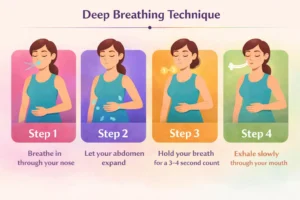
Try this:
- inhale for 4 seconds
- hold for 2
- exhale for 6
This signals your body:
“You are safe.”
Within minutes, your heart rate slows.
👉 One of the simplest ways to calm your system is through breathing: Breathing Techniques for Stress and Panic Relief
2. Meditation (Training Your Attention)
Meditation is not about “stopping thoughts.”
It’s about:
- noticing thoughts
- returning to stillness
Start with:
- 5 minutes daily
- focus on breath
👉 If you’re new to calming practices, start here: Mindfulness Meditation for Beginners
3. Gentle Movement (Releasing Stored Tension)
Your body is not designed to sit all day.
Even:
- stretching
- slow yoga
- walking
can release accumulated stress.
4. Mindful Eating (Healing Begins in the Gut)
One simple shift:
Eat without your phone.
You may notice:
- better digestion
- less bloating
- more satisfaction
👉 Supporting digestion naturally can improve overall balance: Natural Remedies for Digestive Problems
5. Herbal Support (Nature’s Gentle Medicine)
Globally and in Indian homes alike, simple herbs help:
- ginger → digestion
- chamomile → relaxation
- tulsi → stress support
These are not instant cures—but steady support.
👉 Herbal teas are often used to calm the mind and reduce stress naturally: Herbal Tea Recipes
6. Emotional Journaling (Clearing Mental Clutter)
Sometimes the mind just needs space.
Write:
- what you feel
- what you’re thinking
No structure needed.
Clarity follows expression.
7. Reducing Digital Noise

Constant input = mental fatigue.
Try:
- no screens 1 hour before bed
Many readers notice:
- better sleep within days
👉 Simple daily habits can improve mental wellbeing significantly: NHS – Mental Wellbeing Tips
8. Gratitude Practice (Rewiring the Mind)
The brain tends to focus on problems.
Gratitude shifts attention toward:
- safety
- positivity
Over time, this changes mental patterns.
9. Sunlight and Natural Rhythm
Morning sunlight:
- resets your internal clock
- boosts mood naturally
Even 10–15 minutes helps.
10. Sleep as a Healing Practice (Not Just Rest)
Sleep is not passive.
It is when:
- your brain detoxifies
- your body repairs
Create a routine:
- fixed timing
- calm environment
3-Day Mind-Body Reset Plan
Let’s make this more practical and powerful.

Day 1: Awareness
- Morning: deep breathing (5 mins)
- Afternoon: mindful meal
- Night: journal 1 page
Day 2: Reset
- Morning: sunlight + walk
- Afternoon: hydration focus
- Night: herbal tea + no screens
Day 3: Balance
- Morning: light yoga/stretching
- Afternoon: slow eating
- Night: gratitude practice
What to Observe
- Are you calmer?
- Is your digestion better?
- Are you sleeping deeper?
Small shifts = powerful signals.
How Consistency Rewires the Brain (The Hidden Advantage)
One of the most overlooked benefits of mind body healing practices is how they reshape your brain over time.
You may not notice it immediately.
But with repetition, something subtle begins to change.
Your brain starts to:
- react less impulsively
- recover faster from stress
- stay calmer in situations that once felt overwhelming
This is often referred to as neuroplasticity—your brain’s ability to adapt.
For example:
- A person who practices daily breathing may notice fewer anxiety spikes
- Someone who journals regularly may process emotions more clearly
- A consistent sleep routine may improve mood stability
What feels like a “small habit” today becomes a deep internal shift over weeks and months.
Why Slowness Is Actually a Strength in Healing
In a world that rewards speed, healing often feels frustratingly slow.
But here’s a different perspective:
Fast results often fade.
Slow results tend to stay.
When you adopt mind body practices gradually:
- your body adapts naturally
- your mind doesn’t resist
- habits become sustainable
This is why traditional systems like Ayurveda and natural wellness always emphasize:
daily rhythm over quick solutions
Personalizing Your Mind-Body Routine (What Works for You Matters)
Not every practice works the same for everyone.
Some people feel calm through:
- meditation
Others through:
- walking
- prayer
- music
- gardening
You may have noticed this already.
The best mind body healing practices are the ones that feel natural and sustainable for you.
That’s because healing is personal, not universal.
How to Find What Works for You
Ask yourself:
- Do I feel better after movement or stillness?
- Do I prefer silence or guided practices?
- What feels natural—not forced?
Start there.
A Simple Rule
If a practice feels like pressure, it won’t last.
If it feels like relief, it will become part of your life.
The Role of Environment in Healing
Your surroundings influence your state more than you think.
A cluttered, noisy environment often leads to:
- mental fatigue
- irritability
- lack of focus
A calm environment supports:
- relaxation
- clarity
- emotional balance
Small Changes That Make a Big Difference
You don’t need a perfect home.
Try:
- opening windows for fresh air
- reducing unnecessary noise
- keeping your space slightly organized
- adding natural elements (plants, sunlight)
Even these small adjustments can support your mind-body connection.
Daily Micro-Habits That Quietly Improve Your Wellbeing
These are small habits that don’t feel like effort—but add up significantly.
- Drinking water slowly instead of rushing
- Taking 3 deep breaths before meals
- Pausing for 1 minute between tasks
- Stretching after sitting for long periods
These may seem simple.
Even small mind body healing practices done daily can lead to noticeable improvements over time.
But over time, they create a different way of living.
Emotional Awareness: The Missing Piece in Most Healing Plans

Many people focus only on:
- food
- exercise
- sleep
But ignore emotions.
Unprocessed emotions can show up as:
- fatigue
- tension
- digestive discomfort
A Gentle Way to Start
Instead of ignoring emotions, try noticing:
- “What am I feeling right now?”
- “Where do I feel it in my body?”
No need to fix it immediately.
Awareness itself begins the release.
The 80/20 Rule of Natural Healing
You don’t need to be perfect.
In fact, trying to be perfect often leads to:
- burnout
- inconsistency
Instead, follow this:
👉 80% consistency > 100% perfection
Meaning:
- practice regularly
- allow flexibility
- don’t overcomplicate
Cultural Wisdom: What Traditional Practices Got Right
Across cultures, similar healing principles exist.
In India:
- yoga
- pranayama
- herbal remedies
In other parts of the world:
- mindfulness
- forest bathing
- breathing techniques
Even though they appear different, they share the same foundation:
👉 slowing down
👉 connecting inward
👉 respecting natural rhythms
This reinforces an important point:
Mind-body healing is not a trend—it’s a timeless principle.
Signs Your Mind-Body Practices Are Working
Progress is not always dramatic.
But you may start noticing:
- you react less to stress
- your sleep improves gradually
- digestion feels lighter
- your mood becomes more stable
- you feel “more like yourself”
These subtle signs are powerful indicators.
👉 The connection between mind and body is supported by research: Harvard Health – Mind Body Connection
Signs You Might Be Overdoing It
Yes—even healing can be overdone.
Watch for:
- trying too many practices at once
- feeling pressured to “heal faster”
- turning wellness into a strict routine
- comparing yourself to others
If it starts feeling stressful, pause.
Return to simplicity.
How to Stay Consistent (Even on Busy Days)
Consistency is where most people struggle.
Here’s a realistic approach:
On Busy Days, Do the Minimum
- 3 minutes of breathing
- short walk
- mindful meal
Even this counts.
Stack Habits Together
Example:
- breathing + sunlight
- walk + podcast (calm content)
- tea + digital detox
This makes it easier to maintain.
Reduce Decision Fatigue
Have a simple routine instead of deciding daily.
Routine reduces resistance.
A Simple Weekly Mind-Body Rhythm
To make this even more practical, here’s a flexible weekly flow:
Monday–Friday
- short daily practices
- focus on consistency
Saturday
- longer relaxation activity
- nature, walking, or journaling
Sunday
- reflection + reset
- light planning
This creates balance without pressure.
The Long-Term Impact (What Happens After Months)
If practiced consistently, mind body healing leads to:
- better emotional control
- improved physical comfort
- reduced stress sensitivity
- stronger internal awareness
- more stable energy levels
Over time, you don’t just “feel better.”
👉 You function differently.
Supporting Diet for Mind-Body Balance
Food plays a bigger role than most people think.
Include:
- warm, simple meals
- fiber-rich foods
- seasonal fruits
- spices like turmeric, cumin
In Indian kitchens, these are already part of daily life.
Sometimes, going back to basics is enough.
Lifestyle Differences: Global vs Indian Context
Globally:
- high stress
- sedentary lifestyle
In India:
- strong traditional practices
- but increasing urban stress
The best approach?
Combine:
- modern awareness
- traditional wisdom
👉 Research-backed techniques help manage stress effectively: Mayo Clinic – Stress Management
Quick Summary of Mind Body Healing Practices
Mind body healing practices help improve mental clarity, reduce stress, support digestion, and promote overall physical and emotional balance.
What are the key benefits of mind body healing practices?
- Reduce stress and anxiety
- Improve digestion and gut health
- Support better sleep
- Balance hormones
- Increase mental clarity
- Reduce inflammation
- Improve overall well-being
Mind Body Healing vs Quick Fix Solutions
- Quick fixes → temporary relief
- Mind body healing → long-term balance
- Medications → symptom control
- Natural practices → root cause support
Frequently Asked Questions
1. How long does it take to see results?
Some benefits appear within days, while deeper changes take weeks.
2. Can beginners start easily?
Yes—start with breathing and walking.
3. Is this backed by science?
Yes, especially in areas like stress reduction and nervous system regulation.
4. Can I combine multiple practices?
Yes, but keep it simple and consistent.
5. Is this suitable for all ages?
Generally yes, with gentle adaptation.
Disclaimer
This article is for educational purposes only and should not replace professional medical advice.
Conclusion: Real Healing Is Quiet, Slow, and Consistent

Mind body healing practices are not about quick fixes—they are about building a sustainable and balanced way of living.
But there are small actions that slowly change how you feel.
A breath.
A walk.
A moment of stillness.
Over time, these become your foundation.
And without forcing anything, your mind and body begin to work together again.





Deep breathing and meditation really works in stress and anxiety