What to Eat When You Don’t Feel Hungry (9 Easy Foods to Restore Appetite Fast)
A Strange Feeling You Might Be Ignoring…
You sit down to eat… but your body just says no.
The food looks fine. You know you should eat.
But there’s no hunger, no craving—just a quiet resistance.
Why does this happen?
And more importantly…
Should you force yourself to eat—or listen to your body?
If you’ve ever skipped meals not by choice, but because your appetite simply disappeared, this guide will help you understand what’s going on—and what to do next.
If you’re wondering what to eat when you don’t feel hungry, you’re not alone—this is a common experience many people face during stress, illness, or lifestyle changes.
In this guide, you’ll discover:
- Why your appetite disappears
- What to eat when you don’t feel hungry
- Simple ways to restore hunger naturally
- Foods that help without overwhelming your stomach

What to Eat When You Don’t Feel Hungry (Quick Answer + Easy Foods)
- Warm soups and broths
- Fresh fruits like watermelon and papaya
- Smoothies and light shakes
- Yogurt and probiotic foods
- Plain rice or khichdi
- Herbal teas like ginger or peppermint
These are some of the best options if you’re wondering what to eat when you don’t feel hungry but still need energy and nourishment.
These foods are easy to digest, gentle on the stomach, and help restore appetite naturally.
Is This Common or Normal?
You’re not alone in this.
In fact, many readers tell us they go through phases where food just doesn’t feel appealing—especially during stress, illness, or lifestyle changes.
This is more common than most people think.
Loss of appetite can happen due to:
- emotional stress
- digestive discomfort
- hormonal fluctuations
- fatigue or burnout
- mild illness
And sometimes… there’s no obvious reason at all.
↗ According to the World Health Organization, temporary loss of appetite is a common response during illness, stress, or recovery phases.
The key is not to panic—but to understand your body’s signals.
Here’s What’s Really Happening Inside Your Body…
Let’s unpack this in a simple, practical way.
Understanding what to eat when you don’t feel hungry can help you maintain energy levels without forcing heavy meals.
1. Stress Quietly Shuts Down Hunger
Ever noticed how anxiety kills your appetite?
That’s because stress hormones like cortisol and adrenaline shift your body into “survival mode.”
Digestion becomes a low priority.
↗ Experts at the Mayo Clinic note that chronic stress can suppress appetite by shifting the body into a survival mode where digestion becomes a lower priority.
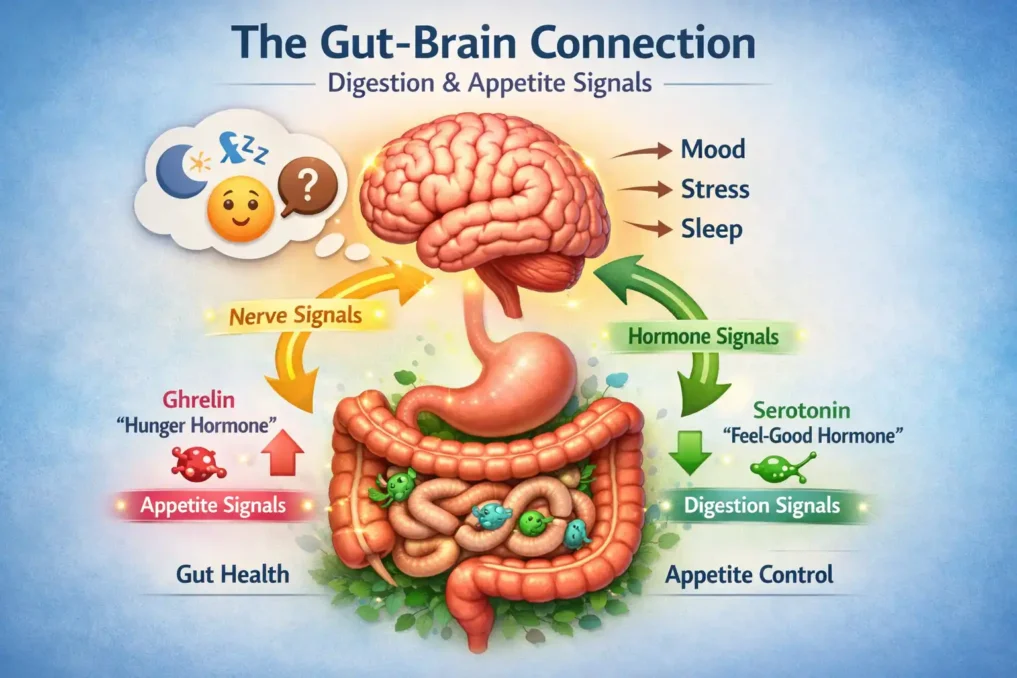
2. Your Gut-Brain Connection Is Out of Sync
Your brain and gut constantly communicate.
When this connection is disrupted—due to poor sleep, anxiety, or irregular meals—your hunger signals can weaken.
One interesting thing researchers have found is that gut health directly influences appetite hormones like ghrelin.
3. Low Energy… But No Hunger?
This confuses many people.
You feel tired… yet not hungry.
This can happen when:
- blood sugar is unstable
- metabolism slows temporarily
- your body adapts to irregular eating patterns
It’s your body conserving energy—not demanding food.
4. Mild Digestive Sluggishness
If your stomach feels heavy, bloated, or slow…
Your body may avoid food instinctively.
In many households, especially in India, this is often described as “weak digestion” or mandagni in Ayurveda.
5. Dehydration Can Trick You
Surprisingly, lack of fluids can reduce appetite.
Your body sometimes confuses thirst with hunger—or suppresses hunger entirely.
6. Illness or Recovery Phase
When you’re slightly sick—even with a cold—your appetite may drop.
According to World Health Organization, reduced appetite is a common immune response as the body focuses on healing.
7. Hormonal Changes
Especially in:
- women (menstrual cycle, pregnancy)
- aging individuals
- irregular sleep cycles
Hormones can significantly affect appetite cues.
This is one reason why knowing what to eat when you don’t feel hungry becomes important for supporting your body during these phases.
👉 If you want to understand the root causes better: Natural Remedies for Digestive Problems
When Should You Be Concerned?
While this is usually harmless, there are times when you should pay attention.
If your loss of appetite:
- lasts more than 1–2 weeks
- leads to noticeable weight loss
- is accompanied by fatigue, nausea, or pain
- affects daily functioning
It’s wise to consult a healthcare professional.
Organizations like NHS recommend checking persistent appetite loss to rule out underlying issues.
↗ The NHS recommends seeking medical advice if loss of appetite persists for more than a couple of weeks or is accompanied by weight loss or fatigue.
Why Ignoring Low Appetite Can Quietly Affect Your Health
Here’s something most people don’t realize…
Skipping food occasionally isn’t a problem.
But when low appetite becomes a pattern, your body starts adapting in ways you may not notice immediately.
At first, it feels manageable.
Then slowly:
- your energy dips
- your concentration weakens
- your mood becomes unpredictable
And the surprising part?
You may not even feel hungry enough to fix it.
The Hidden Impact on Your Body
Let’s look at what can happen over time:
1. Nutrient Gaps Build Up Silently
Even if you’re eating “something,” it may not be enough.
You could be missing:
- iron → leading to fatigue
- B vitamins → affecting brain function
- protein → slowing recovery and strength
This is especially common in busy lifestyles where meals are skipped without planning.
2. Muscle Loss Can Begin Subtly
Your body still needs fuel.
If it doesn’t get it from food, it may start breaking down muscle tissue for energy.
This can happen even if you don’t notice weight loss immediately.
3. Digestive Strength Weakens
In Ayurveda, digestion is seen as a “fire.”
If you stop feeding it regularly, that fire weakens.
And here’s the cycle:
👉 less eating → weaker digestion → even less appetite
Breaking this cycle early is key.
4. Hormonal Imbalance
Irregular eating can affect:
- insulin
- cortisol
- hunger hormones
Which further confuses your body’s natural rhythm.
Here’s something most people don’t expect…
You don’t need to feel hungry to start healing your appetite.
Even small, gentle meals can restart your body’s natural rhythm.
Emotional and Lifestyle Reasons You Might Not Feel Hungry
Let’s be honest—this isn’t always just about food.
Many readers quietly experience appetite loss because of life itself.
1. Mental Overload
When your mind is constantly occupied:
- deadlines
- overthinking
- digital fatigue
Your body deprioritizes hunger.
You may have noticed this on extremely busy days—you suddenly realize it’s evening, and you haven’t eaten properly.
2. Emotional States
Low appetite is often linked with:
- anxiety
- mild sadness
- emotional burnout
Food loses its appeal—not because your body doesn’t need it, but because your mind is elsewhere.
3. Irregular Daily Routine
Late nights… skipped breakfasts… random meal timings…
Over time, your body stops expecting food at regular intervals.
And hunger signals become weaker.
4. Over-Reliance on Caffeine
Coffee and tea can suppress appetite.
Many people unknowingly replace meals with caffeine.
And then wonder why they’re not hungry.
Small Habits to Follow When You Don’t Feel Hungry
This is where things get interesting.
You don’t need drastic changes.
Simple habits can guide you toward what to eat when you don’t feel hungry without overwhelming your digestion.
Just a few consistent habits can retrain your body gently.
1. Start Your Day With Warm Liquids
Before anything else:
- warm water
- lemon water
- ginger-infused water
This gently activates digestion.
In many Indian households, this is a daily ritual—not a trend.
👉 Your gut health plays a key role here: Gut Health Foods for Better Digestion
2. Eat at Fixed Times (Even If It’s Small)
Your body loves rhythm.
Even if you’re not hungry, sit down and eat a few bites at the same time daily.
Over a few days, your body starts anticipating food again.
3. Use Aroma to Stimulate Appetite
Smell plays a powerful role.
Freshly cooked food, herbs, spices…
They can trigger hunger even when you don’t feel like eating.
4. Light Physical Movement
A short walk can do more than you expect.
It stimulates digestion and can naturally bring back hunger.
5. Improve Sleep Quality
Poor sleep disrupts hunger hormones.
Even one night of good sleep can improve appetite the next day.
Best Eating Strategy When Nothing Feels Appealing
Let’s simplify this into something practical.
If you’re struggling right now, follow this:
The “Low Appetite Plate” Formula
Instead of forcing a full meal, aim for:
- 1 soft base → rice, toast, porridge
- 1 easy protein → yogurt, dal, eggs
- 1 light addition → fruit or vegetables
Small, balanced, manageable.
This approach makes it easier to decide what to eat when you don’t feel hungry without overwhelming your body.
The 50% Rule
Eat only until you feel slightly satisfied, not full.
This prevents discomfort and builds a positive eating pattern.
The “First Bite Trick”
Here’s a small psychological hack:
Don’t think about the whole meal.
Just take one bite.
Often, that’s enough to restart appetite.
The Good News Is—Small Changes Can Make a Noticeable Difference
In fact, many people notice their appetite slowly returning within just a few days of making these simple adjustments.
You don’t need heavy meals or forced eating.
You just need smart, gentle nourishment.
What to Eat When You Don’t Feel Hungry: 9 Easy Foods That Help Fast

If you’re unsure what to eat when you don’t feel hungry, start with light, easy-to-digest foods that gently support your body.
Let’s focus on foods that are:
✔ easy to digest
✔ light but nourishing
✔ naturally appetite-stimulating
1. Warm Soups & Broths
Sometimes, solid food feels like too much.
But warm liquids?
They go down easily.
Try:
- vegetable soup
- chicken broth
- lentil soup (dal)
These hydrate and nourish at the same time.
👉 If your appetite drops because of heaviness after meals: Home Remedies for Feeling Heavy After Eating
2. Fresh Fruits (Especially Juicy Ones)
If chewing feels like effort, fruits are your best friend.
Go for:
- watermelon
- oranges
- papaya
- apples
They provide natural sugars, hydration, and gentle energy.
3. Smoothies & Light Shakes

This is one of the easiest ways to get nutrients without “feeling like eating.”
Blend:
- banana + milk
- yogurt + berries
- almond milk + dates
You may notice energy improving within hours.
4. Yogurt & Probiotic Foods
Your gut plays a huge role in appetite.
In traditional Indian kitchens, curd (dahi) is often the go-to when appetite is low.
It supports digestion and restores balance.
5. Light Carbohydrates
Your body still needs fuel—even when hunger is low.
Try:
- plain rice
- toast
- khichdi (rice + lentils)
Simple, comforting, and easy on the stomach.
6. Herbal Teas That Stimulate Appetite
This is where natural remedies shine.
Try:
- ginger tea
- peppermint tea
- fennel water
In Ayurveda, ginger is widely used to “ignite digestive fire.”
7. Nuts & Small Energy-Dense Foods
Even a small handful can help.
- almonds
- walnuts
- soaked raisins
Perfect when you can’t handle full meals.
8. Small, Frequent Bites
Here’s something most people ignore…
You don’t need full meals.
Even 2–3 bites every hour can help restore appetite gradually.
9. Mildly Spiced Foods
A hint of spice can stimulate digestion.
In Indian cuisine, ingredients like:
- cumin
- coriander
- black pepper
are often used for this exact reason.
Indian Home Remedies That Still Work Today
In traditional Indian kitchens, appetite issues were handled simply—but effectively.
1. Ginger + Salt Before Meals
A tiny piece of ginger with a pinch of salt.
This stimulates digestive enzymes naturally.
2. Jeera (Cumin) Water
Boiled cumin water helps reduce bloating and improve digestion.
3. Buttermilk (Chaas)
Light, cooling, and probiotic-rich.
Perfect when heavy food feels overwhelming.
4. Hing (Asafoetida)
Used in small amounts, it reduces gas and improves appetite.
Foods to Avoid When You’re Not Hungry
This part is often ignored—but important.
When your appetite is low, avoid:
- heavy fried foods
- overly spicy meals
- processed snacks
- sugary drinks
These can make digestion slower and worsen the problem.
👉 These foods can worsen bloating and discomfort: Foods That Stop Bloating Immediately at Home
Signs Your Appetite Is Returning (Don’t Miss These)
Here’s something encouraging…
Your body gives subtle signals when it’s recovering.
Look for:
- slight hunger at regular times
- improved taste sensitivity
- better digestion
- increased energy
These are signs your system is rebalancing.
Long-Term Prevention: How to Keep Your Appetite Healthy
Once your appetite improves, the goal is to maintain it.
1. Eat Mindfully
Avoid eating while distracted (phone, TV).
Focus on the food.
2. Maintain Meal Rhythm
Consistency matters more than perfection.
3. Stay Hydrated—But Not During Meals
Too much water during meals can dilute digestive enzymes.
4. Balance Stress Levels
Even small stress-management habits help:
- deep breathing
- short breaks
- outdoor time
5. Keep Your Gut Healthy
Your gut is at the center of everything.
Maintaining these habits ensures you always know what to eat when you don’t feel hungry and prevents recurring appetite issues.
Fermented foods, fiber, and balanced meals support long-term appetite.
Common Mistakes When You Don’t Feel Hungry
- Skipping meals completely
- Forcing heavy foods
- Drinking too much caffeine
- Ignoring hydration
- Eating too fast or distracted
Want to See How Your Body Responds? Try This 3-Day Routine…
This simple experiment can reveal a lot.
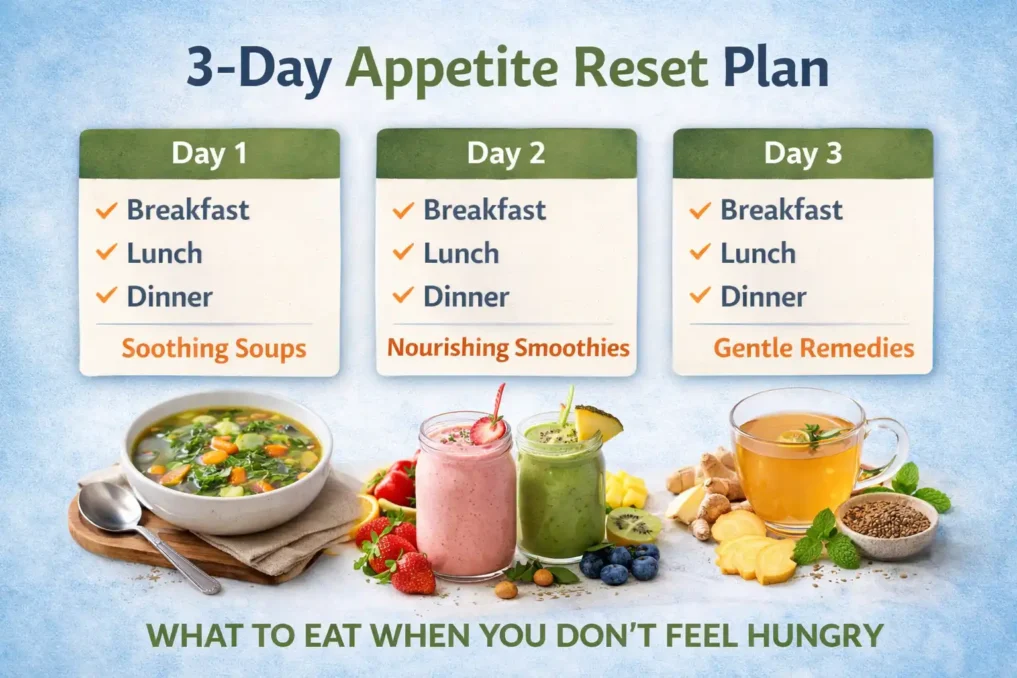
This simple plan shows exactly what to eat when you don’t feel hungry while helping your body gradually regain appetite.
Day 1: Reset Gently
- Start with warm water + ginger
- Eat light soups and fruits
- Stay hydrated
Day 2: Add Soft Foods
- Include rice, yogurt, and smoothies
- Eat small portions every 2–3 hours
Day 3: Build Appetite
- Add light spices
- Try a slightly fuller meal
- Notice hunger signals returning
Many people notice subtle changes within just a few days.
👉 Want a deeper reset plan? Try this: One-Day Gut Reset Plan
Quick Summary
- Loss of appetite is common and often temporary
- Stress, digestion, and hydration play key roles
- Focus on light, easy-to-digest foods
- Small frequent meals work better than large ones
- Natural remedies like ginger and herbal teas can help
- Seek medical advice if it persists
Frequently Asked Questions
What really happens if you don’t eat when you’re not hungry?
Your body may slow metabolism temporarily—but long-term skipping can reduce energy and nutrient intake.
Can this actually improve on its own?
Yes. In many cases, appetite returns once stress, hydration, or digestion improves.
Why do some people notice changes quickly?
Because small adjustments—like hydration or light meals—restore balance faster than expected.
Is it okay to force yourself to eat?
Not force—but gently encourage with small, easy foods.
Are there natural ways to boost appetite?
Yes—ginger, light spices, regular meal timing, and improving gut health all help.
What really happens if low appetite continues for months?
Over time, it can lead to nutrient deficiencies, fatigue, and weakened immunity. Early intervention is important.
Can dehydration alone cause loss of appetite?
Yes. Even mild dehydration can reduce hunger signals significantly.
Why do warm foods feel easier to eat?
Warm foods are easier to digest and more comforting, especially when your digestive system is sluggish.
Is low appetite more common in certain seasons?
Yes. In hot weather, appetite often decreases naturally.
Can herbal remedies actually help?
Yes—especially ginger, fennel, and cumin, which have been traditionally used and supported by modern digestive research.
A Deeper Perspective Most People Miss
Here’s something worth thinking about…
Loss of appetite is not always a problem.
Sometimes, it’s a signal.
A signal to:
- slow down
- reset your routine
- pay attention to your body
Instead of fighting it, understanding it can change everything.
Gentle Health Disclaimer
This article is for educational purposes only and should not replace professional medical advice.
A Final Thought…
Sometimes your body isn’t asking for more food…
It’s asking for better care.
Slowing down. Eating gently. Listening more closely.
And when you respond with patience instead of pressure—
your appetite often finds its way back, naturally.
Learning what to eat when you don’t feel hungry is less about forcing food and more about supporting your body gently and consistently.
Reviewed by NaturalHealingTips Editorial Team
Focused on evidence-based natural health, digestion, and wellness.