
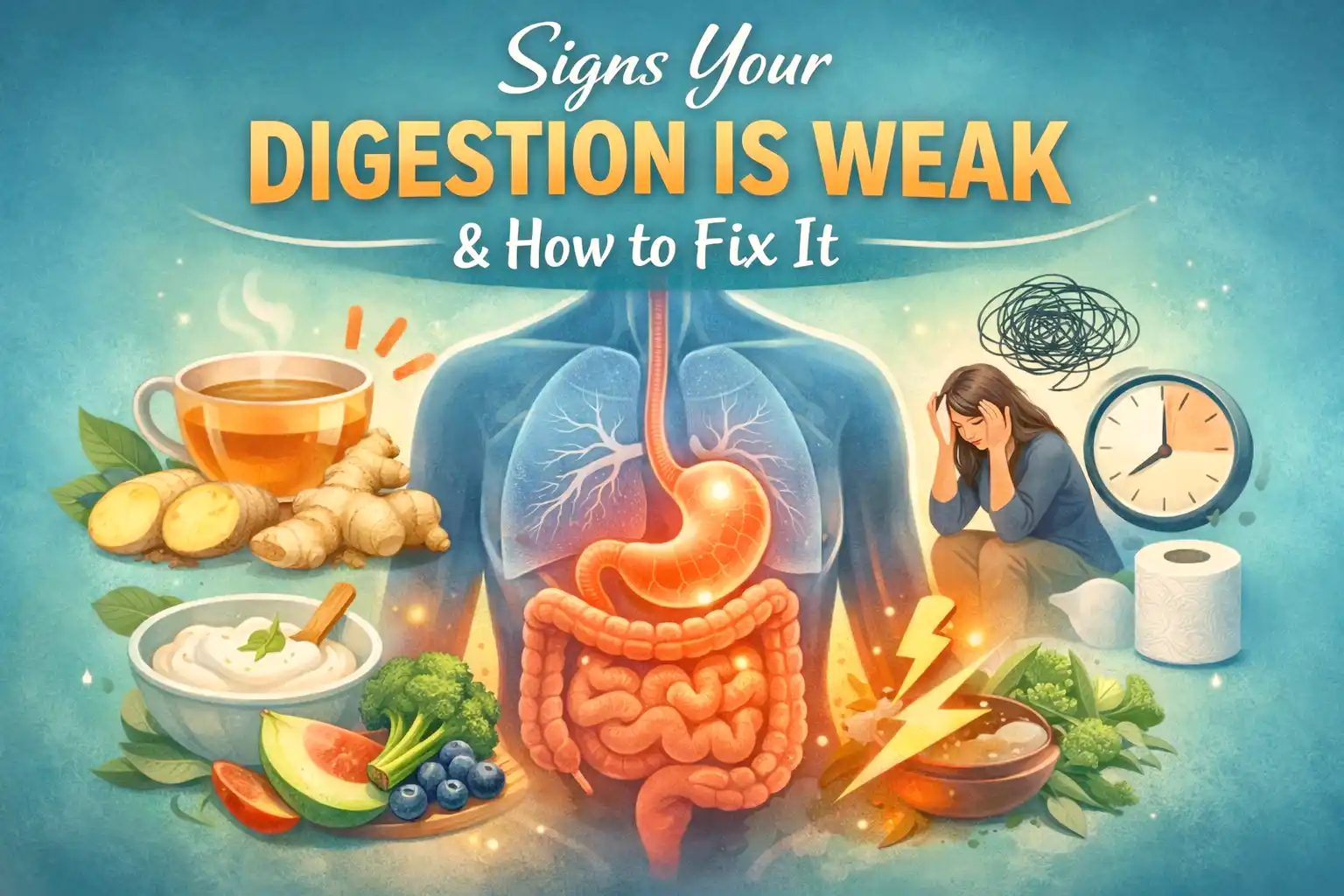
Signs Your Digestion Is Weak and How to Fix It
A Small Clue Many People Ignore
Signs your digestion is weak may include bloating, gas, fatigue after meals, and stomach discomfort. Understanding these early warning signs can help you improve digestion naturally before more serious digestive issues develop.
Many people don’t realize that signs your digestion is weak can appear long before serious digestive problems develop.
Maybe it’s that uncomfortable heaviness after meals.
Or the strange bloating that appears even when you eat something simple.
Perhaps it’s the feeling that food just “sits” in your stomach longer than it should.
You might start asking yourself:
Why do I feel tired after eating?
Why does my stomach feel heavy so often?
Is my digestion actually working properly?
These questions are surprisingly common.
Many readers tell us they assumed digestive discomfort was simply a normal part of modern life — until they realized their body was quietly sending signals that something needed attention.
The truth is, digestion is one of the most important systems in the body. When it functions well, you hardly notice it.
But when digestion weakens, the body often starts whispering subtle warning signs.
And if you learn to recognize them early, you can often improve digestive health with simple natural changes.
Signs Your Digestion Is Weak (Quick Answer)
The most common signs your digestion is weak include bloating after meals, gas, fatigue after eating, constipation, stomach heaviness, and food sensitivities. These symptoms indicate that the digestive system may not be breaking down or absorbing food efficiently.
Is Weak Digestion Common?
Yes — extremely common.
↗ Learn more about indigestion syptioms: National Health Service
digestive discomfort such as bloating, indigestion, and irregular bowel habits are among the most frequently reported health complaints.
Modern lifestyle plays a big role.
Many daily habits can quietly strain digestion:
- eating too quickly
- chronic stress
- ultra-processed foods
- irregular meal timing
- poor sleep
- low fiber intake
Even healthy-looking diets can sometimes lead to digestive discomfort if the body struggles to break down foods efficiently.
In traditional Indian households, elders often used simple observations to judge digestive health.
They might say:
“If your digestion is strong, almost any food suits you.”
While that may be an exaggeration, the idea reflects an important truth — digestion is the foundation of energy, immunity, and overall wellbeing.
Science Behind Digestion and Why It Becomes Weak
Digestion is not just about the stomach.
It involves a complex system that includes:
- stomach acid
- digestive enzymes
- gut bacteria
- intestinal movement
- nervous system signals
When any of these factors become imbalanced, digestion may weaken.
Below are several mechanisms researchers frequently discuss.
1. Low Stomach Acid
The stomach produces hydrochloric acid to break down food.
When stomach acid is too low:
- proteins digest poorly
- minerals absorb less efficiently
- food remains longer in the stomach
This can lead to symptoms like bloating, heaviness, and belching.
Interestingly, many people assume they have “too much acid,” when in fact low stomach acid is sometimes the issue.
2. Digestive Enzyme Insufficiency
Digestive enzymes help break down:
- fats
- proteins
- carbohydrates
These enzymes come from the stomach, pancreas, and small intestine.
If enzyme production decreases — which can happen with age or poor diet — food may not break down properly.
Undigested food particles can cause gas and discomfort.
3. Imbalance in Gut Microbiome
Your digestive system contains trillions of microorganisms.
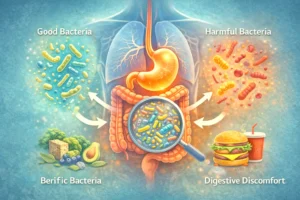
This ecosystem is called the gut microbiome.
Healthy bacteria support:
- digestion
- vitamin production
- immune balance
- gut lining health
When the microbiome becomes imbalanced, digestion often suffers.
↗ According to the Mayo Clinic, gut bacteria influence everything from nutrient absorption to inflammation levels.
4. Sluggish Intestinal Movement
The digestive tract moves food using rhythmic contractions called peristalsis.
If this movement slows down, symptoms may appear such as:
- constipation
- bloating
- heaviness
- slow digestion
Sedentary lifestyle and dehydration often contribute to sluggish digestion.
5. Chronic Stress
One interesting thing researchers have found is that digestion and stress are deeply connected.
The digestive system is controlled by the enteric nervous system, sometimes called the body’s “second brain.”
When stress levels increase:
- digestive enzyme production may decrease
- intestinal movement may slow
- gut bacteria balance may shift
This explains why digestive symptoms often worsen during stressful periods.
6. Poor Chewing Habits
Digestion actually begins in the mouth.
Saliva contains enzymes that start breaking down carbohydrates.
If food is swallowed quickly without proper chewing, the stomach must work harder.
Many nutrition experts recommend chewing food 20–30 times per bite.
This simple habit can dramatically improve digestion.
7. Low Fiber Intake
Fiber acts like a natural broom for the digestive system.
It helps regulate:
- bowel movements
- gut bacteria
- stool consistency
Unfortunately, many modern diets contain far less fiber than recommended.
↗ The World Health Organization notes that adequate fiber intake supports digestive and metabolic health.
Top Signs Your Digestion Is Weak (Early Warning Symptoms)
The body often sends early signals when digestion isn’t functioning optimally.
Understanding the signs your digestion is weak can help you take action before digestive discomfort becomes more serious.

Common signs include:
Frequent bloating after meals
Your stomach feels swollen or tight after eating.
👉 If weak digestion causes gas or bloating after meals, these kitchen remedies may help: Kitchen Ingredients That Reduce Gas Fast
Feeling extremely full after small meals
Food seems to sit in your stomach longer than normal.
👉 That uncomfortable heaviness after eating is often related to slow digestion: Home Remedies for Feeling Heavy After Eating
Excess gas or burping
This may occur when food isn’t fully broken down.
Constipation or irregular bowel movements
Healthy digestion usually produces regular bowel patterns.
Fatigue after eating
Energy drops significantly after meals.
👉 Feeling sleepy after eating can sometimes indicate slow digestion or blood sugar changes: Why Do I Feel Sleepy After Meals?
Food sensitivities
You suddenly struggle to tolerate foods that previously caused no issues.
Bad breath linked to digestion
Poor digestion can sometimes contribute to unpleasant breath.
Nutrient deficiencies
Weak digestion may reduce absorption of nutrients like iron or vitamin B12.
Signs Your Digestion Is Weak at a Glance
| Symptom | Possible Cause |
|---|---|
| Bloating | Low stomach acid or poor digestion |
| Fatigue after meals | Slow digestion or blood sugar imbalance |
| Constipation | Low fiber or dehydration |
| Gas | Undigested food fermentation |
When Should You Be Concerned?
Digestive discomfort is common, but some symptoms should not be ignored.
Consider consulting a healthcare professional if you experience:
- persistent severe abdominal pain
- unexplained weight loss
- blood in stool
- prolonged vomiting
- severe difficulty swallowing
↗ Health organizations such as the NHS recommend medical evaluation when digestive symptoms are persistent or worsening.
Natural approaches can support digestive health, but medical guidance is essential when symptoms are serious.
Natural Ways to Strengthen Digestion
If you notice several signs your digestion is weak, simple lifestyle changes can often improve digestive health naturally.
Fortunately, digestion often responds surprisingly well to simple lifestyle changes.
Below are practical strategies many people find helpful.
If digestion feels sluggish or uncomfortable, natural lifestyle changes may support better digestion: Natural Remedies for Digestive Problems
1. Eat More Slowly
This is perhaps the simplest digestive improvement.
Try:
- putting your fork down between bites
- chewing food thoroughly
- eating without phone distractions
Digestion improves dramatically when meals become calmer.
2. Start Meals With Warm Foods
Cold foods can sometimes slow digestion.
Many traditional cuisines recommend:
- warm soups
- lightly cooked vegetables
- warm herbal drinks
In Indian kitchens, a small piece of ginger with salt before meals has traditionally been used to stimulate digestion.
3. Drink Ginger Tea
Ginger has been studied for its digestive properties.
It may help:
- stimulate digestive enzymes
- reduce bloating
- improve stomach emptying
To prepare:
- 1 cup hot water
- ½ teaspoon grated ginger
Steep for 5–7 minutes.
👉 Many traditional herbal drinks are used to support digestion and reduce bloating: Herbal Tea Recipes
4. Include Fermented Foods
Fermented foods provide beneficial bacteria.
Examples include:
- yogurt
- kefir
- kimchi
- sauerkraut
- traditional Indian buttermilk (chaas)
These foods support a healthy gut microbiome.
5. Increase Fiber Gradually
Add fiber slowly to avoid gas.
Helpful foods include:
- oats
- apples
- lentils
- chia seeds
- vegetables
Fiber feeds beneficial gut bacteria.
6. Stay Hydrated
Water helps food move smoothly through the digestive tract.
Many nutrition experts recommend drinking water throughout the day rather than large amounts during meals.
7. Move Your Body After Meals
Light activity stimulates digestion.
Simple habits include:
- a 10-minute walk
- gentle stretching
- light household movement
Many traditional cultures encourage short walks after dinner.
8. Improve Sleep Quality
Sleep influences digestive hormones.
Poor sleep may affect:
- appetite regulation
- gut bacteria
- metabolism
Aim for consistent sleep timing whenever possible.
9. Reduce Highly Processed Foods
Ultra-processed foods often lack fiber and nutrients.
Instead, choose:
- whole grains
- fresh vegetables
- legumes
- nuts and seeds
Whole foods naturally support digestion.
Try This Simple 3-Day Digestive Reset
If your digestion feels sluggish, try a small experiment.
For three days, follow these habits:
Morning
Warm water + lemon
Breakfast
Oats, fruit, or yogurt
Lunch
Balanced meal with vegetables and whole grains
Afternoon
Herbal tea (ginger or fennel)
Dinner
Light meal before 8 pm
Daily habits
10–15 minute walk after meals
Slow eating and thorough chewing
Many people notice improvements in:
- bloating
- energy levels
- bowel regularity
Even small changes can make digestion noticeably smoother.
How Digestion Influences Your Entire Body
When signs your digestion is weak begin to appear, the effects may extend beyond the stomach and influence energy, mood, and overall wellbeing.
One surprising thing many people discover is that digestion affects far more than the stomach.
When digestion works well, the body tends to feel lighter, more energetic, and balanced. But when digestion weakens, several other systems can quietly suffer.
You may notice:
- low energy during the day
- skin breakouts or dull complexion
- frequent cravings for sugary foods
- brain fog or difficulty concentrating
- increased sensitivity to certain foods
These effects happen because digestion is the gateway to nutrient absorption.
No matter how healthy your meals are, the body can only benefit from nutrients that it successfully absorbs.
If digestion is weak, vitamins and minerals may pass through the system without being fully utilized.
That is why many traditional healing systems — including Ayurveda — consider digestion the foundation of health.
In Ayurvedic philosophy, digestion is described as “Agni,” the digestive fire. When this digestive fire is strong, food transforms efficiently into energy and nourishment.
When it weakens, the body may accumulate undigested material that contributes to discomfort and sluggishness.
While modern science uses different terminology, the core concept is surprisingly similar: efficient digestion supports nearly every aspect of wellbeing.
Lifestyle Habits That Quietly Weaken Digestion
Many people assume digestive issues come only from unhealthy foods.
But in reality, daily habits often play an even bigger role.
Several common lifestyle patterns may gradually weaken digestion over time.
Foods That Naturally Support Strong Digestion
Certain foods have long been recognized for their ability to support digestive comfort.

These foods appear frequently in traditional cuisines across the world.
Ginger
Ginger has been used for centuries to support digestion.
It may help:
- stimulate digestive enzymes
- reduce nausea
- improve stomach emptying
Fresh ginger tea or adding ginger to meals is a simple way to include it in the diet.
Fennel Seeds
In many Indian households, fennel seeds are traditionally eaten after meals.
They are believed to help:
- reduce gas
- relax intestinal muscles
- support smoother digestion
Chewing a small pinch after meals is a common practice.
Yogurt and Probiotic Foods
Probiotic foods contain beneficial bacteria that support gut health.
Examples include:
- yogurt
- kefir
- fermented vegetables
- traditional buttermilk
These foods help replenish gut microbes that assist with digestion.
Papaya
Papaya contains a digestive enzyme called papain.
This enzyme helps break down proteins and may ease digestion after meals.
Many people enjoy papaya as a light dessert or breakfast fruit.
Fiber-Rich Vegetables
Vegetables such as:
- carrots
- spinach
- broccoli
- pumpkin
provide fiber that supports healthy intestinal movement.
Fiber also feeds beneficial gut bacteria.
👉 Certain foods play a powerful role in improving digestion and supporting gut bacteria: Gut Health Foods for Better Digestion
Hydration and Digestion: A Forgotten Connection
Water plays a critical role in digestion, yet many people underestimate its importance.
Hydration helps:
- soften stool
- transport nutrients
- support enzyme activity
- maintain intestinal movement
Even mild dehydration can contribute to constipation or sluggish digestion.
One simple habit that many wellness practitioners recommend is starting the morning with warm water.
This gentle routine can stimulate digestive activity after sleep.
Stress and the Gut: A Powerful Connection
Many readers are surprised to learn that stress can strongly influence digestion.
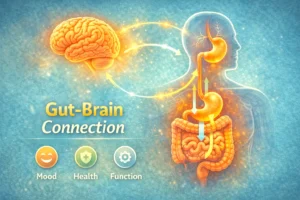
This happens because the gut and brain communicate continuously through what scientists call the gut-brain axis.
When stress levels rise, the body shifts into a “fight or flight” state.
In this state:
- blood flow to the digestive system decreases
- digestive enzyme production may slow
- intestinal movement may change
This is why digestive symptoms often appear during stressful periods.
Examples include:
- bloating before exams or deadlines
- stomach discomfort during emotional stress
- appetite changes during anxiety
Practices that calm the nervous system can indirectly support digestion.
Helpful techniques include:
- deep breathing
- meditation
- gentle yoga
- nature walks
Even five minutes of relaxation before meals can help the digestive system function more efficiently.
The Role of Physical Activity in Digestive Health
Movement plays an important role in digestion.
When the body remains sedentary for long periods, intestinal movement may slow.
Regular physical activity supports digestion by:
- stimulating intestinal contractions
- improving blood circulation to digestive organs
- helping regulate metabolism
You do not need intense exercise to benefit digestion.
Even simple activities can help:
- walking after meals
- light stretching
- gardening
- household chores
In many traditional cultures, a short walk after dinner is a long-standing habit that naturally supports digestion.
Why Morning Digestion Matters
Morning bowel movements are often considered a sign of healthy digestion.
Regular morning elimination suggests that the digestive system is functioning rhythmically.
If bowel movements become irregular or difficult, it may indicate that digestion needs support.
Helpful morning habits include:
- drinking warm water
- eating fiber-rich breakfast foods
- maintaining consistent sleep schedules
These habits help regulate the digestive system’s natural rhythm.
👉 Establishing a simple morning routine may help activate digestion naturally: Morning Routine for Better Digestion Naturally
Signs Your Digestion Is Improving
As digestive health improves, several subtle positive changes may appear.
You may notice:
- less bloating after meals
- more stable energy levels
- regular bowel movements
- reduced cravings for processed foods
- improved comfort when eating a variety of foods
These improvements often happen gradually rather than overnight.
Digestive systems respond best to consistent, sustainable habits.
A Gentle Reminder About Digestive Supplements
Digestive supplements such as:
- enzyme blends
- probiotics
- herbal digestive aids
are widely available.
While some people find them helpful, they should not replace healthy lifestyle habits.
Experts generally recommend starting with foundational improvements such as:
- balanced diet
- hydration
- stress management
- regular physical activity
If supplements are considered, it is best to discuss them with a qualified healthcare professional.
Why Digestion Deserves More Attention
Digestive health rarely receives attention until discomfort appears.
Yet digestion quietly supports many essential functions including:
- nutrient absorption
- immune defense
- energy production
- gut microbiome balance
When digestion is strong, the body operates more efficiently.
Meals feel satisfying rather than heavy.
Energy remains stable.
And everyday wellbeing often improves in ways that are difficult to notice until digestion begins working smoothly again.
What Are the Signs Your Digestion Is Weak?
- Frequent bloating after meals
- Feeling unusually full after small meals
- Gas or burping
- Constipation or irregular bowel movements
- Fatigue after eating
- Food sensitivities
- Bad breath related to digestion
Quick Summary: Signs Your Digestion Is Weak
Common signs include:
- frequent bloating after meals
- heaviness in the stomach
- excessive gas or burping
- constipation or irregular bowel movements
- fatigue after eating
- food sensitivities
- bad breath linked to digestion
- nutrient absorption issues
Improving digestion usually involves:
- eating slowly
- increasing fiber intake
- managing stress
- staying hydrated
- supporting gut bacteria
Frequently Asked Questions
What are early signs of weak digestion?
Common early signs include bloating, slow digestion, irregular bowel movements, and fatigue after meals.
Can weak digestion improve naturally?
Yes. Many cases improve through diet changes, stress management, hydration, and better eating habits.
Which foods help digestion the most?
Fiber-rich foods such as fruits, vegetables, oats, and legumes often support healthy digestion.
Are herbal teas good for digestion?
Herbal teas like ginger, fennel, and peppermint are commonly used to support digestive comfort.
Who should see a doctor for digestive problems?
Anyone experiencing severe pain, persistent vomiting, blood in stool, or unexplained weight loss should consult a healthcare professional.
Gentle Health Disclaimer
This article is for educational purposes only and should not replace professional medical advice. If you have ongoing digestive symptoms, consult a qualified healthcare provider.
Start Improving Your Digestion Today
If you notice several signs your digestion is weak, start with small steps like eating slowly, drinking warm water, and including fiber-rich foods. Even simple changes can create noticeable improvements in just a few days.
Final Thoughts
Paying attention to signs your digestion is weak can help you make simple changes that support long-term digestive health.
Digestion rarely improves overnight.

But the encouraging part is this: your digestive system is incredibly adaptable.
Small habits — chewing slowly, eating whole foods, managing stress — can gradually restore balance.
Sometimes the body simply needs a little support.
And once digestion begins working smoothly again, you may notice something surprising.
More energy.
Better comfort after meals.
And a sense that your body is finally working with you — not against you.






2 thoughts on “Signs Your Digestion Is Weak”