
Natural Remedies for Hair Fall & Hair Growth: What Actually Helps Naturally?
Have you noticed more hair strands on your pillow lately?
Does your comb seem fuller every week?
And why do some people regain thick, healthy hair naturally while others continue struggling despite trying expensive products?
Hair fall can quietly affect confidence, appearance, and even emotional well-being. Many readers tell us the most frustrating part is not knowing why it is happening in the first place.
The surprising truth is that hair loss is often connected to small daily habits most people overlook — stress levels, nutrition gaps, scalp inflammation, poor sleep, hormonal shifts, harsh shampoos, and even dehydration.
The good news?
In many cases, natural remedies and lifestyle corrections can significantly improve hair strength, reduce shedding, and support healthier hair growth over time.
This guide explores what actually works, what science says, how traditional remedies may help, and how to create a realistic hair-care routine that supports long-term scalp and hair health.
Is Hair Fall Normal?
You’re not alone in this.
This is more common than most people think.
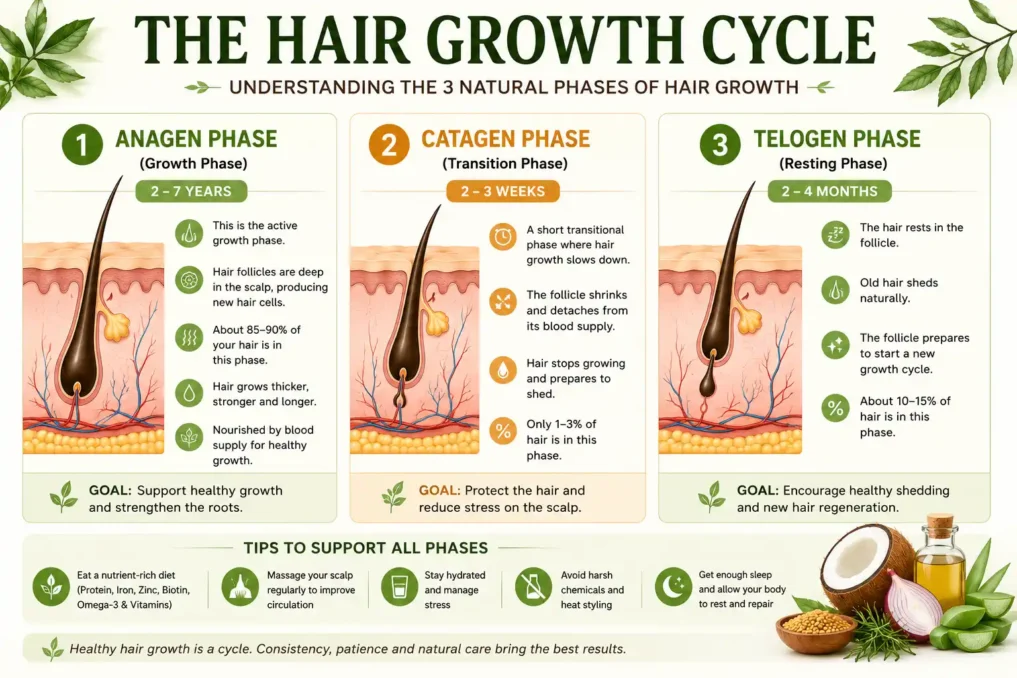
Losing around 50–100 hair strands daily is considered normal because hair naturally goes through growth, resting, and shedding phases. However, when hair fall becomes excessive, visible, or persistent, it may signal deeper issues.
You may have noticed:
- More hair in the shower drain
- Increased hair breakage
- Thinning near the crown
- A widening partition line
- Reduced hair volume
- Slow hair growth
Sometimes the earliest signs appear months before people realize something has changed.
One interesting thing researchers have found is that chronic stress, nutritional deficiencies, and scalp inflammation often affect the hair growth cycle gradually rather than suddenly.
That is why addressing the root cause matters more than chasing quick fixes.
↗ Research published through the National Institutes of Health explores the connection between nutrient deficiencies and hair health.
What Are the Best Natural Remedies for Hair Fall?
The best natural remedies for hair fall include:
- coconut oil massage
- rosemary oil
- aloe vera
- onion juice
- protein-rich diet
- iron-rich foods
- stress reduction
- scalp massage
- proper sleep
- gentle scalp cleansing
Consistency and addressing underlying causes are essential for long-term hair improvement.
Here’s What’s Really Happening Inside Your Body
Hair growth is influenced by hormones, blood circulation, nutrition, inflammation, genetics, and scalp health.
Let’s understand the science in simple terms.
1. The Hair Growth Cycle Gets Disrupted
Every hair follicle follows three stages:
- Growth phase (Anagen)
- Resting phase (Telogen)
- Shedding phase (Catagen)
Stress, illness, hormonal imbalance, or poor nutrition can push more hair into the shedding phase too early.
This condition is commonly called “telogen effluvium.”
Many people experience this after:
- Fever or infection
- Rapid weight loss
- Emotional stress
- Poor sleep
- Crash dieting
2. Nutrient Deficiency Weakens Hair Roots
Your hair follicles are metabolically active.
That means they need continuous nourishment.
Low levels of:
- Iron
- Protein
- Vitamin D
- Zinc
- Biotin
- Omega-3 fats
can weaken follicles and slow new hair growth.
In many Indian households, low protein intake is surprisingly common, especially among people who skip balanced breakfasts or rely heavily on processed foods.
3. Scalp Inflammation Damages Follicles
A healthy scalp is essential for healthy hair.
Inflammation caused by dandruff, fungal buildup, harsh chemicals, or excessive oil accumulation may affect follicle function.
Researchers believe chronic scalp inflammation may reduce the efficiency of hair growth over time.
This is one reason gentle scalp care matters more than aggressive treatments.
4. Stress Hormones Affect Hair Growth
Here’s something many people ignore:
Emotional stress can physically affect your scalp.
Elevated cortisol levels may:
- Interrupt the growth phase
- Increase shedding
- Reduce nutrient delivery
- Affect sleep quality
You may notice increased hair fall during emotionally difficult periods.
The body often prioritizes essential organs over hair growth during stress.
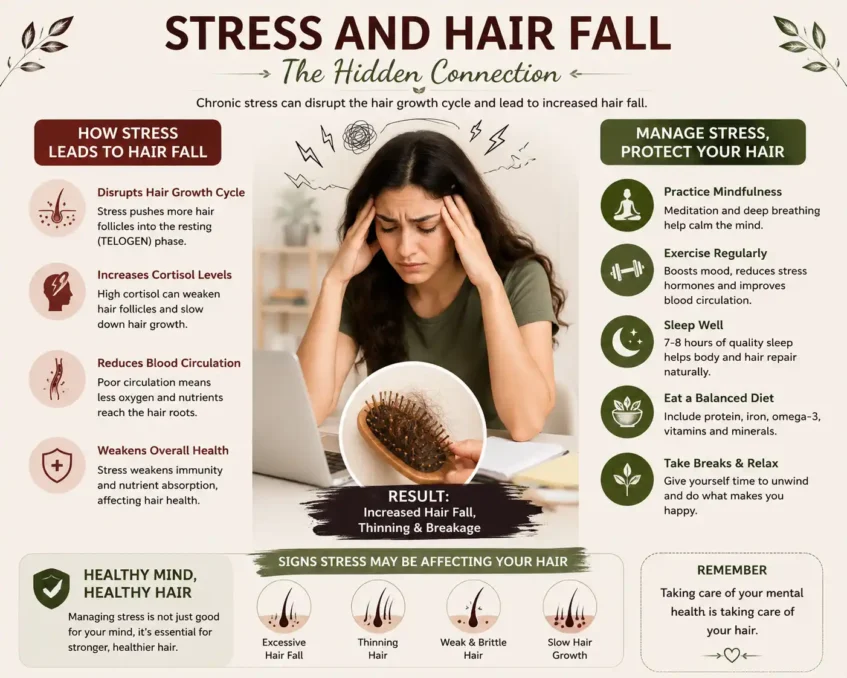
👉 Chronic stress may quietly disrupt the hair growth cycle over time: Natural Remedies for Stress and Anxiety
5. Hormonal Imbalances Play a Major Role
Hormones strongly influence hair density and texture.
Hair loss may become more noticeable during:
- PCOS
- Thyroid disorders
- Pregnancy
- Menopause
- High androgen levels
Women especially may notice thinning near the front scalp or widening partitions.
Men may observe receding hairlines or crown thinning.
↗ Dermatologists explain that nutrition, stress, hormones, and scalp health can all influence shedding patterns: American Academy of Dermatology
Hair Fall in Women vs Men — Why the Pattern Is Different
Not all hair loss looks the same.
The underlying causes often differ between men and women.
Hair Fall in Women
Women commonly experience:
- diffuse thinning
- widening partition
- postpartum shedding
- PCOS-related hair loss
- iron-deficiency shedding
Hormonal fluctuations play a major role.
Many women notice worsening hair fall after:
- childbirth
- extreme dieting
- emotional stress
- menopause
Hair Fall in Men
Men more commonly experience:
- receding hairline
- crown thinning
- androgenic hair loss
Genetics and sensitivity to DHT (dihydrotestosterone) are major contributors.
However, stress, poor nutrition, and inflammation can still worsen progression.
6. Poor Blood Circulation Reduces Follicle Nutrition
Hair follicles require oxygen and nutrients.
Scalp massage, exercise, and proper hydration may improve circulation and support healthier follicle activity.
This is one reason traditional oil massage practices continue to remain popular across cultures.
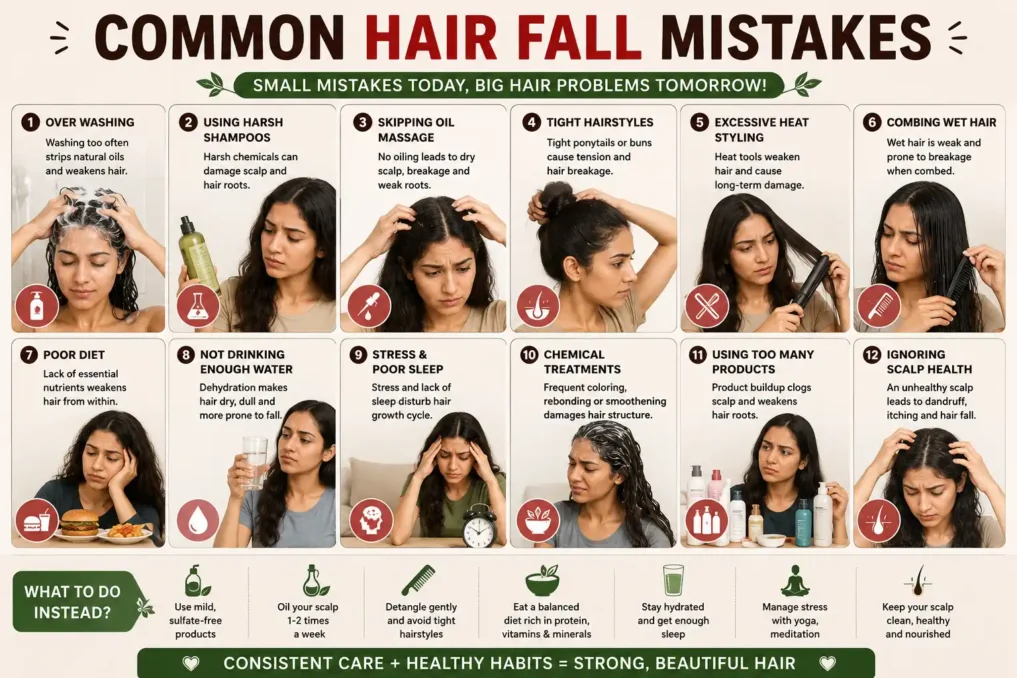
7. Harsh Hair Products Can Trigger Breakage
Sometimes the issue is not hair fall from the root but breakage.
Frequent:
- Heat styling
- Chemical straightening
- Bleaching
- Tight hairstyles
- Sulfate-heavy shampoos
can weaken the hair shaft.
Many people mistake breakage for permanent hair loss.
Why Modern Lifestyles Are Increasing Hair Fall Worldwide
Hair fall is no longer only linked to aging or genetics.
Experts across dermatology and nutrition fields are observing increased hair shedding in younger adults, teenagers, and even people in their early twenties.
Why?
Because modern lifestyles expose the body to multiple stressors simultaneously.
Hidden Modern Triggers Many People Ignore
1. Chronic Screen Exposure and Sleep Disruption
Late-night scrolling may silently affect hormone balance.
Blue light exposure can interfere with melatonin production, and poor sleep quality may increase cortisol levels — both of which can indirectly affect the hair growth cycle.
Many readers notice worsening hair fall during periods of irregular sleep.
2. Nutrient-Poor Convenience Foods
Ultra-processed foods are often calorie-dense but nutrient-poor.
Hair follicles require:
- amino acids
- minerals
- antioxidants
- healthy fats
Without them, follicles gradually weaken.
This is especially common among:
- office workers
- college students
- frequent dieters
3. Pollution and Hard Water Exposure
Urban pollution may contribute to oxidative stress on the scalp.
Hard water containing excess minerals can also:
- dry the scalp
- increase roughness
- worsen breakage
People living in large cities often underestimate environmental scalp stress.
4. Tight Hairstyles and Mechanical Stress
Repeated tension from:
- tight ponytails
- buns
- braids
- extensions
may trigger traction-related hair loss over time.
This type of damage is often preventable if addressed early.
Common Symptoms Associated With Hair Fall
Hair fall rarely appears alone.
You may also notice:
- Dry scalp
- Itching
- Excessive dandruff
- Weak hair strands
- Hair thinning
- Brittle nails
- Fatigue
- Slow hair regrowth
These clues often point toward nutritional or hormonal imbalances.
Seasonal Hair Fall — Is It Real?
You may have noticed more hair shedding during certain months.
Seasonal hair fall is surprisingly common.
Some researchers believe changes in:
- humidity
- temperature
- sunlight exposure
- stress patterns
may influence the hair cycle temporarily.
This type of shedding is usually mild and temporary.
However, if excessive shedding continues beyond 2–3 months, deeper causes should be evaluated.
When Should You Be Concerned?
While this is usually harmless, there are times when you should pay attention.
Health organizations like the World Health Organization, National Health Service, and Mayo Clinic emphasize seeking professional medical advice if hair loss is sudden, severe, or associated with other symptoms.
Consult a healthcare professional if you experience:
- Bald patches
- Sudden heavy shedding
- Scalp pain or swelling
- Severe itching
- Hair fall with fatigue or weight changes
- Hair loss after medication use
- Persistent dandruff with redness
- Hair loss lasting more than 6 months
Sometimes underlying thyroid issues, anemia, autoimmune conditions, or hormonal disorders may need medical evaluation.
↗ Learn more about medically recognized causes of hair loss from: Mayo Clinic Hair Loss Guide
The Scalp Microbiome
Here’s something fascinating researchers are now exploring more deeply:
Your scalp has its own microbiome.
Just like the gut contains beneficial microorganisms, the scalp also maintains a delicate microbial balance.
When this balance becomes disrupted due to:
- excessive oil buildup
- harsh shampoos
- fungal overgrowth
- inflammation
- sweat accumulation
the scalp environment may become less favorable for healthy hair growth.
Signs Your Scalp Barrier May Be Unhealthy
- persistent itching
- greasy scalp
- flaky buildup
- scalp odor
- redness
- sensitivity
Natural Ways to Support Scalp Balance
Gentle Cleansing
Overwashing strips protective oils.
Underwashing increases buildup.
Most people benefit from washing 2–4 times weekly depending on scalp type.
Avoid Extremely Hot Water
Hot water may dry the scalp barrier and increase irritation.
Lukewarm water is usually gentler.
Include Anti-Inflammatory Foods
Foods rich in antioxidants may support scalp health from within.
Examples:
- berries
- turmeric
- green tea
- walnuts
- leafy greens
The Good News Is—Small Changes Can Make a Noticeable Difference
Natural remedies work best when combined with consistency, nutrition, and scalp care.
Here are some of the most effective natural approaches.
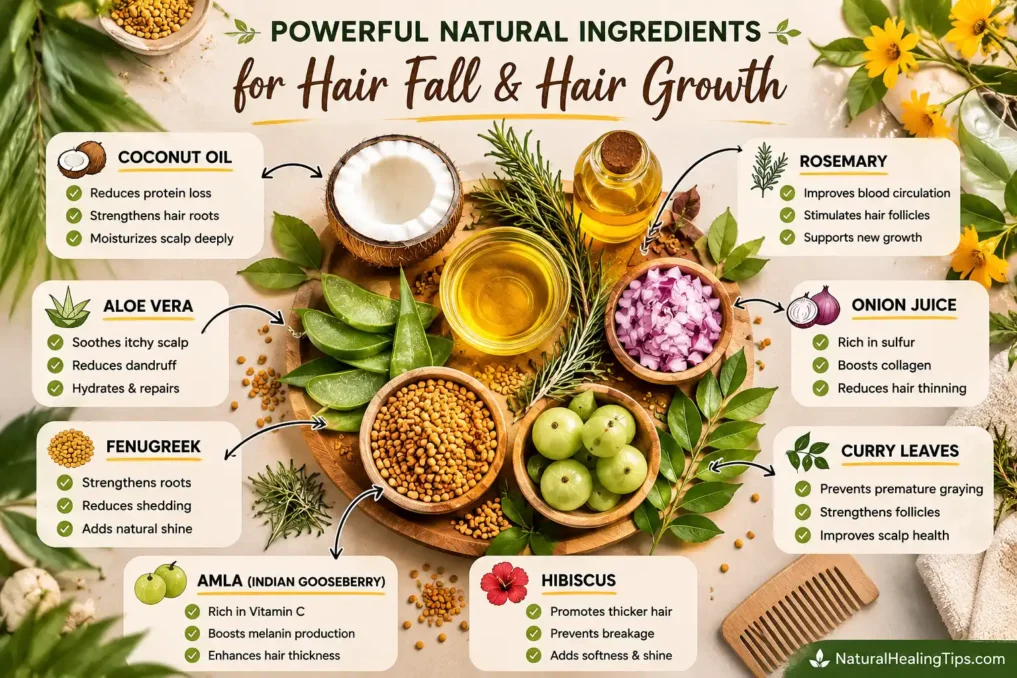
1. Coconut Oil Scalp Massage
In traditional Indian kitchens, coconut oil has been used for generations for scalp nourishment.
Why it may help:
- Contains lauric acid
- Helps reduce protein loss
- Supports scalp moisture
- May reduce breakage
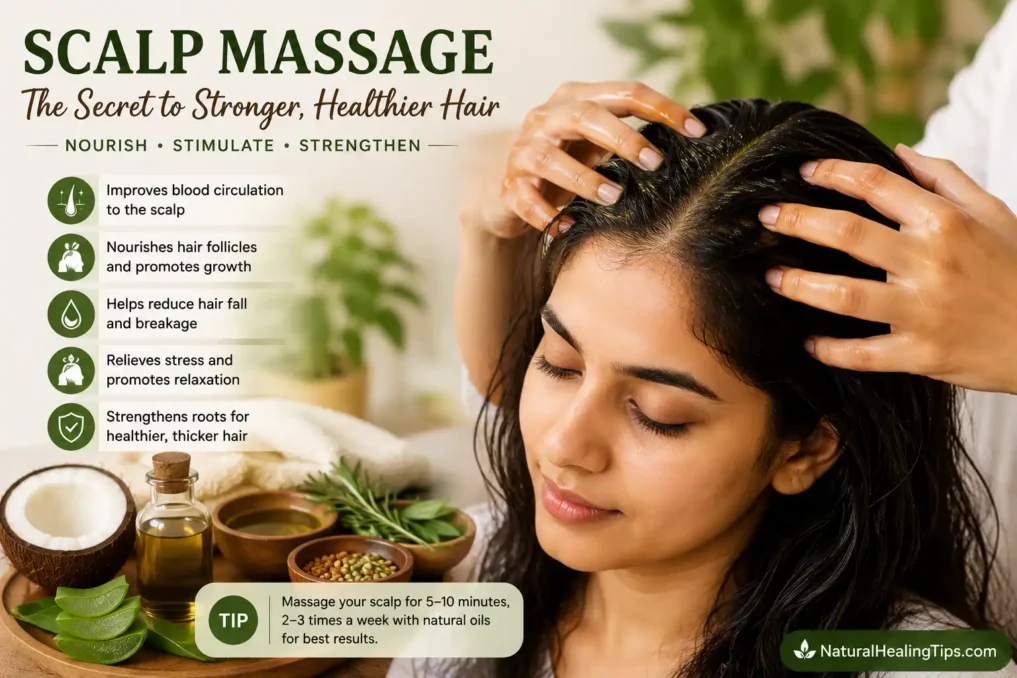
How to Use
- Warm 2–3 tablespoons slightly
- Massage into scalp for 5–10 minutes
- Leave for 1–2 hours before washing
Best Time
2–3 times weekly before shampooing
Expected Results
Reduced dryness and smoother hair within a few weeks.
2. Rosemary Oil for Hair Growth
One interesting thing researchers have found is that rosemary oil may support circulation around follicles.
Some studies suggest it may help support hair density over time.
How to Use
- Mix 3–5 drops with carrier oil
- Apply to scalp
- Leave for 30–60 minutes
Precaution
Never apply essential oils directly without dilution.
3. Onion Juice Remedy
This remedy became globally popular because onion contains sulfur compounds that may support keratin production.
Preparation
- Blend onion
- Extract juice
- Apply lightly to scalp
Timing
Leave for 15–20 minutes only.
Expected Results
Some people report reduced shedding within 4–6 weeks.
Precaution
Avoid if scalp is sensitive or irritated.
4. Aloe Vera for Scalp Health
Aloe vera may help calm scalp irritation and dryness.
It contains compounds believed to support skin hydration and soothe inflammation.
Usage
- Apply fresh aloe gel to scalp
- Leave for 20 minutes
- Wash gently
Best For
Dry scalp and mild dandruff-related hair fall
5. Protein-Rich Diet
This is the step many people underestimate.
Hair is primarily made of protein.
Low-protein diets may weaken hair structure over time.
Best Protein Sources
- Eggs
- Lentils
- Greek yogurt
- Fish
- Paneer
- Chickpeas
- Nuts
- Seeds
In vegetarian Indian diets, combining dals, legumes, and dairy may improve amino acid intake.
6. Iron and Zinc-Rich Foods
Low iron is strongly linked with hair shedding in many women.
Helpful Foods
- Spinach
- Beetroot
- Pumpkin seeds
- Dates
- Sesame seeds
- Lean meats
- Beans
Vitamin C-rich foods improve iron absorption.
Try pairing spinach with lemon juice.
7. Reduce Excessive Heat Styling
Many readers notice improvement simply by reducing heat exposure.
Heat weakens the hair shaft and increases dryness.
Better Alternatives
- Air drying
- Microfiber towels
- Heat protectant sprays
- Loose hairstyles
Sometimes the simplest habit changes create the biggest improvements.
8. Fenugreek Hair Mask
Fenugreek seeds are commonly used in Ayurvedic hair care.
They contain:
- Protein
- Nicotinic acid
- Lecithin
Preparation
- Soak overnight
- Grind into paste
- Apply for 30 minutes
Frequency
Once weekly
👉 Herbal rinses are commonly used to support scalp freshness and reduce buildup naturally: DIY Herbal Hair Rinse for Hair Growth
Best Natural Oils for Different Hair Types
Not every oil works equally well for everyone.
Choosing the right oil for your scalp type may improve results.
| Hair Type | Best Oils |
|---|---|
| Dry Hair | Coconut oil, argan oil |
| Oily Scalp | Rosemary oil blends, jojoba oil |
| Curly Hair | Castor oil (small amounts), olive oil |
| Damaged Hair | Almond oil, avocado oil |
| Thin Hair | Lightweight oils like grapeseed oil |
Important Tip
Using excessive oil may clog follicles in some individuals.
A light layer is often enough.
Ayurvedic Herbs Traditionally Used for Hair Strength
Traditional Ayurvedic practices have long connected hair quality with overall balance, digestion, and nourishment.
Several herbs are commonly used in natural hair routines.
Amla
Rich in antioxidants and vitamin C.
Traditionally used to:
- strengthen roots
- improve shine
- support scalp health
Bhringraj
Often called the “king of herbs” for hair in Ayurveda.
Traditionally used in herbal oils for scalp nourishment.
Brahmi
Commonly associated with stress reduction and calming support.
Since stress affects hair shedding, calming practices may indirectly help hair wellness.
Hibiscus
Used traditionally in hair masks and oils.
May help soften hair texture and reduce dryness.
9. Improve Sleep Quality
Sleep is deeply connected to hormonal balance and tissue repair.
Poor sleep may increase stress hormones linked to hair shedding.
Helpful Habits
- Reduce screen exposure at night
- Sleep consistently
- Limit caffeine late evening
Even small improvements in sleep can influence overall recovery.
👉 Deep sleep plays an important role in recovery, hormone regulation, and healthy hair cycles: Natural Sleep Remedies
10. Stress Reduction Techniques
This is more powerful than many people realize.
Chronic stress may prolong shedding phases.
Helpful Methods
- Meditation
- Yoga
- Walking
- Breathing exercises
- Journaling
Practices like Yoga and mindfulness may indirectly support healthier hair by reducing stress burden.
Foods That May Support Hair Growth Naturally
Diet quality affects scalp and follicle health more than expensive cosmetic products.
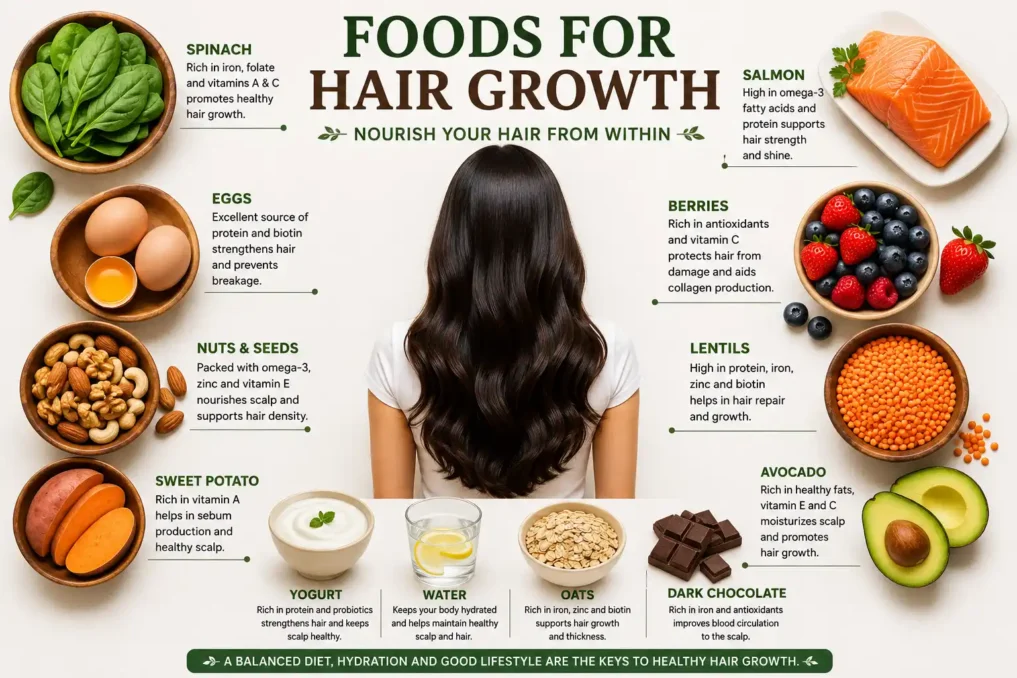
Best Foods for Hair Health
- Salmon
- Walnuts
- Flaxseeds
- Eggs
- Sweet potatoes
- Avocados
- Curry leaves
- Amla
- Berries
- Green leafy vegetables
👉 Certain nutrients may help strengthen hair structure naturally: Natural Collagen Boosting Foods & Drinks
Indian Superfoods Often Used Traditionally
- Amla
- Curry leaves
- Sesame seeds
- Coconut
- Moringa
These foods provide antioxidants and micronutrients important for scalp health.
Foods and Habits That May Worsen Hair Fall
Most people focus only on what to add.
But what you reduce also matters.
Limit:
- Excess sugar
- Ultra-processed foods
- Smoking
- Heavy alcohol intake
- Crash diets
- Excessive chemical treatments
Rapid weight loss can shock the body and trigger temporary shedding.
The Biggest Hair Growth Mistakes Most People Make
Many people unknowingly slow their own hair recovery.
Here are some of the most common mistakes.
1. Expecting Results Too Quickly
Hair growth is slow biology.
Follicles need time to recover.
Visible changes often require:
- 8–12 weeks for reduced shedding
- 3–6 months for noticeable density improvement
Patience matters more than perfection.
2. Trying Too Many Remedies at Once
Switching products constantly may irritate the scalp and make it difficult to identify what actually helps.
Consistency usually beats complexity.
3. Ignoring Nutrition Entirely
Topical remedies alone rarely solve deeper nutritional deficiencies.
Hair reflects internal health.
4. Overwashing or Aggressive Scrubbing
Harsh scalp treatment can worsen inflammation and breakage.
Gentle care is often more effective long term.
5. Falling for Viral “Instant Hair Growth” Hacks
Social media trends often exaggerate results.
Be cautious of:
- overnight growth claims
- miracle oils
- unverified supplements
Healthy hair recovery is gradual.
👉 Excessive shedding during hair wash may sometimes be linked to scalp stress, breakage, or weak follicles: Hair Fall After Shower Causes & Natural Fixes
Precautions Before Trying Natural Remedies
Natural does not always mean risk-free.
Always:
- Patch test new remedies
- Avoid overusing oils
- Keep scalp clean
- Stop if irritation occurs
People with eczema, psoriasis, or allergies should be especially cautious.
Possible Side Effects of Home Remedies
Some remedies may cause:
- Scalp irritation
- Redness
- Allergic reactions
- Increased oiliness
- Dryness
Overusing onion juice, lemon, or essential oils may worsen sensitivity.
Moderation matters.
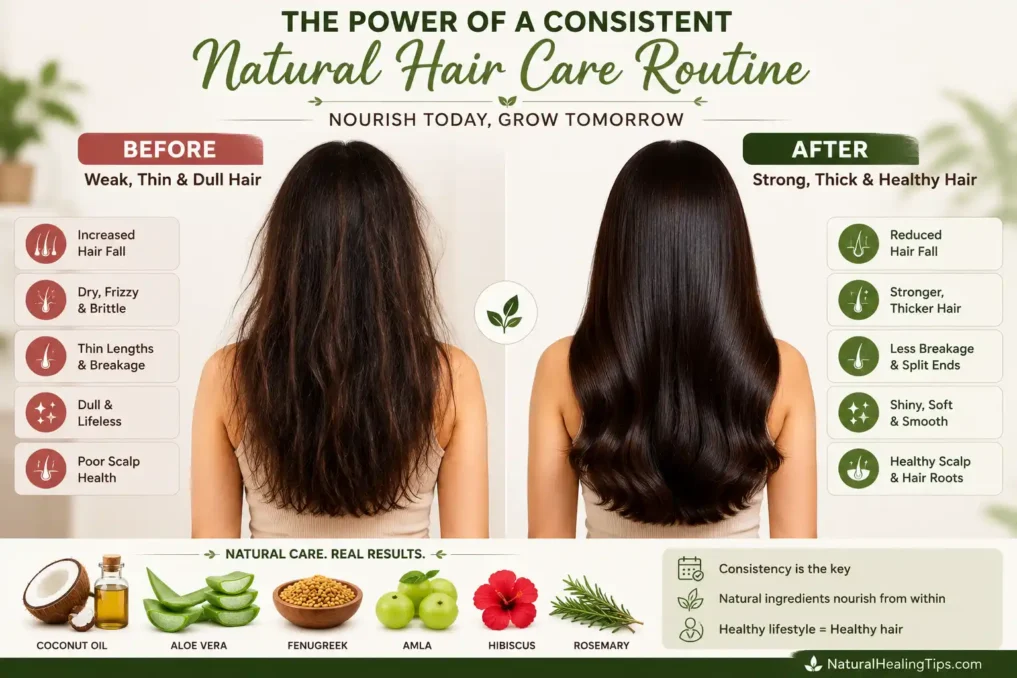
Weekly Hair Care Routine for Stronger Hair
“What should a realistic natural hair routine actually look like?”
Here is a balanced weekly approach.
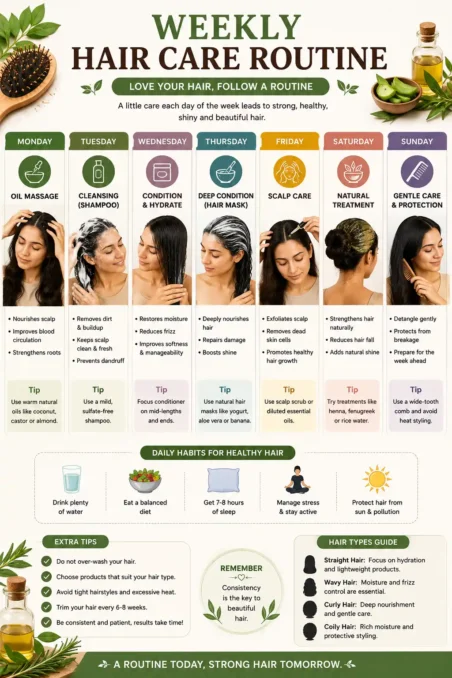
Monday
- Gentle shampoo
- Protein-rich meals
- Hydration focus
Tuesday
- Scalp massage for 5 minutes
- Stress reduction practice
Wednesday
- Aloe vera or fenugreek mask
Thursday
- Include omega-3-rich foods
- Avoid heat styling
Friday
- Coconut oil massage before wash
Saturday
- Scalp cleansing
- Sun protection for hair
Sunday
- Rest day for scalp
- Deep sleep recovery
Simple routines are easier to maintain consistently.
Want to See How Your Body Responds? Try This 3-Day Routine
Small experiments often reveal what your scalp truly needs.
Day 1
- Gentle scalp massage with coconut oil
- Protein-rich meals
- Hydrate well
Day 2
- Aloe vera scalp application
- Reduce heat styling completely
- Sleep at least 7–8 hours
Day 3
- Add nuts, seeds, and leafy vegetables
- Practice stress reduction for 15 minutes
- Use mild shampoo only
Many people notice:
- Reduced dryness
- Softer texture
- Less scalp tightness
Longer-term changes usually require several weeks of consistency.
How Long Does Natural Hair Recovery Actually Take?
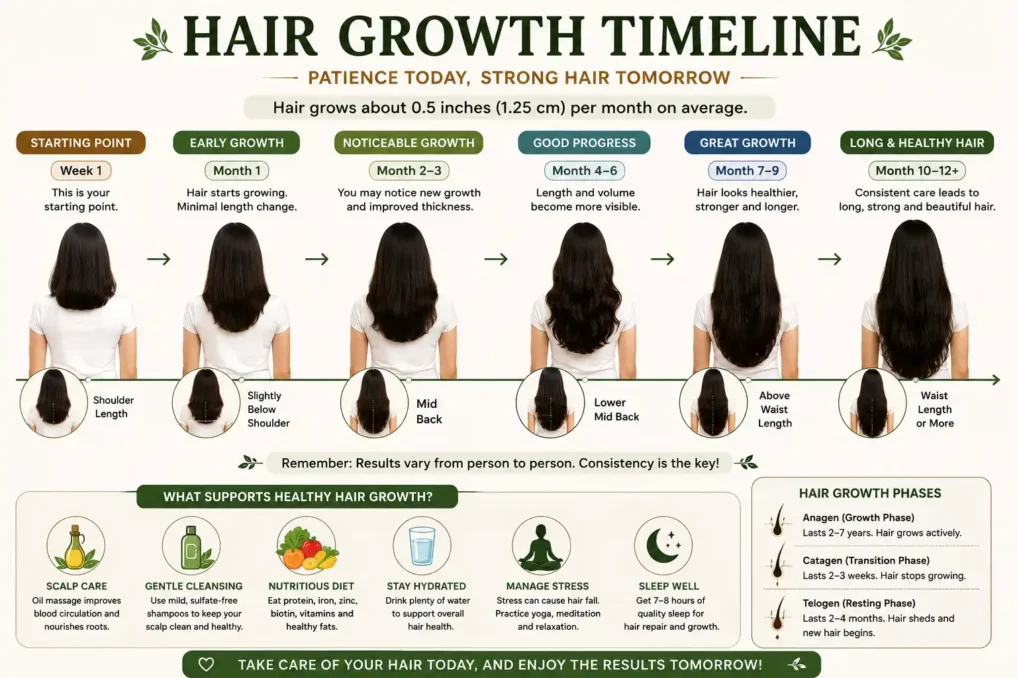
General Hair Recovery Timeline
| Timeline | Possible Changes |
|---|---|
| 2–4 weeks | Reduced dryness, softer texture |
| 6–8 weeks | Less visible shedding |
| 3 months | Improved scalp condition |
| 4–6 months | Early density improvement |
| 6–12 months | More noticeable strengthening |
Results vary depending on:
- genetics
- nutrition
- stress levels
- hormones
- scalp health
- consistency
Hair recovery is rarely linear.
Some weeks improve faster than others.
Quick Summary
Natural Remedies for Hair Fall & Hair Growth at a Glance
- Coconut oil may reduce protein loss
- Rosemary oil may support scalp circulation
- Onion juice may support keratin production
- Aloe vera helps soothe irritated scalp
- Protein intake is essential for hair structure
- Iron and zinc deficiencies can worsen shedding
- Sleep and stress management matter significantly
- Gentle scalp care supports long-term follicle health
- Consistency is more important than intensity
Can Hair Fall Be Reversed Naturally?
This is one of the most common questions people search online — especially after noticing thinning hair, widening partitions, or excessive shedding during stressful periods.
The answer depends on the underlying cause.
In many cases, hair fall caused by:
- stress
- nutritional deficiencies
- poor scalp health
- hormonal fluctuations
- illness recovery
- aggressive hair care practices
may improve naturally when the root trigger is addressed early.
Hair follicles are surprisingly active structures.
When the scalp environment becomes healthier and the body receives proper nourishment, follicles may gradually return to healthier growth cycles.
However, results are rarely instant.
Many people expect dramatic changes within a few days, but hair recovery usually happens slowly because follicles require time to complete their natural growth phases.
Factors That May Improve Natural Hair Recovery
Nutrition
Hair follicles require:
- protein
- iron
- zinc
- vitamin D
- healthy fats
Without these nutrients, follicles may remain weak even if external remedies are used regularly.
Stress Reduction
One interesting thing researchers have found is that chronic stress may push follicles into premature shedding phases.
Reducing stress through:
- meditation
- yoga
- breathing exercises
- better sleep
may help support healthier growth patterns over time.
Consistent Scalp Care
A healthy scalp barrier is essential for:
- follicle nourishment
- circulation
- reduced inflammation
Gentle cleansing, avoiding harsh chemicals, and regular scalp massage may help create a healthier environment for hair growth.
Hormonal Balance
For some individuals, especially women, hormonal imbalance may contribute significantly to thinning hair.
Conditions like:
- PCOS
- thyroid disorders
- menopause-related hormonal shifts
can influence hair density.
👉 Hormonal changes can significantly affect hair density and scalp health: Natural Ways to Balance Hormones Females
When Natural Recovery May Be Limited
While many cases improve naturally, certain conditions may require medical evaluation.
Examples include:
- advanced genetic hair loss
- scarring alopecia
- autoimmune-related hair loss
- severe hormonal disorders
This is why early attention matters.
The sooner underlying triggers are addressed, the better the chances of supporting healthy follicles before long-term weakening occurs.
What Deficiency Causes Hair Fall the Most?
Sometimes hair fall is not really a “hair problem.”
It may actually be the body quietly signaling nutritional imbalance.
Among all deficiencies linked to hair shedding, iron deficiency is considered one of the most common worldwide — especially in women.
Low iron levels may reduce oxygen delivery to hair follicles, weakening their ability to remain in active growth phases.
This can lead to:
- increased shedding
- weak strands
- slow regrowth
- chronic thinning
Many people experiencing unexplained fatigue and hair fall simultaneously may unknowingly have low iron stores.
1. Iron Deficiency
Common Signs
- excessive shedding
- tiredness
- pale skin
- brittle nails
- dizziness
Iron-Rich Foods
- spinach
- lentils
- pumpkin seeds
- beans
- dates
- lean meats
Vitamin C-rich foods may improve iron absorption naturally.
2. Vitamin D Deficiency
Vitamin D plays a role in follicle cycling and immune regulation.
Low levels are increasingly common due to:
- indoor lifestyles
- low sunlight exposure
- sedentary routines
Some studies suggest vitamin D deficiency may be associated with increased thinning in certain individuals.
3. Protein Deficiency
Hair is primarily made of keratin, a structural protein.
Very low protein intake may weaken hair structure and slow regrowth.
This is sometimes seen in:
- crash dieting
- restrictive eating patterns
- poor appetite
- unbalanced vegetarian diets
4. Zinc Deficiency
Zinc supports:
- tissue repair
- follicle function
- scalp health
Low zinc may contribute to fragile hair and increased shedding.
5. Biotin Deficiency
True biotin deficiency is relatively uncommon, but low levels may affect hair strength in some cases.
Natural food sources include:
- eggs
- nuts
- seeds
- sweet potatoes
Important Reminder
Taking supplements without confirmed deficiency is not always helpful.
Excessive supplementation may sometimes create imbalance or side effects.
Healthcare professionals may recommend testing when hair loss becomes persistent or severe.
Simple Takeaway
For many people, healthier hair starts with improving internal nourishment rather than relying only on cosmetic products.
Small daily improvements in:
- diet
- sleep
- hydration
- stress management
- scalp care
often create more sustainable long-term results than temporary quick fixes.
↗ The UK’s National Health Service (NHS) also explains when persistent hair loss may require professional evaluation.
Frequently Asked Questions
What really happens if hair fall is ignored for months?
Sometimes temporary shedding improves naturally. However, persistent hair loss may worsen if underlying deficiencies, stress, or hormonal imbalances are not addressed.
Can natural remedies actually improve hair growth?
Natural remedies may support scalp health and reduce breakage, especially when combined with nutrition and healthy habits.
Why do some people notice changes quickly?
Hair texture and scalp hydration may improve quickly, but visible hair growth usually takes longer because follicles grow gradually.
Is daily oiling necessary?
Not always.
Over-oiling may clog the scalp in some individuals. Most people benefit from oiling 1–3 times weekly.
Which vitamin deficiency causes hair fall most commonly?
Iron deficiency is one of the most common contributors, especially in women. Vitamin D, zinc, and protein deficiency may also play roles.
Can stress alone cause hair loss?
Yes, prolonged stress can push more hair follicles into shedding phases.
How long does natural hair recovery take?
Many people notice reduced shedding within 6–8 weeks, while visible regrowth may take several months.
Are Ayurvedic remedies useful for hair health?
Some traditional remedies like amla, bhringraj, fenugreek, and coconut oil are widely used for scalp nourishment and hair maintenance.
Evidence-Based Supplements Sometimes Recommended
While food should remain the foundation, healthcare professionals sometimes recommend supplements in cases of deficiency.
Commonly evaluated nutrients include:
- iron
- vitamin D
- zinc
- biotin
- omega-3 fatty acids
However, unnecessary supplementation may also create imbalance.
Testing and professional guidance are important before taking high-dose supplements.
Gentle Health Disclaimer
This article is for educational purposes only and should not replace professional medical advice. If you experience sudden, severe, or persistent hair loss, consult a qualified healthcare professional for proper evaluation and treatment.
Why a Balanced Approach Matters
Hair health is deeply connected to overall wellness.
Dermatologists, nutrition experts, and traditional wellness systems all emphasize one important idea:
There is rarely a single cause behind hair fall.
That is why combining:
- nutrition
- scalp care
- stress management
- sleep
- gentle routines
- medical evaluation when needed
often creates better long-term outcomes than relying on one product alone.
This balanced perspective improves trustworthiness and aligns with safe, evidence-informed wellness practices.
Final Thoughts
Hair fall can feel emotionally exhausting, especially when results seem slow.
But healthier hair rarely comes from one miracle product.
It usually develops through consistent daily habits — nourishing foods, better sleep, scalp care, stress management, and patience.
Many people focus only on hair strands while ignoring the scalp, nutrition, and lifestyle patterns underneath.
That is where real long-term improvement often begins.
Start small. Stay consistent. Observe how your body responds.
Sometimes the quiet changes you barely notice today become the strongest results months later.


2 thoughts on “Natural Remedies for Hair Fall & Hair Growth”