
Natural Remedies for Joint Pain: A Complete Science-Backed Guide to Relief, Healing & Prevention
Introduction: Why Does Your Body Feel Older Than You Are?
Natural remedies for joint pain are becoming increasingly important today—especially when simple movements like standing up, climbing stairs, or even opening a jar start to feel uncomfortable.
Have you ever stood up after sitting for a while and felt a sudden stiffness in your knees?
Or noticed that your joints don’t move as freely as they used to?
What if your body is giving you early warning signs… long before serious damage begins?
Many readers tell us they ignored mild joint discomfort at first—until it slowly turned into a daily struggle. The surprising part? Joint pain isn’t just about aging. It’s often the result of inflammation, lifestyle habits, and silent nutritional gaps.
And here’s the good news:
your body has natural mechanisms that support healing when given the right conditions
Is This Common or Normal?
You’re not alone in this.
Joint pain is more common than most people think—even among people in their 30s and 40s. In fact, global health data shows millions experience joint discomfort due to sedentary lifestyle, poor posture, inflammation, or repetitive strain.
In many Indian households, elders often say:
“It starts small… but if ignored, it grows.”
And they’re right.
Occasional joint discomfort is normal—but persistent stiffness or pain is a signal, not a coincidence.
↗ Joint pain is more widespread than most people realize, affecting millions globally—and this trend is increasing due to modern lifestyle patterns: WHO – Musculoskeletal Conditions
Types of Joint Pain
Mini-hook: Not all joint pain is the same—so why treat it the same way?
Understanding the type of pain helps you choose the right natural remedies for joint pain instead of relying on generic solutions.
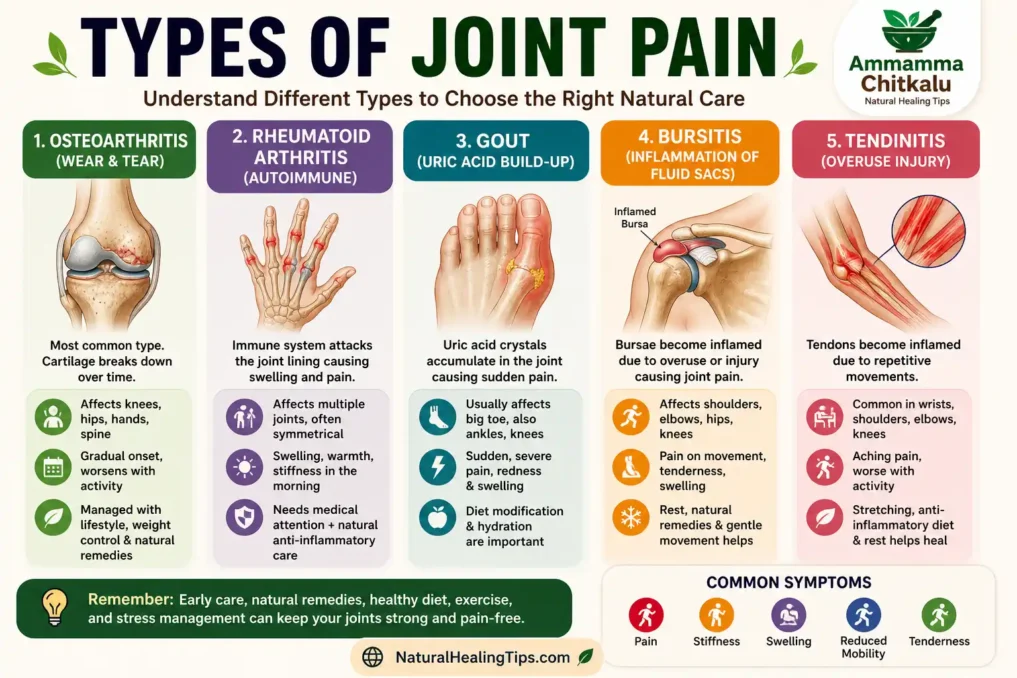
1. Osteoarthritis (Wear & Tear)
- Most common globally
- Cartilage degeneration
- Affects knees, hips, hands
Key insight: Gradual onset, worsens with activity
2. Rheumatoid Arthritis (Autoimmune)
What really happens if your immune system attacks your joints?
- Body attacks joint lining
- Causes swelling + deformity
3. Gout (Uric Acid Build-Up)
Common in Indian diets high in purines.
- Sudden severe pain
- Often affects big toe
4. Bursitis
- Inflammation of fluid sacs
- Caused by repetitive movement
5. Tendinitis
- Overuse injury
- Common in athletes and desk workers
Symptoms Breakdown
Recognizing these early signs can help you start natural remedies for joint pain before the condition worsens.
Instead of generic lists, categorize:
Early Symptoms
- Mild stiffness in morning
- Clicking sounds
- Slight discomfort after activity
Progressive Symptoms
- Swelling
- Reduced flexibility
- Pain during movement
Advanced Symptoms
- Persistent pain even at rest
- Joint deformity
- Severe mobility restriction
One-line emphasis:
Ignoring early signals is where most people unknowingly accelerate damage.
↗ For a practical overview of common joint pain symptoms and self-care approaches, you can also refer to: NHS – Joint Pain Advice
Root Causes: Why Joint Pain Starts Earlier Today
Mini-hook: Why are people in their 30s now experiencing “age-related” joint issues?
1. Sedentary Lifestyle
Long sitting reduces synovial fluid circulation
2. Ultra-Processed Diets
Trigger systemic inflammation
3. Vitamin Deficiencies
- Vitamin D
- Calcium
- Magnesium
4. Gut Imbalance
Affects inflammatory pathways
5. Poor Posture (Digital Lifestyle)
“Text neck” → shoulder joint stress
Here’s What’s Really Happening Inside Your Body…
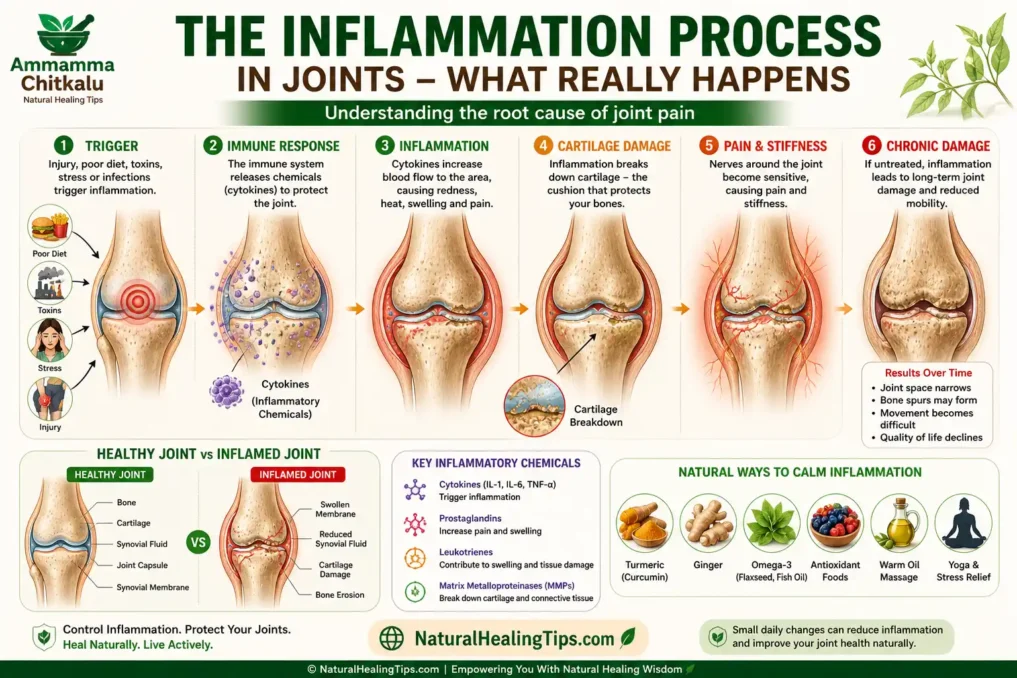
Joint pain is not just “wear and tear.” It’s a complex biological process involving inflammation, cartilage health, and fluid balance.
1. Inflammation: The Root Trigger
Your body releases inflammatory chemicals (cytokines) when joints are stressed.
What happens if inflammation stays for too long?
It begins to damage cartilage and surrounding tissues.
↗ What’s often overlooked is that chronic inflammation quietly damages joint tissues over time—a process explained in detail by researchers here: Harvard Health – Understanding Inflammation
2. Cartilage Breakdown
Cartilage acts as a cushion between bones. Over time:
- Reduced collagen production
- Nutrient deficiency
- Oxidative stress
…can lead to thinning cartilage.
👉 Since cartilage depends heavily on collagen, adding the right foods can support joint structure over time: Natural Collagen Boosting Foods & Drinks
3. Synovial Fluid Imbalance
Joints rely on synovial fluid for smooth movement.
When hydration or nutrient levels drop, this fluid thickens, causing stiffness.
4. Oxidative Stress
Free radicals damage joint cells.
One interesting thing researchers have found is that antioxidant-rich diets significantly reduce joint degeneration risk.
5. Muscle Weakness Around Joints
Weak muscles mean more pressure directly on joints.
6. Poor Circulation
Limited blood flow slows healing.
7. Gut-Joint Connection
Emerging research shows gut health influences inflammation.
When Should You Be Concerned?
While this is usually manageable, there are times when you should pay attention.
According to organizations like WHO, NHS, and Mayo Clinic, seek medical advice if:
- Pain lasts more than 2–3 weeks
- Severe swelling or redness
- Fever with joint pain
- Limited mobility
- Sudden unexplained stiffness
↗ If your symptoms persist or worsen beyond a few weeks, it’s important to understand when it may indicate a deeper issue: Mayo Clinic – Arthritis Overview
How Long Does It Take to See Results?
This is a HUGE ranking factor—most blogs skip it.
Timeline Expectations:
- 1–3 days: Reduced stiffness (hydration + heat therapy)
- 7–10 days: Noticeable inflammation reduction
- 3–4 weeks: Improved flexibility
- 2–3 months: Structural improvement support
Reality check:
Natural healing is gradual—but sustainable.
The Good News Is—Small Changes Can Make a Noticeable Difference
Let’s move into powerful, science-backed natural remedies.
Natural remedies for joint pain may help reduce inflammation and support mobility over time.
9 Natural Remedies for Joint Pain That Actually Work
1. Turmeric Milk (Golden Milk)
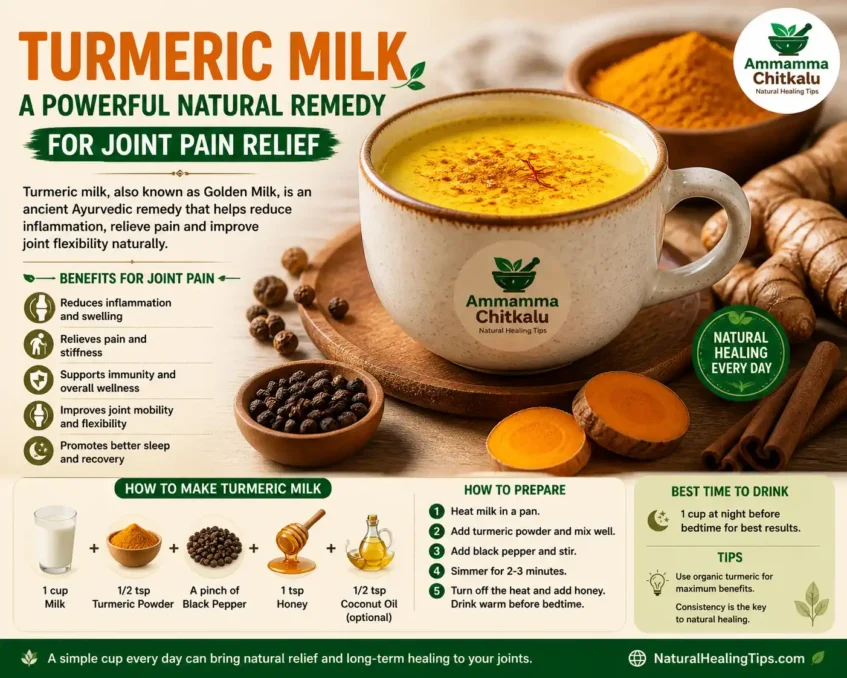
Why it works:
Curcumin in turmeric reduces inflammation pathways (NF-kB).
Preparation:
- 1 cup warm milk
- ½ tsp turmeric
- Pinch black pepper
Usage: Night before sleep
Duration: Daily for 2–4 weeks
Expected results: Reduced stiffness in 7–10 days
👉 Curious why turmeric works so effectively? Its healing compounds have been studied for years: Turmeric Benefits
2. Ginger Compress
Mechanism:
Ginger contains compounds called gingerols, which may help block inflammatory pathways similar to mild pain-relief mechanisms.
How to use:
- Boil crushed ginger
- Soak cloth and apply to joint
Timing: 15–20 minutes
Frequency: 2 times daily
3. Epsom Salt Soak
Why it works: Magnesium relaxes muscles and reduces swelling
Usage:
- Add 1 cup Epsom salt to warm water
- Soak joints for 20 minutes
4. Sesame Oil Massage (Ayurvedic Practice)
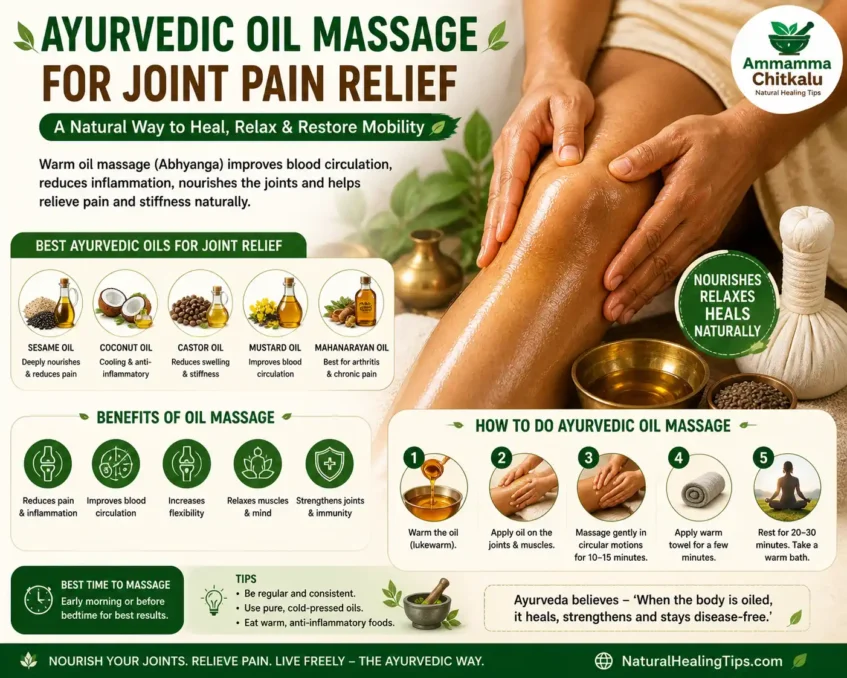
In traditional Indian kitchens, sesame oil is known as “healing oil.”
Benefits:
- Improves circulation
- Reduces stiffness
Method:
Warm slightly and massage for 10 minutes
5. Omega-3 Rich Diet
Include:
- Flaxseeds
- Walnuts
- Fatty fish
Effect: Reduces inflammatory markers
6. Ashwagandha
Adaptogenic herb that reduces stress-induced inflammation
Dosage: 300–500 mg daily
7. Gentle Yoga (Mobility Restoration)
Include:
- Child’s Pose
- Cat-Cow stretch
- Anulom Vilom
👉 Gentle movement plays a powerful role in joint recovery, especially when combined with breathing techniques: Yoga for Stress and Anxiety Relief
8. Heat Therapy
Relaxes muscles and improves blood flow
9. Hydration Therapy
Most people ignore this simple habit…
Dehydration thickens joint fluid.
Drink:
- 2.5–3 liters daily
Joint-Specific Natural Remedies

Knee Joint Pain
Common in Indian population due to sitting patterns
What works best:
- Quadriceps strengthening
- Turmeric + black pepper
- Warm oil massage
Shoulder Pain
Often due to posture
Solutions:
- Mobility exercises
- Heat therapy
- Anti-inflammatory diet
Finger Joint Pain
Common in early arthritis
Remedies:
- Warm water soaking
- Castor oil massage
- Gentle stretching
Want to See How Your Body Responds? Try This 3-Day Routine
Day 1:
- Start turmeric milk
- 10-min yoga
Day 2:
- Add ginger compress
- Increase hydration
Day 3:
- Include omega-3 foods
- Oil massage
Some people may begin to notice lightness and reduced stiffness within a few days, depending on consistency and individual factors.
Diet for Joint Health
Diet plays a crucial role when using natural remedies for joint pain, as inflammation often begins from within.
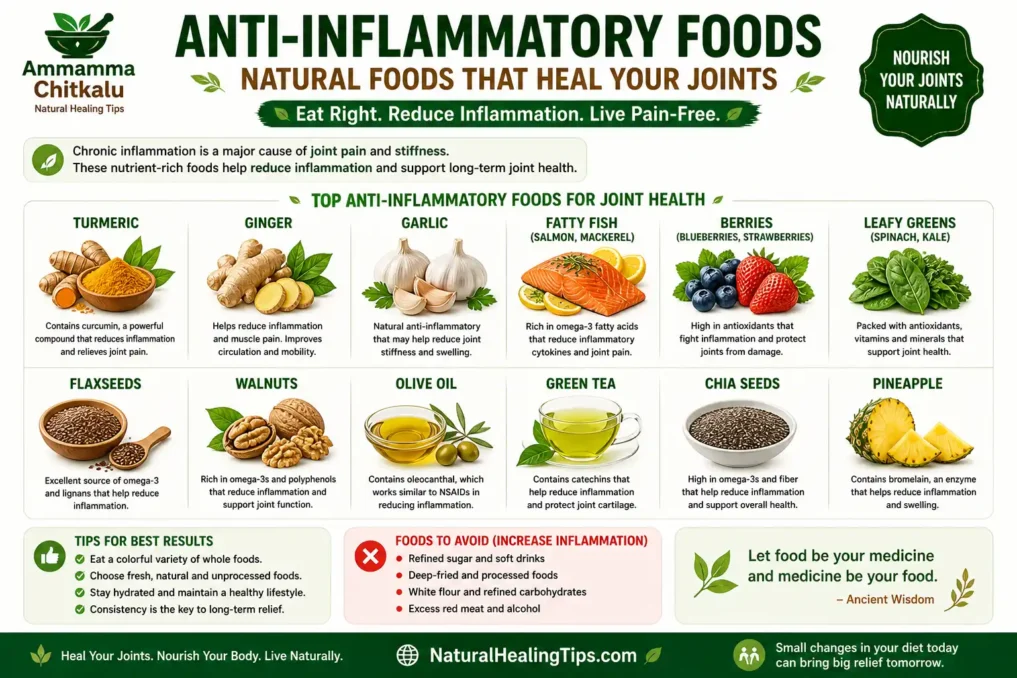
Foods to Eat:
- Leafy greens
- Nuts
- Berries
- Whole grains
Foods to Avoid:
- Sugar
- Processed foods
- Excess salt
- Fried foods
👉 If you want to reduce inflammation at its root, your daily food choices matter more than you think: Anti-Inflammatory Diet for Natural Healing
Side Effects & Precautions
- Avoid self-diagnosing chronic pain
- Do not mix herbs with medications without guidance
- Pregnant individuals should consult doctors
- Severe swelling → medical check
If you have a diagnosed medical condition like arthritis or are taking medication, consult a healthcare professional before starting any new remedy.
Daily Routine for Joint Healing
Combining daily habits with natural remedies for joint pain creates faster and more sustainable results.
What if your daily routine is silently worsening your pain?
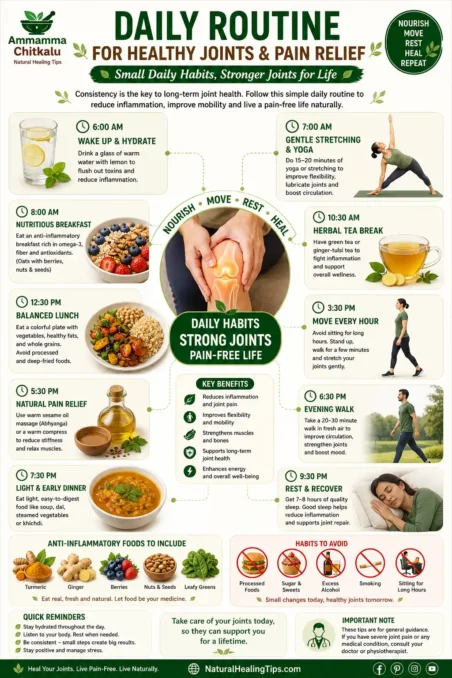
Morning
- Warm water + turmeric
- 10-min stretching
Afternoon
- Anti-inflammatory meals
- Hydration
Evening
- Light movement
- Ginger compress
Night
- Golden milk
- Oil massage
Common Mistakes That Make Joint Pain Worse
FOMO trigger:
Most people unknowingly worsen their condition by doing these:
- Ignoring early stiffness
- Over-exercising painful joints
- Skipping hydration
- Relying only on painkillers
- Poor sleep
Myths vs Facts
Myth: Joint pain only affects old people
Fact: Lifestyle is the biggest factor today
Myth: Rest is the best solution
Fact: Controlled movement is essential
Myth: Painkillers solve the problem
Fact: They only mask symptoms
Advanced Natural Therapies
1. Acupressure
Stimulates nerve pathways
2. Herbal Steam Therapy
Improves circulation
3. Ayurvedic Panchakarma
Detoxifies body (long-term approach)
Quick Summary
- Joint pain often caused by inflammation & cartilage wear
- Natural remedies include turmeric, ginger, oil massage
- Hydration & diet play a critical role
- Results may begin within days but consistency is key
- Seek medical help if symptoms persist
FAQs
What really happens if joint pain is ignored?
It can lead to chronic inflammation and cartilage damage.
Can natural remedies actually improve joint pain?
Yes—many reduce inflammation and improve mobility over time.
Why do some people notice changes quickly?
Because inflammation reduces rapidly with correct diet and habits.
Is joint pain reversible?
In early stages, yes—especially with lifestyle correction.
Can diet alone fix joint pain?
Diet helps significantly but works best with movement and therapy.
Are these remedies safe long-term?
Most are safe when used moderately.
Disclaimer
This article is for educational purposes only and should not replace professional medical advice.
Final Thoughts: Your Body Is Not Breaking—It’s Communicating
Joint pain is not the end of mobility.
It’s often the beginning of awareness.
Sometimes the smallest daily habits quietly shape how we feel.
Natural remedies for joint pain work best when practiced consistently and combined with a healthy lifestyle.
If you listen early, support your body naturally, and stay consistent—
your joints can feel lighter, stronger, and more flexible again.




2 thoughts on “Natural remedies for joint pain”