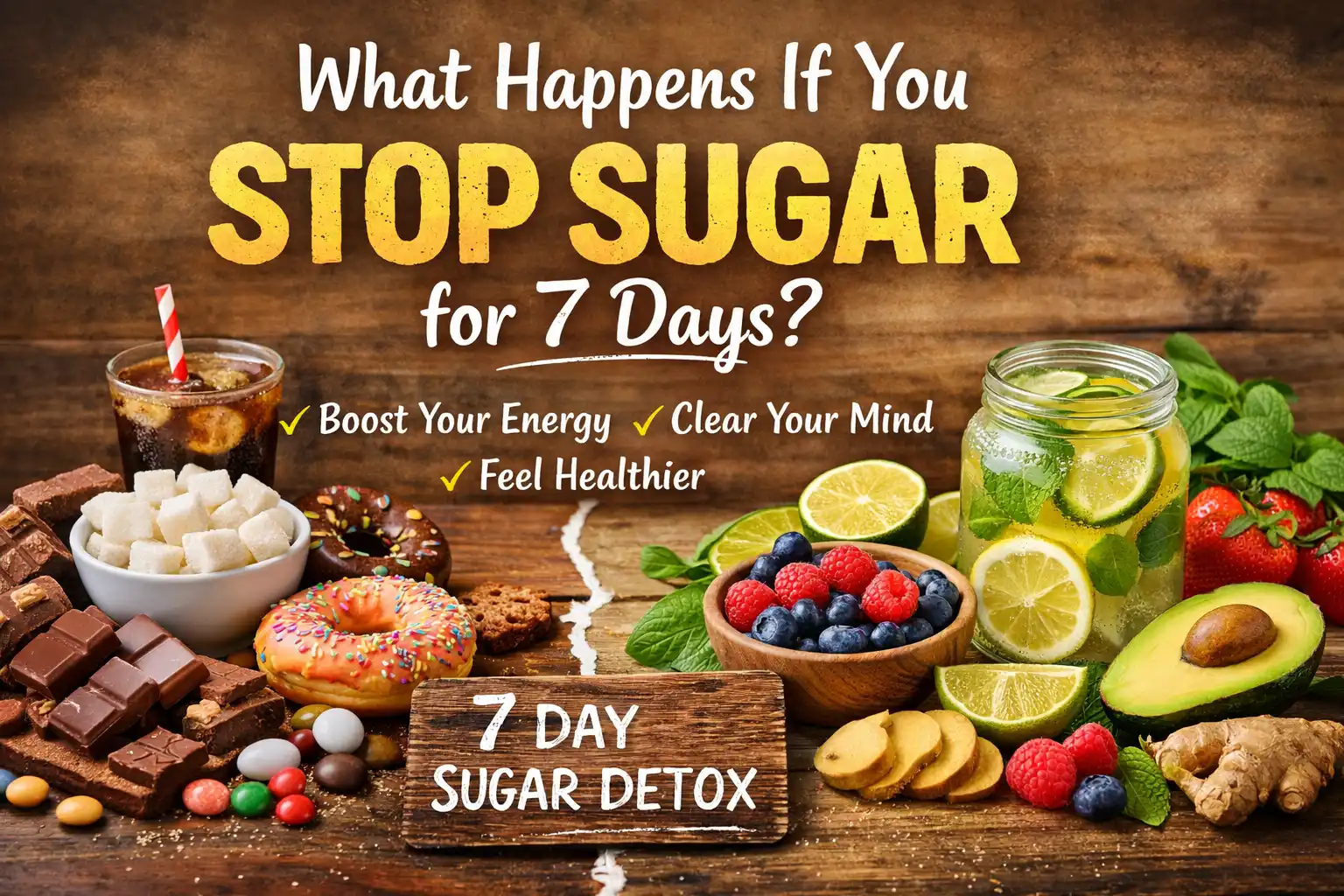
What Happens If You Stop Sugar for 7 Days
A Small Experiment That Feels Bigger Than It Is
It often starts quietly.
If you’ve ever wondered what happens when you stop sugar for 7 days, you’re not alone—this simple experiment has become increasingly popular among people trying to improve their health naturally.
Maybe you notice you’re reaching for sweets more often than usual. A biscuit with tea turns into three. A soft drink becomes a daily habit. And somewhere in the back of your mind, a question appears:
What would happen if I just stopped sugar for a few days?
Would your body feel lighter? Would cravings disappear? Or would it be too difficult to even try?
Many readers tell us they’ve thought about this—but never actually tested it.
And honestly, that’s understandable.
Sugar is everywhere.
From breakfast cereals to packaged snacks, from tea-time treats to “healthy” granola bars—it quietly becomes part of everyday life.
So what really happens if you stop sugar for just 7 days? Or in other words, what changes can you expect from a simple 7-day sugar detox?
The answer is more interesting than most people expect.
And the most surprising part? Many people notice changes within just a few days.
Is This Common or Normal?
Completely.
In fact, reducing sugar is one of the most common health experiments people try worldwide.
According to global dietary trends, average sugar consumption is significantly higher than recommended levels by major health organizations.
That doesn’t mean something is “wrong” with you.
It simply reflects:
- modern food habits
- busy lifestyles
- easy access to processed foods
In many households—especially in India—sweet tea, desserts after meals, and festive foods are part of culture and comfort.
According to global health experts, most people consume more sugar than recommended for long-term health.
↗ WHO – Guideline: Sugars intake for adults and children
So if you feel dependent on sugar, you’re not alone.
And taking a 7-day break? That’s actually a very reasonable and safe starting point for most people.
👉 If you’re exploring natural ways to reset your body, this guide explains simple daily methods: Natural Detox Drinks for Daily Health
The Science Behind What Happens in 7 Days
Let’s break this down in a simple, real-world way.
When you stop sugar for 7 days, your body begins adjusting faster than most people expect, both physically and mentally.
Your body doesn’t just “miss sugar”—it adapts surprisingly fast.
1. Brain and Dopamine Reset
Sugar stimulates dopamine—the “feel-good” chemical.
When you stop sugar:
- dopamine spikes reduce
- cravings initially increase
- then gradually stabilize
This is why the first 2–3 days feel the hardest.
After that, many people notice:
cravings become quieter.
2. Anti-Inflammatory Effects
High sugar intake is linked to low-grade inflammation.
Reducing sugar may:
- lower inflammation markers
- reduce puffiness
- improve joint comfort
You may not feel this dramatically in 7 days—but subtle changes begin.
3. Digestive Support
Sugar feeds certain gut bacteria—especially the less beneficial ones.
When you cut sugar:
- gut balance begins shifting
- bloating may reduce
- digestion feels lighter
In traditional Indian diets, this is why meals focus on:
- fiber
- spices like cumin and ginger
- fermented foods
These naturally support gut balance.
👉 To understand how food impacts your gut, this detailed guide can help: Gut Health Foods for Better Digestion
4. Blood Sugar Stabilization
This is one of the most noticeable changes.
Without constant sugar spikes:
- energy becomes more stable
- fewer crashes
- reduced irritability
You may have noticed this already—those mid-afternoon energy dips start to fade.
5. Immune System Interaction
Excess sugar can temporarily suppress immune response.
Reducing it may:
- support immune function
- reduce fatigue
- improve overall resilience
It’s not a miracle—but it’s a meaningful shift.
6. Metabolism and Fat Storage
When sugar intake drops:
- insulin levels stabilize
- fat storage signals reduce
- body begins using stored energy
This is why some people notice:
- slight weight reduction
- less bloating
Even within a week.
Regular high sugar intake can affect how your body regulates energy and metabolism over time.
↗ NHS – How does sugar affect your health?
7. Skin and Hydration Changes
Many readers tell us this is their favorite change.
Without sugar:
- skin inflammation may reduce
- breakouts may calm
- hydration improves
It’s subtle—but visible.
But the physical changes are only part of the story. What many people don’t expect is the emotional and mental shift that follows.
Many nutrition experts suggest that even short-term sugar reduction can help reset cravings and improve metabolic balance.
The Emotional Side of Sugar (Not Just Physical)
Most articles focus on biology.
But sugar is deeply emotional.
Think about it:
- sweets during celebrations
- desserts after stressful days
- tea with sugar during conversations
In many households, especially in India, sweetness is linked to:
- comfort
- hospitality
- connection
So when you stop sugar, you may feel:
- slightly “off” emotionally
- missing a small daily ritual
This isn’t weakness.
It’s conditioning.
Why Sugar Feels So Addictive (And Why It’s Hard to Stop)
Have you ever noticed something strange?
Even after a full meal… you still want something sweet.
Not because you’re hungry—but because it feels incomplete without it.
This is where many people get confused.
They assume it’s a lack of willpower.
But in reality, there’s something deeper happening inside your brain and body.
1. The Dopamine Effect — Your Brain’s Reward System
Sugar activates dopamine—the chemical linked to pleasure and reward.
When you eat something sweet:
- your brain releases dopamine
- you feel a temporary sense of satisfaction
- your brain remembers that experience
Over time, this creates a simple association:
Sweet food = good feeling
Now imagine this happening every day—after meals, during tea time, or when you feel stressed.
Your brain starts expecting it.
That’s why cravings can feel so automatic.
2. The Habit Loop You Don’t Notice
One interesting thing researchers have found is that many eating behaviors are driven by patterns—not hunger.
It often follows a loop:
- Trigger: finishing a meal, feeling bored, or taking a break
- Craving: desire for something sweet
- Action: eating sugar
- Reward: temporary satisfaction
For example:
You finish dinner → you expect dessert → you eat something sweet.
Repeat this daily, and it becomes automatic.
So when you stop sugar for 7 days, you’re not just changing your diet.
You’re interrupting a deeply ingrained pattern.
3. Emotional Eating — More Common Than You Think
In many households, sugar is not just food—it’s comfort.
Think about it:
- sweets during celebrations
- chocolate during stress
- sweet tea during conversations
You may have noticed:
When you feel tired, stressed, or even bored, you reach for something sweet.
Not because your body needs sugar…
But because your mind associates it with relief.
This is called emotional eating.
And it’s one of the biggest reasons sugar feels “addictive.”
4. Why the First Few Days Feel the Hardest
When you suddenly stop sugar, your brain doesn’t immediately adjust.
Instead, it reacts.
You may feel:
- strong cravings
- irritability
- a sense of something “missing”
This isn’t weakness.
It’s your brain adapting to a new pattern.
The good news?
This phase is temporary.
Most people notice that cravings begin to reduce after 3–4 days.
5. The Turning Point — When Control Comes Back
Here’s something encouraging.
As you continue reducing sugar:
- your brain stops expecting constant sweetness
- your taste buds reset
- natural foods start tasting better
You may even notice:
Foods that once felt normal now taste too sweet.
This is a powerful shift.
Because now, instead of reacting to cravings…
You start choosing consciously.
A Simple Insight That Changes Everything
Sugar doesn’t control you.
Patterns do.
And once you understand those patterns, something changes.
You don’t need extreme discipline.
You just need awareness.
Because when you recognize:
- why you crave sugar
- when it happens
- what triggers it
You naturally start making better choices—without forcing yourself.
And that’s where real change begins.
The “Awareness Effect” — The Real Change Most Articles Ignore
Here’s something rarely talked about.
When you stop sugar, the biggest shift is not physical—it’s awareness.
You begin to notice:
- how often you eat without hunger
- how emotions influence food choices
- how “just one bite” becomes a pattern
Many readers tell us:
“I didn’t quit sugar… I became aware of it.”
And that changes everything.
Because awareness leads to control—not restriction.
👉 If you notice habits driving your cravings, this can give deeper insight: Digital Detox for Mental Health
Hidden Sources of Sugar Most People Miss
Here’s something surprising.
Even when people say “I don’t eat sugar,” they often still consume a lot of it.
Many readers are shocked when they discover hidden sugars in:
- packaged juices
- breakfast cereals
- flavored yogurt
- sauces (ketchup, salad dressing)
- energy bars
- bakery bread
In many households, even “healthy” foods can quietly contain added sugar.
The Craving Curve (A Simple Way to Understand It)
Cravings don’t disappear instantly.
This pattern becomes especially clear when you stop sugar for 7 days, as your cravings gradually shift from intense to manageable.
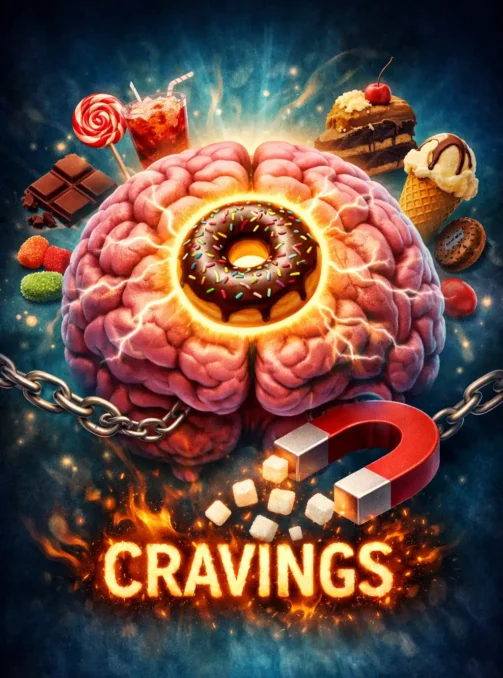
They follow a pattern:
- Day 1–2: strong cravings
- Day 3–4: reducing intensity
- Day 5–7: manageable
Understanding this helps you stay consistent.
Because you realize:
the discomfort is temporary.
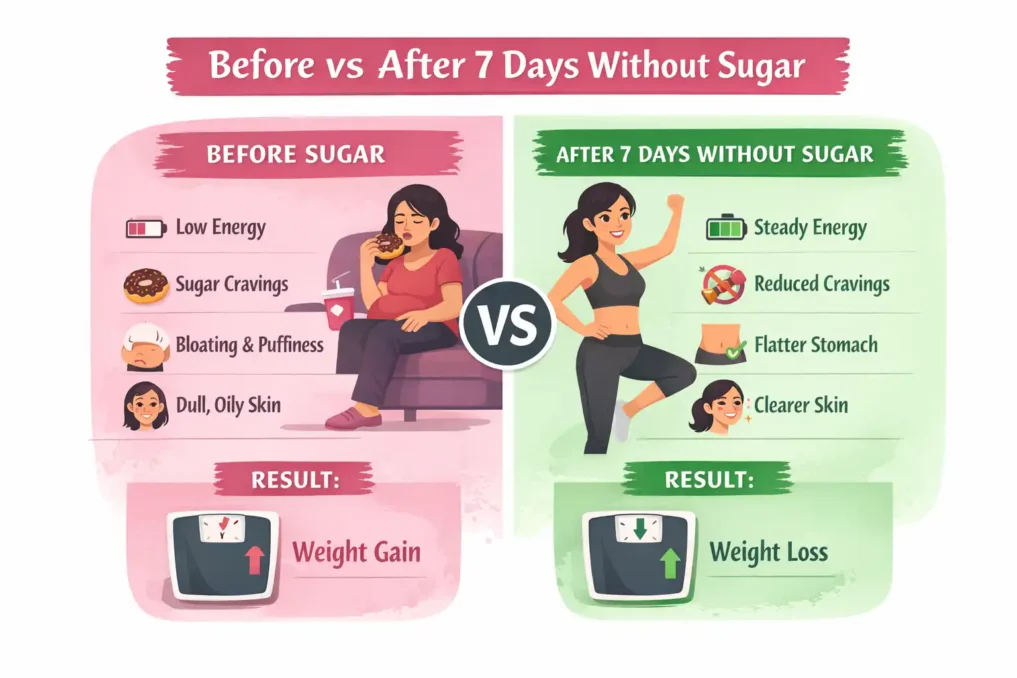
Before vs After Stopping Sugar for 7 Days
Sometimes, the changes are easier to understand when you see them side by side.
While the transformation may not feel dramatic overnight, many people notice subtle but meaningful shifts in how their body feels and responds.
Here’s a simple comparison of what typically changes when you stop sugar for 7 days.
| Before Stopping Sugar | After 7 Days Without Sugar |
|---|---|
| Frequent energy crashes | More stable, consistent energy |
| Strong cravings for sweets | Cravings become weaker and manageable |
| Bloating and heaviness after meals | Lighter digestion and reduced bloating |
| Brain fog or lack of focus | Improved mental clarity and concentration |
| Poor or inconsistent sleep | Better sleep quality and relaxation |
What These Changes Actually Feel Like
At first glance, these differences may seem small.
But in real life, they feel quite noticeable.
Energy:
Before, you might feel energetic after eating something sweet—only to crash an hour later. After a few days without sugar, energy feels steadier, without sudden ups and downs.
Cravings:
In the beginning, cravings can feel intense—especially after meals or during evening tea time. But by day 4 or 5, many people notice something surprising: the urge for sweets becomes quieter.
Digestion:
Meals begin to feel lighter. That heavy, bloated feeling after eating often reduces, and your stomach feels more comfortable throughout the day.
Mental Clarity:
Instead of feeling sluggish or distracted, your mind feels sharper. Tasks that usually feel tiring may become easier to focus on.
Sleep:
Some people notice they fall asleep faster or wake up feeling slightly more refreshed. It’s subtle—but noticeable over time.
A Small but Powerful Shift
These changes may not feel dramatic like a “before and after transformation.”
But they create something more valuable:
Consistency.
And once your body gets used to this more balanced state, it becomes easier to maintain healthier habits without forcing yourself.
That’s the real benefit most people don’t expect.
When Should You Be Concerned?
For most healthy individuals, stopping sugar for 7 days is safe.
However, there are exceptions.
Health organizations like:
- World Health Organization
- National Health Service
- Mayo Clinic
suggest being mindful if you:
- have diabetes
- are on blood sugar medication
- experience severe fatigue or dizziness
- have a history of eating disorders
In such cases, it’s better to:
- reduce sugar gradually
- consult a healthcare professional
Also, mild symptoms like:
- headaches
- irritability
- cravings
are normal in the first few days.
They usually pass.
Practical Natural Solutions (Make It Easier)
Let’s be honest—this is where most people struggle.
Not in understanding—but in doing.
These small adjustments can make it much easier to stop sugar for 7 days without feeling overwhelmed or deprived.
Here’s how to make your 7-day sugar break realistic.
1. Focus on Whole Foods
Eat:
- fruits (natural sweetness)
- vegetables
- whole grains
- lentils
In Indian kitchens, simple meals like:
- dal + rice
- vegetable curry
- roti + sabzi
are naturally low in added sugar.
👉 If you want to naturally support digestion while reducing sugar, explore this list: Foods That Naturally Clean Your Gut
2. Replace Sugary Drinks
Instead of:
- soft drinks
- sweetened tea
Try:
- herbal teas
- lemon water
- warm jeera water
3. Use Natural Flavor Enhancers
Spices reduce sugar cravings naturally:
- cinnamon
- cardamom
- ginger
They add depth without sweetness.
4. Improve Sleep Quality
Poor sleep increases sugar cravings.
Even 1–2 extra hours of quality sleep can:
- reduce cravings
- stabilize mood
5. Move Your Body Daily
Light activity helps regulate:
- blood sugar
- mood
- appetite
Even a 20-minute walk works.
6. Manage Stress
Stress often triggers sugar cravings.
Try:
- breathing exercises
- meditation
- quiet time
👉 If stress is triggering your cravings, this guide offers simple natural techniques: Natural Remedies for Stress and Anxiety
7. Keep Healthy Snacks Ready
Instead of sweets:
- nuts
- seeds
- roasted chana
These keep you full.
8. Use Traditional Remedies
In many Indian households:
- ginger tea
- turmeric milk
- fennel water
are used to balance digestion and reduce cravings.
Common Mistakes When Stopping Sugar (And How to Avoid Them)
Let’s be honest—this is where most people struggle.
Not because they don’t understand what to do…
But because small mistakes make the process harder than it needs to be.
Many readers start strong, feel motivated for 1–2 days, and then suddenly give up.
Not due to lack of discipline—but due to avoidable mistakes.
Here are the most common ones—and how you can handle them better.
1. Cutting All Carbs Instead of Just Sugar
This is one of the biggest misunderstandings.
Many people think:
“If I remove sugar, I should remove all carbohydrates.”
So they suddenly avoid:
- rice
- roti
- fruits
And what happens?
- energy drops quickly
- fatigue increases
- cravings become stronger
Imagine skipping your usual meals and then wondering why you feel weak by afternoon.
That’s not sugar withdrawal—it’s lack of proper fuel.
How to fix it:
Keep complex carbs like:
- whole grains
- fruits
- lentils
You’re removing added sugar, not essential nutrition.
2. Not Eating Enough Protein or Fiber
Another common mistake is focusing only on what to remove—without thinking about what to add.
When meals lack:
- protein
- fiber
You may feel:
- hungry again very quickly
- unsatisfied after eating
- strong sugar cravings
This is especially noticeable in the evening.
You eat dinner… and still feel like something is missing.
That “something” often turns into a craving for sweets.
How to fix it:
Build meals that include:
- dal or legumes
- eggs or paneer
- vegetables and whole grains
These help you feel full and reduce unnecessary cravings.
3. Ignoring Hydration (Mistaking Thirst for Cravings)
Here’s something surprising.
Sometimes, what feels like a sugar craving is actually dehydration.
Many readers notice:
- cravings increase when they haven’t had enough water
- fatigue feels worse in the afternoon
Picture this:
It’s mid-day. You feel tired and want something sweet.
But instead of sugar, you drink a glass of water—and suddenly the craving reduces.
How to fix it:
Make hydration a priority:
- warm water in the morning
- herbal teas
- regular water intake throughout the day
It’s a simple shift—but highly effective.
4. Relying on Artificial Sweeteners
This is where things get tricky.
Many people replace sugar with:
- artificial sweeteners
- “sugar-free” products
It feels like a smart shortcut.
But often:
- cravings don’t reduce
- sweet dependency continues
- habit remains unchanged
You’re not actually resetting your system—you’re just switching sources.
How to fix it:
Gradually reduce sweetness overall.
Use:
- fruits
- spices like cinnamon
- natural flavors
The goal is not just “no sugar”—it’s less dependence on sweetness.
5. Expecting Immediate Results
This is where most people give up.
They think:
“I stopped sugar for 2 days… why don’t I feel amazing yet?”
But here’s the reality:
- first 2–3 days are adjustment
- benefits come gradually
If expectations are too high, even small discomfort feels like failure.
Emotionally, this leads to:
- frustration
- doubt
- quitting early
How to fix it:
Shift your mindset:
Instead of:
“I need quick results”
Think:
“I’m giving my body time to adjust”
That small mental shift changes everything.
6. Not Planning for Craving Moments
Most people don’t fail because they lack motivation.
They fail because they don’t prepare for predictable situations.
Like:
- evening tea time
- post-meal cravings
- late-night snacking
In those moments, willpower alone isn’t enough.
You need alternatives ready.
How to fix it:
Plan ahead:
- keep nuts or fruits nearby
- have herbal tea ready
- replace habits—not just remove them
Because when the moment comes, your decision is already made.
7. Going Too Extreme Too Fast
Some people go all-in:
- no sugar
- no carbs
- strict rules
It feels powerful at first.
But soon:
- energy drops
- cravings intensify
- motivation crashes
And then comes the rebound.
How to fix it:
Keep it simple.
Focus on:
- removing added sugar
- eating balanced meals
- making gradual adjustments
Sustainable always beats extreme.
Small Insight
Most people don’t fail because stopping sugar is difficult.
They fail because they make it harder than it needs to be.
When you understand these patterns, the process becomes much smoother.
And instead of struggling…
You start feeling in control.
The “Replacement Strategy” That Actually Works
Most people fail not because they lack discipline…
But because they remove sugar without replacing what it was doing for them.
That’s the real problem.
Because sugar isn’t just about taste.
It often provides:
- quick energy
- comfort during stress
- a sense of completion after meals
So when you suddenly remove it, your body—and your habits—feel a gap.
And that gap is what creates cravings.
What Doesn’t Work
Many people try to rely only on willpower.
They:
- cut sugar suddenly
- ignore hunger signals
- avoid snacks completely
At first, this feels strong and controlled.
But by evening, something changes.
You feel:
- low energy
- irritation
- a strong urge for something sweet
And that’s when most people give in.
Not because they failed—but because their body wasn’t supported.
What Actually Works (The Replacement Approach)
Instead of just removing sugar, you replace its role in a smarter way.
Think of it like this:
You’re not taking something away—you’re upgrading it.
1. Replace Sweetness with Natural Sources
If your body is used to sweet taste, removing it completely can feel harsh.
Instead, shift gradually.
Use:
- fruits like bananas, apples, or dates
- naturally sweet foods like carrots or sweet potatoes
For example:
Instead of a sugary dessert after lunch, try a piece of fruit.
It satisfies the taste—without triggering the same cycle.
2. Replace Energy with Balanced Meals
Many sugar cravings are actually energy dips.
This often happens:
- mid-morning
- late afternoon
Instead of reaching for sugar, support your energy with:
- whole grains
- protein (dal, eggs, paneer)
- healthy fats (nuts, seeds)
These provide steady energy—without crashes.
3. Replace Comfort with Warm Drinks
Sometimes, the craving is not for sugar—but for comfort.
This is especially common:
- during evening tea time
- after a long day
Instead of sweet tea or snacks, try:
- herbal tea
- ginger tea
- warm turmeric milk at night
These give the same comforting feeling—without sugar.
4. Replace the Habit, Not Just the Food
This is the most important shift.
If you usually:
- eat sweets after meals
- snack while watching TV
Don’t just remove it.
Replace it with something intentional:
- drink water or tea after meals
- take a short walk
- have a handful of nuts
Because habits don’t disappear—they need to be redirected.
A Real-Life Scenario
Imagine this:
It’s 5 PM.
You usually have tea with biscuits.
Now you’ve stopped sugar.
Instead of forcing yourself to “avoid everything,” you:
- have unsweetened tea
- add a few nuts or roasted chana
The routine stays.
The habit stays.
But the sugar is gone.
That’s what makes this approach sustainable.
Small Insight
Your body doesn’t just crave sugar.
It craves:
- energy
- comfort
- routine
When you replace those intelligently…
Cravings don’t need to be “fought.”
They naturally reduce.
And that’s when the process starts feeling easy—not forced.
A Simple “Sugar Awareness Ritual”
Here’s something unique you can suggest to readers:
Before eating anything sweet, pause and ask:
- Am I hungry?
- Or just craving?
This small habit alone can:
- reduce unnecessary sugar intake
- build awareness
- improve long-term habits
The Mindful Eating Shift (A Hidden Benefit)
After a few days without sugar:
You naturally start:
- eating slower
- tasting food more
- feeling full earlier
This is not forced.
It’s a natural response.
3-Day Natural Experiment
Try this simple reset:
Day 1
- Remove added sugar
- Drink more water
- Expect cravings
Day 2
- Add fruits for sweetness
- Try herbal tea
- Notice energy changes
Day 3
- Focus on whole meals
- Reduce snacking
- Observe mood stability
By Day 3, something shifts.
You feel more in control.
What Happens Each Day When You Stop Sugar
Many readers ask a simple but important question:
“What will I actually feel each day?”
Let’s walk through a realistic 7-day experience—not perfect, but honest.
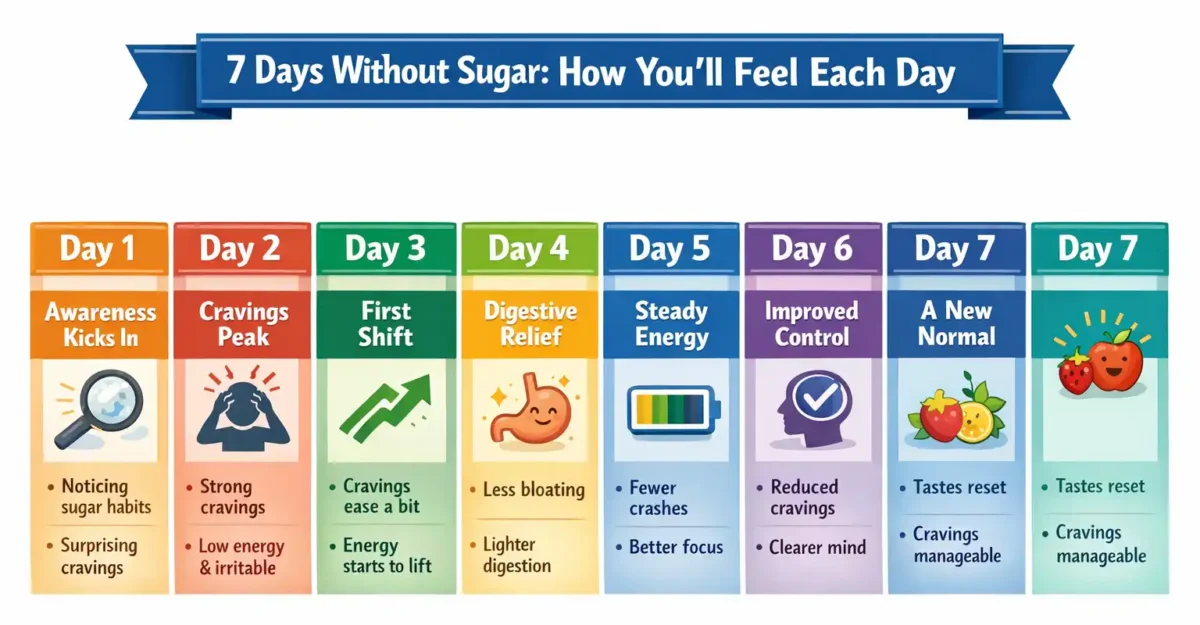
Day-by-day changes you may experience when you stop sugar for 7 days.
Here’s what a typical experience looks like when you stop sugar for 7 days and allow your body to reset.
Day 1: Awareness Kicks In
This day is more mental than physical.
You begin to notice:
- how often you reach for sugar
- how automatic your habits are
- how frequently sugar appears in your meals
Even your tea or coffee may taste different.
Day 2: Cravings Peak
This is usually the toughest day.
You may feel:
- strong cravings
- mild headaches
- irritability
- low energy
This happens because your body is adjusting to lower sugar intake.
It’s not true hunger—it’s habit and chemistry.
Day 3: The First Shift
Something subtle changes.
- cravings begin to reduce
- energy becomes slightly stable
- mood improves a bit
Many people say this is when they start feeling encouraged.
Day 4: Digestion Feels Lighter
You may notice:
- less bloating
- less heaviness after meals
- smoother digestion
Your gut is slowly adapting to a lower-sugar environment.
Day 5: Steady Energy
This is where benefits become clearer.
- fewer energy crashes
- better focus
- reduced irritability
Instead of ups and downs, your energy feels more balanced.
Day 6: Better Control
Cravings don’t disappear—but they lose intensity.
- you feel more in control
- emotional eating reduces
- decision-making improves
Day 7: A New Normal
By now:
- your taste buds adjust
- natural foods taste sweeter
- cravings feel manageable
And most importantly—you realize this is sustainable.
Small Insight
Not everyone experiences this exactly the same way.
But most people notice one common thing:
It gets easier after the first 2–3 days.
Weight Loss — Expectation vs Reality
Let’s be honest.
Many people try this for weight loss.
What Actually Happens in 7 Days:
- slight water weight reduction
- reduced bloating
- improved digestion
What Does NOT Happen:
- major fat loss
- dramatic transformation
And that’s okay.
Because the real benefit is:
building sustainable habits.
Many people try to stop sugar for 7 days expecting rapid weight loss, but the results are usually more subtle and sustainable.
Why Your Body Adapts Faster Than You Think
The human body is highly adaptive.
When sugar intake drops:
- insulin stabilizes
- hunger hormones adjust
- energy regulation improves
This is why even a short break can feel impactful.
Cultural Insight: Sugar in Modern vs Traditional Diets
This is where things get interesting.
Modern Lifestyle
- packaged snacks
- sugary beverages
- processed desserts
Sugar becomes frequent and hidden.
Traditional Eating Patterns (India & Global)
- sweets are occasional
- meals are balanced
- natural ingredients dominate
In traditional Indian kitchens:
- jaggery is used sparingly
- sweets are linked to occasions—not daily habits
The difference is not just ingredients.
It’s frequency.
A Practical Self-Check: Are You Eating Too Much Sugar?
Ask yourself:
- Do you crave something sweet after every meal?
- Do you feel low energy without sugar?
- Do you snack even when not hungry?
If yes, your body may be relying on sugar more than needed.
By now, you’ve seen how both your body and mind respond to reducing sugar. Let’s quickly summarize the key changes you can expect.
Quick Summary
What happens if you stop sugar for 7 days?
- Cravings increase initially, then reduce
- Energy levels become more stable
- Bloating and digestion may improve
- Skin may appear clearer
- Inflammation begins to decrease
- Mood swings reduce
- Slight weight and water loss may occur
FAQ Section
Is stopping sugar for 7 days good for health?
Yes, it can help reset cravings, stabilize energy, and improve digestion.
How often should you do a sugar detox?
Once in a while is enough. Focus more on long-term habits than frequent detoxes.
Are there side effects?
Mild headaches, fatigue, and cravings are common in the first few days.
What is the best way to stop sugar?
Start by removing added sugar and replacing it with whole foods.
Who should avoid stopping sugar suddenly?
People with diabetes or medical conditions should consult a doctor first.
The “Bounce Back” Trap (And How to Avoid It)
Here’s where many people struggle.
After 7 days, they reward themselves with:
- desserts
- sugary drinks
- binge eating
And suddenly:
- cravings return stronger
- guilt appears
- motivation drops
This is not failure—it’s a common pattern.
Better Approach
Instead of going back fully:
- reintroduce sugar slowly
- keep portions small
- stay mindful
Think of sugar as:
something you enjoy—not something that controls you.
Long-Term Takeaway (What Most Articles Miss)
The real benefit of stopping sugar for 7 days is not:
- weight loss
- detox
- quick results
It’s this:
You regain control over your choices.
And once you have that—
You don’t need strict rules anymore.
Long-term research also links excess sugar consumption with broader metabolic and heart health concerns.
↗ Harvard Health – The sweet danger of sugar
Gentle Health Disclaimer
This article is for educational purposes only and should not replace professional medical advice.
Final Thoughts
At first, when you stop sugar for 7 days, it can feel like you’re giving something up.
But by the end of the week, many people notice something unexpected—
they haven’t really lost anything.
Energy feels steadier. Cravings become quieter. Food starts to taste more natural.
And slowly, you begin to understand your body a little better.
But let’s be honest.
Stopping sugar for 7 days won’t completely transform your health overnight.
It won’t magically fix everything.
What it does give you is something far more valuable—
awareness.
You start noticing:
- what your body actually needs
- how habits influence your choices
- how small changes create real impact
And once you have that awareness, you don’t need extreme rules.
You just need consistency.
Because real health is not about perfection.
It’s about balance, patience, and the small decisions you make every day.
This is why even a simple no sugar for 7 days challenge can create lasting awareness and healthier habits.